Metal Roof vs. Shingles in North Texas: Honest Pros and Cons
 By Chris Grimes, owner of Verde RoofingPublished October 4, 2026 · 7 min read
In short
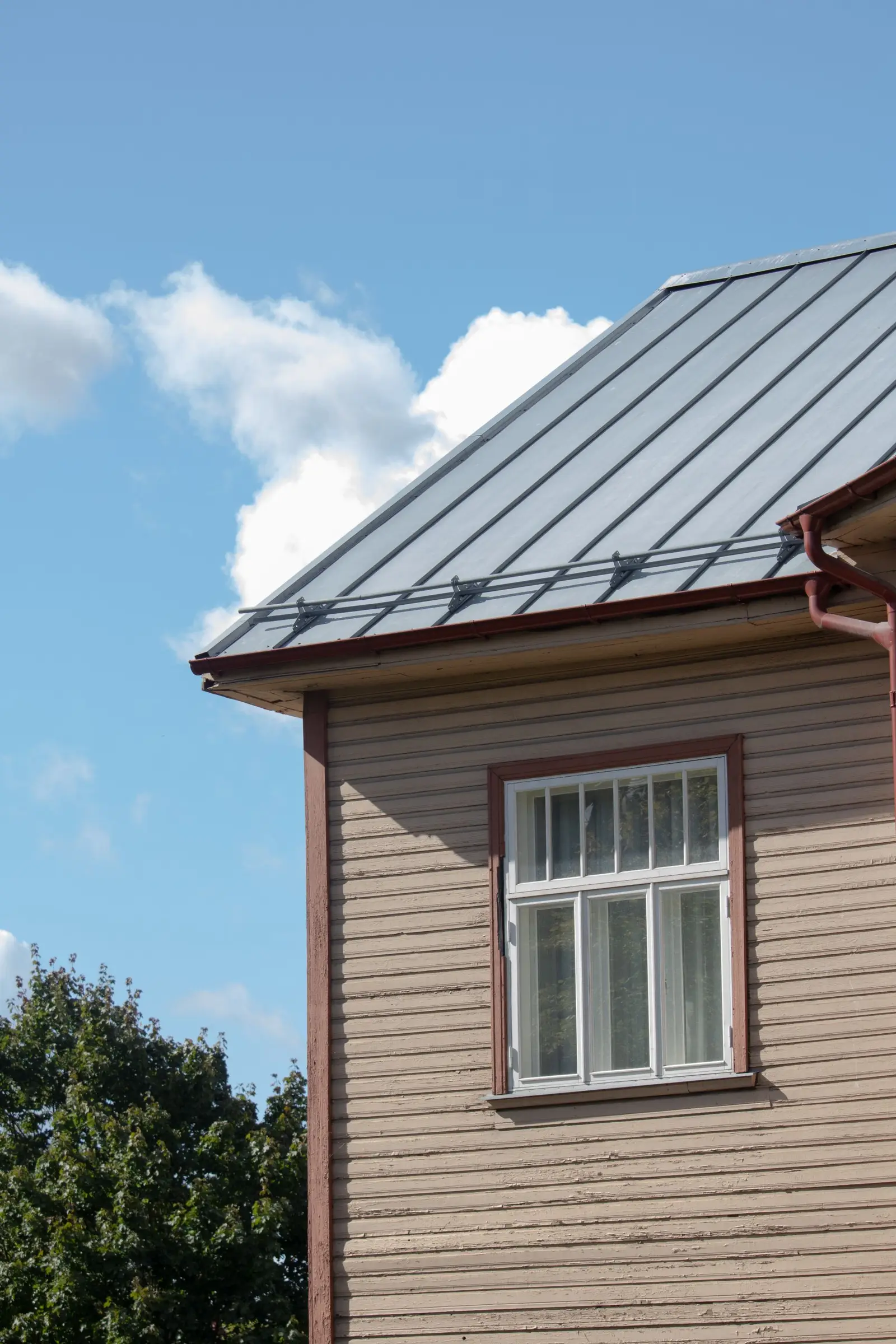
Metal costs substantially more up front (the 2025 Cost vs. Value report prices a typical metal reroof in our region about 64 percent above asphalt) but typically lasts much longer, sheds wind well and rarely leaks from hail. Shingles cost less, are easier to repair and match, and hail dents are not a concern. In North Texas, metal fits owners staying many years who accept possible cosmetic dents; shingles, especially Class 4, fit most other homeowners.
Key takeaways
- HomeGuide's 2025 guides put metal at $5 to $16 per square foot installed versus $3 to $5 for asphalt shingle roofs.
- HomeGuide lists typical lifespans of 30 to 80+ years for metal and 15 to 30 years for asphalt shingles.
- Metal can dent or scratch in hail, and TDI warns that metal roof discounts may come with a cosmetic damage exclusion.
- In the 2025 Cost vs. Value report for the West South Central region, asphalt roof replacement recouped 68.1 percent of cost at resale and metal 50.5 percent.
- ENERGY STAR says cool roofs save the most energy in hot, sunny climates like the Southern U.S.; color and coating matter more than the material.
After a second or third hail roof, a lot of North Texas homeowners start asking the same question: should the next one be metal? Metal roofs promise decades of service and fewer storm headaches. Shingles promise a lower bill today and a familiar look. Both promises are partly true.
This guide compares metal and asphalt shingles on what actually matters for a home in Plano, Dallas, Fort Worth or the suburbs around them: cost, lifespan, hail, heat, insurance, resale and repairs. It also says plainly who should choose which.
How do metal roofs and shingles compare at a glance?
| Metal roof | Asphalt shingles | |
|---|---|---|
| Typical installed cost (HomeGuide, 2025) | $5 to $16 per sq ft overall; standing seam $9 to $16 | $3 to $5 per sq ft; architectural $400 to $600 per square |
| Typical lifespan (HomeGuide) | 30 to 80+ years | 15 to 30 years |
| Hail | Rarely leaks; can dent visibly | Can bruise or fracture; Class 4 options resist better |
| Wind | Strong when properly fastened | Depends on product; architectural lines rated far higher than 3-tab |
| Heat | Light painted finishes reflect well | Standard shingles absorb more; some reflective colors exist |
| Resale, West South Central (Cost vs. Value 2025) | 50.5% of cost recouped | 68.1% of cost recouped |
| Repairs | Specialized; panel matching can be harder | Easy, widely available |
The rest of this guide explains each row.
How much more does a metal roof cost in Texas?
HomeGuide's November 2025 metal roof cost guide puts metal at $5 to $16 per square foot installed on average. By type, it lists corrugated or exposed-fastener sheet metal at $5 to $12, standing seam at $9 to $16, metal shingles at $6 to $14 per square foot installed, and stone-coated steel at $700 to $1,300 per square (100 square feet) installed. HomeGuide's asphalt shingle guide puts asphalt roofs at $3 to $5 per square foot installed, with architectural shingles at $400 to $600 per square.
The 2025 Cost vs. Value report, which prices a typical project in each region, shows the same gap: an asphalt roof replacement in the West South Central region at $27,116 and a metal roof replacement at $44,505.
These are published ranges, not our prices. What moves a metal roof's price in DFW: the panel system, the gauge and finish, roof complexity (hips, valleys, dormers and penetrations all need custom trim), tear-off and decking repairs, and two-story height. For more detail, read our metal roof cost in Texas guide or start with the roof cost calculator.
Does metal really last longer?
Usually, yes. HomeGuide lists metal roofs at 30 to 80+ years when installed correctly and maintained, and asphalt shingle roofs at 15 to 30 years. The spread is wide for both because material, finish, ventilation, installation and weather all matter.
The useful way to think about it is cost per year you will actually own the house. If you plan to stay 25 years or more, a metal roof may be the only roof you buy. If you expect to move in seven years, most of metal's extra life goes to the next owner, and resale data suggests buyers do not pay you back for all of it. Our guide on how long a roof lasts in Texas compares lifespans by material.
How do metal roofs handle North Texas hail?
This is the most important row for DFW, and the honest answer has two parts.
Metal rarely leaks from hail. A properly installed standing seam or stone-coated steel roof keeps water out after storms that would ruin a standard shingle roof. Some metal products carry a UL 2218 Class 4 impact rating; check the exact product's listing rather than assuming.
Metal can dent, and dents are often treated as cosmetic. The Texas Department of Insurance's August 2026 guidance on metal roofs says they can dent or scratch from hail, wind-blown debris and falling branches, and that those marks may hurt appearance without affecting performance. TDI also warns that metal roof discounts may come with conditions such as an exclusion for cosmetic damage, meaning the policy may not pay to fix dents that do not affect function.
So a metal roof can come through a hailstorm watertight but dimpled, and you may be living with those dents. Thinner panels and flat, smooth standing seam tend to show dents most; textured stone-coated steel tends to hide them better. Our guide to hail dents on a metal roof covers how they are evaluated.
If hail resistance at a lower price is the main goal, Class 4 impact-resistant shingles are the other serious option; see Class 4 shingles for Texas hail.
When I walk a metal roof after hail, I look at the seams, the fasteners and the trim first, because that is where function can actually be lost, then at the panels for dents.
Is a metal roof cooler in Texas summers?
It can be, but the material matters less than the finish. ENERGY STAR describes a cool roof as one with both high solar reflectance and high thermal emittance, and says cool roofs work best in hot, sunny climates like the Southern U.S., especially on buildings with low roof insulation. Citing Lawrence Berkeley National Laboratory, it notes that a clean white roof reflecting 80 percent of sunlight stays about 50°F cooler on a summer afternoon than a gray roof reflecting 20 percent.
For North Texas that means:
- A light-colored, factory-painted metal roof can reflect much more sun than dark shingles.
- A dark metal roof is not automatically cool.
- Attic ventilation and insulation still matter as much as the roof surface.
- Savings depend on your house, so treat any promised dollar figure with caution.
Our guide to roof color and your electric bill goes deeper.
Which is easier to repair?
Shingles win this one clearly. Almost any roofer can replace a few wind-lifted shingles, swap a cracked pipe boot or rebuild flashing on a shingle roof, often in a few hours. Matching color can be a challenge on older roofs, but the work itself is routine.
Metal repairs need a crew that works on metal. A damaged standing seam panel may have to be replaced from the ridge down to the eave, and finding a panel with the same profile, gauge and paint color years later can be hard. Ask the installer to leave a few spare trim pieces and to record the exact panel system and color in your paperwork. On exposed-fastener panels, plan for periodic fastener checks; the rubber washers age in the sun.
Both roof types share the same weak points at penetrations and walls: pipe boots, flashing, skylights and chimneys. Whichever you choose, an inspection after major hail or wind catches small problems before they reach the ceiling.
What about insurance and resale?
Insurance. TDI says not every insurer offers a metal roof discount and savings vary, so ask your agent and compare rates. It also notes metal roofs usually lose coverage more slowly with age than shingled roofs, which can matter as a roof gets older. Get a written quote for both roof types, and ask directly whether a cosmetic damage exclusion would be added. More on this in does a new roof lower your insurance in Texas.
Resale. In the 2025 Cost vs. Value report for the West South Central region, an asphalt roof replacement recouped 68.1 percent of its cost at resale and a metal roof 50.5 percent. Metal does not hurt value, but buyers do not pay back its full premium. A metal roof is an investment in your own years in the house.
HOAs. Many planned communities in Collin and Denton counties regulate roof materials and colors. Check your HOA's rules before you get attached to a standing seam design.
Who should choose metal, and who should choose shingles?
Metal is a strong fit if you:
- Plan to stay in the home for decades.
- Want to stop replacing roofs after hailstorms and can accept cosmetic dents.
- Like the look, or have a modern farmhouse or contemporary design that suits it.
- Have a simple roof shape, which keeps metal's custom trim costs down.
- Want a light, reflective roof for summer heat.
Shingles are usually the better choice if you:
- Expect to sell within roughly the next decade.
- Need the lowest up-front cost, or insurance is paying to restore an existing shingle roof.
- Have a complex roof with many valleys, dormers and penetrations.
- Want easy, inexpensive repairs and color matching.
- Want hail resistance through a Class 4 shingle at a lower price.
Steps to decide between metal and shingles
- Decide how long you realistically expect to own the house.
- Get one written estimate with both options on the same scope: tear-off, decking, underlayment, flashing and ventilation.
- Ask your insurance agent for the premium difference and whether a cosmetic exclusion applies to either.
- Check HOA rules and approved colors.
- Look at finished metal and shingle roofs in your area, in person.
- Compare the products' impact and wind ratings and warranty documents, not just the brochures.
- Ask each roofer what their workmanship warranty covers on that roof type, in writing, and who you call if a seam or a shingle edge lifts in year three.
We install metal roofing along with Malarkey and Owens Corning shingles, so we can price both honestly. Our metal roofing and roof replacement pages explain how each project works.
Compare both on your roof
To see a metal roof and a shingle roof priced side by side for your home, call or text (214) 687-1951, 24/7, or book a free roof inspection. Chris will inspect your roof with you, talk through how long you plan to stay, and give you a written estimate for each option.
Questions people ask next
Is a metal roof louder than shingles in the rain?
Over solid decking, underlayment and an insulated attic, a residential metal roof is much quieter than the open-framed metal on a barn or carport. You may hear heavy rain or hail more than on shingles, particularly in rooms with vaulted ceilings. If noise worries you, ask to visit a finished metal roof during a rainstorm before deciding.
Does a metal roof need maintenance?
Less than shingles, but not zero. Exposed-fastener panels need their screws and washers checked over time, sealant at trim and penetrations ages in Texas sun, and debris should be kept out of valleys and gutters. Standing seam with concealed fasteners needs the least attention. An inspection after big hail or wind is still worth it.
Can you put a metal roof over existing shingles in Texas?
Some metal systems can be installed over one layer of shingles where local code allows, but it hides the decking and any rot or damage underneath. Many roofers recommend a tear-off so the deck can be inspected and repaired first. Ask your city about permit rules and ask the roofer how the manufacturer's warranty treats a layover.
Will my insurance cost more or less with a metal roof?
It varies by insurer. The Texas Department of Insurance says not every insurer offers a metal roof discount, savings vary, and discounts may come with conditions such as a cosmetic damage exclusion. TDI also notes metal roofs usually lose coverage more slowly with age than shingled roofs. Get a quote for both before you choose.
What type of metal roof is best for a house in Dallas?
Standing seam steel with concealed fasteners is a popular premium residential choice. Stone-coated steel looks like shingles, shake or tile, and its textured surface tends to hide small dents better. Exposed-fastener panels cost less but need fastener maintenance over time. Choose a painted, light-reflective finish for heat, and check the impact rating for hail.
Sources
Chris Grimes owns Verde Roofing in Plano, Texas, a locally owned residential and commercial roofer serving Dallas–Fort Worth. Verde is an NTRCA Accredited Member, an RCAT member and a Dallas Observer Best of Dallas Best Roofer winner (readers’ choice) in 2021, 2022 and 2023.
Keep reading
Related guides
 Cost & financingMetal Roof Cost in Texas: Standing Seam, Stone-Coated Steel and PanelsFixr’s 2026 guide puts metal roofing at about $11 per square foot on average versus about $4 for asphalt shingles, roughly two to three times the…Read the guide Hail & storm damageHail Dents on a Metal Roof: Cosmetic or Functional Damage?Hail dents on a metal roof are cosmetic when they change only how the roof looks, and functional when they open seams, crack the coating, loosen…Read the guide
 Roofing materialsBest Roofing Shingles for Texas Hail: Class 4 Impact-Resistant Shingles ExplainedClass 4 is the highest impact rating under UL 2218: the shingle survives two hits in the same spot from a 2-inch steel ball without cracking…Read the guide