

Roof Replacement Day: What to Expect, Hour by Hour
 By Chris Grimes, owner of Verde RoofingPublished August 17, 2026 · 8 min read
In short
A typical asphalt shingle replacement on a single-family home takes one to two days of work, longer for steep, large or multi-layer roofs, tile or slate, or when rotted decking turns up. Expect a dumpster a day or two ahead, a loud tear-off in the morning, a decking check, then underlayment, flashing and shingles. Prepare by moving cars, securing pets, clearing the yard and covering items in the attic.
Key takeaways
- Most single-family asphalt shingle roofs are torn off and reroofed in one to two days, and weather, decking repairs and roof complexity can add time.
- Owens Corning’s homeowner guide says a dumpster may arrive one to two days before work and planning typically starts four to six weeks ahead.
- Tear-off is the loudest and dustiest part; cover items in the attic and take down wall hangings on top-floor rooms.
- The decking check after tear-off is where surprises appear, so know your contract’s price for replacement sheets.
- Finish with a walkthrough, a nail sweep, the permit’s final inspection where required, and your warranty registration.
You have signed the contract, picked a shingle color and the date is on the calendar. Now the practical questions start. Where does the dumpster go? Should you take the pictures off the walls? Can the dog stay in the backyard? Will you be able to work from home?
This is a plain walk through a typical residential roof replacement day in Dallas–Fort Worth, from the week before to the final walkthrough. Every roof is different, so treat the times as a general pattern, not a schedule, and ask your roofer for the plan on your house.
How long does a roof replacement take?
For most homes, less time than people expect. IKO’s homeowner guide says a tear-off on an average-sized roof can wrap up in a single day and installation may take one or two days, so a single-family home is often finished in a day or two from start to finish. The same guide notes that slate and tile take longer because of their weight.
What stretches the job:
| Factor | Why it adds time |
|---|---|
| Roof size and number of planes | More squares, more valleys, hips and cuts |
| Steep pitch | Crews need more safety setup and move slower; common on two-story homes in Frisco and McKinney |
| Multiple layers | More material to tear off and haul |
| Rotted or damaged decking | Sheets must be cut out and replaced before underlayment |
| Chimneys, skylights, dormers | Each needs new flashing work |
| Material | Tile, slate and some metal systems take longer than asphalt |
| Weather | No shingle installation in rain; North Texas spring storms cause delays |
| Ventilation changes | Adding or changing vents takes extra time |
If you are still comparing prices, our roof replacement cost guide for DFW and the roof cost calculator cover what drives the number.
What happens in the weeks before?
Owens Corning’s homeowner guide says planning typically begins about four to six weeks before installation, when the contractor inspects the roof and attic, finalizes the quote, handles permits and orders materials. Shingle color has to be settled before materials are ordered, so pick it early. Our guide to roof color and energy efficiency can help with that choice in Texas heat.
Permits. Many North Texas cities require a permit for a re-roof. The City of Grand Prairie, for example, requires one for any roof replacement, recovering or repair, requires the contractor to be registered with the city, and says work cannot proceed past an inspection point without approval. Rules differ by city, so ask your roofer who pulls the permit and whether your city requires inspections.
HOA approval. Many planned communities in Plano, Allen, Frisco and McKinney require architectural approval for shingle color or style. Get it in writing before the materials are ordered.
How should you prepare your home?
Most of the work is outside, but a re-roof shakes the whole house. Use this checklist in the two days before:
- Move vehicles out of the driveway and garage if the dumpster will block them. Owens Corning suggests asking where the dumpster will go and parking on the street.
- Clear the yard of patio furniture, grills, planters, bikes and garden tools near the house.
- Protect plants: ask how the crew will cover beds and shrubs, and point out anything delicate.
- Mark sprinkler heads and low lighting near the drip line so they are not crushed.
- Secure pets indoors or elsewhere, and tell the crew about gates and access.
- Take down wall hangings and shelf items on exterior walls and top-floor rooms; hammering vibrates them.
- Cover items in the attic with old sheets or plastic. Tear-off shakes dust and old granules through the decking.
- Tell your neighbors a few days ahead, as Owens Corning suggests; it will be loud.
- Plan for noise if you work from home, nap a baby, or have an anxious pet.
- Arrange solar, satellite or antenna removal with those companies ahead of time if needed.
What happens on replacement day, hour by hour?
Here is how a typical one-day asphalt shingle replacement unfolds. A second day is common on bigger or more complex roofs.
Early morning: arrival and setup
The crew arrives, the dumpster is already in place, and materials are on the roof or in the driveway. The foreman walks the property, confirms the shingle color and product with you, and sets up protection: tarps over landscaping, plywood against walls where needed, ladders and safety lines. This is the moment to raise any questions about access or special requests.
Morning: tear-off
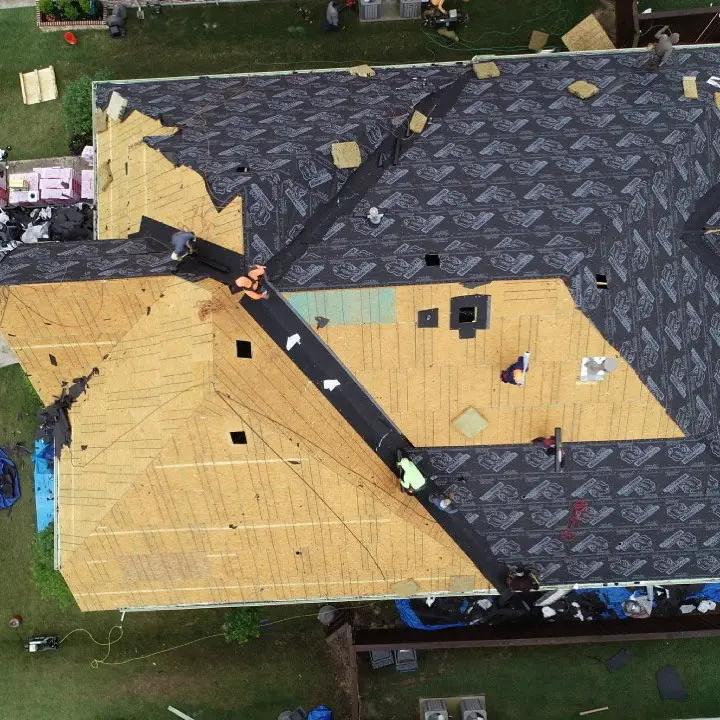
This is the loudest, messiest part. The crew strips the old shingles, underlayment and usually the old flashing and pipe boots down to the wood decking. Debris goes down chutes or into the dumpster. Expect constant scraping and thumping overhead.
Late morning: decking inspection and repairs
With the roof stripped, the crew can finally see the decking. Soft, rotted or delaminated sheets get cut out and replaced. This is the most common source of surprise costs, so know your contract’s per-sheet price ahead of time. A good crew will show you or photograph the damaged wood.
Midday: dry-in
The crew installs drip edge, ice and water barrier in valleys and around penetrations, and underlayment across the deck. Once this layer is down, the house is protected from rain even before shingles go on. A responsible crew does not open more roof than it can dry in the same day. Our guide to underlayment and ventilation explains what each layer does.
Afternoon: shingles, flashing and vents
Starter strips go on at the eaves and rakes, then shingles course by course. Flashing is installed at walls, chimneys and skylights, pipe boots replaced, and ridge vents or other ventilation installed. Hip and ridge caps finish the job.
The first thing I look at when a roof is finished is the flashing where the roof meets a wall or chimney. Shingles are easy to see; flashing is where leaks start.
Late afternoon: cleanup
The crew clears debris, hauls off the old material, and sweeps the yard, driveway and beds for nails, usually with a rolling magnet. Owens Corning advises asking for a second nail sweep if you are not satisfied, and agreeing on cleanup expectations before the work starts.
What changes on a two-day job or a different material?
A one-day job is common on a simple, single-story ranch. Plenty of DFW homes are not that. A tall two-story house in Frisco or McKinney with a steep pitch, several valleys and a couple of dormers often runs into a second day, and that changes a few things for you.
- Overnight protection. At the end of day one, every opened section should be dried in with underlayment, and any loose material secured. Ask the foreman to show you what was left open, if anything, before the crew leaves.
- Two days of noise and parking. The dumpster and materials stay in place, so plan for your driveway to be unavailable a little longer.
- Decking decisions on day one. If wood replacement comes up, you will usually hear about it the first morning. Decide quickly so the crew can keep going.
Material changes the picture too. Tile, slate and many metal systems take longer than asphalt, as the IKO guide notes, and they often involve different underlayments, battens or trim. If you are weighing a switch, our metal roofing page and the guide to tile and slate roofs explain what installation involves.
Older homes in Lakewood, Preston Hollow and the Park Cities can bring their own surprises: more than one layer of old roofing, board decking instead of plywood sheets, or chimney flashing that has been patched for decades. None of that is unusual, but it is worth asking during the estimate whether the roofer expects any of it on your house.
Finally, ask practical questions ahead of time: whether the crew needs an outdoor outlet, whether a portable toilet will be placed on site (Owens Corning mentions one is removed at the end of many jobs), and who to call during the day if something comes up.
What should you check at the final walkthrough?
The contractor should walk the job with you. Bring this list:
- Shingle product and color match the contract
- Flashing at walls, chimneys and skylights looks new and tight
- Pipe boots and vents are replaced and sealed
- Gutters are clear of debris and not bent from ladders
- No shingles or nails left in beds, grass or the driveway
- Attic shows no daylight through new decking where it should not
- Decking replacement count matches what you were told
- Any damage to siding, windows, AC units or landscaping is noted in writing
Owens Corning’s guide also mentions a final inspection for proper installation and defects, and reminds homeowners to register the warranty. Ask for the registration confirmation and the permit’s final inspection result where your city requires one. Our roof warranty guide explains why registration matters.
What can go wrong on replacement day?
Most replacements are uneventful. When something goes wrong, it is usually one of these:
- Weather. A storm rolls in mid-job. The fix is a crew that dries in as it goes.
- Hidden decking damage. More sheets than expected. The fix is a per-sheet price in the contract.
- Nails in the driveway. The fix is a thorough magnet sweep and a second one if needed.
- Damage to gutters or siding. Note it at the walkthrough. If you need gutter work anyway, our gutters page explains how it fits with a re-roof.
- Materials mismatch. Wrong color delivered. Check the bundles when they arrive.
If your new roof is part of an insurance claim, also read the Texas roof insurance claim process, since the final payment of recoverable depreciation often depends on the completed invoice.
After the roof is on
Keep your contract, invoice, permit, warranty registration and photos together. Watch the ceilings after the first heavy rain. If anything looks off, call the installer first and put it in writing. For long-term care, our roof maintenance checklist for Texas covers the simple seasonal checks that keep a roof healthy.
Ready to plan your roof replacement?
Chris inspects the roof with you, explains what the job involves on your house, and gives you a written estimate after a free inspection. Learn more about our roof replacement service, then call or text (214) 687-1951, 24/7, or book a free roof inspection.
Questions people ask next
Do I need to be home during a roof replacement?
Not all day, but be reachable. Be there at the start to confirm the shingle color, dumpster spot and access, and again at the end for the walkthrough. If decking needs replacing after tear-off, the crew may need your approval quickly, so keep your phone close.
Can a roof be replaced in the rain?
Crews should not install shingles in rain, and a responsible roofer will not tear off more roof than it can dry in the same day. In North Texas spring, pop-up storms are common, so ask how the crew protects open sections and what happens to the schedule if storms are forecast.
Is it safe to stay in the house during a roof replacement?
Yes, most people stay home. Expect loud hammering and vibration for much of the day, so keep children and pets away from the work zone and stay out of the yard near the drip line where debris falls. Working from home may be difficult during tear-off.
Will a new roof damage my landscaping or driveway?
There is some risk from falling debris and dumpster weight. Ask the roofer how they protect beds and shrubs, where the dumpster goes, and whether they use plywood under it on a driveway. Point out sprinkler heads, septic lines and delicate plants before work starts.
How long after a roof replacement can solar panels or a satellite dish go back up?
As soon as the roof is complete, but the installer must flash every penetration correctly or it can cause leaks and affect warranty coverage. Coordinate removal and reinstall with your solar company before the roofing date so the roof is not left with open holes.
Sources
Chris Grimes owns Verde Roofing in Plano, Texas, a locally owned residential and commercial roofer serving Dallas–Fort Worth. Verde is an NTRCA Accredited Member, an RCAT member and a Dallas Observer Best of Dallas Best Roofer winner (readers’ choice) in 2021, 2022 and 2023.
Keep reading
Related guides
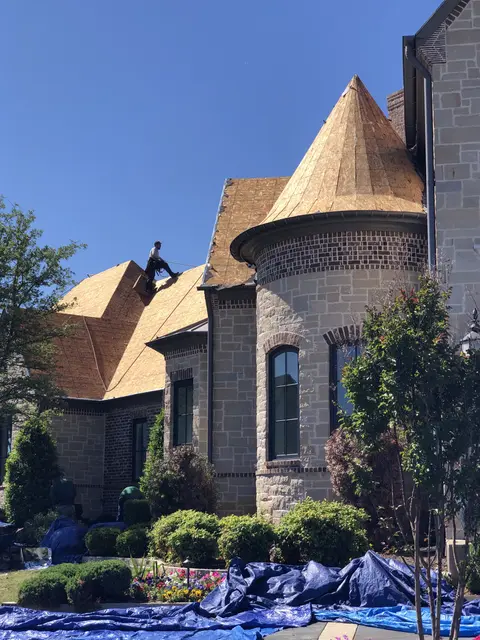 Cost & financingHow Much Does a New Roof Cost in Dallas–Fort Worth?National cost guides put a full asphalt shingle replacement at roughly $3.75 to $11 per square foot of roof (Fixr, 2026), which works out to about…Read the guide
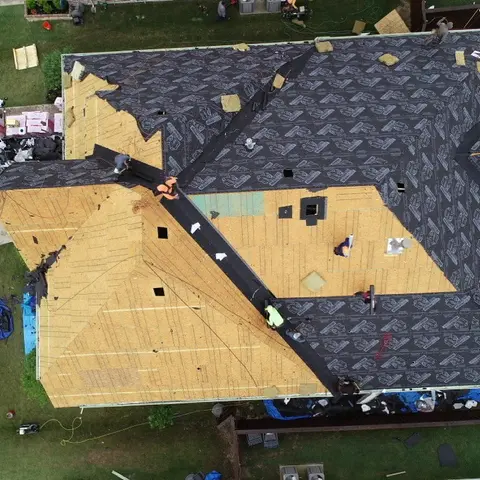 Roofing materialsUnderlayment, Ventilation and Decking: The Parts of a Roof You Don't SeeUnder the shingles sit the decking (plywood or OSB), underlayment (synthetic or felt), self-adhered ice and water barrier at valleys and other leak-prone spots, drip edge…Read the guide
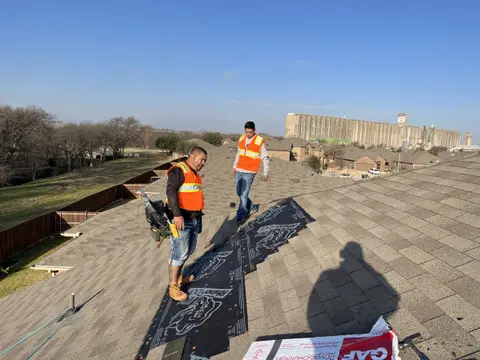 Hiring a rooferRoof Warranties Explained: Manufacturer vs. WorkmanshipA new roof usually carries two warranties. The manufacturer’s warranty covers defects in the shingles and accessories; the contractor’s workmanship warranty covers installation mistakes. Neither covers…Read the guide