Roofers for an Older House in Richardson: What to Look For
 By Chris Grimes, owner of Verde RoofingPublished November 6, 2026 · 9 min read
In short
Verde Roofing, a locally owned roofer based next door in Plano, replaces and repairs roofs on older Richardson homes. Owner Chris Grimes inspects the roof and attic with you, photographs what he finds and gives a free written estimate; call or text (214) 687-1951. Verde is an NTRCA Accredited Member with a 5.0 rating from 54 Google reviews. With any roofer, check that the estimate prices decking, layers and flashing in writing.
Key takeaways
- On an older house the cost surprises sit under the shingles: extra layers, plank decking, worn flashing and thin ventilation.
- The 2021 International Residential Code does not allow new shingles over a roof that already has two or more layers, and a replacement means removal down to the deck.
- The same code sets a minimum slope of 2:12 for asphalt shingles and requires double underlayment from 2:12 up to 4:12.
- Fixr's 2026 guide puts decking replacement at $2 to $8 per square foot, so ask for a unit price before the tear-off starts.
- Age alone is not a reason to replace; a sound older roof with one failed detail usually needs a repair.
Much of Richardson was built between the 1950s and the 1970s: single-story brick ranch homes with long, low rooflines, deep eaves and mature trees overhead. Those houses have usually been reroofed more than once, by different crews, under different rules. The shingles you see from the street are only the latest chapter.
That history is why choosing a roofer for an older house is a different job from choosing one for a ten-year-old home in a newer subdivision. The skill that matters is less about laying shingles and more about reading what is underneath them before the price is set.
What is different about the roof on an older Richardson house?
A newer roof is fairly predictable: one layer of shingles over plywood or OSB sheets, with modern underlayment and vents. An older roof can hold several things a quick drive-by estimate will miss.
| What an older roof may hide | Why it matters | What to ask the roofer |
|---|---|---|
| A second layer of shingles | More tear-off labor and disposal; hidden condition of the bottom layer | How many layers did you count, and where did you check? |
| Board (plank) decking instead of sheets | Gaps, splits and knots affect how shingles nail and lie | What will you do if the boards are gapped or split? |
| Low-slope sections | Shingles have a minimum slope; porch and patio tie-ins often fall below it | Which areas are too low for shingles, and what goes there instead? |
| Original or reused flashing | Old metal at the chimney and walls is a common leak source | Which flashing is new, and which is being reused? |
| Few roof vents and blocked soffits | Trapped attic heat ages shingles and strains the air conditioner | Where does air enter the attic and where does it leave? |
| Rotted fascia or eave boards | Deep eaves on ranch homes collect water at the edges | Is fascia repair priced, and at what unit cost? |
None of these is a reason to panic. Each is a reason to want a roofer who looks first and prices second.
Can new shingles go over the old ones?
On many older homes, someone already did that once. Laying a new roof over an existing one was a common way to save money, and plenty of mid-century houses still carry two layers.
The 2021 International Residential Code, the model code Texas cities adopt with their own amendments, draws a clear line. Section R908.3.1.1 says a roof recover is not permitted where the existing roof is water soaked or too deteriorated to be an adequate base, or where the roof already has two or more applications of any type of roof covering. Section R908.3 says a roof replacement includes removing the existing layers down to the roof deck.
In practice, that means a two-layer roof comes off completely. Even where one more layer would be allowed, a full tear-off is usually the better choice on an older house, because it is the only way to see the decking. Your city's adopted edition and amendments are what govern your address, so confirm permit requirements with Richardson's building inspection department or have the roofer do it in writing. Our repair or replace guide explains the trade-offs of roofing over in more detail.
What if the decking is old boards instead of plywood?
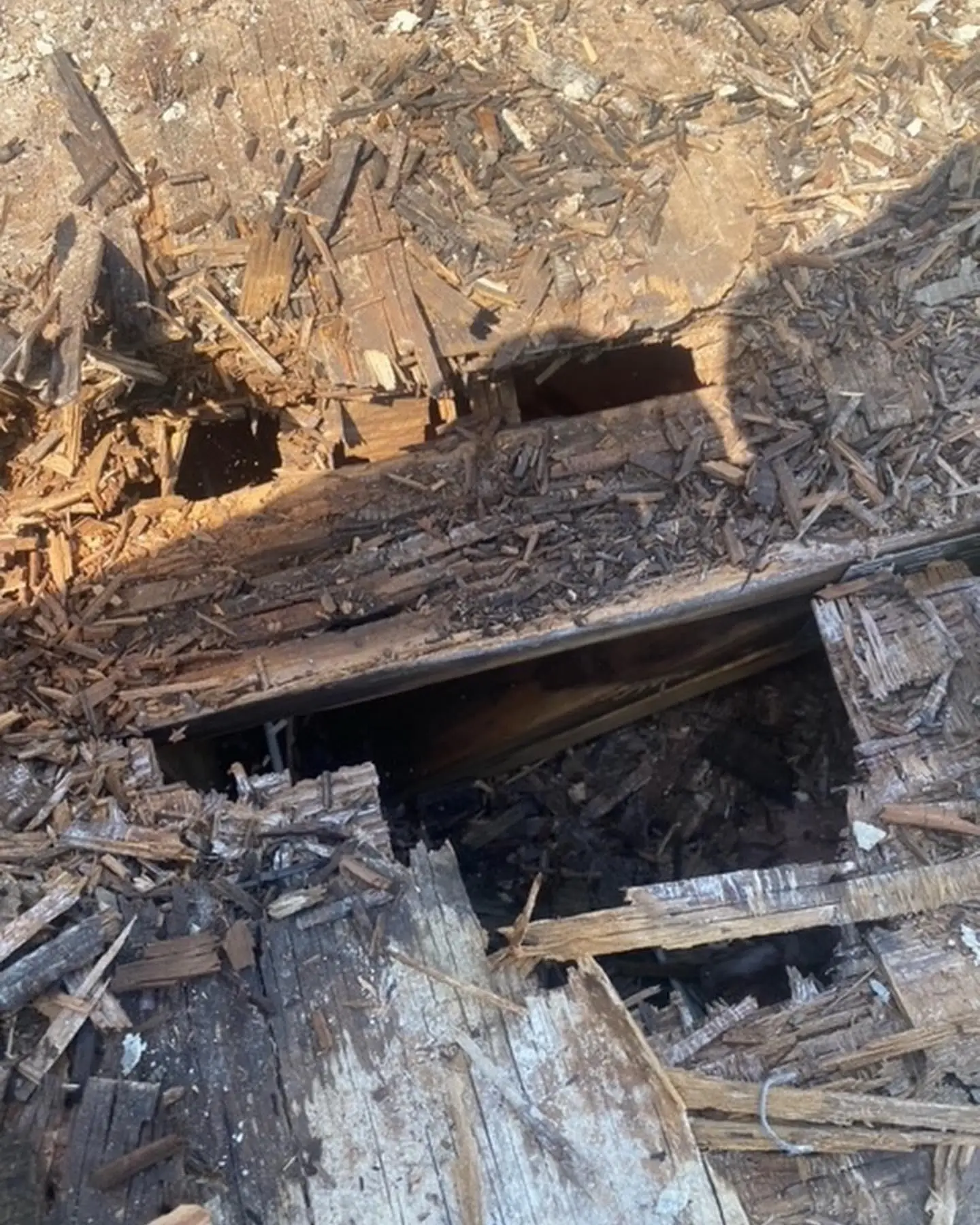
Many houses of this era were decked with solid lumber boards rather than the plywood or OSB sheets used now. Board decking is not a defect. Sound, tight boards can hold a roof for a long time.
The trouble comes with age. Boards shrink and leave gaps, split along the grain, cup, or rot near the eaves and around old leaks. The code (Section R905.2.1) requires asphalt shingles to be fastened to solidly sheathed decks, and shingle manufacturers publish their own deck requirements in their installation instructions. A nail driven into a gap or a split holds nothing, and a shingle bridging an uneven board shows it from the street.
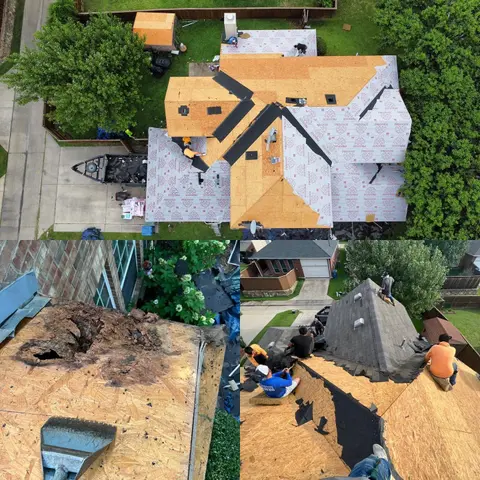
A roofer has three honest options once the old roof is off: keep sound boards and replace the bad ones, sheet over the boards with new panels, or remove and replace the decking in the worst areas. Which is right depends on what the tear-off reveals, and nobody can know for sure from the ground. What you can insist on is a unit price in the estimate and photos of anything replaced. The hidden layers are covered in depth in our guide to underlayment, ventilation and decking.
When I look at an older house, I go into the attic before I talk about price, because the underside of the deck tells me whether I am looking at boards or sheets, where old leaks ran and how the attic breathes.
Is my roof too low-sloped for shingles?
Ranch homes are known for gentle roof pitches, and additions make them gentler: a den built onto the back, a covered patio, a converted carport. These tie-ins are where older roofs leak most stubbornly.
The code is specific here as well. Section R905.2.2 allows asphalt shingles only on slopes of 2:12 or greater, meaning the roof rises 2 inches for every 12 inches of run, and requires double underlayment on slopes from 2:12 up to 4:12. Below 2:12, shingles are the wrong material no matter how carefully they are laid.
Ask the roofer to measure the slope of every section, not only the main roof. A low section may need a membrane or metal system designed for low slopes, and the estimate should say exactly which product goes where. If a past roofer simply ran shingles across a nearly flat patio cover, replacing them with more shingles repeats the mistake.
What does replacing an older roof typically cost?
Published national figures give a frame of reference, not a quote. Fixr's 2026 guide puts the average roof replacement at about $10,000, with most projects between $7,500 and $14,000, and says labor makes up 40% to 60% of the total.
The older-house items are what move a job within or beyond that range. The same Fixr guide lists:
- Tear-off: about $50 per roofing square including dump fees, rising toward $150 per square for multiple layers of asphalt shingles or heavier materials. A square is 100 square feet of roof.
- Decking replacement: $2 to $8 per square foot.
- Permit: $100 to $500, depending on the city.
These are Fixr's published ranges, not Verde's prices. Roof size, pitch, the number of layers, how much decking fails, the material you choose and access around trees and fences all change the number. Our DFW roof replacement cost guide breaks down each factor, and the roof cost calculator gives a ballpark from published ranges before anyone visits.
The mistake to avoid is comparing two bids on the bottom line alone. A low bid that assumes one layer and perfect decking is not cheaper than a higher bid that prices what is really there. It is just less finished.
How do you judge a roofer's experience with older homes?
Texas has no statewide roofing license, so the checking falls to you. Our guide on choosing a roofing contractor in DFW covers insurance, references and credentials. For an older house, add these steps:
- Watch where they look. A roofer who never asks about the attic or checks the roof edge for layers is guessing at the two biggest unknowns.
- Ask for photos. You should see pictures of the layers at the eave, the underside of the deck, the chimney flashing and any low-slope tie-in.
- Get the unknowns priced. The estimate should state the number of layers assumed and a unit price for decking and fascia replacement.
- Have flashing listed item by item. New, reused or reset, for the chimney, walls, valleys and pipe boots.
- Ask who confirms the permit. Get the answer, and the permit itself, in writing.
- Ask what happens on tear-off day if they find a surprise. A good answer includes a phone call, photos and your approval before extra work.
- Ask for the workmanship warranty in writing, along with the manufacturer warranty for the shingle you choose.
Our guide on how to read a roofing estimate shows what each of those lines should look like on paper.
When does an older house not need a new roof?
The age of the house says little about the age of the roof. A 1962 ranch may be wearing shingles installed a few years ago.
What matters is the condition of the current roof. InterNACHI's life expectancy chart lists about 20 years for 3-tab asphalt shingles and 30 for architectural shingles, and warns that hot climates drastically reduce asphalt shingle life. Treat those as outer guides in North Texas and look at the roof itself: our guide to how long a roof lasts in Texas explains what to look for.
If the shingles are still flexible and holding their granules, and the problem is one cracked pipe boot, a rusted piece of chimney flashing or a few shingles lost to wind, that is a roof repair, not a replacement. The same is true of a single low-slope patio section that leaks while the main roof is fine: fix that section with the right material and leave the rest alone.
Insurance is a separate question from wear. The Texas Department of Insurance notes that an insurer will not pay for a new roof just because it is old or worn out. If a storm did the damage, that is different, and you should have it documented before you decide anything.
How does Verde Roofing approach an older Richardson home?
Verde Roofing is based at 5055 W Park Blvd in Plano, the city on Richardson's northern border, and works throughout Collin and Dallas counties, which between them contain all of Richardson. We have no office in Richardson itself; you can see every county we cover on our service areas page.
Chris Grimes, the owner, inspects the roof with you and checks the attic when he can reach it. He photographs what he finds and explains whether a repair would carry the roof before anyone talks about a new one. If replacement is the better use of your money, you get a free written estimate. Our roof replacement work includes a full tear-off so the decking can be checked and damaged boards replaced where needed, with new underlayment, flashing and ventilation, and a choice of Malarkey or Owens Corning shingles.
For checking us out: Verde holds NTRCA Accredited Member status, belongs to RCAT, and was the readers' choice for Best Roofer in the Dallas Observer's Best of Dallas in 2021, 2022 and 2023. You can read what customers say on our reviews page.
Start with a look under the surface
If your Richardson home is due for a roof, or you are not sure whether it is, call or text (214) 687-1951, 24/7, or book a free roof inspection. Chris will walk the roof with you, show you the photos and put the unknowns in writing before you commit to anything.
Questions people ask next
Can a roofer tell how many shingle layers I have without tearing anything off?
Usually, yes. The edge of the roof at the eave or rake shows the layers stacked like pages of a book, and a roofer can lift the drip edge or look at a gable end to count them. A very thick, wavy edge or shingles that sit unusually high against the flashing are also clues. Ask for a photo of the roof edge with the estimate.
Do I have to bring the whole roof up to current code when I reroof an older house?
A replacement is generally built to the code your city has adopted at the time of the permit, which can add items the old roof never had, such as drip edge or more ventilation. The city's building inspection office decides what applies to your address. Ask the roofer to list code items as separate lines so you can see what each one costs.
Will my homeowners insurance treat an old roof differently?
It can. The Texas Department of Insurance says some policies pay less if the roof is older or showing wear, and that some companies switch to actual cash value coverage as roofs age. Insurers also do not pay for a roof simply because it is old or worn out. Read your declarations page and ask your agent how your roof is covered before a storm tests it.
Should I add attic ventilation when I replace the roof on a 1960s house?
Often it makes sense, because the roof is open and the cost of adding vents is lowest then. Many older ranch homes have a few small roof vents and painted-over or insulation-blocked soffit vents. Exhaust and intake have to be balanced, so adding ridge vent alone may not help. Ask the roofer to explain where air will enter and where it will leave.
Can the old gutters and fascia stay when the roof is replaced?
They can if they are sound. On older houses the fascia boards behind the gutters sometimes have rot that only shows once the old drip edge comes off. A careful roofer checks the fascia and the gutter attachment during the inspection and tells you beforehand whether sections need replacing, rather than discovering it halfway through installation day.
Sources
Chris Grimes owns Verde Roofing in Plano, Texas, a locally owned residential and commercial roofer serving Dallas–Fort Worth. Verde is an NTRCA Accredited Member, an RCAT member and a Dallas Observer Best of Dallas Best Roofer winner (readers’ choice) in 2021, 2022 and 2023.
Keep reading
Related guides
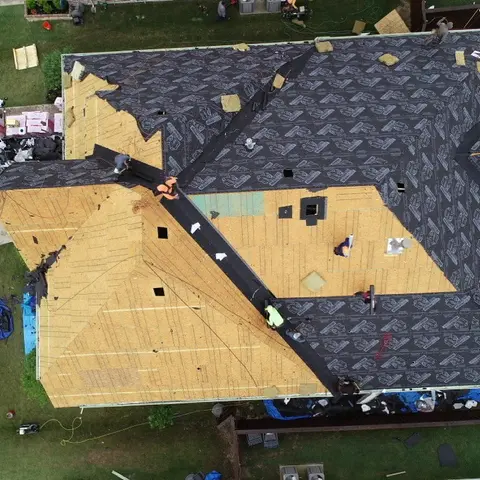 Roofing materialsUnderlayment, Ventilation and Decking: The Parts of a Roof You Don't SeeUnder the shingles sit the decking (plywood or OSB), underlayment (synthetic or felt), self-adhered ice and water barrier at valleys and other leak-prone spots, drip edge…Read the guide
 Repair or replaceHow Long Does a Roof Last in Texas? Lifespan by MaterialPublished life-expectancy charts give about 20 years for 3-tab asphalt shingles, about 30 for architectural shingles, 40 to 80 for metal and far longer for clay…Read the guide
 Roofers by citySmall Roof Repair in Richardson: Who Takes On Minor JobsVerde Roofing, a locally owned roofer based in neighboring Plano, repairs roofs in Richardson, including small jobs such as a cracked pipe boot, a few missing…Read the guide