Roofing and Solar From One Company in Plano
 By Chris Grimes, owner of Verde RoofingPublished November 2, 2026 · 9 min read
In short
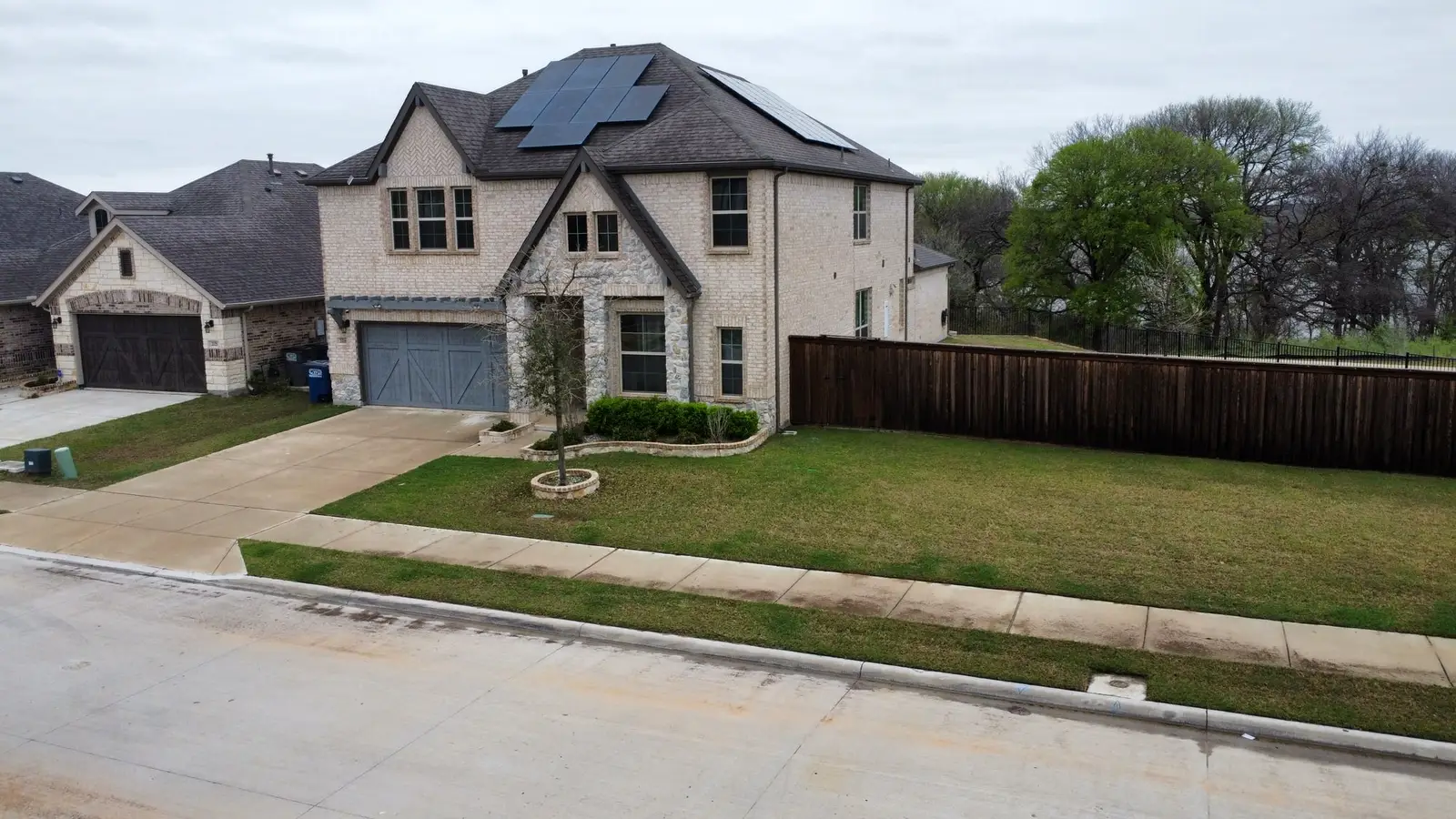
Yes. Verde Roofing, also known as Verde Roofing & Solar, is a locally owned company based in Plano that replaces roofs and installs rooftop solar for homes and businesses. Owner Chris Grimes inspects the roof with you first, photographs what he finds and gives a free written estimate; call or text (214) 687-1951, 24/7. With any roofing-and-solar company, check who is responsible in writing for leaks at the panel mounts.
Key takeaways
- The U.S. Department of Energy says solar panels last about 25 to 30 years, so the roof under them should be judged before panels go on.
- Fixr puts removing and reinstalling a 14 to 16 panel system for a roof replacement at $2,800 to $4,800, a cost you avoid by doing the roof first.
- One company for both means one party answers for every mount that penetrates the roof.
- The IRS says the residential clean energy credit under §25D is not allowed for expenditures made after December 31, 2025.
- Texas Property Code §202.010 limits an HOA's power to ban rooftop solar but still lets it require prior approval and set placement rules.
Solar is usually sold by solar companies and roofs by roofers, and most homeowners deal with them years apart. The trouble starts when the two meet on the same roof: panels bolted through shingles that are halfway through their life, or a leak under an array that neither company wants to own.
So the question of whether one Plano company does both is a sensible one. The short answer is yes. The longer answer is about what "both" should mean, because a roofer that subcontracts solar and a solar seller that subcontracts roofing can each claim it.
What should "roofing and solar from one company" actually mean?
Three arrangements get described the same way in a sales conversation:
- One company contracts for the roof and the solar. You sign with one business, and that business answers for both scopes.
- A solar company adds a roof to make the sale. The roof is arranged through a partner and may be priced into a solar loan.
- A roofer refers you to a solar installer. Two contracts, two warranties, a friendly introduction.
Only the first gives you what you are probably looking for, which is a single party responsible for the place where the two systems touch. To find out which one you are being offered, ask plainly:
- Whose name is on the contract for the roof, and whose for the solar?
- Who inspects the roof before the system is designed, and is that person a roofer?
- Who installs the mounts and flashes them?
- If water comes in under the array in year three, who do I call, and is that in writing?
Why does the roof come before the panels?
Because the two have to last together. The U.S. Department of Energy notes that solar panels last about 25 to 30 years. Whatever is under them is hidden and hard to reach for that whole period.
If the roof wears out or is damaged first, the array has to be disconnected, removed, stored and reinstalled so the roofing can be done. Fixr's guide to that job, last updated in January 2025, puts the national average at $3,800, with a typical range of $2,800 to $4,800 for 14 to 16 panels, or roughly $200 to $300 per panel. That is money spent to end up with the same solar system you already had.
North Texas adds a second reason. Hail is a regular part of spring here, and a roof can carry storm damage its owner has never noticed. Panels installed over a roof with an unfiled, legitimate storm claim turn a straightforward replacement into a more complicated one later.
A roof inspection ahead of solar should answer four things:
- How much useful life the roofing has left, in the inspector's honest opinion
- Whether there is hail or wind damage now
- The condition of the decking and flashing on the planes that would hold panels
- Whether attic ventilation is adequate, since vents and panels compete for the same roof space
Our guide to how long a roof lasts in Texas gives the lifespan background, and 12 signs you need a new roof lists what to look for from the ground.
When I check a roof ahead of solar, I pay most attention to the slopes the panels will cover. Those are the shingles nobody will look at again for a long time, so they need to be the best ones on the house.
Who is responsible for the holes in your roof?
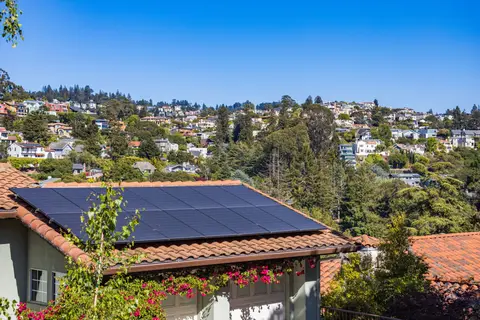
A rooftop array is held down by mounts fastened through the roofing into the framing. Each one is a penetration, and each one has to be flashed so water running down the slope goes around it. This is roofing work, whoever does it.
The table shows how responsibility usually divides under the two ways of buying.
| Question | Separate roofer and solar installer | One company for both |
|---|---|---|
| Who judges the roof before design? | Often the solar salesperson, from photos or satellite images | A roofer, on the roof |
| Who flashes the mounts? | The solar crew | The same company that installed or inspected the roof |
| Leak under the array | Each side may say the other caused it | One party to call |
| Roof workmanship warranty after mounts go in | May be affected; depends on the roofer's terms | One set of terms from one company; still get it in writing |
| Scheduling a new roof and solar | You coordinate two calendars | One sequence |
| After hail | Two inspections, and a third party to remove panels | One inspection of roof and array, one plan |
Whichever way you buy, get the answer in writing. Ask for the document that says who covers leaks at the attachments and for how long, and how the installation affects the shingle manufacturer's warranty. Our guide to roof warranties explains the difference between manufacturer and workmanship coverage.
How is a combined roof and solar project sequenced?
When the roof needs replacing, both jobs can be planned as one. The order matters more than the speed.
- Roof inspection. The roof is inspected and photographed, and you get a clear opinion: keep, repair or replace.
- Settle any storm claim. If there is storm damage and you decide to file, the claim and the roof work come before panels. You file and own the claim; a roofer documents and meets the adjuster.
- Solar consultation and layout. Goals, usage, roof planes, shade and equipment locations are worked out, with the roof plan in hand.
- HOA application. If you live in a deed-restricted subdivision, submit the layout for approval now.
- Written estimate. One document covering the roof scope and the solar system, with each priced on its own lines.
- Permits and utility paperwork. Grid-tied rooftop solar typically involves city permitting and the utility that delivers your power. Ask who files each application.
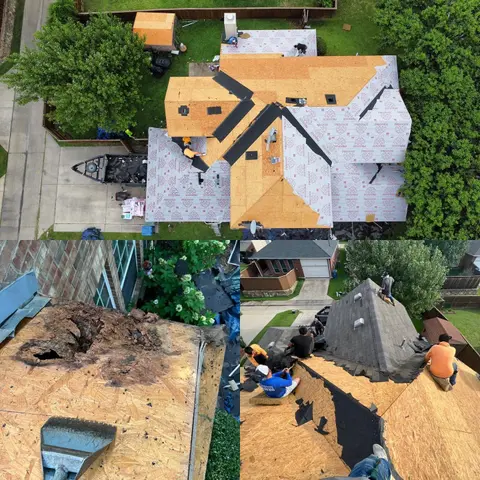
- Roof work. Tear-off, decking repair, underlayment, flashing and shingles are completed and checked.
- Solar installation. Mounts are attached and flashed, then racking, panels and electrical.
- Inspection and activation. The system is turned on only after the required approvals.
Plan vents and pipe penetrations during step 3. On a replacement, some can be positioned to leave cleaner planes for panels, which is far easier than working around them later. If the roof is being replaced anyway, the best shingles for Texas hail explains impact-rated options worth considering under an array.
What has changed about solar tax credits and costs?
A great deal of solar advertising still mentions a 30 percent federal tax credit for homeowners. For new home systems, that is out of date.
The IRS states that the residential clean energy credit under section 25D will not be allowed for any expenditures made after December 31, 2025, and that an expenditure is treated as made when the original installation of the item is completed. Rules for businesses are separate and have their own timelines.
What to do with that:
- Do not sign anything that depends on a federal residential credit to make the numbers work.
- Ask a tax professional about your own situation, especially for a business property.
- Ask for the assumptions behind any savings figure in writing: system production, your electricity rate, what your retail electric provider pays for exported power, and how those change over time.
Nobody can honestly promise you a payback period. It depends on your usage, your plan, the roof's sun exposure and how long you stay in the house.
What does a home solar system cost in Texas?
Fixr's Texas solar guide, updated in January 2026, lists an average cost of $21,460 before incentives for an average 7.1 kW system, or about $2.85 per watt. Your number will move with system size, panel and inverter choices, roof pitch and height, the number of roof planes used, and any electrical panel work.
Those are published averages, not Verde's prices. Verde's price for the solar system and any roof work is a written estimate after a free inspection. For roof budgeting, see how much a new roof costs in Dallas–Fort Worth. Our full guide to solar panels and your roof goes further into Texas electricity plans, buyback and the property tax treatment of solar.
Can a Plano HOA stop you from installing solar?
Generally not outright, but it can shape where and how. Many Plano subdivisions have architectural review, so this deserves an early look.
Texas Property Code §202.010 says a property owners' association may not prohibit or restrict an owner from installing a solar energy device, with listed exceptions. Among them, an association may restrict a roof-mounted device that:
- extends higher than or beyond the roofline
- does not conform to the slope of the roof
- has a frame, brackets or visible piping and wiring that are not silver, bronze or black
- is placed outside an area the association designated, unless a different location would raise estimated annual energy production by more than 10 percent
- voids material warranties as installed
- was installed without the association's prior approval
That last point is the practical one. The statute protects your right to install, and it also lets the association require you to ask first. Submit the application before work begins and keep the written approval. The law also has a narrow exception for small developments still in their development period. For anything contested, read your governing documents and talk to an attorney.
When should you not combine the jobs, or skip solar?
A company that does both should be willing to tell you when you need only one, or neither.
- Your roof is young and undamaged. You do not need a new roof to go solar. Keep it.
- Your roof needs a repair, not a replacement. Fix the flashing or the few damaged shingles and reassess; see repair or replace your roof.
- Your best roof planes are shaded. Mature trees shade many roofs in established neighborhoods, and heavy shade may make panels a poor fit.
- You expect to move soon. A long-lived system makes less sense on a house you will leave in a few years, and a leased system has to be transferred or bought out at sale.
- The roof is the urgent problem. If it leaks, do the roof now and treat solar as a later decision.
- The numbers only work with a credit that no longer exists. Then they do not work.
How does Verde approach roofing and solar in Plano?
Verde Roofing, also known as Verde Roofing & Solar, is locally owned and based at 5055 W Park Blvd in Plano. It replaces roofs and installs rooftop solar for homes and businesses, so the roof and the system can be planned as one project.
Every solar conversation starts with the roof. Owner Chris Grimes inspects it with you, photographs what he finds and tells you whether it has enough life left to sit under panels. If it does not, a roof replacement with Malarkey or Owens Corning shingles is completed first and the solar is installed after. You get a written estimate for the system and any roof work. Verde does not promise any tax credit, rebate or payback period.
Verde is an NTRCA Accredited Member and an RCAT member, was voted Best Roofer by Dallas Observer readers in 2021, 2022 and 2023, and holds a 5.0 rating from 54 Google reviews. Ask Verde the same questions this guide suggests for anyone, including how mounts are flashed and what the warranties say in writing. Homeowners up the Tollway can also read getting one quote for a new roof and solar panels in Frisco.
Start with the roof under the panels
Call or text (214) 687-1951, 24/7, or book a free roof inspection. Chris will check the roof with you, tell you honestly whether it is ready for solar, and give you a written estimate for whatever it needs.
Questions people ask next
Can solar panels be added to a roof I replaced a few years ago?
Usually, if the roof is in good condition with no storm damage. Have it inspected first, because hail may have hit it since it was installed. Also read your roofing warranties: some set conditions for rooftop attachments. Ask the solar installer how each mount will be flashed and whether the method is consistent with the shingle manufacturer's instructions.
Which roof planes are best for solar on a Plano house?
In North Texas, south-facing planes generally receive the most sun over the year, with east and west faces producing less and north faces least. Shade from trees, chimneys and neighboring two-story homes matters as much as direction. A roof cut into many small hips and valleys may also limit how many panels fit. Ask for the layout and the production assumptions in writing.
Does my homeowners insurance cover rooftop solar panels in Texas?
It depends on your policy. Some policies treat owned rooftop panels as part of the dwelling, others limit or exclude them, and leased systems may be handled differently. Call your agent before you sign a solar contract, ask the question in writing, and ask whether adding panels changes your premium or your wind and hail deductible.
What happens to my solar panels if hail damages the roof later?
The panels usually have to come off so the roof under them can be repaired or replaced, then go back on. Whether your insurer pays for that removal and reinstallation depends on your policy, so ask your agent in advance. Have both the roof and the array inspected and photographed after a storm, before anything is moved.
Is a solar attic fan the same as solar panels?
No. A solar attic fan is a roof-mounted vent fan powered by its own small built-in panel. It moves hot air out of the attic and does not supply electricity to the house. Verde features Attic Breeze solar attic fans. Whether one helps depends on the attic's existing intake and exhaust ventilation, which should be checked first.
Sources
- U.S. Department of Energy: Replacing your roof? It's a great time to add solar
- Fixr: Cost to remove solar panels to replace a roof (updated January 2025)
- IRS: FAQs on modification of sections 25C, 25D and other credits under Public Law 119-21
- Texas Property Code §202.010: Regulation of solar energy devices
- Fixr: Solar panel installation cost in Texas (updated January 2026)
Chris Grimes owns Verde Roofing in Plano, Texas, a locally owned residential and commercial roofer serving Dallas–Fort Worth. Verde is an NTRCA Accredited Member, an RCAT member and a Dallas Observer Best of Dallas Best Roofer winner (readers’ choice) in 2021, 2022 and 2023.
Keep reading
Related guides
 Gutters, siding, paint & solarSolar Panels and Your Roof: Replace First, Costs and Incentives in TexasIf your roof is within several years of replacement, replace it before installing solar, because panels must be removed and reinstalled to reroof later; Fixr puts…Read the guide
 Repair or replaceHow Long Does a Roof Last in Texas? Lifespan by MaterialPublished life-expectancy charts give about 20 years for 3-tab asphalt shingles, about 30 for architectural shingles, 40 to 80 for metal and far longer for clay…Read the guide
 Roofers by cityNew Roof and Solar Panels in Frisco: Getting One Quote for BothVerde Roofing, also known as Verde Roofing & Solar, is a locally owned roofer based in Plano that replaces roofs and installs rooftop solar in Frisco…Read the guide