Emergency Roof Tarping: When You Need It and How It Should Be Done
 By Chris Grimes, owner of Verde RoofingPublished September 24, 2026 · 8 min read
In short
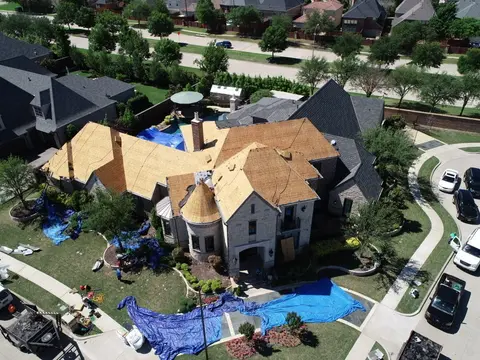
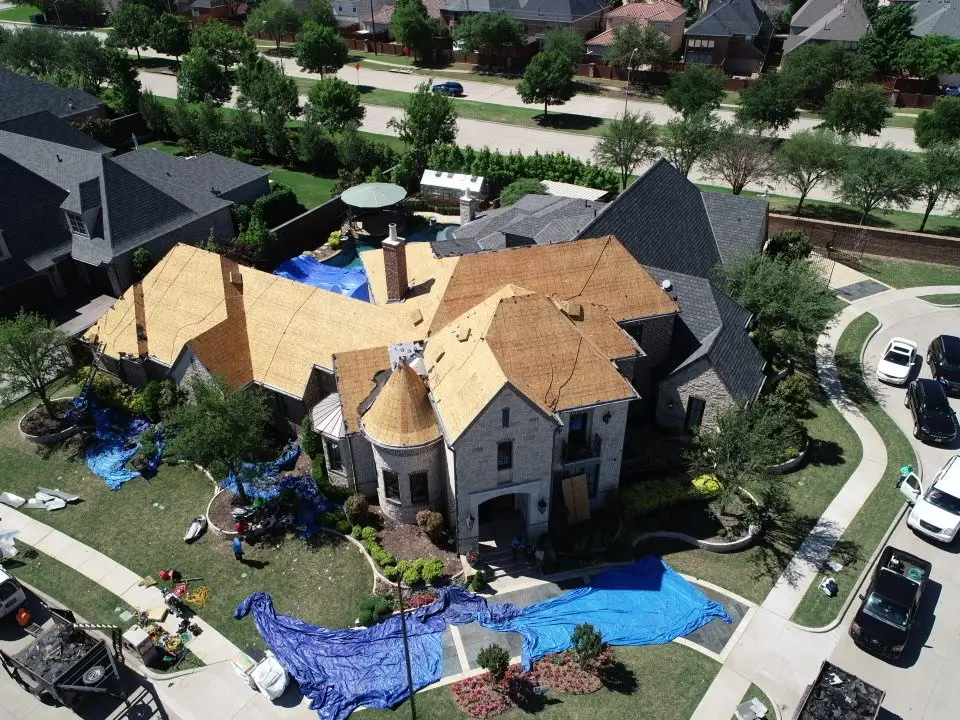
You need an emergency tarp when a storm leaves your roof open or leaking and a permanent repair cannot happen right away. HomeGuide puts the typical tarping job at $175 to $700, with after-hours work at $1.00 to $2.80 per square foot. A proper tarp is heavy-duty, anchored with wood battens fastened to solid decking, runs over the ridge where possible, and is photographed for your insurance claim.
Key takeaways
- Tarp when water can get in and a permanent repair is days or weeks away; it is a temporary fix, not a repair.
- HomeGuide reports a typical tarping cost of $175 to $700, $0.70 to $2.00 per square foot standard and $1.00 to $2.80 after hours.
- TDI and Triple-I both tell homeowners to prevent further damage, such as with a tarp, and to keep every receipt for reimbursement.
- A good tarp is anchored with wood battens into solid decking, not weighed down with bricks or nailed through the bare tarp.
- HomeGuide says a temporary tarp lasts 60 to 90 days on average, so schedule the real repair promptly.
A limb came through the roof during last night's storm, or the wind peeled off a section of shingles and water is dripping into the upstairs closet. The permanent repair may be days or weeks away while you wait for an adjuster, materials or a dry stretch of weather. What you need right now is to keep the water out.
That is what an emergency tarp is for. Done right, it protects your home and your insurance claim. Done badly, it blows off in the next storm, tears up good shingles, or traps water where you can't see it.
When do you actually need an emergency tarp?
You need a tarp when water can get into the house and a permanent repair cannot happen soon. Typical situations:
- Shingles, underlayment or decking are missing after wind
- A tree or limb punctured the roof
- Hail broke a skylight or punched through a brittle roof
- A leak is active and rain is in the forecast
- Fire, a fallen antenna or other damage opened the roof
You probably do not need a tarp when:
- Hail bruised shingles but nothing is leaking
- A few shingles are creased but still in place and the decking is covered
- A single small leak can be fixed permanently the same week
If you are not sure, a roofer can look the same day and tell you. Our guide to what to do when your roof is leaking covers the inside of the house while you wait.
What does emergency roof tarping cost?
National cost guides give a useful range, but your price depends on the size of the opening, the roof's pitch and height, and the time of day. HomeGuide reports that the average cost to tarp a roof is $175 to $700, that standard installation runs $0.70 to $2.00 per square foot including materials and labor, and that emergency after-hours tarping runs $1.00 to $2.80 per square foot. It adds that an extra $100 to $200 call-out fee may apply outside regular business hours.
HomeGuide's figures by size of the area covered:
| Area covered | Typical total (HomeGuide, standard) |
|---|---|
| 100 sq ft | $70 to $200 |
| 250 sq ft | $175 to $500 |
| 500 sq ft | $350 to $1,000 |
| 1,000 sq ft | $700 to $2,000 |
| 2,000 sq ft | $1,400 to $4,000 |
These are published national ranges, not Verde's prices. HomeGuide lists what moves the price:
- Pitch and size. Steep, large roofs need bigger tarps and more safety setup.
- One story or two. Two-story homes, common across Frisco, McKinney and Prosper, take more time and equipment.
- Roof type. Tile and other materials that can't be nailed through cost more to tarp than asphalt shingles.
- Roof design. More peaks, valleys and planes mean more cutting and fastening.
- Debris removal. Branches or a fallen tree have to come off first, and tree removal is a separate cost.
- Tarp grade. Heavy-duty tarps cost more but last much longer.
Verde's price for any tarp or repair is a written estimate after a free inspection. We provide 24-hour emergency service across DFW, and you can see the area we cover on our service areas page.
How should an emergency tarp be installed?
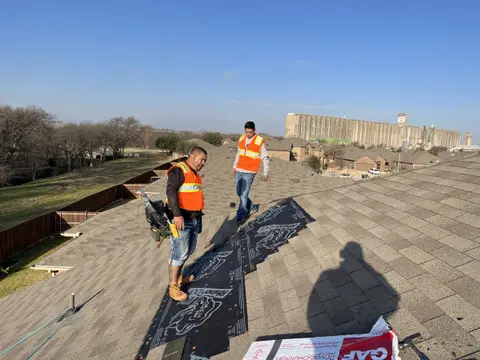
A tarp is only as good as how it is anchored. Here is what a proper installation looks like, step by step:
- Photograph the damage first. Before anything covers the hole, the crew documents it: wide shots, close-ups, and the attic below if water came in.
- Clear debris. Branches, loose shingles and broken decking are removed so the tarp lies flat and can't be punctured.
- Choose the right tarp. It should be heavy-duty and large enough to extend well past the damage on all sides. HomeGuide notes a heavy-duty 10-mil tarp is needed for a tarp meant to last up to two years, while thinner ones last up to three months.
- Run it over the ridge when possible. Water runs downhill. A tarp that starts above the damage and goes over the peak keeps water from running under its top edge.
- Anchor with wood battens. The tarp edges are wrapped around boards, and the boards are fastened through to solid decking. Fastening through the bare tarp lets wind tear it at every nail.
- Seal and check the edges. No loose corners for wind to catch, and nothing that funnels water into the opening.
- Check the inside. Confirm the drip has stopped and dry out what got wet.
- Photograph the finished tarp for your insurance file.
What a bad tarp looks like: bricks or cinder blocks holding it down, a tarp that ends below the damage, nails driven straight through the plastic, or loose edges flapping in the wind. Each of those can cause more damage than the storm did.
When I tarp a roof at night, the goal is simple: get it dry and keep it dry until we can fix it properly. That means taking the extra few minutes to batten it and run it over the ridge, so you aren't calling again after the next gust.
What about tile, metal and flat roofs?
Not every roof takes a tarp the same way. Concrete and clay tile, found on many higher-end homes in areas like Preston Hollow, can't be walked on carelessly or nailed through, so crews protect the tiles and anchor around them, which takes longer. Metal panels need fasteners and sealant chosen so they don't create new leaks. On flat or low-slope roofs, HomeGuide notes the work is harder because water tends to pool under the tarp; the standing water has to be removed first and the tarp wrapped over the edges and secured. If you own a commercial building with a flat roof, see our commercial roofing page.
Should you tarp the roof yourself?
Plenty of handy homeowners can put a tarp over a small hole on a low, dry, single-story roof. The trouble is that emergencies rarely look like that. Storm damage happens in rain, wind and the dark, often on a steep second-story slope covered in wet leaves and loose granules.
A simple test: if you would not walk that roof on a calm, dry afternoon, do not walk it after a storm. Put buckets under the leak, move your belongings, take photos from the ground and inside, and call for help. A fall costs far more than any tarp, and an insurance claim does not get stronger because you risked a ladder at midnight.
How long can a tarp stay on the roof?
Not as long as people hope. HomeGuide reports that a temporary roof tarp lasts 60 to 90 days on average, and that long-term tarping lasts one to two years, depending on the material, installation method and weather. North Texas UV, heat and spring wind are hard on plastic.
While the tarp is on:
- Check it from the ground after every storm and windy day.
- Watch ceilings below the damaged area for new stains.
- Call if edges loosen or the tarp starts to tear.
- Keep moving toward the permanent repair or replacement.
Does insurance pay for emergency tarping in Texas?
In most cases, yes, if the damage that made the tarp necessary is covered. The Texas Department of Insurance advises homeowners after hail or wind to cover holes to keep rain out and save all receipts, because your policy may pay for temporary repairs. TDI's claim guide lists preventing further damage, "such as with a tarp," as one of the steps to getting a claim paid.
Triple-I adds two points worth knowing:
- Most policies expect you to take reasonable steps to protect your property from further damage. Waiting for the adjuster to see an open roof in the rain is not what your policy wants.
- Temporary repair costs count toward your total settlement, so they reduce what is left for the permanent repair. That is one more reason to pay for a tarp done once and done right.
Keep the invoice, photos of the damage before the tarp, and photos of the tarp after. Our guide to documenting roof storm damage shows how to organize them.
What should a tarping invoice and agreement include?
A tarp is a small, separate job. It should come with a simple written price, and it should not lock you into anything else. Look for:
- Company name, local address and phone number
- Date and time of service
- Area covered and materials used
- Price for the tarp, plus any call-out or debris charges
- Photos of the damage and the finished tarp
- No clause assigning your insurance proceeds or committing you to a full roof
Be careful with any contractor who will only tarp if you sign for the whole roof on the spot. The Texas Department of Insurance tells homeowners never to sign a contract with blank spaces and not to pay the full amount up front. You can decide on the permanent work after the adjuster visit and after you have compared estimates, as explained in how to read a roofing estimate.
What happens after the tarp?
The tarp buys time for the real decisions:
- Report the claim if the damage is covered and likely above your deductible.
- Get the roof inspected fully, not only the tarped area. Storms that open one spot often damage others.
- Meet the adjuster. If you'd like, we meet the adjuster on site to show the damage we found, including what was under the tarp in our photos.
- Decide on repair or replacement with a written estimate in hand.
- Schedule the permanent work before the tarp's useful life runs out.
You own the claim and make the decisions with your insurer. Our role, as described on our insurance claim help page, is to inspect, document, meet the adjuster, write the repair estimate and do the work. For hail specifically, see what to do after a hailstorm. For the repair itself, see our storm and hail damage service or roof repair.
Roof open after a storm?
If your roof is open or leaking anywhere in DFW, call or text Verde Roofing at (214) 687-1951. We provide 24-hour emergency service, including tarping. When the weather clears, book a free roof inspection and Chris Grimes will inspect the whole roof with you, photograph the damage, and explain your options for the permanent fix.
Questions people ask next
Does homeowners insurance pay for emergency roof tarping?
Usually, if the damage itself is covered. The Texas Department of Insurance says your policy may pay for temporary repairs and tells you to save all receipts. Triple-I notes temporary repair costs count toward your total settlement. Keep the invoice and before-and-after photos of the tarp.
How long can a tarp stay on a roof?
HomeGuide reports a temporary roof tarp lasts 60 to 90 days on average, and long-term tarping with heavier material can last one to two years. In North Texas sun and wind, thin tarps break down faster. Treat any tarp as a bridge to the permanent repair and check it after every storm.
Can I tarp my own roof?
You can, on a low, dry, single-story roof if you are comfortable on ladders. Most storm damage happens in rain, wind and the dark, and many DFW homes are two stories with steep pitches. If the roof is wet, steep or structurally damaged, leave it to a crew with fall protection.
Will a tarp affect my insurance claim?
A tarp helps your claim by showing you took reasonable steps to prevent further damage, which most policies require. Photograph the damage before the tarp goes on, so the adjuster can see what was under it. A good roofer will take those photos for you.
Do I have to sign a full roofing contract to get a tarp?
No. A tarp is a separate, small job and should have its own price. Be cautious of anyone who makes an emergency tarp conditional on signing a contract for the whole roof or your insurance proceeds. Sign for the tarp only, and decide on the permanent work later.
Sources
Chris Grimes owns Verde Roofing in Plano, Texas, a locally owned residential and commercial roofer serving Dallas–Fort Worth. Verde is an NTRCA Accredited Member, an RCAT member and a Dallas Observer Best of Dallas Best Roofer winner (readers’ choice) in 2021, 2022 and 2023.
Keep reading
Related guides
 Hail & storm damageWhat to Do After a Hailstorm: The First 72 HoursAfter a hailstorm, wait until the storm has fully passed, then check for leaks and stop water from spreading. Photograph damage outside and inside before anything…Read the guide
 Repair or replaceRoof Leaking? What to Do Right Now and How Leaks Get FoundTurn off power to any wet light fixture, catch the water, relieve a bulging ceiling with a small hole over a bucket, move valuables, and photograph…Read the guide
 Hail & storm damageHow to Document Roof Storm Damage for Your Insurance ClaimTo prove roof storm damage, record the storm date, photograph hailstones and dented soft metal with a scale reference, capture wide and close-up photos of the…Read the guide