

What to Do After a Hailstorm: The First 72 Hours
 By Chris Grimes, owner of Verde RoofingPublished October 26, 2026 · 8 min read

In short
After a hailstorm, wait until the storm has fully passed, then check for leaks and stop water from spreading. Photograph damage outside and inside before anything is cleaned up. Keep receipts for any emergency repairs. Get a free roof inspection to confirm whether the roof is damaged, and report real damage to your insurer as soon as you can. Do not sign anything with a door-to-door contractor that day.
Key takeaways
- Stay inside until 30 minutes after the last thunder, as the National Weather Service advises, and never climb a wet roof.
- Photograph damage before cleanup and keep receipts; TDI says your policy may pay for temporary repairs.
- Texas insurers have 15 business days to acknowledge a claim and generally 15 business days to decide after getting what they need, according to TDI.
- In Texas you pay your own deductible; a contractor who offers to waive or absorb it is breaking Business and Commerce Code §27.02.
- A roofer can inspect, document and meet the adjuster, but only a licensed public adjuster may represent you on the claim.
The hail stopped twenty minutes ago. The yard is white, the neighbor's car has a cracked windshield, and you are standing in the kitchen wondering whether the roof over your head just got ruined. In North Texas this happens to thousands of families every spring, and the next three days decide whether the cleanup goes smoothly or turns into months of stress.
Here is the order that works, hour by hour, with the Texas rules that matter along the way.
What should you do in the first hour after hail?
Stay safe first. The National Weather Service advises staying indoors until 30 minutes after the last thunder, because lightning can strike up to 10 miles from a storm. Hail often comes with a second wave of storms behind it in DFW, so check the radar before you step outside.
Then do a quick inside walk:
- Look at ceilings, especially below valleys, chimneys, skylights and the second-floor bathroom.
- Check the attic with a flashlight if you can get in safely. Look for daylight, wet insulation or water running down rafters.
- Check windows and skylights for cracks.
- If water is coming in, put buckets down, move furniture and electronics, and if a ceiling is bulging with water, poke a small hole at the low point so it drains into a bucket instead of collapsing.
- If water is near light fixtures or outlets, turn off that circuit at the breaker.
Do not climb onto the roof, especially if it is wet or covered in hail. That rule holds no matter how handy you are. We explain what a proper temporary cover looks like in emergency roof tarping.
What should you photograph before anything is cleaned up?
The Texas Department of Insurance tells homeowners to take photos and video of the damage and make a list of damage inside and outside the house. Do this before you rake, sweep or throw anything away. TDI also says not to throw away damaged items until your insurer tells you to.
Your first-day photo list:
- Hailstones on the ground next to a coin, ruler or tape measure, as soon as safely possible (they melt fast)
- Dented gutters, downspouts, vents, A/C condenser fins and window screens
- Siding, fence and window damage
- Any interior stains, wet drywall or damaged belongings
- Vehicles that were outside
- A wide shot of each side of the house so the close-ups have context
Phone photos keep the date and time. Save them to a dedicated album or cloud folder now, before they get buried. Our full guide on documenting roof storm damage covers what an adjuster wants to see.
How do you stop more damage in the first 24 hours?
Your policy expects you to protect the house from further damage. TDI's advice after hail is to remove standing water, cover broken windows and holes to keep rain out, and save all receipts, because your policy may pay for temporary repairs. Triple-I adds that you should not wait for the adjuster to make temporary repairs that prevent further damage, but should hold off on major permanent repairs until the adjuster has seen the damage.
In practice that means:
| Problem | Do now | Wait on |
|---|---|---|
| Active roof leak | Tarp by a professional, catch water inside | Replacing shingles or decking |
| Broken window | Board up or cover with plastic | Ordering the new window |
| Wet carpet or drywall | Dry it out, fans, move belongings | Tearing out finished walls beyond what's wet |
| Dented gutters, still draining | Nothing urgent | Replacement until after inspection |
| No visible damage | Photograph soft metal, schedule inspection | Any repairs |
Keep every receipt: tarps, plywood, fans, a hotel night if the house is not livable. Triple-I notes that additional living expenses are usually covered if your home becomes uninhabitable, but you will need proof.
When should you get a roof inspection?
Within the first few days is ideal, while the marks are fresh and easy to tie to the storm date. Most hail damage is not visible from the ground: bruised and cracked shingles look fine from the yard, especially on two-story homes in Frisco, McKinney and Allen. If your gutters or vents are dented, the roof deserves a close look. Our guide to the signs of hail damage on a roof explains what is real damage and what is not.
A useful inspection gives you three things: photos of every damaged area, an honest opinion on whether the damage is enough to justify a claim, and a sense of whether the roof needs repair or replacement.
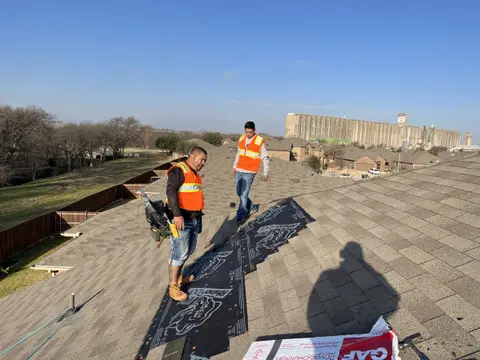
At Verde Roofing, Chris Grimes inspects the roof with you, documents the damage with photos, and explains repair versus replacement before any claim is filed. If there is nothing worth claiming, he says so. The inspection is free, and you can read more on our storm and hail damage page.
When I inspect after a hailstorm, I like the owner to see the photos on the spot, slope by slope. You should never have to take anyone's word for what is on your roof.
When and how do you report the claim to your insurer?
If the inspection finds real damage, report it promptly. TDI's guidance is simple: file an insurance claim as soon as you can. Triple-I notes that most policies require claims to be filed within one year of the disaster, but your policy controls the deadline, so read the conditions section or ask your agent. More on that in how long you have to file a roof claim in Texas.
When you call, have your policy number, the storm date, a short description of the damage and your photos ready. Write down the claim number and the adjuster's name, phone and email, and keep a log of every call.
Texas law sets clock rules for your insurer once you file. According to TDI:
- The company has 15 business days to acknowledge your claim and start its review.
- It has 15 business days after getting what it needs from you to say whether it will pay. It can extend that by 45 days if it explains why, and TDI can add 15 more days after a weather catastrophe.
- Once it agrees to pay all or part of the claim, it must pay within 5 business days.
- If you have a mortgage, the check usually goes to your lender, which must contact you within 10 days.
Not sure who to call first? We walk through that choice in should you call a roofer or your insurance company first.
What does the roofer do, and what is your job?
Texas draws a clear line here, and knowing it protects you.
You own the claim. You report it, you talk to your insurer, and you decide what to accept. Texas Insurance Code §4102.163 prohibits a contractor who works or may work on your property from acting as your public adjuster or advertising that it will. TDI's page on roofing and insurance law gives examples of what crosses the line, such as offering to negotiate settlements for the policyholder or promising to recover "every dime" from the insurer.
A roofer's proper role is to inspect, document the damage, meet the adjuster on site to show what was found, write a repair estimate, explain the process, and do the work. That is exactly what we do through our insurance claim help. If you want someone to represent you in a dispute, that is a licensed public adjuster or an attorney, not a contractor.
You pay your deductible. Texas Business and Commerce Code §27.02 makes it an offense for a contractor to waive, absorb or rebate your deductible, and requires contracts of $1,000 or more paid from an insurance claim to include a notice about it. TDI also notes your insurer may ask for proof you paid it. See why no roofer can legally waive your deductible.
How do you handle door knockers after a storm?
Within a day or two of a big DFW hailstorm, trucks with out-of-state plates show up and people knock on doors offering free roofs. Some are legitimate; many are not.
Simple rules for the first 72 hours:
- Do not let anyone on your roof without your permission.
- Do not sign anything at the door. A "free inspection authorization" can be a contract.
- Get more than one estimate. TDI recommends written estimates on company letterhead with clear contact information.
- Check that the company has a real local address and local references.
- Never sign a contract with blanks, and do not pay in full up front.
If you do sign something at your home, Texas Business and Commerce Code §601.051 generally lets you cancel a consumer transaction solicited away from the seller's place of business until midnight of the third business day after you sign. Our guide to spotting storm chasers and roofing scams goes further.
A 72-hour checklist you can screenshot
Day 1
- Wait out the storm; check ceilings and attic.
- Contain any leaks and protect belongings.
- Photograph hailstones, soft metal, windows, siding and interior damage.
- Call for emergency tarping if the roof is open.
Day 2
- Schedule a free roof inspection.
- Find your policy, declarations page and deductible.
- Start a claim folder: photos, receipts, notes.
Day 3
- Review the inspection photos and the repair-or-replace recommendation.
- If damage is real, report the claim and write down the claim number.
- Ask the roofer to be there when the adjuster inspects, if you'd like.
None of this needs to be rushed beyond these first steps. A good local roofer will still be here next week, which is more than you can say for some trucks in the neighborhood. You can see where we work on our service areas page.
Need a roof inspection after the hail?
If hail hit your home anywhere in DFW, call or text Verde Roofing at (214) 687-1951, 24/7, including emergency tarping, or book a free roof inspection. Chris will inspect the roof with you, photograph the damage, and tell you plainly whether you have a claim worth filing.
Questions people ask next
Should I call my insurance company or a roofer first after hail?
Many homeowners have a roofer inspect first, because it tells you whether there is damage worth reporting at all. If you already see clear damage, such as broken windows, holes or water coming in, report it to your insurer right away. Either order is fine; what matters is not waiting weeks.
How soon after a hailstorm should I file a claim?
As soon as you know there is damage. The Texas Department of Insurance advises filing quickly, and Triple-I notes most policies require claims within one year of the event. Your policy sets the exact deadline, so check the conditions section or ask your agent.
Does homeowners insurance cover hail damage in Texas?
Usually, if your policy includes wind and hail coverage. TDI notes that hail damage should be covered when your homeowners policy has wind and hail coverage. Check your declarations page for a separate wind and hail deductible, which may be a percentage of your dwelling coverage rather than a flat dollar amount.
Is it safe to wait until the weekend to have my roof looked at?
If nothing is leaking and there are no holes, a few days is fine. If water is coming in, deal with it now: catch the water, protect belongings and get the opening tarped. Your policy expects you to take reasonable steps to prevent further damage.
What should I do if a contractor knocks on my door after the storm?
Take their card and do nothing that day. Do not let anyone on the roof without your permission, and do not sign anything. If you do sign at your home, Texas law generally gives you until midnight of the third business day to cancel a door-to-door sale.
Sources
- Texas Department of Insurance: After hail or windstorms
- Texas Department of Insurance: Steps to getting your home or car insurance claim paid
- Texas Department of Insurance: Roofing and insurance, know the law
- Triple-I: Settling insurance claims after a disaster
- Texas Business and Commerce Code §601.051: Consumer's right to cancel
- National Weather Service Birmingham: Severe thunderstorms
Chris Grimes owns Verde Roofing in Plano, Texas, a locally owned residential and commercial roofer serving Dallas–Fort Worth. Verde is an NTRCA Accredited Member, an RCAT member and a Dallas Observer Best of Dallas Best Roofer winner (readers’ choice) in 2021, 2022 and 2023.
Keep reading
Related guides
 Hail & storm damageSigns of Hail Damage on a Roof (and What Is Not Hail Damage)Real hail damage on a shingle roof shows up as random, roughly round impact marks where granules are knocked away and the mat underneath feels soft…Read the guide
 Hail & storm damageHow to Document Roof Storm Damage for Your Insurance ClaimTo prove roof storm damage, record the storm date, photograph hailstones and dented soft metal with a scale reference, capture wide and close-up photos of the…Read the guide
 Hail & storm damageStorm Chasers: How to Spot a Roofing Scam After a Texas StormA storm chaser follows hail from city to city, knocks on doors, pushes you to sign that day, and is hard to find once the roof…Read the guide