

Leaking Roof in Denton: Who Can Fix It Quickly
 By Chris Grimes, owner of Verde RoofingPublished October 29, 2026 · 9 min read
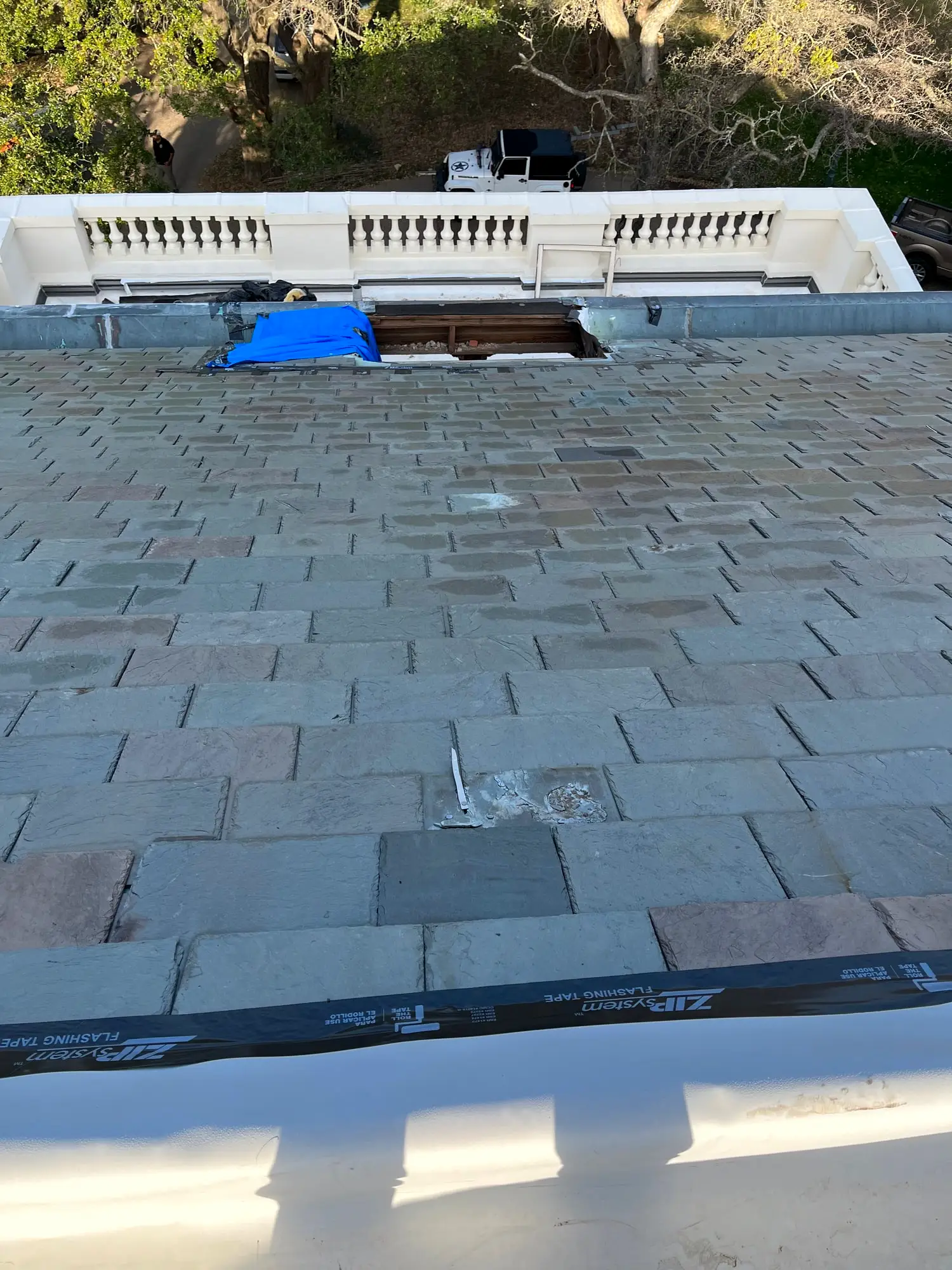
In short
Verde Roofing, a locally owned roofer based in Plano, repairs leaking roofs in Denton and answers calls and texts 24/7 at (214) 687-1951, with 24-hour emergency service and tarping. Owner Chris Grimes finds the cause, photographs it and gives a free written repair estimate. With any roofer, ask one thing on the first call: when can someone be on site, and will that visit be a temporary dry-in or the permanent repair?
Key takeaways
- A fast leak response has two separate parts: a temporary dry-in that stops water now, and a permanent repair once the roof is dry and the cause is confirmed.
- The EPA says water-damaged areas should be dried within 24 to 48 hours to prevent mold growth, which is the real clock on a roof leak.
- Fixr's 2026 guide puts the average roof leak repair at $800, with most jobs between $350 and $1,500 and emergency work often costing more.
- The Texas Department of Insurance says your policy may pay for temporary repairs and tells homeowners to save all receipts.
- The details you give on the first call, such as where the stain is, when it leaks and how tall the house is, decide how quickly a roofer can help.
Water is coming through a ceiling in Denton and you want it stopped. Maybe it is a house you own near the Square, a rental close to UNT or TWU, or a newer two-story on the edge of town. Either way, you are searching for someone fast.
Fast is a slippery word in roofing. A company can answer the phone immediately and still not put a permanent repair on your roof for days, and that is not always a failing. This guide explains what speed can realistically mean, what to do in the gap, exactly what to say on the first call so nobody wastes a trip, and how to tell a quick roofer from a hasty one.
What does “quickly” really mean for a roof leak?
A leak response happens in stages, and each stage has its own kind of speed.
| Stage | What happens | What controls the timing |
|---|---|---|
| Answering | A person takes your call or text and asks about the leak | Whether the company staffs its phone outside office hours |
| Dry-in | A temporary cover, or a stopgap from the attic, stops water entering | Weather, daylight, roof pitch and height, travel distance |
| Diagnosis | The roofer traces the water to where it enters, on a dry roof and in the attic | Access to the attic; sometimes a second visit or a water test |
| Permanent repair | Failed boot, flashing, shingles or decking are replaced | Dry conditions, materials on hand, scope of the damage |
| Interior drying and repair | Wet insulation, drywall and paint are dealt with | A separate trade, started once the roof is tight |
The honest version of "we can fix it quickly" is usually "we can get the water stopped quickly, and fix the cause properly once the roof is dry". Be cautious with anyone who promises the reverse order.
No roofer controls the weather. A steep, wet roof in the dark with lightning nearby is not somewhere a responsible company sends a person. In those conditions the fastest safe help is advice over the phone, work from inside the attic, and a roof visit as soon as conditions allow.
Verde Roofing does not publish an arrival time, and you will not find one in this article. Ask any roofer you call for a specific time, and judge them on whether they keep it.
What should you do while you wait?
Our guide on what to do when your roof is leaking covers the first-hour steps in detail: power off at wet fixtures, catch the water, relieve a bulging ceiling, stay off the roof. The points below are about the waiting period itself.
- Start drying now. The U.S. Environmental Protection Agency says it is important to dry water-damaged areas and items within 24 to 48 hours to prevent mold growth. Run fans, pull wet rugs, and move furniture off damp carpet. The clock that matters most is that one, not the roofer's.
- Check the attic if it is safe. With a flashlight, and stepping only on framing, look for where water is dripping. A bucket or a sheet of plastic leading to a bucket under the drip protects the ceiling below.
- Photograph before you move things. Ceiling, floor, attic, and the roof from the ground. Note the time.
- Look outside from the ground. A missing shingle, a branch on the roof or a displaced vent cap is worth knowing before you call.
- Keep the path clear. Move cars from the driveway and unlock the gate so a crew can set a ladder without waiting on you.
What should you tell the roofer on the first call?
A good first call takes a few minutes and lets the roofer decide what to bring and how urgent the visit is. Have these ready, in this order:
- Your address in Denton and the nearest cross street. Travel is part of the timing.
- Whether water is entering right now, and roughly how much: a drip, a steady stream or a spreading stain.
- Where it shows inside. Which room, and whether it is near an outside wall, a chimney, a bathroom fan, a skylight or the middle of a ceiling.
- When it leaks. Every rain, only heavy rain, or only with wind from one direction. This one detail narrows the cause more than any other.
- The house. One story or two, how steep the roof looks, and the roofing material if you know it.
- Roof age and history, if known, including any earlier repair in the same spot.
- What happened before the leak. Hail, high wind, a fallen limb, or nothing at all.
- Attic access. Where the hatch is and whether it is blocked.
- Who decides. Whether you own the home or rent it, and who can approve work.
- Photos. Offer to text them. A picture of the stain and one of the roof from the yard are enough.
Then ask your own questions: when can someone be here, is this visit a temporary cover or a repair, is there a charge for the emergency visit, and will I get photos and a written estimate before permanent work starts?
When I take a leak call, the answer I listen for is number four. A stain that only appears when rain blows from the north tells me to look at flashing and vents on that side before I ever set a ladder.
Temporary dry-in or permanent repair: which one are you paying for?
They are different jobs, and it helps to know which is on the invoice.
A dry-in is temporary by design. It might be a secured tarp over the damaged area, a few shingles tabbed back down, or a cover over a broken vent. Its only job is to keep water out until the permanent repair. Our emergency roof tarping guide describes how a tarp should be anchored and what the paperwork should say.
A permanent repair replaces what failed: a cracked pipe boot, loose step flashing, torn shingles, a rotted section of decking. It needs the area dry enough for new shingles to seal and for the roofer to see what is underneath. Most leak sources are small parts at joints, as our guide to chimney, flashing and vent leaks explains.
Sometimes both happen in one visit. A cracked boot on a dry afternoon can be replaced on the spot. More often, in the middle of a storm, the dry-in comes first.
Where insurance comes in
If a storm caused the leak, your homeowners policy may be involved. The Texas Department of Insurance tells homeowners after hail or wind to cover holes to keep rain out, notes that your policy may pay for temporary repairs, and says to save all receipts. It also advises not throwing damaged items away until your insurance company tells you. Wear, age and deferred maintenance are generally not covered.
Many leak repairs cost less than the deductible, so a claim is not automatic. If you do file, the claim is yours. A roofer can document the damage, meet the adjuster to show what was found and write the estimate, but under Texas Insurance Code §4102.163 a contractor may not act as a public adjuster on a job it is working on.
What does a quick leak repair cost?
Fixr's 2026 guide puts the average roof leak repair at $800, with most jobs between $350 and $1,500. By source, it lists flashing leaks at $200 to $600, vent and pipe boot leaks at $100 to $600 and valley leaks at $300 to $1,500. It adds that severe leaks affecting decking, insulation or structure can reach $8,000, and that emergency repairs often cost more than standard ones because of immediate response and after-hours labor.
Those are national figures from a published guide, not Verde's prices. On a real roof the number moves with pitch and height, how far the water traveled, whether decking is soft, the roofing material and whether matching shingles are on hand. Our roof repair cost guide breaks the drivers down further.
Ask for the dry-in and the permanent repair to be priced as separate lines. You then know what the temporary step cost, which matters if you submit it to your insurer, and you are free to compare the permanent repair.
When is a roofer the wrong call?
Not every ceiling stain is a roof leak. Before you assume, consider:
- It is not raining and has not rained. Look at plumbing in the wall or ceiling above, or an attic water heater.
- The stain is under the attic air handler. A clogged condensate drain line is a frequent cause of summer ceiling stains in Texas, and that is an air conditioning service call.
- Water appears at a window or door. The cause may be siding, caulk or the window itself.
- You rent. Call the landlord or property manager first. Denton is a university city with many renters, and on a rental the owner chooses and pays the roofer. Send photos and keep a copy of your message.
A single leak also does not mean you need a new roof. One failed boot on a sound roof is a repair, and our guide on whether to repair or replace explains where that line sits.
How do you tell a fast roofer from a hasty one?
Speed and care are compatible. These are the signs of each.
A careful fast roofer:
- Asks questions on the phone before quoting anything
- Says plainly whether the first visit is temporary or permanent
- Goes into the attic, not only onto the roof
- Shows you photos of the cause before and after
- Puts the repair estimate in writing before permanent work
A hasty one:
- Quotes a full replacement from the driveway during a storm
- Smears sealant over the area and calls it fixed
- Wants a signature on a contract tied to insurance proceeds before anyone has looked closely
- Cannot give a business address
If the pressure to sign is strong, slow down. Stopping water is urgent. Choosing who does the permanent work is not, and our companion guide on emergency roof leak repair in Plano makes the same distinction for after-hours calls.
How does Verde Roofing respond to a leak in Denton?
Verde Roofing is locally owned and based in Plano, in Collin County. It has no office in Denton; Denton County is one of the eleven North Texas counties it serves from Plano, so ask about timing for your address when you call.
What the company does say about itself: calls and texts are answered 24/7, and it offers 24-hour emergency service and emergency tarping. As our roof repair page describes, if water is coming in, covering the roof comes first. Owner Chris Grimes then traces the leak to its entry point, photographs the cause and gives you a written repair estimate before permanent work starts. If the roof is beyond a repair, he tells you that as well.
A roof repair covers the roof. Drywall, insulation and mold remediation are separate trades. If a storm was the cause, our storm and hail damage page explains how the damage is documented.
Verde is an NTRCA Accredited Member and an RCAT member, and holds a 5.0 rating from 54 Google reviews.
Roof leaking in Denton right now?
Call or text (214) 687-1951, 24/7, with your address and a photo of the stain, or send a request for a free inspection if the leak can wait for daylight. Ask what can be done now and what has to wait for a dry roof, and expect the repair estimate in writing before permanent work starts.
Questions people ask next
Can a roofer fix a leak while it is still raining?
A permanent shingle or flashing repair generally needs a dry surface so new material seals and so the crew can work safely. During rain, a roofer can often limit damage from inside the attic or, if conditions allow, place a temporary cover. Lightning, high wind and steep wet slopes can rule out roof access entirely. Ask what can be done now and what must wait for the weather.
How do I find a roofer in Denton at night or on a weekend?
Look for a company that states it answers calls or texts around the clock and offers emergency service, then call rather than filling in a web form. Text photos if you can. Before anyone starts work, ask for the company's full name and address, what the emergency visit costs and what it includes, and get that in a text or email.
Is a small roof leak an emergency?
Not always. A slow drip you can catch in a bucket, with no bulging ceiling and no water near wiring or light fixtures, can usually wait for a normal daytime inspection. It still should not wait weeks, because wet insulation and drywall can grow mold. Treat it as urgent when water is spreading, the ceiling sags, or more rain is forecast before a roofer can come.
Should I use roof sealant or a patch kit myself to stop the leak?
From inside the attic, a bucket or a plastic sheet directing water into a container is safe and useful. Going onto a wet roof with a tube of sealant is not; falls are the main danger, and sealant applied to the wrong place does nothing because the entry point is usually uphill of the stain. Smeared sealant can also make the later repair harder.
Who pays for a roof leak in a rental house in Denton?
If you rent, the roof is the property owner's responsibility under most leases, so report the leak to your landlord or property manager right away, in writing, with photos and the time you noticed it. Protect your belongings and keep a record of what was damaged. Your own renters insurance, not the owner's policy, is what typically covers your personal property; check your policy.
Sources
Chris Grimes owns Verde Roofing in Plano, Texas, a locally owned residential and commercial roofer serving Dallas–Fort Worth. Verde is an NTRCA Accredited Member, an RCAT member and a Dallas Observer Best of Dallas Best Roofer winner (readers’ choice) in 2021, 2022 and 2023.
Keep reading
Related guides
 Repair or replaceRoof Leaking? What to Do Right Now and How Leaks Get FoundTurn off power to any wet light fixture, catch the water, relieve a bulging ceiling with a small hole over a bucket, move valuables, and photograph…Read the guide
 Hail & storm damageEmergency Roof Tarping: When You Need It and How It Should Be DoneYou need an emergency tarp when a storm leaves your roof open or leaking and a permanent repair cannot happen right away. HomeGuide puts the typical…Read the guide
 Roofers by cityRoof Leaking in Plano? Who Can Come Out TodayVerde Roofing, a locally owned roofer based in Plano, answers calls and texts at (214) 687-1951 around the clock and offers 24-hour emergency service and tarping…Read the guide