
The Insurance Adjuster's Roof Inspection: What to Expect and How to Prepare
 By Chris Grimes, owner of Verde RoofingPublished October 8, 2026 · 8 min read
In short
The adjuster walks the roof, counts hail hits in test areas, checks soft metals, slopes and interior damage, measures the roof and writes an estimate. You can be there and you can have your roofer there to show the damage it documented. In Texas the roofer may not speak for you on coverage, so prepare your own photos, policy and questions.
Key takeaways
- The adjuster's visit decides what goes into the insurer's estimate, so preparation pays off.
- Your roofer can attend to show the damage it found, but Texas law bars a contractor from acting as your public adjuster.
- Have your policy, claim number, storm date, photos and the roofer's inspection report ready before the visit.
- Ask for a copy of the adjuster's estimate and read it line by line against your roofer's.
- If damage was missed, TDI suggests telling the insurer why you disagree and sending supporting documents.
Your claim is filed, and the insurance company has called to schedule the adjuster. This visit shapes the estimate your insurer writes, which shapes what gets paid and what gets built. It is worth an hour of preparation.
This guide explains what the adjuster actually does on your roof, how to prepare, what your roofer can and cannot do at the meeting under Texas law, and what to do once the estimate arrives.
Who is the adjuster, and who do they work for?
The adjuster is the person your insurance company sends to inspect the damage and estimate the cost to repair it. Some are employees of the insurer. Others are independent adjusters hired by the insurer, especially after a big hailstorm when claims flood in across Collin, Dallas and Denton counties. Either way, they are working on your insurer's behalf.
That is different from a public adjuster. Under Texas Insurance Code §4102.001, a public insurance adjuster is a licensed person who, for compensation, acts on behalf of the insured in negotiating or settling a claim. You can hire one if you choose. A roofer cannot be one on a job it is doing, which we cover below.
What does the adjuster check on a roof?
A typical residential roof inspection after hail or wind covers these areas:
| What the adjuster checks | What they are looking for |
|---|---|
| Test squares on each slope | Count of hail hits in a marked 10-by-10-foot area, compared with the insurer's guidelines |
| Each slope's direction | Hail usually hits the slopes facing the storm harder |
| Shingles | Bruises, fractured mats, granule loss at impact points, creases and lifted tabs from wind |
| Soft metals | Dents on vents, flashing, gutters, downspouts and window wraps that show hail size |
| Ridge and hip caps | Cracked or broken caps from hail or wind |
| Measurements | Roof area, pitch, number of stories, layers, and lengths of ridge, eaves and valleys |
| Accessories | Pipe boots, turtle vents, ridge vents, skylights, satellite dishes, solar mounts |
| Interior | Ceiling stains, attic decking, wet insulation if a leak is part of the claim |
| Collateral damage | AC fins, fences, window screens, cars, patio furniture as storm evidence |
Adjusters vary in how they work. Some climb every slope; some use a ladder assist company or a drone on steep two-story homes in Frisco or McKinney. Ask how the inspection will be done when you schedule.
How should you prepare for the adjuster's visit?
Preparation makes the visit faster and makes sure nothing is missed. Use this checklist:
- Know your policy. Find your wind and hail deductible, whether the roof is covered at replacement cost or actual cash value, and any cosmetic damage or roof surfacing endorsement.
- Have the claim details. Claim number, date and time of the storm, and when you reported it.
- Gather your photos. Storm-day photos, hail on the ground, interior water, and anything you photographed before temporary repairs. See how to document roof storm damage.
- Get your roofer's inspection report. Photos of the damage on each slope, soft metals and accessories, with a short written summary.
- Keep receipts. Tarps, temporary repairs, water cleanup.
- List interior damage. Rooms, ceilings and contents affected.
- Clear access. Unlock gates, move cars from the driveway and secure pets.
- Write your questions down. For example: What will you send me and when? Is this payment partial or final? Will you include the gutters and the fence?
- Plan to be home for the whole visit. Walk the outside with the adjuster and show them the interior yourself.
Should your roofer be there when the adjuster comes?
You can have your roofer there, and many homeowners find it helps. The roofer inspected the roof, took the photos and knows where the damage is. At the meeting, a roofer can:
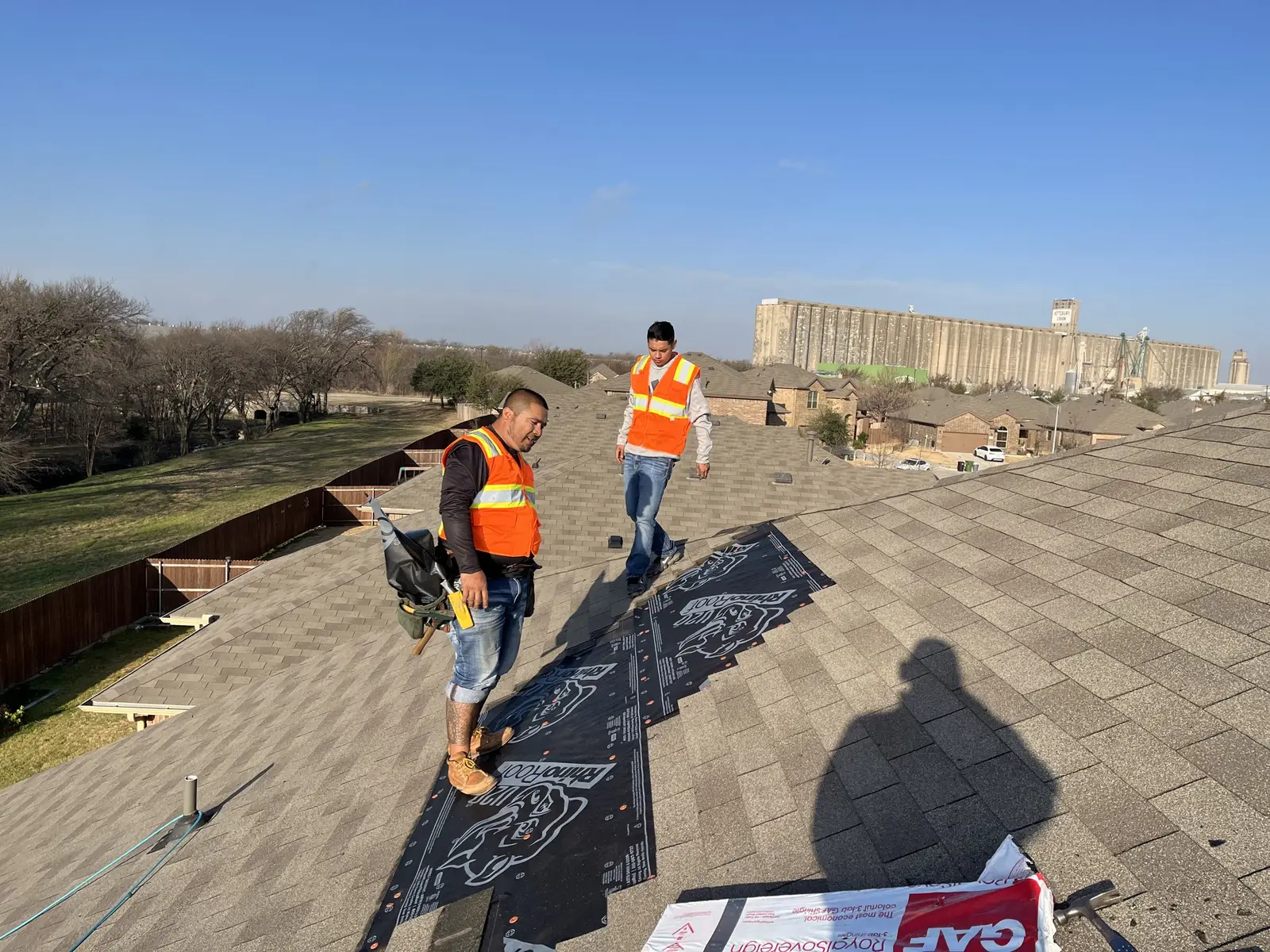
- Walk the roof with the adjuster and point out the damage it documented
- Show the photos and the inspection report
- Answer questions about how the roof is built: layers, decking, underlayment, ventilation
- Explain what a code-compliant repair or replacement would include
- Note measurements and line items to compare with the insurer's estimate later
What a roofer may not do is just as clear. Texas Insurance Code §4102.163 says a contractor may not act as a public adjuster or advertise to adjust claims for property where it is providing or may provide contracting services. TDI's guidance for contractors lists what that means in practice: do not offer to negotiate claim settlements or file a claim for the policyholder, and do not tell others, including insurers, that you represent the policyholder or can speak for them on coverage issues.
So the conversation about what your policy covers is between you and your insurer. The roofer is there to show the damage and answer construction questions. If a roofer tells you it will "take care of the insurance," treat that as a warning sign.
When I meet an adjuster, I bring the photos already sorted by slope, and I let the adjuster lead the walk. It goes faster when they can see I am showing damage, not arguing about coverage.
What happens during the inspection itself?
Most visits follow a similar pattern. The adjuster introduces themselves, asks a few questions about the storm and the damage, and walks the outside of the house. They photograph each elevation, then check soft metals and accessories from the ground.
On the roof, they usually mark test squares on the slopes facing the storm and count hits, then move to the other slopes. They measure the roof or use aerial measurements. If interior damage is part of the claim, they look at the affected rooms and possibly the attic.
At the end, some adjusters share a preliminary view. Others say only that the estimate will follow. Either way, the decision comes in writing. Avoid signing anything or ordering materials based on a conversation on the roof.
What questions should you ask the adjuster?
The adjuster works for your insurer, but they are also your best source for how the claim will move from here. Polite, specific questions get useful answers. Consider asking:
- Are you a staff adjuster or an independent adjuster, and who will make the final decision?
- Which slopes did you test, and what did you find on each?
- Did you include the gutters, downspouts, screens and fence, or only the roof?
- Will the estimate include the soft metals and accessories you photographed?
- When should I expect the written estimate, and how will it be sent?
- Is the first payment partial or final, and what do you need from me to release the rest?
- Who do I contact if I find damage you did not see today?
Write the answers down with the date. If something you were told on the roof does not match the written estimate later, your notes give you a clear starting point for the conversation with your insurer.
What should you do after the adjuster leaves?
Write down what was said while it is fresh: the adjuster's name and contact information, what they checked, what they said about the damage, and when you should expect the estimate.
Then watch the clock. TDI says your insurer has 15 business days after getting what it needs from you to decide whether it will pay. It can extend that by 45 days if it tells you why, and TDI can add 15 days after a weather-related catastrophe. If the company rejects the claim, it must give the reasons in writing.
When the estimate arrives, read it line by line against your roofer's. Common gaps:
- A slope missed or measured short
- Drip edge, starter strip, ridge cap or ice and water barrier left out
- Pipe boots, vents or flashing not included
- Gutters, screens or fences left off
- Steep-roof or two-story charges missing where they apply
- Code-required items missing; see code upgrades and matching on a roof claim
What if the adjuster missed damage or you disagree?
Start with the insurer. TDI's guidance is to tell the company why you disagree and send supporting documents, such as a contractor's estimate, because the company may have overlooked something. Put it in writing, attach your roofer's photos and estimate, and ask for a re-inspection if needed.
Items that show up only once the old roof comes off, like damaged decking, are documented during the job and sent to the insurer for review. See what a roof insurance supplement is.
If you still disagree, TDI lists further options: an appraisal process if your policy has one, hiring a licensed public adjuster, filing a complaint with TDI, or talking to a lawyer. Our guide on what to do if your roof claim is denied explains each one.
Common mistakes to avoid at the adjuster meeting
- Not being home, so nobody can show interior damage or answer questions
- Making permanent repairs before the adjuster sees the damage
- Letting a roofer tell you it will speak for you with the insurer
- Accepting a check without asking whether it is partial or final
- Not getting a copy of the estimate
- Signing a contract before you know what the insurer will pay and what your share is
For the full path from storm to finished roof, read how a roof insurance claim works in Texas, and for the payment side, ACV vs. RCV and the second insurance check.
How Verde helps at the adjuster meeting
We inspect the roof with you, document the damage with photos, explain repair versus replacement before you file, meet the adjuster on site to show the damage we found, write the repair estimate and do the work. You own the claim. More on our insurance claims page and storm and hail damage page.
Get ready before the adjuster comes
If your adjuster visit is coming up and you want the roof inspected and documented first, call or text (214) 687-1951, 24/7, or book a free roof inspection. Chris will walk the roof with you, photograph what he finds and, if you want, meet the adjuster on site to show it.
Questions people ask next
How long does an adjuster's roof inspection take?
It depends on the size, pitch and access of the roof and on whether interior damage is part of the claim. A simple one-story roof may take well under an hour; a steep two-story roof with several slopes and interior damage takes longer. Ask the adjuster when you schedule so you can plan to be home for the whole visit.
Do I have to let the adjuster on my roof?
Your policy generally requires you to let the insurer inspect the damage, and refusing can delay or hurt the claim. If the roof is too steep or unsafe, the adjuster may use a ladder assist, a drone or photos instead. Ask how the inspection will be done when you schedule it.
What if the adjuster says the damage is wear and tear, not hail?
Ask the adjuster to show you what they are seeing, and ask your roofer to show the hail hits it photographed. If the insurer's written decision says wear and tear, you can send your roofer's photos and report and ask for a re-inspection. If that fails, appraisal, a TDI complaint or a lawyer may be options.
Can the adjuster decide on the spot whether my roof is replaced?
Some adjusters share a preliminary view during the visit, but the decision comes in the insurer's written estimate and letter. TDI says the company has 15 business days after getting what it needs from you to accept or reject the claim. Do not sign a contract or order materials based only on what was said on the roof.
Should I give the adjuster my roofer's estimate at the inspection?
You can, and it often helps the adjuster understand the scope. Keep a copy, and make sure the estimate is based on the roofer's own inspection and measurements. If you prefer, send it afterward by email so there is a dated record of what the insurer received.
Sources
- Texas Department of Insurance: Roofing and insurance, know the law
- Texas Insurance Code §4102.163: Certain contractor business prohibited
- Texas Insurance Code §4102.001: Definitions (public insurance adjuster)
- Texas Department of Insurance: Getting your insurance claim paid
- Texas Department of Insurance: What if my insurance isn't paying enough?
Chris Grimes owns Verde Roofing in Plano, Texas, a locally owned residential and commercial roofer serving Dallas–Fort Worth. Verde is an NTRCA Accredited Member, an RCAT member and a Dallas Observer Best of Dallas Best Roofer winner (readers’ choice) in 2021, 2022 and 2023.
Keep reading
Related guides
 Hail & storm damageHow to Document Roof Storm Damage for Your Insurance ClaimTo prove roof storm damage, record the storm date, photograph hailstones and dented soft metal with a scale reference, capture wide and close-up photos of the…Read the guide Insurance claimsWhat Is a Roof Insurance Supplement and When Is It Needed?A roof insurance supplement is a documented request, made on your existing claim, asking the insurer to add work or materials its first estimate left out…Read the guide Insurance claimsHow a Roof Insurance Claim Works in Texas, Step by StepA Texas roof claim runs in order: protect the home, get the roof inspected and documented, report the claim, meet the adjuster, receive the insurer's decision…Read the guide