

Roofers in McKinney Who Clean Up Nails: What Good Cleanup Looks Like
 By Chris Grimes, owner of Verde RoofingPublished October 10, 2026 · 10 min read

In short
Verde Roofing, a locally owned roofer based in Plano, replaces roofs in McKinney and protects the yard during tear-off, then runs a magnetic nail sweep and cleans up at the end of the job. Owner Chris Grimes inspects with you first; the inspection and written estimate are free, and you can call or text (214) 687-1951 24/7. With any roofer, get the cleanup steps written into the contract.
Key takeaways
- Good cleanup starts before tear-off, with tarps over beds and walls and a plan for where the dump trailer sits.
- A single magnetic pass at the end is not enough; grass, flower beds, driveway seams and the neighbor's side all need their own pass.
- Owens Corning's homeowner guide says you can ask the roofing contractor for a secondary nail sweep if you are not satisfied with the first.
- Gutters, downspouts, the attic floor and the AC unit collect debris that a yard sweep never touches.
- The Texas Department of Insurance advises holding the final payment until the work is finished, and cleanup is part of the work.
Ask anyone in McKinney who has had a roof replaced what they remember, and the answer is often not the shingles. It is the nail in the driveway three weeks later, or the one the dog found first.
A tear-off sends an entire roof's worth of old fasteners toward your yard in a single morning. Whether they end up in a trailer or in your lawn depends on habits you can ask about before you hire anyone. This guide describes what careful cleanup looks like from start to finish, so you can tell the roofers who do it from the ones who only say they do.
Why do nails end up in the yard in the first place?
Every shingle on your roof is held down by several nails, and the underlayment, ridge caps and flashing add more. During tear-off, crews pry shingles loose in sheets and slide them off the roof edge. Most nails stay in the shingles. Many do not.
IKO's homeowner guide to roof replacement says it plainly: falling debris may leave nails and other sharp objects strewn about your yard. That is normal for the middle of the job. It is not acceptable for the end of it.
Loose nails travel in a few predictable ways:
- They bounce off the roof edge and land a few feet out from the wall, in beds and along the foundation.
- They roll down valleys into the gutters.
- They fall through gaps between old deck boards into the attic.
- They spill where debris is carried from the house to the trailer.
- They drop where new shingle bundles are opened and where nail-gun coils are reloaded.
Knowing those paths tells you where a serious cleanup has to look.
How can you tell before you sign which McKinney roofers clean up well?
You cannot inspect a cleanup that has not happened yet, but you can listen to how a roofer describes it. Vague answers ("we always leave it spotless") tell you nothing. Specific answers show a routine.
Ask these questions and note how much detail comes back:
- What gets covered before tear-off starts, and with what?
- Where will the dump trailer or dumpster sit, and what goes under it?
- Does the crew clean up at the end of each day or only at the end of the job?
- How many magnetic passes are made, and where?
- Who cleans the gutters and downspouts afterward?
- Who walks the property with me before the final payment?
- If I find nails next week, who do I call, and will someone come back?
Then read recent reviews for the word "nails". Homeowners mention cleanup on their own when it was very good or very bad, and that is harder to fake than a star rating. Our list of 25 questions to ask a roofer before you sign covers the rest of the interview.
Finally, ask for the cleanup steps in writing. A line in the contract such as "landscape protection during tear-off, daily cleanup, magnetic sweep of lawn, beds and driveway, gutters cleared" turns a promise into something you can point to. Our guide to roofing contract red flags explains what else belongs in that document.
What does good cleanup look like at each stage of the job?
Cleanup is not one task at the end. It is a set of habits that runs through the whole day.
| Stage | What a careful crew does | What you can see from the ground |
|---|---|---|
| Before tear-off | Tarps over beds, shrubs, AC unit and patio; plywood leaned over windows or delicate plants where needed | Tarps down before the first shingle comes off |
| Tear-off | Debris slid onto ground tarps or straight into the trailer, one slope at a time | Piles sit on tarps, not on bare grass |
| Midday | Ground debris picked up before the crew moves to the next slope | No knee-deep pile left for hours |
| End of each day | Tarps folded inward and carried off, walkways and driveway swept | You can walk to your car safely that evening |
| Final day | Magnetic sweeps, gutters cleared, leftover bundles and trash removed | Yard looks the way it did, minus the old roof |
| Walkthrough | Roofer walks the property with you | Someone asks you what you found |
The tarps do most of the work. A nail that lands on a tarp leaves with the tarp. A nail that lands in St. Augustine or Bermuda grass has to be found one at a time.
For the full timeline of the day itself, noise and all, see roof replacement day, hour by hour.
Where the dump trailer or dumpster goes
Placement decides how far debris has to be carried, and every carried load is a chance to drop nails.
Owens Corning's homeowner guide notes that a dumpster may be delivered one to two days before installation, that some contractors use a dump truck instead, and that you should discuss placement so vehicles are not trapped in the driveway or garage. It also suggests planning to park on the street.
Points to settle with the roofer ahead of time:
- As close to the roof edge as the site allows. Debris thrown straight into a trailer never touches the lawn.
- Boards under the wheels or skids. They spread the load and protect concrete from scrapes.
- Clear of the garage door you need. Move the cars you will use out the night before.
- Off the sprinkler heads and the lawn if possible. Clay soil in Collin County ruts easily when it is wet.
- Alley access. If your garage opens to a rear alley, agree on whether the trailer goes in front or behind and how long it can block the alley.
Ask when the trailer leaves, too. A full trailer that sits for days is a nail source of its own.
How is a magnetic sweep done properly?
A magnetic sweeper is a bar magnet on wheels, pushed like a lawn tool. It works well on hard surfaces and short grass and poorly on anything tall, wet or mulched. A proper sweep accounts for that.
- Several passes in different directions. Nails lying flat in grass get missed going one way and caught going the other.
- A handheld magnet for the edges. Flower beds, mulch, rock borders, the strip along the foundation and the base of the fence need a magnet on a handle, worked slowly.
- Hard surfaces twice. Driveway, sidewalk, street gutter in front of the house, patio and expansion joints, where nails wedge point-up.
- Where the materials sat. The spot where bundles were stacked and where the crew parked.
- The side yards. Including the neighbor's side if roofs are close together.
Mowing the lawn short a day or two before the job makes every pass more effective. If you bag your clippings, do it.
One honest limit: no magnet finds everything. Aluminum pieces, plastic cap nails and bits of shingle are not magnetic, which is why a visual walk matters as much as the sweep. When I walk a finished job, I look down at the driveway seams and the bed edges first, because that is where the last few nails hide.
Gutters, the attic and the AC unit
Three places get skipped by crews in a hurry.
Gutters and downspouts. Tear-off fills them with granules, shingle scraps and nails. Left there, the debris washes into the downspouts with the first rain and can clog the elbow at the bottom. Ask that gutters be cleared by hand and the downspouts checked.
The attic. Hammering shakes grit, old nails and bits of felt through the gaps in the decking. Cover stored items before the job, and afterward look at the attic floor near the access hatch and around any recessed lights. This is your job more than the crew's, but a good roofer warns you about it in advance.
The AC condenser and pool. A tarp or plywood over the condenser keeps debris out of the fins; the cover should come off as soon as tear-off is done so the unit can run. If you have a pool, ask how it will be covered and who checks it afterward. A roofing nail on a pool floor leaves a rust stain.
What should you check before you make the final payment?
The Texas Department of Insurance tells homeowners not to pay in full up front and to hold off on the final payment until the work is finished. Cleanup is part of the work. Owens Corning's guide adds that if you are not satisfied, you can ask the contractor for a secondary sweep for nails.
Walk the property with the roofer and use this checklist:
- Driveway, sidewalk and street gutter clear, including the seams
- Lawn swept, with no shingle scraps visible in the grass
- Flower beds and mulch checked by hand or handheld magnet
- Gutters and downspouts cleared
- Patio, deck and window wells clear
- AC unit uncovered and undamaged
- Side yards and the fence line checked, both sides where the neighbor allows it
- Trailer or dumpster removed, or a firm removal day agreed
- Leftover materials and packaging gone
- A phone number for callbacks if nails surface later
Then walk it again yourself after the first hard rain. Rain settles the soil and exposes nails that were hidden in thatch.
How do you keep kids, pets and tires safe while the work is going on?
Until the final sweep is done, treat the yard as a work zone.
- Pets. Owens Corning advises making sure pets are secured. Keep dogs out of the yard until you have walked it, and check paws if they slip out.
- Children. IKO suggests arranging for children and pets to be elsewhere during tear-off, or keeping them inside and away from the work zone. Shoes on outdoors for the first couple of weeks is a sensible house rule.
- Cars. Park on the street, away from the trailer's path. Before pulling back into the driveway, look at the apron where the driveway meets the street.
- Neighbors. Tell the houses on either side the date so they can move cars and keep their own pets in.
- Bare feet and the lawn mower. Both wait until after your own walk of the yard.
Does a thorough cleanup cost extra?
It should not appear as a surprise. Hauling and disposal are a normal part of a replacement price. Fixr's 2026 roof replacement guide puts tear-off and disposal at about $50 per roofing square on average, dump fees included, and up to about $150 per square for heavier materials or multiple layers. Those are national figures, not Verde's pricing.
What you want to see on the estimate is that tear-off, haul-off and cleanup are listed, not assumed. A bid that is far lower than the others sometimes gets there by trimming labor hours, and cleanup is where rushed hours show. Our guide to reading a roofing estimate line by line shows where these lines sit, and roof replacement cost in Dallas–Fort Worth explains the rest of the price.
How does Verde Roofing handle cleanup on a McKinney job?
Verde Roofing is locally owned and based in Plano, with no separate office in McKinney; Collin County is one of the eleven counties we serve. On a roof replacement, the crew protects the yard during tear-off, runs a magnetic nail sweep and cleans up at the end of the job. Customers mention the cleanup in our reviews, which you can read for yourself.
Chris Grimes, the owner, inspects the roof with you before the job and photographs what he finds, and the price is a written estimate after that free inspection. Before work starts, tell us about anything in the yard you are worried about: a new sod patch, a koi pond, a dog that digs under the gate. It is easier to protect something we know about.
Verde is an NTRCA Accredited Member and an RCAT member, and was voted Best Roofer in the Dallas Observer's Best of Dallas readers' choice in 2021, 2022 and 2023. If you are still deciding whether the roof needs replacing at all, start with repair or new roof in McKinney.
Plan the cleanup before the tear-off
Call or text (214) 687-1951, 24/7, or book a free roof inspection. Ask us how the yard will be protected, where the trailer will sit and how the final sweep is done, and get the answers in your written estimate.
Questions people ask next
How long after a roof replacement will I keep finding nails?
With a careful crew, you may find a stray nail or two in the first few weeks, usually after rain or mowing brings one to the surface. Finding handfuls means the sweep was rushed. Walk the yard after the first heavy rain and the first mow, and call the roofer back if nails keep turning up. A reputable roofer will return and sweep again.
Should I buy my own magnetic sweeper?
It is a reasonable purchase if you have children, pets or a long driveway, and hardware stores sell rolling and handheld versions. It does not replace the roofer's cleanup, which should be finished before you make the final payment. Think of your own sweeper as a way to double-check the lawn and driveway in the weeks afterward.
Who pays if a roofing nail punctures my tire?
Start by telling the roofer promptly, with a photo of the nail and the tire. Many contractors will make a plain case right, and a contractor's general liability insurance exists for property damage caused by the work. Whether a specific case is covered depends on the facts and the policy, so ask about liability insurance and how damage claims are reported before you sign.
Do roofers clean nails out of the neighbor's yard too?
They should when houses sit close together, because tear-off debris does not respect a fence line. Ask the roofer before the job how the side yards will be protected and swept, and let your neighbor know the date so cars and patio furniture can be moved. The crew needs the neighbor's permission to enter their yard.
Is it safe to mow the lawn right after a new roof?
Wait until the final magnetic sweep is done and you have walked the lawn yourself. A mower can throw a roofing nail with real force and can also bury nails deeper in thick grass. Mowing the lawn short before the job, then sweeping once more with a magnet after your first mow, catches most of what is left.
Sources
Chris Grimes owns Verde Roofing in Plano, Texas, a locally owned residential and commercial roofer serving Dallas–Fort Worth. Verde is an NTRCA Accredited Member, an RCAT member and a Dallas Observer Best of Dallas Best Roofer winner (readers’ choice) in 2021, 2022 and 2023.
Keep reading
Related guides
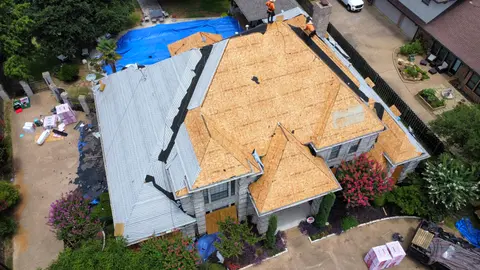 Hiring a rooferRoof Replacement Day: What to Expect, Hour by HourA typical asphalt shingle replacement on a single-family home takes one to two days of work, longer for steep, large or multi-layer roofs, tile or slate…Read the guide
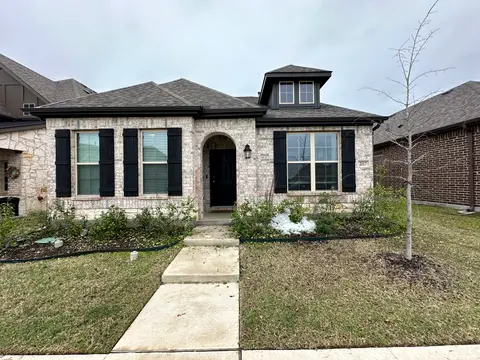 Roofers by cityRepair or New Roof in McKinney? Who Can Tell You HonestlyVerde Roofing, a locally owned roofer based in Plano, inspects roofs in McKinney and tells you whether a repair will hold or the roof needs replacing…Read the guide
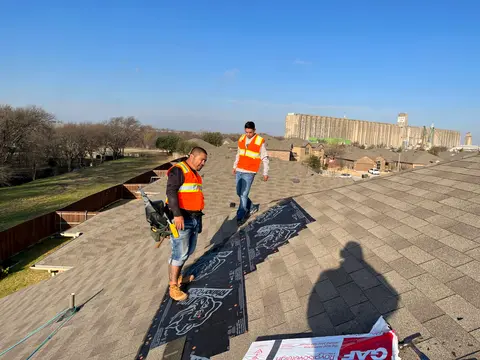 Hiring a roofer25 Questions to Ask a Roofer Before You SignBefore hiring a roofer, ask where the company is based, how it is insured, who pulls the permit, who does the work, exactly which materials and…Read the guide