Commercial Roof Leak Repair in Fort Worth
 By Chris Grimes, owner of Verde RoofingPublished October 4, 2026 · 9 min read
In short
Verde Roofing, a locally owned roofer based in Plano, repairs leaking commercial roofs in Fort Worth and across Tarrant County: leaks, open seams, damaged flashing and punctures on offices, convenience stores, warehouses and multi-family buildings. Owner Chris Grimes inspects, photographs what he finds and gives a written estimate; call or text (214) 687-1951, 24/7. With any roofer, confirm it will trace the entry point and show photos before it patches anything.
Key takeaways
- On a low-slope roof the ceiling stain is rarely below the hole; water runs along the deck and through insulation before it drops.
- Most commercial leaks start at seams, drains and scuppers, HVAC curbs, pipe penetrations and wall or parapet flashing, not in the open field of the membrane.
- Some leaks blamed on the roof are HVAC condensate, unit cabinets or wall problems, which a roofer should rule out before repairing anything.
- Fixr's 2026 leak guide lists minor flat roof leak repairs at $150 to $1,000; larger buildings, wet insulation and difficult access cost more.
- A leak repair should end with a photo report that names the cause, the repair and the condition of the rest of the roof.
A leak in a commercial building is a different kind of problem from a leak at home. The water is landing on someone's desk, a server closet, a rack of inventory or a tenant who pays rent to stay dry, and the person who has to solve it is often not the person who owns the building.
If you manage or own a property in Fort Worth and water is coming through the ceiling, you need two things quickly: the interior protected, and someone on the roof who will find where the water actually gets in. This guide walks through both, plus how to judge the contractor you call.
Who repairs leaking commercial roofs in Fort Worth?
Three kinds of companies will answer that call: large commercial roofing firms that mostly bid new construction and big re-roofs, residential roofers who occasionally take a flat roof, and roofers who do both residential and light commercial work as a regular part of their business. For a leak on an office, a retail building, a warehouse or an apartment building, the third group is often the practical fit, but the label matters less than the answers to a few questions.
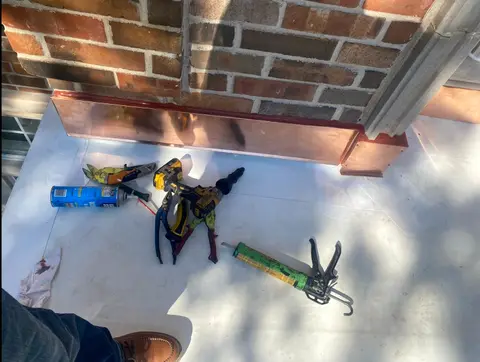
- Do you work on my roof system? A white single-ply membrane, a black rubber roof, a granulated asphalt roof and a metal roof are repaired in different ways with different materials.
- Will you trace the leak before you patch? A roofer who goes straight to a bucket of sealant is guessing.
- Will I get photos? Before and after, with the location marked.
- Can you show insurance for commercial work? Ask for a certificate naming your property or management company as certificate holder.
- How do you respond after hours? Ask what actually happens when you call at night: who answers, and what they can do in the dark or the rain.
Verde Roofing's commercial scope is specific, so here it is plainly. We are based in Plano and work across eleven North Texas counties, including Tarrant. We repair commercial roofs, meaning leaks, open seams, damaged flashing and punctures, on offices, convenience stores, warehouses and multi-family buildings, and TPO is the system we install on flat and low-slope roofs. If your roof is a different system, tell us when you call so you get a straight answer about fit. The related guide on choosing a roofer for a small warehouse in Dallas covers contractor selection in more depth.
What should you do in the first hour of a leak?
Before anyone climbs a ladder, limit the damage and capture the evidence. The order matters.
- Move or cover what is under the leak. Stock, electronics and paper records first. Plastic sheeting and bins are enough.
- Keep people away from wet floors and wet ceiling tiles. A saturated tile can fall without warning.
- Treat water near lights, panels or equipment as an electrical hazard. Have a qualified person shut off the affected circuit if it can be done safely.
- Photograph and video everything. The drip, the ceiling, the damaged contents, and the time.
- Mark the spot. Note the nearest column, door or grid line so the location can be transferred to the roof.
- Write down the weather. Was it wind-driven rain, a long soaking rain, or hail? Is the HVAC running?
- Notify ownership, the tenant and, if required, the insurer or the warranty holder.
- Keep staff off the roof. Wet membrane is slick, and skylights and roof edges are fall hazards.
- Call the roofer and send the photos.
If the leak follows a storm, the Texas Department of Insurance advises taking photos and video of all damage, making temporary repairs to keep it from getting worse, and keeping receipts for every expense.
Where do low-slope roofs actually leak, and why is the stain somewhere else?
On a pitched shingle roof, water runs downhill and the stain is usually close to the problem. A low-slope commercial roof behaves differently. Water that gets through the membrane soaks into the insulation, runs along the steel deck or a structural member, and drops at the first opening it finds, such as a deck seam or a light fixture. The entry point can be many feet from the drip.
That is why tracing matters, and why most of the search happens at details rather than in the open field of the roof.
| Where it starts | What typically fails | Clue from inside the building |
|---|---|---|
| Membrane seams | A weld or adhesive bond opens, often at a T-joint or a corner | Leak along a straight line, worse in long rains |
| Drains and scuppers | Debris blocks flow; the clamping ring or flashing loosens | Leak near a drain line; ponding on the roof above |
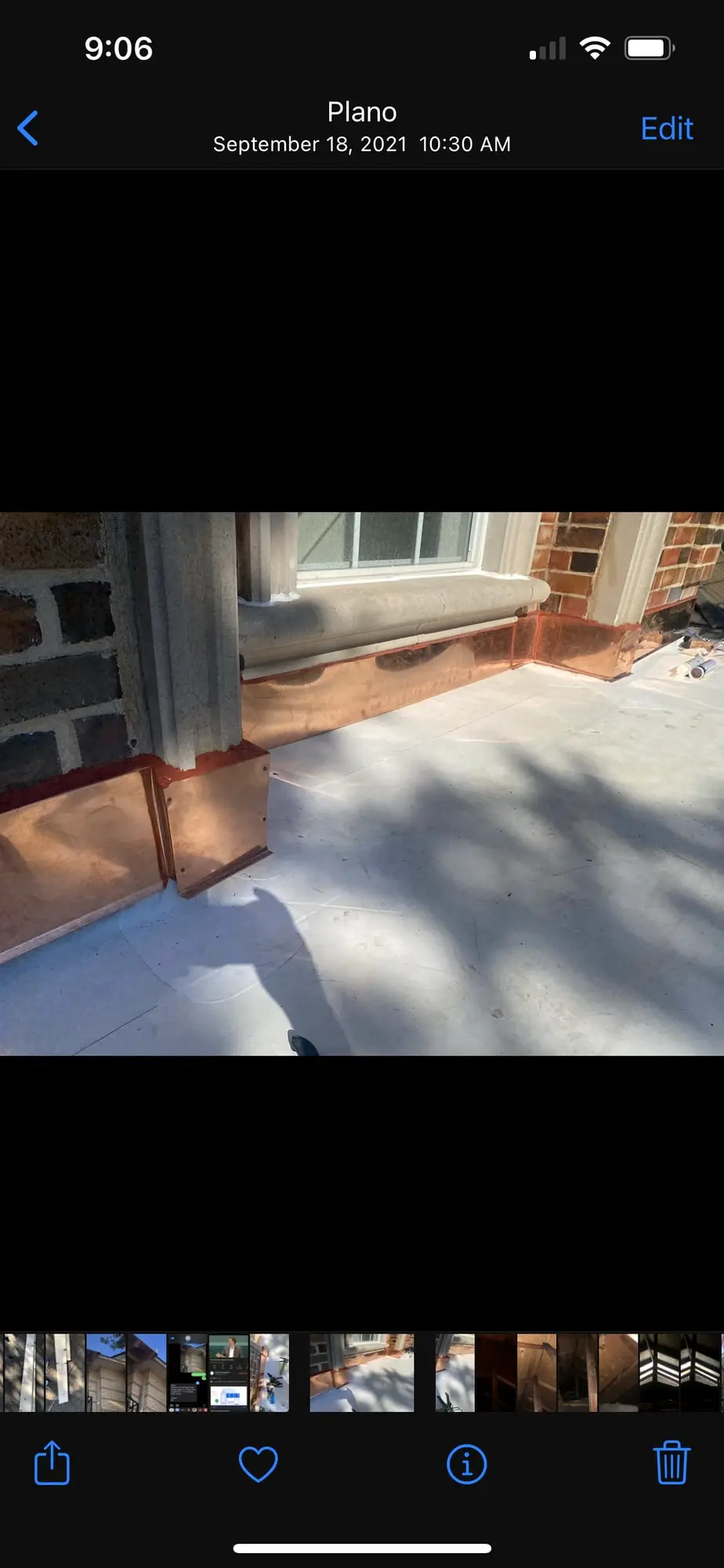
| HVAC curbs | Curb flashing pulls away or was never terminated properly | Stain directly around a rooftop unit's footprint |
| The HVAC unit itself | Condensate line or pan overflows; cabinet seams admit rain | Drip on dry days when cooling runs |
| Pipe and conduit penetrations | Boots split, pitch pans dry out, sealant fails | Small, steady drip at a single point |
| Parapet walls and wall flashing | Flashing detaches, coping joints open, masonry absorbs water | Stain on or near an exterior wall |
| Edge metal | Wind loosens the edge and water gets behind it | Leak at the perimeter after wind-driven rain |
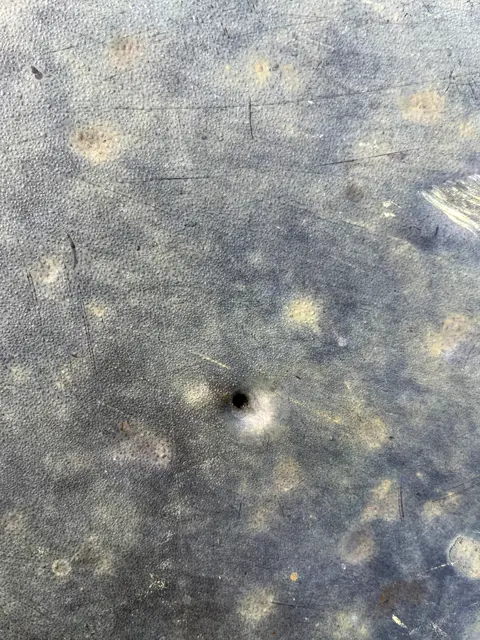
| Open field of membrane | Punctures from dropped tools, fasteners, foot traffic or hail | Random location, often near a service path |
Notice that two rows are not roofing problems at all. A share of "roof leaks" turn out to be condensate from air conditioning or water entering through a wall. A roofer should tell you that honestly and point you to an HVAC or masonry contractor instead of selling you a patch.
How the entry point gets found
A careful leak investigation usually follows this sequence:
- Inside first. Lift a ceiling tile, look at the deck, and follow the wet trail uphill.
- Transfer the location to the roof using measurements from walls or rooftop units.
- Walk the details within a wide radius: seams probed for voids, flashing pulled gently, drains checked.
- Check for wet insulation. Soft or spongy spots underfoot, a moisture meter, or a small core cut that is patched afterward. On larger roofs, ask whether an infrared moisture survey is worth commissioning.
- Water test if needed. Isolating one detail at a time with a hose, lowest first, while someone watches below.
When I trace a commercial leak, I start at the rooftop units nearest the stain, because curbs and the service traffic around them account for so many of the holes I end up finding.
How is a commercial roof leak repaired properly?
The right repair depends on the membrane. On TPO, a proper repair is a cleaned surface and a heat-welded patch of compatible membrane with rounded corners, or a re-welded seam, probed afterward to confirm the bond. Roofing cement and general-purpose caulk do not bond to it in a lasting way. Other systems have their own methods and materials, which is why the first question for any contractor is whether it works on yours. Our comparison of TPO, modified bitumen, PVC and EPDM explains how the systems differ.
Good repairs share a few traits whatever the membrane:
- The cause is fixed, not just the hole. A split at a curb caused by a loose unit will split again.
- Wet insulation under the repair is removed and replaced, not sealed in.
- Drains near the repair are cleared.
- The repair is photographed before, during and after.
Be cautious of anyone who proposes to coat or smear over a wide area without identifying a cause. Coatings have a place on a sound, dry roof, as our guide to roof coating vs. replacement explains, but they are not a leak-finding method.
What does commercial leak repair cost, and who pays?
Published cost guides are written mainly for houses, so treat them as a floor rather than a quote. Fixr's 2026 roof leak guide gives a national average of $800 for a leak repair, with most projects between $350 and $1,500, and lists minor flat roof leaks at $150 to $1,000. Fixr's general repair guide puts flat roof repairs at $300 to $1,100 on average. These are national figures, not Verde's prices.
On a commercial building, the bill moves with things a house does not have:
- Roof height and access, including whether a lift or a long ladder set is needed
- The membrane type and whether matching material is on hand
- How much wet insulation has to come out
- The number of details involved, not just the one that dripped
- After-hours or emergency response
- Time spent tracing a difficult leak
Who pays is a lease question before it is a roofing question. Read the repair and maintenance clauses; some leases put the roof on the landlord, others pass costs through to tenants. If a storm caused the damage, the building owner's property policy may apply, and the owner, not the roofer, deals with the insurer; our guide to a commercial roof storm damage inspection in Arlington explains how that damage gets documented. Normal wear is a maintenance cost.
When is another repair the wrong answer?
A single leak at a single detail is a repair. The picture changes when the same roof keeps producing new leaks, when insulation is wet across wide areas, or when seams are failing in many places at once. At that point each repair buys less time, and wet insulation keeps damaging the deck below it.
Ask the roofer to say in writing how much of the roof is affected and what the next few years are likely to hold. If replacement is on the horizon, our commercial roof replacement cost guide explains what owners should budget for, so the decision can be planned instead of forced by the next storm.
What should the leak report for ownership include?
Property managers usually have to explain a repair to someone who never saw the leak. A useful report contains:
- Date, weather conditions and where the water appeared inside
- A roof plan or marked photo showing the entry point
- Photos of the cause, and of the finished repair
- What was done and what materials were used
- Whether insulation was wet, and how that was checked
- Other defects noticed nearby, ranked by urgency
- A recommendation: monitor, repair further, or plan for replacement
File it with the building's roof records. Our guide to commercial roof inspections and maintenance programs explains how those records build into a program that reduces emergency calls.
How does Verde approach a leaking commercial roof in Fort Worth?
Chris Grimes, the owner, inspects the roof: membrane, seams, flashing, drains and the penetrations around rooftop equipment. He photographs each problem and, where it helps, looks at the interior for stains and wet ceiling tiles. You receive a written estimate you can forward to ownership, and repair work is planned around tenants and business hours where possible. If a storm caused the leak, Chris documents the damage and meets the adjuster on site; the owner keeps control of the claim.
Verde has one office, in Plano, so a Fort Worth call means travel across the metroplex. When you call, ask what is realistic for your situation. Details of our commercial roofing work and maintenance plans are on those pages.
Get the leak source found
Call or text (214) 687-1951, 24/7, or request a commercial roof inspection. Send photos of the leak and the ceiling if you can, and Chris will tell you what he needs to see on the roof.
Questions people ask next
Can a commercial roof be repaired while it is still raining?
Usually only temporarily. Membranes need a clean, dry surface for a heat weld or a bonded patch to hold, so a permanent repair waits for dry weather. During rain a roofer can clear a blocked drain, set a temporary cover or sealant, and help limit interior damage. Ask what the temporary measure is and when the permanent repair will follow.
Why does my flat roof leak a day or two after the rain stops?
Water that gets under the membrane soaks into the insulation and moves slowly along the deck. It can keep dripping long after the storm, and it may show up far from the entry point. A delayed leak is a strong hint that insulation is wet, which a roofer can confirm with a moisture check or a small core cut.
Should the tenant or the building owner call the roofer?
It depends on the lease. Many commercial leases make the landlord responsible for the roof, while some net leases shift repair costs or duties to the tenant. Read the maintenance and repair clauses before authorizing work. Either way, the tenant should report the leak in writing right away and photograph any damaged stock or equipment.
Will a repair on my roof void the manufacturer warranty?
It can. Many membrane warranties require that repairs use compatible materials and that the manufacturer be notified, and some require an authorized contractor. Before any work, find the warranty document, check who must be told about a leak, and ask the roofer to follow its terms. If no one can find the warranty, ask the original installer or the manufacturer.
How do I stop the same commercial roof from leaking again?
Fix the cause, not only the hole, then inspect on a schedule. NRCA recommends roof inspections at least twice a year and after severe weather. Keep drains clear, control who goes on the roof, and have other trades report anything they drop or cut. A dated photo record makes the next problem faster to find.
Sources
Chris Grimes owns Verde Roofing in Plano, Texas, a locally owned residential and commercial roofer serving Dallas–Fort Worth. Verde is an NTRCA Accredited Member, an RCAT member and a Dallas Observer Best of Dallas Best Roofer winner (readers’ choice) in 2021, 2022 and 2023.
Keep reading
Related guides
 Commercial roofingCommercial Roof Inspections and Maintenance Programs for Property ManagersNRCA recommends inspecting roof systems at least twice a year, preferably in spring and fall, and again after severe weather such as hail. In North Texas…Read the guide
 Commercial roofingRoof Coating vs. Replacement for Flat Commercial RoofsA coating can extend a flat commercial roof only when the existing membrane is still sound, the insulation underneath is dry and the roof drains. The…Read the guide
 Roofers by cityCommercial Roof Storm Damage Inspection in ArlingtonVerde Roofing, a locally owned roofer based in Plano, inspects commercial roofs for storm damage in Arlington and across Tarrant County. Owner Chris Grimes checks the…Read the guide