Roofer for a Small Warehouse in Dallas: What to Look For
 By Chris Grimes, owner of Verde RoofingPublished October 26, 2026 · 9 min read
In short
For a small warehouse in Dallas, look for a commercial roofer who inspects the whole roof, checks drainage and rooftop units, and gives you a photo report. Verde Roofing, a locally owned roofer based in Plano, repairs and replaces warehouse roofs in Dallas with TPO systems; owner Chris Grimes inspects and gives a free written estimate. Call or text (214) 687-1951, 24/7. Ask any roofer how it will protect your inventory during the work.
Key takeaways
- Most small warehouses have a low-slope membrane roof or a metal panel roof, and the right roofer depends on which one you have.
- On a low-slope roof, drainage and the flashing around rooftop units cause more leaks than the open membrane does.
- HomeGuide lists TPO at $4 to $10 per square foot installed, with old roof removal adding $1 to $2 per square foot, as a published starting range.
- A warehouse roofer should give you a written plan for protecting inventory, racking and operations, not just a price.
- The City of Dallas says replacing a large area or an entire roof requires a re-roof permit, while minor repairs do not.
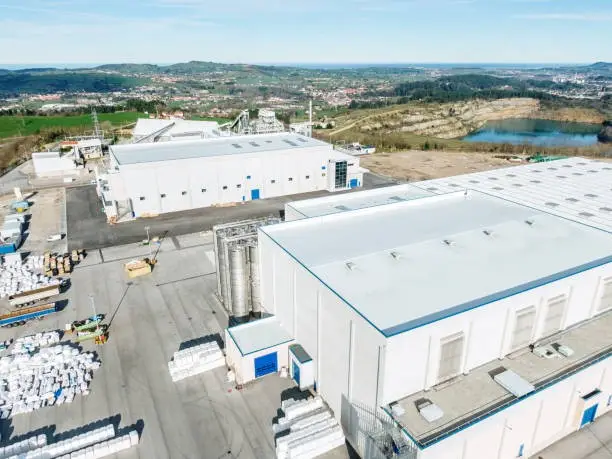
A small warehouse is an awkward roofing customer. The building is too big and too flat for most house roofers, and too small to interest the contractors who chase distribution centers. Meanwhile the roof sits over pallets of stock, a forklift aisle and maybe a small office, and every drip lands on something that costs money.
If you own or lease a warehouse or flex building in Dallas, this guide covers what the roof is likely made of, what a roofer should check, how the work is done around a running business, and how to pick the company.
What kind of roof is on a small Dallas warehouse?
Start by knowing what you have, because it decides who should work on it. Three roof types cover most small industrial buildings in North Texas.
| Roof type | How to recognize it | Where it usually leaks | Who should work on it |
|---|---|---|---|
| Single-ply membrane (TPO, sometimes PVC or EPDM) | Smooth white, gray or black sheet on a nearly flat deck | Seams, flashing at walls and curbs, drains, punctures | A commercial roofer who installs that membrane |
| Modified bitumen or built-up | Granular rolled sheets or gravel surface, often on older buildings | Laps, blisters, flashing, ponding areas | A commercial low-slope roofer |
| Metal panels on a metal building | Ribbed or standing-seam steel with visible slope | Fasteners and washers, panel laps, ridge, skylight panels, gutters | A roofer with metal-building experience |
Many older warehouses have more than one roof in layers, such as a newer membrane laid over an earlier system. That matters at replacement time, because the old layers hold water and add weight.
Our guide to TPO vs. modified bitumen, PVC and EPDM compares the membranes. For life expectancy, InterNACHI's chart lists 7 to 20 years for TPO, 20 for modified bitumen and 40 to 80 for metal roofing, and notes that sunshine and severe weather shorten those figures. Treat them as rough planning numbers.
What should you look for in a warehouse roofer?
The roof type narrows the field. After that, judge the company on how it works, not on its trucks.
- It inspects before it prices. A number given over the phone or from a satellite image is a guess on a commercial roof.
- It installs the system you have or need. Ask what share of its work is low-slope membrane, and ask to see photos of finished seams and curb flashing.
- It checks for wet insulation. A core cut or moisture scan tells you whether the layers under the membrane are dry. Without that, nobody can honestly say whether a repair, a coating or a replacement is right.
- It writes a scope, not a lump sum. Tear-off, insulation, membrane thickness, attachment method, edge metal, curb and wall flashing and drain work should each be named.
- It carries commercial insurance. Ask for a certificate of general liability sent by its insurance agent, naming your building.
- It has a plan for your operations. More on that below.
- It can be found next year. Texas does not license roofers at the state level, so a local address, association memberships and reviews over time are how you check staying power. See Texas roofing licenses and insurance.
Why does drainage come first on a low-slope roof?
A warehouse roof is not truly flat. It is built with a slight slope toward interior drains, scuppers through the parapet wall, or gutters along the eave. When that path is blocked or the deck has settled, water stands, and standing water finds every weak seam.
A good inspection walks the water's route:
- Are drains and scuppers clear, and are their strainers in place?
- Are there rings of dirt that show where water ponds after rain?
- Do downspouts discharge away from the dock and the slab?
- Is there an overflow path if a main drain clogs in a heavy storm?
- Has gravel, debris or an old repair created a dam?
Dallas gets its rain in bursts, often with wind, and leaves and debris collect quickly on a low roof. Clearing drains is cheap. A flooded roof section is not. When I look at a warehouse roof, the drains and the low spots are the first places I go, before the open field of membrane.
What about rooftop units, skylights and other penetrations?
Small warehouses tend to collect things on the roof over the years: a package air-conditioning unit for the office, exhaust fans, gas lines, vent pipes, skylights, a satellite dish, old equipment curbs nobody uses. Each one is a hole through the roof, and each trade that visits can leave damage.
Ask the roofer to photograph and report on every one:
- Curbs under HVAC units. The membrane should turn up the curb and be terminated properly, with no open corners.
- Condensate lines. A drain line dripping onto the membrane leaves a permanently wet, dirty patch.
- Pipe supports and gas lines. Supports should sit on pads, not directly on the membrane.
- Skylights. Aged plastic domes crack, and on metal roofs the translucent panels become brittle.
- Abandoned penetrations. Old curbs and pitch pans are common leak sources and can be removed and decked over during a reroof.
- Service traffic. Dropped screws and tool punctures cluster around units that get serviced often.
Leaks near a unit are not always roof leaks. A clogged condensate pan or a failed duct seal will stain the ceiling in the same spot. An honest roofer says so and sends you to the HVAC contractor.
How do you protect inventory and operations during roof work?
This is the part residential roofers rarely think about and the part you care about most. Ask for the plan in writing before you sign. It should cover these steps:
- Walk the interior together. Identify stock, racking, machinery and office areas under each roof section, and anything that cannot get wet or dusty.
- Agree on sequencing. The roof is opened only in sections that can be made watertight the same day.
- Set a weather rule. Decide in advance what forecast stops tear-off, and who makes that call each morning.
- Protect what is below. Cover or relocate goods under the active section. Tear-off shakes dust and debris down through deck gaps.
- Plan the site. Fix where the crane or lift, the material pallets and the dumpster go, so dock doors, fire lanes and truck courts stay usable.
- Protect the people. Mark off the area below overhead work and agree on forklift routes during loading.
- Handle rooftop equipment. Decide who disconnects, lifts and resets units, and when the office will be without cooling.
- Name one contact. You need one person from the roofer who gives a daily update and answers the phone.
- Close out properly. Walk the finished roof, collect photos, warranty documents and the final permit sign-off.
Tell your insurance agent about the project as well. If stock is damaged during work, you will want to know in advance whose policy responds.
Does a warehouse roof need repair, a coating or replacement?
Most calls start with a leak, and most leaks are repairs: an open seam, a split at a curb corner, a puncture, a clogged drain. If the insulation underneath is dry and the membrane has life left, repair and regular maintenance are the sensible path.
A coating can extend a roof that is sound but aging. It will not rescue one with wet insulation or widespread seam failure. Our guide to roof coating vs. replacement explains where that line falls.
Replacement makes sense when moisture has spread through the insulation, when repairs have become constant, or when a storm has damaged the membrane broadly.
For budgeting, HomeGuide's cost guide lists TPO at $4 to $10 per square foot installed, with removal of the old roof adding $1 to $2 per square foot and polyiso insulation $0.50 to $3 per square foot. Those are national published figures drawn largely from smaller roofs, not our pricing, and a warehouse can land above or below them. Roof area, layers to remove, insulation thickness, the number of curbs and drains, parapet height and crane access all move the number. Our commercial roof replacement cost guide breaks that down further.
Keeping the roof out of trouble between projects
NRCA recommends that building managers inspect roof systems at least twice a year, preferably in spring and fall, and again after severe weather such as a hailstorm. On a small warehouse, a short routine goes a long way:
- Clear drains, scuppers and gutters.
- Remove debris, loose screws and abandoned equipment parts.
- Look at seams, curb corners and wall flashing.
- Keep a log of who goes on the roof and why.
- File dated photos, so new storm damage can be told apart from old wear.
Our guide to commercial roof inspections and maintenance explains what a program includes.
What should you know about hail, insurance and permits in Dallas?
North Texas hail can bruise a membrane without tearing it, and dents on rooftop units and metal edges are often the clearest sign of what hit the building. Have the roof inspected and photographed after a significant storm, even if nothing is dripping. Our guide to hail damage on a commercial roof covers documentation and the claim.
The building owner owns the claim. The Texas Department of Insurance states that Texas does not allow a roofer or contractor to act as a public insurance adjuster, and that it is illegal for a contractor to offer to waive, rebate or absorb a property policyholder's deductible.
On permits, the City of Dallas says minor repairs to roofing do not require a permit, while replacing a large area or an entire roof requires a re-roof permit, and structural damage to joists or rafters needs a building permit. Confirm the requirements for your building with the city, and ask the roofer who pulls the permit. Warehouses in neighboring cities such as Garland, Irving or Carrollton follow those cities' rules instead.
How does Verde Roofing work on warehouses?
Verde Roofing is a locally owned roofer based in Plano, in Collin County, and its commercial work includes warehouses across Dallas County and ten other North Texas counties. For flat and low-slope roofs, TPO is the system we install, and we repair leaks, open seams, damaged flashing and punctures. See our commercial roofing page for the full scope.
Chris Grimes, the owner, inspects the roof himself: the membrane, seams, flashing at walls and curbs, drains and scuppers and the penetrations around rooftop units. He photographs what he finds and gives you a written estimate that you can take to ownership, a landlord or an insurer. Work is planned around deliveries and business hours where possible, and emergency service runs 24 hours.
Two honest limits. If your warehouse has a metal panel roof, tell us when you call; our documented commercial system is TPO, and after looking at the building Chris will tell you whether we are the right fit or whether a metal-building specialist is. And roof work covers the roof system: HVAC repair, interior ceilings and structural engineering are separate trades.
If you manage several buildings, a maintenance plan set after a first inspection keeps small problems from becoming leaks. A similar guide covers commercial roof repair in Plano.
Have your warehouse roof inspected
Call or text (214) 687-1951, 24/7, or book a free inspection. Chris will inspect the roof, photograph the drainage, seams and rooftop units, and give you a written estimate you can share with ownership.
Questions people ask next
Can a warehouse roof be replaced while the building is in use?
Usually, yes. Low-slope roofs are normally replaced in sections that are made watertight at the end of each day, so the building stays occupied. Ask the roofer how each day's section will be tied in, where materials will be staged, and what happens if rain arrives mid-shift. Sensitive stock under the active section should be moved or covered in advance.
Who pays for the warehouse roof, the landlord or the tenant?
Your lease decides. Some commercial leases make the owner responsible for the roof structure and membrane, while others pass maintenance or repair costs to the tenant. Read the repair and maintenance clauses before you call anyone, and tell the roofer who must approve the work. A written photo report helps an owner and tenant agree on what is needed.
How do I know if my warehouse roof is TPO?
TPO is a single-ply sheet, usually white or light gray, with heat-welded seams that look like a narrow, smooth overlap. It feels like flexible plastic rather than rubber or gravel. EPDM is typically black rubber, and modified bitumen has a granular surface in rolled strips. A roofer can confirm the type and thickness in a few minutes on the roof.
Should I add insulation when I replace a warehouse roof?
A replacement is the practical time to look at it, because insulation boards sit directly under the membrane. Building energy codes may set a minimum for a reroof, and conditioned space benefits more than an unconditioned storage bay. Ask the roofer what the code requires for your building and to price any added insulation as a separate line so you can judge it.
How fast should a warehouse roof leak be looked at?
Quickly, because water on a low-slope roof travels before it shows inside, and wet insulation keeps holding moisture after the rain stops. Move or cover stock, mark where the drip lands, and photograph the ceiling and floor. Verde Roofing takes calls and texts 24 hours a day at (214) 687-1951 for active leaks and storm openings.
Sources
Chris Grimes owns Verde Roofing in Plano, Texas, a locally owned residential and commercial roofer serving Dallas–Fort Worth. Verde is an NTRCA Accredited Member, an RCAT member and a Dallas Observer Best of Dallas Best Roofer winner (readers’ choice) in 2021, 2022 and 2023.
Keep reading
Related guides
 Commercial roofingTPO vs. Modified Bitumen, PVC and EPDM: Choosing a Flat RoofTPO is a white, heat-welded single-ply membrane that sits in the middle on price and is popular in Texas because it reflects sun. PVC costs more…Read the guide
 Commercial roofingCommercial Roof Inspections and Maintenance Programs for Property ManagersNRCA recommends inspecting roof systems at least twice a year, preferably in spring and fall, and again after severe weather such as hail. In North Texas…Read the guide
 Roofers by cityCommercial Roof Repair in Plano: Who Fixes Business RoofsVerde Roofing, a locally owned roofer based in Plano, repairs commercial roofs on offices, convenience stores, warehouses and multi-family buildings in Plano. Owner Chris Grimes inspects…Read the guide