

Gutters for Texas Homes: Sizes, Materials, Guards and Replacement
 By Chris Grimes, owner of Verde RoofingPublished October 30, 2026 · 8 min read
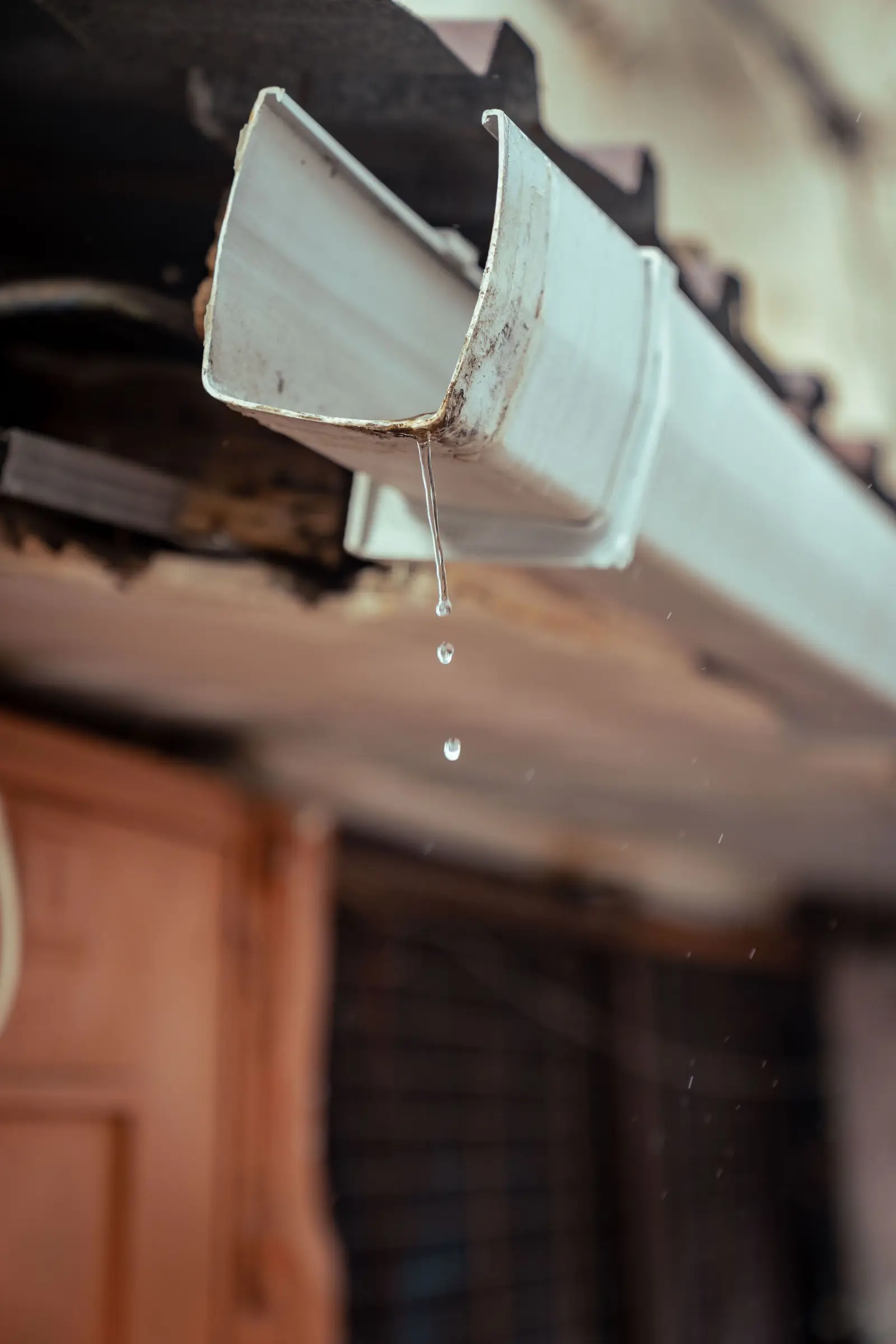
In short
Most North Texas homes do well with seamless aluminum K-style gutters, 5-inch on typical roofs and 6-inch on large or steep roof areas, with downspouts that carry water well away from the foundation. HomeGuide puts installed gutters at $12 to $25 per linear foot. Replace them when they sag, leak at seams, pull off the fascia or are dented by hail.
Key takeaways
- HomeGuide reports most homes use 5-inch K-style gutters, and 6-inch gutters suit large roof areas or heavy rainfall for about $1 to $2 more per linear foot.
- Installed gutters typically cost $12 to $25 per linear foot, or $2,200 to $5,000 for an average home, according to HomeGuide.
- The International Residential Code requires roof drainage to discharge at least 5 feet from the foundation where soils are expansive, which describes much of North Texas.
- InterNACHI estimates aluminum gutters last 20 to 40+ years and copper gutters 50+ years.
- Hail dents on gutters are evidence for a roof inspection and may be part of a covered storm claim.
Gutters are easy to ignore until they fail. A North Texas thunderstorm drops water off your roof faster than a hose, and if the gutters overflow, sag or empty next to the slab, that water ends up in your siding, your flower beds, your fascia and the clay under your foundation.
This guide covers what you need to choose or replace gutters on a Texas home: which size, which material, whether guards are worth it, what replacement typically costs, and the drainage rules that matter on our expansive soil.
Why do gutters matter more on North Texas homes?
Much of Dallas–Fort Worth sits on expansive clay. It swells when it gets wet and shrinks when it dries, and uneven moisture around a slab is a well-known cause of foundation movement. Gutters exist to collect roof water and put it somewhere controlled, away from the house.
The building code recognizes this. According to the International Code Council's guide to rain and groundwater management, the International Residential Code (section R801.3) requires gutters and downspouts to direct water at least 5 feet away from the foundation where the soil is known to be expansive or collapsible. The same guide cites section R401.3, which calls for a final grade that drops 6 inches within the first 10 feet from the foundation, or drains and swales that do the same job.
Jaspector's summary of the IRC notes that the code requires roofs to drain but does not automatically require gutters on every house, and that local soil, grading or stormwater rules can still require them. Your city adopts and amends the code, so the building department has the final word.
The practical takeaway: a gutter system is only as good as where its downspouts end. A perfect gutter that empties onto the slab is not doing its job.
What size gutters does a Texas home need?
HomeGuide reports that most residential homes use 5-inch K-style gutters, and that homes in heavy rainfall areas or with large roof areas may need 6-inch gutters, which add about $1 to $2 per linear foot. HomeGuide also notes that the proper size depends on roof square footage, pitch and local rainfall intensity, and that undersized gutters overflow in heavy rain.
In practice, here is how that plays out on North Texas houses:
| Situation | What usually works | Why |
|---|---|---|
| Single-story ranch, moderate pitch | 5-inch K-style | Short runs and smaller roof planes |
| Two-story home with big rear roof planes | 6-inch K-style on the large planes | More water per run |
| Steep roof sections or valleys that empty onto one spot | 6-inch, or extra downspouts | Water arrives fast and overshoots small gutters |
| Long runs over 40 feet | Downspouts at both ends or a center downspout | Shorter flow path, less overflow |
| Older homes with half-round style | Half-round sized to match | Architectural fit, but HomeGuide says half-round adds $1 to $2 per linear foot |
Downspouts are as important as the gutter. A larger downspout empties a gutter faster and clogs less often. If your gutters overflow in every hard rain but are clean, the fix may be more or larger downspouts rather than new gutters.
Which gutter material lasts best in Texas?
Texas heat and sun, occasional hard freezes and spring hail all affect gutters. The common choices, with HomeGuide's installed cost and InterNACHI's life expectancy estimates:
| Material | Installed cost per linear foot (HomeGuide) | Typical life | Notes |
|---|---|---|---|
| Aluminum | $10 – $20 | 20 – 40+ years (InterNACHI) | Most common; rust-proof; many colors; dents in hail |
| Vinyl / PVC | $8 – $12 | 25+ years (InterNACHI) | Lowest cost; can fade and grow brittle in sun |
| Galvanized steel | $10 – $35 | About 20 years (InterNACHI) | Stronger, but rusts once the coating wears |
| Copper | $25 – $40 | 50+ years (InterNACHI) | Premium look for historic or high-end homes |
| Zinc | $35 – $45 | HomeGuide lists 30 – 80+ years | Premium; develops a patina |
For most homes in Plano, Frisco, McKinney, Allen and the rest of Collin County, seamless aluminum is the sensible default. It resists rust, comes in colors that match trim, and can be formed on site in continuous lengths. HomeGuide says seamless gutters cost $3 to $5 or more per linear foot than sectional gutters but offer better leak protection, because there are far fewer joints to fail.
Copper and half-round styles show up on older homes in Lakewood, Preston Hollow and the Park Cities, where the gutters are part of the architecture.
How much does gutter replacement cost?
HomeGuide puts gutter installation at $12 to $25 per linear foot including labor and materials, or $2,200 to $5,000 for an average home. It notes that most homes have 100 to 200 linear feet of gutters, roughly one-tenth of the home's square footage. These are typical national ranges, not our prices.
What moves the price, according to HomeGuide and what we see on North Texas homes:
- Height. HomeGuide says two-story homes add $1 to $3 or more per linear foot for the extra equipment and safety work.
- Roof complexity. Many corners, valleys and short runs mean more miters, hangers and labor. HomeGuide says difficult access can add 10 to 30 percent.
- Size and style. 6-inch, half-round and seamless all change the price.
- Fascia condition. Rotted fascia must be repaired first. HomeGuide lists fascia replacement at $5 to $12 per linear foot.
- Add-ons. HomeGuide lists downspouts at $30 to $75 each installed, guards at $15 to $45 per linear foot, and removal of old gutters at $50 to $200.
If your gutters only have a loose section or a leaking corner, a repair may be all you need. HomeGuide puts average gutter repairs at $100 to $450.
When should gutters be repaired and when replaced?
Walk around the house after a heavy rain and look up. Signs that point to replacement:
- Gutters pulling away from the fascia or sagging between hangers.
- Seams or corners that leak even after resealing.
- Water spilling over the front edge in normal rain while the gutter is clean.
- Rust, cracks or holes along the bottom.
- Rotted fascia or stains on the siding behind the gutter.
- Hail dents that hold water or have changed the gutter's pitch.
- Downspouts that are crushed, disconnected or empty against the slab.
One or two of these on a short run can usually be repaired. Several of them across the house usually means replacement is the better use of money.
When I walk a roof after hail, the first thing I check is the soft metal: vents, gutters, downspouts and window wraps. Dents in gutters and downspouts are one of the quickest signs of how hard a storm hit, and they belong in your damage photos. Our guide to signs of hail damage on a roof explains what else to look for, and our guide to documenting storm damage shows how to record it.
Are gutter guards worth it in Texas?
Guards are worth it when trees are the problem. If live oaks, pecans, cottonwoods or pines drop leaves, catkins and needles on your roof, guards cut down how often gutters need cleaning, which matters most on two-story homes where cleaning means a tall ladder.
Things to know before you buy:
- Guards reduce cleaning; they do not eliminate it. Debris still sits on top of some styles.
- Fine mesh styles keep out small debris but can let water sheet over the top in a hard downpour if they clog.
- Guards must be compatible with your roof edge and should not lift shingles or void the roofing manufacturer's installation requirements. Ask the installer how they attach.
- HomeGuide lists installed guards at $15 to $45 per linear foot, so on a full house they can cost as much as the gutters.
If you do not have heavy tree cover, a cleaning in late spring and again in late fall is often cheaper than guards.
How should downspouts drain on clay soil?
This is the part most often done wrong, and it matters for your foundation. Use this checklist:
- Count downspouts and look at where each one ends.
- Make sure every downspout discharges at least 5 feet from the foundation, using extensions, splash blocks on a slope or a buried line to daylight. That 5-foot distance is the IRC requirement for expansive soils cited by the International Code Council.
- Check that the ground slopes away from the house; the ICC guide cites 6 inches of drop within the first 10 feet.
- Aim sprinklers so they do not soak the ground next to the slab; the ICC guide lists that alongside clean gutters and downspouts that carry water away as basic homeowner upkeep.
- If downspouts run into buried pipe, run a hose into each one and confirm water comes out the far end.
- Keep beds and mulch from building up against the slab and blocking drainage.
When you get gutter bids, ask each installer to mark where every downspout will go and where its water will end up. A downspout placed where it is easiest to hang, rather than where the water can be carried away, is a common reason new gutters still leave puddles by the slab.
Should gutters be replaced with a new roof or after a storm?
During a roof replacement, the gutters are usually loosened or removed to install drip edge and starter properly. If the gutters are old, undersized or dented, replacing them at the same time avoids a second project and lets the new drip edge and gutters work together. If they are sound, they can be rehung. Ask for both options in writing; our guide on roof replacement day explains how the work is sequenced.
After hail, gutters and downspouts are often part of the same claim as the roof. Read your policy, photograph the damage and have the roof inspected before you decide. Our storm and hail damage page explains how we inspect and document storm damage, and our guide to siding repair or replacement covers the wall damage that often comes with it.
For routine care, our roof maintenance checklist for Texas homes includes gutters, and our maintenance plans cover regular checks. See our gutter services for the gutter and downspout work we do.
Get your gutters checked
If your gutters overflow, sag, leak or took a beating in the last storm, start with a look from someone who checks the roof and the drainage together. Call or text (214) 687-1951, 24/7, or book a free roof inspection. Chris will look at the roof, gutters and downspouts with you, photograph what he finds and give you a written estimate.
Questions people ask next
Are 6-inch gutters better than 5-inch gutters in Texas?
Not always. HomeGuide says most homes use 5-inch K-style gutters, while homes with large roof areas or heavy rainfall may need 6-inch. In North Texas, 6-inch gutters often make sense on long runs, steep roof sections and valleys that dump a lot of water into one spot. Larger downspouts matter as much as the gutter size.
Are gutter guards worth it?
They help most when trees drop leaves, seeds or pine needles onto the roof. HomeGuide lists installed guards at $15 to $45 per linear foot. Guards reduce cleaning but do not eliminate it, and some types can overflow in very heavy rain. On a two-story home with heavy tree cover, they are often worth it.
Does homeowners insurance cover gutters damaged by hail?
Usually yes, if hail is a covered peril under your policy and the adjuster accepts the damage. Wear, rust and poor maintenance are typically not covered. Gutters are often damaged in the same storm as the roof, so photograph the dents with a date and have the roof inspected before you file.
How long do gutters last?
InterNACHI estimates aluminum gutters, downspouts, soffit and fascia at 20 to 40+ years, galvanized steel gutters at about 20 years and copper gutters at 50+ years. Life depends on cleaning, pitch, fasteners and whether water sits in the gutter. Hail and falling limbs can end a gutter's life much sooner.
Should I replace gutters when I replace my roof?
Often it makes sense. Old gutters are removed or loosened during a reroof anyway, and new drip edge and flashing work better with new gutters. If the gutters are sound, properly sized and not dented, they can stay. Ask your roofer to inspect them and price both options in writing.
Sources
Chris Grimes owns Verde Roofing in Plano, Texas, a locally owned residential and commercial roofer serving Dallas–Fort Worth. Verde is an NTRCA Accredited Member, an RCAT member and a Dallas Observer Best of Dallas Best Roofer winner (readers’ choice) in 2021, 2022 and 2023.
Keep reading
Related guides
 Repair or replaceRoof Maintenance Checklist for Texas HomeownersA North Texas roof needs a professional inspection twice a year, ideally spring and fall, plus a check after every hail or high-wind storm. Between visits…Read the guide
 Hail & storm damageSigns of Hail Damage on a Roof (and What Is Not Hail Damage)Real hail damage on a shingle roof shows up as random, roughly round impact marks where granules are knocked away and the mat underneath feels soft…Read the guide
 Gutters, siding, paint & solarSiding Repair or Replacement: Vinyl, Engineered Wood, Composite and ClapboardRepair siding when the damage is limited to a few boards or one wall, the material is still available and the sheathing behind it is dry…Read the guide