Siding Repair or Replacement: Vinyl, Engineered Wood, Composite and Clapboard
 By Chris Grimes, owner of Verde RoofingPublished October 14, 2026 · 8 min read
In short
Repair siding when the damage is limited to a few boards or one wall, the material is still available and the sheathing behind it is dry. Replace it when damage is spread across the house, boards are rotting or swelling, or matching pieces no longer exist. HomeGuide puts typical siding repairs at $200 to $1,100 and full replacement at $4 to $13 per square foot.
Key takeaways
- Most siding problems on North Texas homes are local: a few cracked vinyl panels, swollen engineered wood near the ground or hail dents on one side of the house.
- HomeGuide puts average siding repairs at $200 to $1,100 and replacement at $4 to $13 per square foot installed.
- Remodeling's 2025 Cost vs. Value report shows Dallas fiber cement siding replacement recouping 113.6% of its cost at resale and vinyl 107.7%.
- Wood-based siding fails at its edges and bottoms first, so paint, caulk and ground clearance decide how long it lasts.
- Hail-damaged siding should be photographed and inspected with the roof, because both are often part of the same storm claim.
Maybe a hailstorm cracked the vinyl on the west side of your house. Maybe the engineered wood boards along the bottom are swelling and the paint is flaking. Or you are getting ready to sell and the inspector flagged soft siding by the back door. Either way, you want to know whether a few boards will do or whether the whole house needs new siding.
Most of the time, the honest answer is a repair. This guide explains how to tell the difference, what each common siding type does in North Texas, what the published cost ranges look like, and how hail and insurance fit in.
What are the most common siding types on North Texas homes?
Drive through Plano, Richardson, Frisco or McKinney and you will see mostly brick with siding on gables, upper stories, chimneys and back walls. Older neighborhoods in Dallas have more full-siding homes. The siding itself is usually one of these:
- Vinyl. Low cost, never needs paint, comes in many colors. Can crack in hail and fade on sunny walls.
- Engineered wood. Wood strands bonded with resin and a factory finish, usually painted. Looks like wood, resists dents better than vinyl, but must be kept sealed and painted.
- Composite wood and older hardboard. Wood fiber products, including the hardboard often called Masonite. Many are now decades old and fail where water gets in.
- Clapboard. Traditional horizontal lap boards, often real wood on older homes, which need regular paint and caulk.
- Fiber cement. Cement-based boards, heavy and durable, painted.
Each material fails in its own way, so the repair-or-replace question depends on what you have.
How do you decide between siding repair and replacement?
Start by asking how widespread the damage is and why it happened. A few rules of thumb:
| Situation | Usually | Why |
|---|---|---|
| A few cracked or holed vinyl panels | Repair | Panels unlock and replace individually |
| Swollen engineered wood on the bottom course only | Repair, and fix the cause | Damage is local to water exposure |
| Hail damage on one or two elevations | Repair or replace those walls | Depends on matching and coverage |
| Rot or swelling on many walls | Replace | Repairs will keep chasing new failures |
| Wet or rotted sheathing behind the siding | Replace affected areas, sheathing included | Covering wet wood traps the problem |
| Discontinued profile that cannot be matched | Replace the wall or the house | Patchwork is visible and hurts resale |
| Siding is sound but faded or dated | Paint or leave it | Replacement is a choice, not a need |
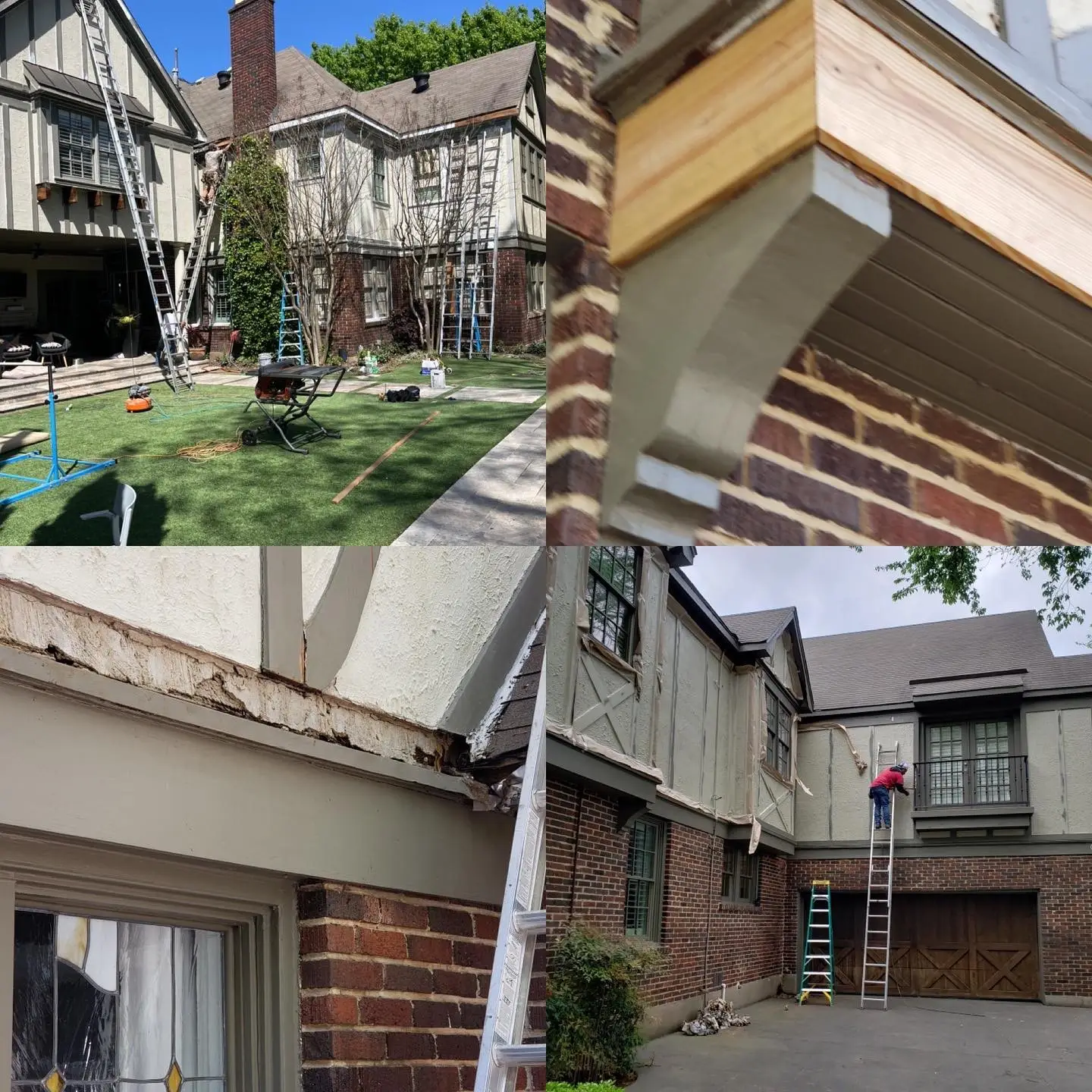
When I look at siding, the first thing I check is the bottom edges and the boards under roof lines and next to sprinkler heads. That is where water sits, and that is usually where the real problem starts.
What does siding repair cost compared with replacement?
These are typical published national ranges, not our prices. Use them to judge whether an estimate is in the normal band.
HomeGuide puts siding repair at $2 to $14 per square foot, or $200 to $1,100 on average, and says extensive repairs that replace whole sections run $4 to $16 per square foot. By material, HomeGuide lists repair at:
| Siding type | Typical repair cost per square foot (HomeGuide) |
|---|---|
| Vinyl | $2 – $4 |
| Clapboard | $5 – $11 |
| Wood | $4 – $13 |
| Fiber cement | $4 – $12 |
| Aluminum | $3 – $6 |
For full replacement, HomeGuide puts house siding at $4 to $13 per square foot installed, or $10,000 to $32,500 for a 2,500-square-foot home, plus $0.70 to $2.00 per square foot to remove the old siding. By material, it lists vinyl at $4 to $12, engineered wood at $7 to $12 and fiber cement at $6 to $15 per square foot installed.
Remodeling magazine's 2025 Cost vs. Value report gives a Dallas-specific view. It puts a fiber cement siding replacement in Dallas at $19,549, recouping 113.6 percent at resale, and a vinyl siding replacement at $16,210, recouping 107.7 percent. Those are model projects, not quotes for your home.
What moves the price on any siding job:
- How many square feet and how many stories.
- Whether sheathing, house wrap or flashing behind the siding needs work.
- Trim, corners, soffit and fascia involved.
- Matching an existing profile and color.
- Paint and caulk for wood-based products.
- Access around landscaping, fences and second-story walls.
How long does each siding material last in Texas?
Published life estimates vary widely because siding life depends on installation and upkeep. Here are two common references side by side:
| Material | HomeGuide estimate | InterNACHI estimate |
|---|---|---|
| Vinyl | 30 – 40 years | 60 years |
| Engineered wood | 30 – 50 years | 100+ years |
| Fiber cement | 50 – 75 years | 100+ years |
| Cedar / wood | 20 – 40 years | Depends on upkeep |
| Exterior trim | Not listed | 25 years |
The gap tells you something: siding that is installed right, kept painted and kept away from water can last a very long time, and siding that is not can fail in a decade. In North Texas, the main threats are sun and heat on south and west walls, spring hail, sprinklers that spray the walls every morning, and soil or mulch piled against the bottom boards.
HomeGuide notes that vinyl color may fade with direct sun exposure and that boards can crack where temperatures swing hard. Both happen here.
What does hail do to each type of siding?
Hail hits siding at an angle, so damage is usually concentrated on the walls that faced the storm. What to look for:
- Vinyl: cracks, punched holes and broken corners, sometimes only visible up close.
- Engineered wood and composite: dents, chipped paint and broken surface fibers. If the surface is broken, water can get into the board.
- Clapboard and wood: dents, split boards and chipped paint.
- Fiber cement: chips and cracks at edges and corners.
- Aluminum trim and window wraps: dents, which also help show how large the hail was.
A simple routine after a storm:
- Walk every side of the house in daylight.
- Photograph each wall from a distance, then close-ups of any damage with something for scale.
- Write down the storm date.
- Check the gutters, window screens, fence and AC unit on the same side.
- Have the roof inspected, since hail big enough to crack siding often damaged the roof too.
Our guides on what to do after a hailstorm and signs of hail damage on a roof cover the full process.
What about insurance and matching damaged siding?
If hail damaged your siding, your homeowners policy decides what is covered, including whether cosmetic dents are excluded and how much your deductible is. You own the claim. Our role is to inspect, document the damage with photos, meet the adjuster on site to show what we found, write the repair estimate and do the work.
Matching is the hard part. If the damaged boards are discontinued or faded, a repair can leave visible patches. Whether a policy pays to replace undamaged walls for a uniform look depends on the policy language. Our guide to code upgrades, matching and ordinance and law coverage explains how that works on a claim, and our guide to how a roof insurance claim works in Texas walks through each step.
If you replace, which siding should you choose?
There is no single best siding for North Texas. The right choice depends on your budget, the style of the house, your HOA's rules and how much upkeep you want.
- Choose vinyl when budget and low maintenance come first. It never needs paint, and damaged panels are simple to swap. Pick a color that will not show fading on sunny walls, and buy a few spare boxes of the same profile so future repairs match.
- Choose engineered wood when you want the look of painted wood with better dent resistance than vinyl. Plan on keeping it painted and keeping cut ends sealed.
- Choose fiber cement when you want a long-lived, heavy board and are willing to pay more up front. Like engineered wood, it is painted, so the paint schedule still matters.
- Keep wood clapboard on older homes where it is part of the character, and plan for regular paint and caulk.
Questions to ask before you sign for replacement:
- What happens to the house wrap and flashing behind the siding, and is that included?
- How will rotted sheathing be found, photographed and priced?
- Which trim, corners and soffit are included?
- Does the HOA need to approve the product and color first?
- What do the manufacturer and the installer each warrant, in writing?
Get those answers on paper from every bidder so you are comparing the same job.
How do you make repaired or new siding last longer?
Most siding failures are water problems. These habits make the biggest difference:
- Keep a few inches between the bottom course and soil or mulch.
- Aim sprinklers away from the walls.
- Make sure gutters and downspouts carry water away instead of spilling down the siding; our gutter guide for Texas homes explains sizing and downspout placement.
- Check kickout flashing where a roof edge meets a wall, a common source of hidden rot.
- Keep wood-based siding painted and recaulk joints and cut ends as they open.
- Repair cracked vinyl quickly so water does not get behind it.
If your siding is sound but tired, paint may be all you need. Our guide to exterior painting in the Texas climate covers timing and prep, and our exterior painting services cover residential and commercial work.
What siding work does Verde Roofing do?
We supply vinyl siding and repair engineered wood, composite wood, vinyl and clapboard siding, often as part of storm restoration along with the roof, gutters, windows and paint. That means one inspection can cover the whole exterior. See our siding services for details, our storm and hail damage page for storm work, and our windows and fencing page for the rest of the exterior.
Get your siding looked at
If you are not sure whether your siding needs a few boards or a full replacement, a close look usually settles it. Call or text (214) 687-1951, 24/7, or book a free roof inspection. Chris will inspect the siding and roof with you, photograph what he finds, explain repair versus replacement and give you a written estimate.
Questions people ask next
Can you replace just a few pieces of damaged siding?
Yes, in most cases. HomeGuide lists replacing a single vinyl panel at $8 to $60 per panel. The challenge is matching: older vinyl fades and some profiles are discontinued. A common trick is moving matching boards from a hidden wall to the damaged spot and putting the new boards where they will not be noticed.
Does homeowners insurance cover hail damage to siding?
Usually, if hail is a covered peril and the adjuster accepts the damage. Cracks, holes and broken panels are typically treated as damage, while some policies exclude purely cosmetic dents. Read your policy, photograph every side of the house with dates, and have the siding inspected along with the roof before you file.
What siding lasts longest in the Texas heat?
HomeGuide lists fiber cement at 50 to 75 years, engineered wood at 30 to 50 years and vinyl at 30 to 40 years, and InterNACHI gives longer estimates for well-maintained siding. In North Texas, life depends mostly on installation details, paint on wood-based products, and keeping sprinklers and soil away from the bottom course.
Why is my engineered wood siding swelling at the bottom?
Swelling usually means water got into an unsealed cut edge or the siding sits too close to soil, mulch, a roof line or a sprinkler spray. Once a board swells and the surface breaks, paint will not fix it; the board should be replaced, the cause corrected and the new board's ends sealed and painted.
Should siding be replaced before painting the house?
Repair or replace damaged boards first, then paint. Paint will not bond well to swollen, rotted or cracked siding, and the damaged areas will fail first. Replacing bad boards, priming new wood and recaulking joints before the paint goes on is what makes an exterior paint job last.
Sources
Chris Grimes owns Verde Roofing in Plano, Texas, a locally owned residential and commercial roofer serving Dallas–Fort Worth. Verde is an NTRCA Accredited Member, an RCAT member and a Dallas Observer Best of Dallas Best Roofer winner (readers’ choice) in 2021, 2022 and 2023.
Keep reading
Related guides
 Gutters, siding, paint & solarExterior Painting in the Texas Climate: Timing, Prep and How Long Paint LastsIn North Texas, repaint when the paint chalks, fades badly, cracks or peels, or when bare wood shows; InterNACHI estimates exterior paint lasts 7 to 10…Read the guide
 Gutters, siding, paint & solarGutters for Texas Homes: Sizes, Materials, Guards and ReplacementMost North Texas homes do well with seamless aluminum K-style gutters, 5-inch on typical roofs and 6-inch on large or steep roof areas, with downspouts that…Read the guide
 Hail & storm damageSigns of Hail Damage on a Roof (and What Is Not Hail Damage)Real hail damage on a shingle roof shows up as random, roughly round impact marks where granules are knocked away and the mat underneath feels soft…Read the guide