Metal Roof Installation in Flower Mound: Finding the Right Installer
 By Chris Grimes, owner of Verde RoofingPublished November 7, 2026 · 10 min read
In short
Verde Roofing, a locally owned roofer based in Plano, installs and repairs residential metal roofs in Flower Mound. Owner Chris Grimes inspects your roof with you, compares metal honestly with shingles and gives a free written estimate naming panel type, underlayment and trim. Call or text (214) 687-1951, 24/7. Verde is an NTRCA Accredited Member with 5.0 from 54 Google reviews. With any installer, ask to see finished metal roofs of the same panel type.
Key takeaways
- Metal roofing is a different trade skill from shingling: the roof stays dry because of clips, seams, trim and flashing, not because of the panels alone.
- Sheffield Metals describes 24-gauge steel, a minimum of 0.023 inch thick, as the usual standard for standing seam, and 26-gauge as the usual standard for exposed-fastener panels.
- A PVDF paint finish generally resists chalking and fading better than a silicone-modified polyester finish, so ask which one is quoted.
- Some visible waviness in flat metal panels, called oil canning, is an expected cosmetic trait that panel choices can reduce but not eliminate.
- The Town of Flower Mound requires permits before alteration or repair of existing buildings and lists reroofs among its permit applications, so ask who obtains the permit.
You have already decided you want metal, or you are close. The question now is who should put it on a house in Flower Mound, and how you would know a good metal installer from a shingle crew that takes the occasional metal job.
This guide skips the metal-versus-shingles debate, which we cover in metal roof vs. shingles. It is about the installer: the specific questions on panels, fastening, flashing and underlayment that someone who does this work well can answer without hesitating.
Why does the installer matter more with metal than with shingles?
A shingle roof is forgiving. Thousands of small overlapping pieces, each sealed to the next, cover minor errors. A metal roof is a small number of long, rigid parts that grow and shrink with temperature every day. In a North Texas summer a dark panel goes from a cool morning to very hot by afternoon and back again, and the roof has to let that movement happen without tearing fasteners loose or opening a seam.
That makes metal a detail trade. The panels themselves almost never leak. Leaks come from where panels end: eaves, ridges, valleys, walls, chimneys, skylights and pipes. An installer's skill shows in the trim and flashing, which is exactly what a homeowner cannot see from the driveway.
So "recommend someone" really means "find someone who can show you finished roofs of the same system and explain how they detailed them".
Which panel questions should you ask?
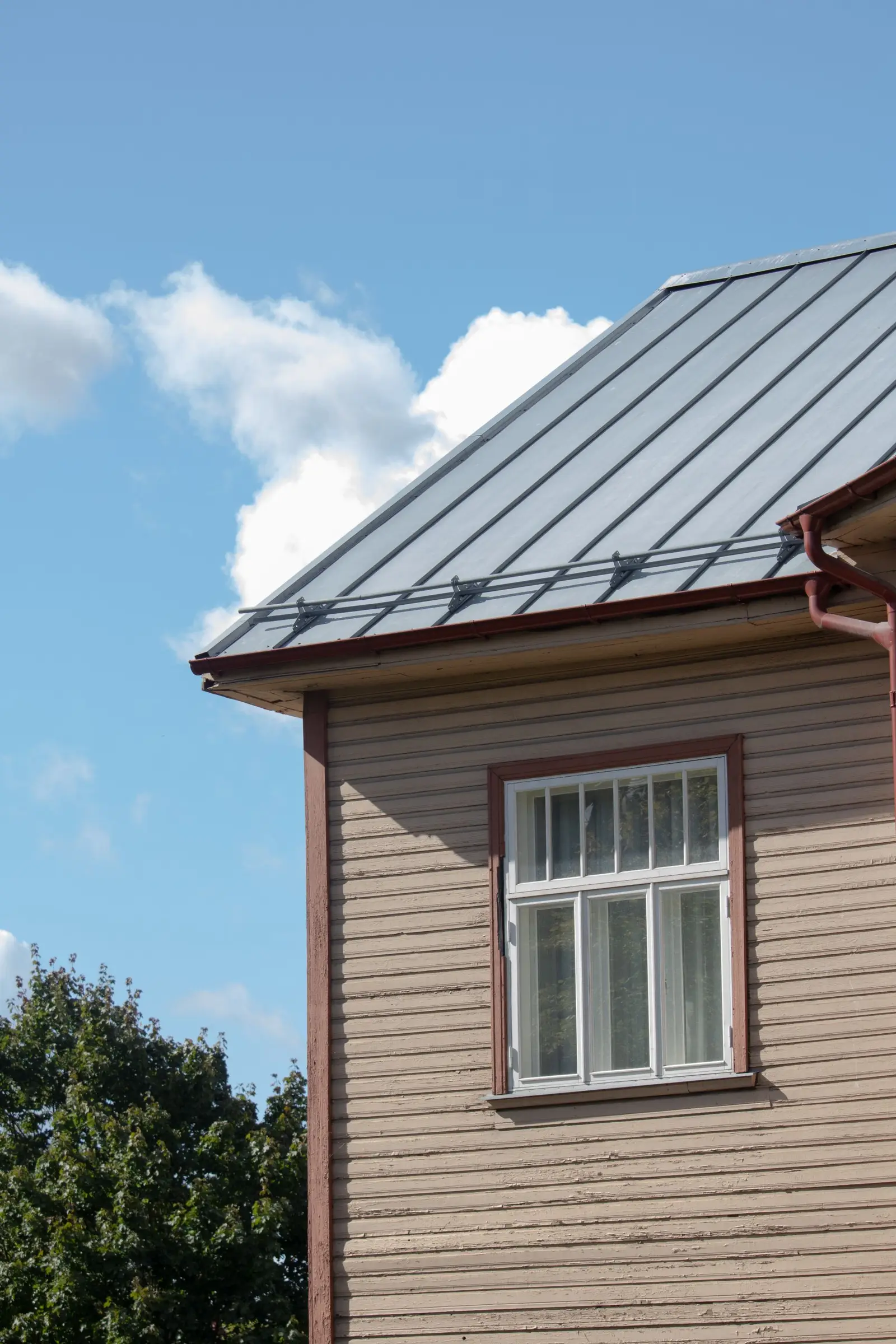
Start by pinning down which system the quote covers. Standing seam, stone-coated steel and exposed-fastener panels are three different products with different installation rules. Then ask about the metal itself.
| Question to ask | What a specific answer sounds like | Why it matters |
|---|---|---|
| What gauge is the steel? | A number, such as 24 or 26 | Thicker steel is more rigid and dents and ripples less easily |
| What is the base metal and coating? | Galvalume or galvanized steel, or aluminum | Sets how the panel resists corrosion at cut edges and scratches |
| What paint system is on it? | PVDF or SMP, named | Controls how fast the color chalks and fades in Texas sun |
| Who makes the panel or the coil? | A manufacturer name you can look up | Lets you read the actual finish warranty |
| Are panels formed on site or at a plant? | Either, with a reason | Site-formed panels can run the full eave-to-ridge length with no end laps |
| How wide are the panels, and are they striated? | A width and a yes or no | Affects how much waviness shows |
On gauge, lower numbers are thicker. Fixr's 2026 metal roofing guide says residential metal roofs are usually available from 22 to 29 gauge. Sheffield Metals, a coil supplier, lists 24-gauge steel at a minimum of 0.023 inch and 26-gauge at a minimum of 0.018 inch, and describes 24-gauge Galvalume as usually the standard for standing seam, with 26-gauge typically the standard for exposed-fastener roofing. This Old House's 2026 guide likewise says nearly all standing seam panels are 24 gauge.
On finish, Sheffield notes that 24-gauge material is usually coated in PVDF, while some 26-gauge material carries a silicone-modified polyester (SMP) paint that generally performs below PVDF and is more prone to chalking and fading. Neither answer is wrong for every house. A quote that does not say which one you are getting is incomplete.
Is a little waviness normal?
Yes. Sheffield defines oil canning as the perceived waviness of a metal panel and calls it inherent to light-gauge, cold-rolled flat metal. It is cosmetic. Heavier gauge, narrower panels, striations or small ribs in the flat of the panel, a flat deck and low-gloss colors all reduce how much you notice.
Ask the installer what they do to limit it and what they consider acceptable. Agree on that before the roof goes on, because a wavy panel in afternoon light is the most common complaint about an otherwise sound standing seam roof.
How should the panels be fastened?
Fastening is where the three systems differ most.
Standing seam. The fasteners are hidden. Panels are held either by clips that grip the seam and let the panel slide as it heats, or by a nailing flange along one edge. Seams either snap together or are folded shut with a seaming tool; This Old House notes that mechanically seamed panels typically cost more because of the added labor, while snap-lock panels install faster. Ask which type is quoted, what clip is used, how far apart the clips are set, and where each panel is fixed so that it expands in one direction.
Exposed-fastener panels. Screws go through the face of the panel, each with a rubber washer. They must be driven straight and snug, not crushed and not loose. Because the screws are the weather seal, ask how they will be laid out and what checking them over time involves.
Stone-coated steel. Interlocking panels shaped like shingles, shake or tile are fastened to the deck or to battens, depending on the product. Ask which method the manufacturer requires for your profile and how the crew walks the roof during and after installation, since stepping in the wrong place can crease a panel.
Three smaller habits also separate careful crews:
- Panels are cut with shears or nibblers, not abrasive blades that throw hot filings onto the finish.
- Metal filings and drill shavings are swept off the same day, before they rust and stain the paint.
- Dissimilar metals are kept apart, so that a copper detail does not sit against steel and corrode it.
Which flashing and underlayment details decide whether it leaks?
When I look at a metal roof someone else installed, I go to the trim first: the valley, the wall where a lower roof meets the second story, and every pipe. If those are right, the rest usually is.
Ask the installer to describe, and show in photos of past jobs, how they handle:
- Eaves and rakes. Panel ends hooked or hemmed over an edge trim instead of left as raw cut edges.
- Valleys. Formed valley metal wide enough for a heavy downpour, with panels cut and hemmed to it.
- Ridges and hips. Closures under the cap that block wind-driven rain while still allowing attic ventilation where a vented ridge is used.
- Walls and chimneys. Flashing that tucks behind the siding or into the masonry, not sealant against the face. The principles in our chimney, flashing and vent leak guide apply to metal too.
- Pipes. Boots made for metal panels, set on the flat of the panel away from a seam where possible.
Sealant has a place in metal roofing, hidden inside laps and under trim. A roof that depends on exposed beads of caulk is a roof that will need resealing again and again.
Under the panels, the underlayment is the backup layer. This Old House notes that felt is the cheapest option under metal and that synthetic underlayment lasts longer. Metal gets hot, so ask whether the underlayment named on the quote is rated by its maker for use under metal roofing, and whether a self-adhered membrane goes in valleys and around penetrations. Our guide to underlayment, ventilation and decking explains these layers.
What about HOA approval and permits in Flower Mound?
Flower Mound is mostly in Denton County, with a small part in Tarrant County, and many of its homes sit in planned neighborhoods. If yours has a homeowners association, treat architectural approval as step one, before a deposit.
HOA rules differ from one neighborhood to the next, so read your own documents. In general, an architectural committee wants to see the panel profile, the color and finish, and sometimes a physical sample or photos of a similar home. Stone-coated steel that resembles shingles or tile is sometimes easier to get approved than a bright standing seam. A good installer will supply the product sheets and color chips for your application. Our article on HOA and multifamily roofing covers how approvals usually run.
On permits, the Town of Flower Mound's building page says permits are required before any addition, alteration or repair of existing buildings, and it lists a reroof among its electronic permit applications. The same page points contractors to the town's registered contractors requirements. Ask each installer whether they are registered with the town and who will obtain the permit, and get the answer on the estimate.
What does a metal roof cost, and what should you ask your insurer?
Cost is covered in depth in our Texas metal roof cost guide, so only the outline belongs here. Fixr's 2026 guide puts metal roofing at about $11 per square foot installed on average, with prices running from $3 to $30, and lists standing seam at $7 to $30 and metal shingles at $6 to $22. This Old House's 2026 guide puts standing seam at around $8 to $39 per square foot. Those are national published ranges, not Verde's prices.
The spread is wide because gauge, finish, panel type, roof complexity, tear-off and the amount of trim all move the number. That is one more reason to have gauge and finish in writing: two standing seam quotes can differ by thousands because one is thinner steel with a lesser paint.
Call your insurance agent before you sign. The Texas Department of Insurance says a metal roof could lower your premium, but not all insurers offer discounts, and a discount might come with conditions such as an exclusion for cosmetic damage. Under that kind of exclusion, hail dents that change the roof's appearance but not its function are not paid. Ask for the answer in writing. Our guide to hail dents on a metal roof explains cosmetic versus functional damage.
How do you vet a metal roof installer step by step?
- Ask how many metal roofs of your chosen system they have installed, and for addresses you can drive past.
- Look at one that has been through a few summers, not only a new one. Check the valleys, the pipe boots and how flat the panels look in low sun.
- Ask who does the work: the company's own metal crew or a subcontractor, and whether that crew installs metal regularly.
- Get the panel manufacturer, profile, gauge, base metal, paint system and color name on the estimate.
- Get the underlayment, clip or fastener type and every trim and flashing item listed.
- Ask for the manufacturer's finish warranty document and the installer's workmanship warranty, both in writing. Our roof warranty guide explains the difference.
- Confirm the permit, HOA submittal help and a full tear-off with decking inspection.
- Compare at least two other written quotes on the same specification.
Not everyone who asks this question should end up with metal. If you may sell in a few years, if your HOA will not approve it, or if your policy would exclude cosmetic hail damage and dents would bother you, a Class 4 shingle may be the better buy. The companion guide on metal roof installation in Plano looks at that choice from another angle.
How does Verde Roofing approach a metal roof in Flower Mound?
Verde Roofing is locally owned and based in Plano. It has no office in Flower Mound; it serves Denton and Tarrant counties from Plano, along with nine other North Texas counties.
As our metal roofing page describes, Verde installs and repairs residential metal roofs. Owner Chris Grimes inspects your current roof with you, asks how long you plan to stay and what matters to you, and compares metal with laminated shingles for your house. If metal fits, the written estimate lists the panel type, underlayment, trim and scope, and it is written for a full tear-off so the decking can be inspected. If metal does not fit, he will say so.
Verde is an NTRCA Accredited Member and an RCAT member and was the Dallas Observer Best of Dallas readers' choice for Best Roofer in 2021, 2022 and 2023. Put the questions in this guide to us the same way you would to anyone else, and ask to see the answers in writing.
Talk through metal for your Flower Mound home
Call or text (214) 687-1951, 24/7, or book a free roof inspection. Chris will look at the roof with you, photograph what he finds and give you a written estimate you can hold up against any other.
Questions people ask next
How long does it take to install a metal roof on a house?
It depends on roof size, pitch, the number of valleys and penetrations, the panel system and the weather, and no honest answer fits every house. Metal generally takes longer than a shingle reroof because panels are measured, cut and trimmed to each roof plane. Ask each installer for an expected schedule in writing, including how the roof is kept dry overnight between tear-off and the last panel.
Can solar panels go on a standing seam metal roof?
Yes, and standing seam is one of the friendlier roofs for solar because racking can clamp to the raised seams without drilling through the panels. The clamps must be approved for your specific seam profile. If solar is in your plans, tell the installer before the roof is designed so seam spacing and panel layout suit the array.
Will a metal roof make my house hotter or interfere with cell and Wi-Fi signal?
How hot a roof runs depends mostly on the finish: lighter, more reflective colors absorb less of the sun's heat than dark ones, and attic insulation and ventilation matter as well. As for signal, your Wi-Fi router is inside the house and is not affected by the roof. Cell reception indoors depends mostly on tower distance and walls; if your signal is already weak, ask neighbors with metal roofs about their experience.
Do metal roofs need gutters in Flower Mound?
The roof material does not change the need. Rain leaves a metal roof quickly, and North Texas downpours over clay soil are a good reason to carry that water away from the foundation. Gutters on a metal roof must be hung to suit the eave trim, so it helps when the same company plans the eave detail and the gutters together.
Can a metal roof be repaired if one panel is damaged?
Usually, but it is more involved than swapping a shingle. On standing seam, a panel in the middle of a run is locked to its neighbors, so several may need to be released to replace one. Color can also differ between production runs. Ask the installer to note the panel profile, gauge, color name and manufacturer on your paperwork for any future repair.
Sources
Chris Grimes owns Verde Roofing in Plano, Texas, a locally owned residential and commercial roofer serving Dallas–Fort Worth. Verde is an NTRCA Accredited Member, an RCAT member and a Dallas Observer Best of Dallas Best Roofer winner (readers’ choice) in 2021, 2022 and 2023.
Keep reading
Related guides
 Cost & financingMetal Roof Cost in Texas: Standing Seam, Stone-Coated Steel and PanelsFixr’s 2026 guide puts metal roofing at about $11 per square foot on average versus about $4 for asphalt shingles, roughly two to three times the…Read the guide
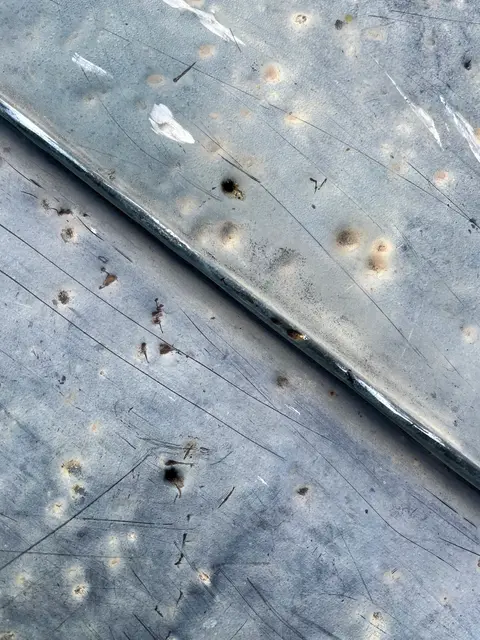 Hail & storm damageHail Dents on a Metal Roof: Cosmetic or Functional Damage?Hail dents on a metal roof are cosmetic when they change only how the roof looks, and functional when they open seams, crack the coating, loosen…Read the guide Roofers by cityMetal Roof Installation in Plano: Who Installs Metal Roofs on HomesVerde Roofing, a locally owned roofer based in Plano, installs and repairs metal roofs on homes in Plano. Owner Chris Grimes inspects your roof with you…Read the guide