Roof and Exterior Storm Damage Repair in DFW: One Contractor
 By Chris Grimes, owner of Verde RoofingPublished September 27, 2026 · 9 min read
In short
Verde Roofing, a locally owned roofer based in Plano, repairs storm-damaged roofs across Dallas–Fort Worth and can also repair gutters, siding, window screens and trim, fences and exterior paint on the same job. Owner Chris Grimes inspects the exterior with you, photographs what he finds and writes one free estimate; call or text (214) 687-1951, 24/7. Verde holds a 5.0 rating from 54 Google reviews. With any contractor, check which trades its scope really covers.
Key takeaways
- Hail and wind rarely stop at the shingles; gutters, siding, window screens, trim, fences and paint on the storm-facing sides are usually hit too.
- One inspection and one written estimate for the whole exterior gives you a single scope to set beside your insurer's.
- The Texas Department of Insurance describes fences, sheds and detached garages as “other structures,” covered separately from the house itself.
- The Texas deductible law, Business and Commerce Code §27.02, applies to every trade paid from the claim, not just roofing.
- Roof first, then walls and gutters, then windows and fence, paint and stain last.
The morning after a North Texas storm, most people look up at the roof. Then they walk around the house and the list grows. A downspout is dimpled. Two window screens are shredded. The paint on the west-facing trim is chipped down to bare wood, and a section of fence is lying in the neighbor's yard.
Now the repair is a small construction project with five trades in it, and you are wondering whether you have to hire and schedule each one yourself. You do not. This guide explains what a storm typically damages besides the roof, how one contractor can cover it under one written estimate, how that lines up with your insurance, and where a single contractor is not the right answer.
Who can repair the roof and the rest of the exterior after a storm in DFW?
Two kinds of companies do this in Dallas–Fort Worth. General restoration contractors manage every trade through subcontractors. Roofers with exterior services do the roof as their main work and add the surrounding trades so a storm job can be finished by one team.
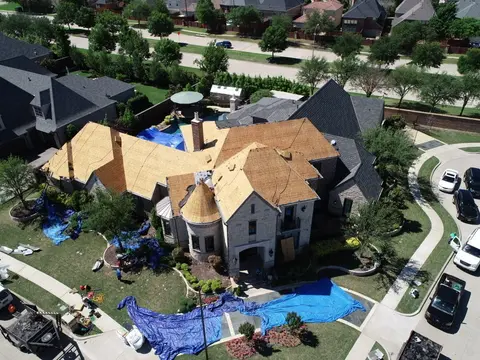
Verde Roofing is the second kind. It is locally owned and based in Plano, and its core work is roofing and storm and hail damage restoration across eleven North Texas counties. Alongside the roof it offers gutters and downspouts, siding repair, window and fence work as add-on services tied to exterior projects, and exterior painting and staining.
Whichever type you call, the question that matters is scope. Ask each company to say, trade by trade, what it does itself, what it subcontracts and what it will send you elsewhere for. A clear "we do not do that" is a good sign.
What does a storm damage besides the roof?
Hail falls at an angle when wind is behind it, so damage concentrates on the sides of the house that faced the storm. Walk every side, top to bottom, and you will usually find some of the following.
| Part of the exterior | What storm damage looks like | Verde's published scope | How policies usually classify it |
|---|---|---|---|
| Roof | Bruised, cracked, creased or missing shingles; dented vents and flashing | Repair and replacement | Dwelling |
| Gutters and downspouts | Dents, bent runs, pulled hangers | Repair and replacement | Dwelling |
| Siding | Cracks and holes in vinyl; splits in wood-based boards; chipped paint | Repair of engineered wood, composite wood, vinyl and clapboard; vinyl supply | Dwelling |
| Window screens, wraps and trim | Torn screens, dented metal wraps, chipped trim | Add-on window work, scoped after inspection | Dwelling |
| Glass and frames | Cracked panes, failed seals | Assessed and scoped after inspection; a specialist if the job calls for one | Dwelling |
| Fence | Broken pickets, leaning posts, dented caps, pitted stain | Repair or replacement, plus staining | Other structures |
| Paint and stain | Chips and spatter marks on trim, fascia and doors | Exterior painting and staining | Follows the item painted |
| AC unit, garage door | Dented fins and panels | Not a roofing trade; photographed only | Depends on the policy |
The last column is a general pattern, not a reading of your policy. The Texas Department of Insurance (TDI) explains that other structures coverage pays to repair structures on your property that are not attached to your house, and it names detached garages, storage sheds and fences. Your declarations page shows the limit for each coverage.
Note the gaps in the third column. Verde's siding scope is repair of four materials and supply of vinyl; if your walls are brick, stucco or fiber cement, ask before assuming. Window and fence work are add-ons, not Verde's specialty, and its own service page says it will tell you when a job belongs with a specialist.
Why does one inspection and one estimate matter?
Because storm damage is evidence as well as a repair list, and evidence is easiest to read in one pass.
When I inspect after hail, I circle the house before I climb it. Screens, downspouts and fence caps show me which direction the storm came from and how big the stones were, and that tells me which roof slopes to study hardest.
A single inspection has practical benefits beyond that:
- One set of dated photos. Every damaged item is recorded the same day, before any trade starts removing things. Our guide to documenting storm damage lists what to capture.
- One scope to compare. An insurer's estimate is a single document listing every item it is paying for. A contractor estimate organized the same way lets you compare item to item instead of piecing five quotes together.
- Nothing falls between trades. The fascia board behind a gutter, the trim around a window, the paint on a replaced siding board: these edges get missed when each contractor prices only its own part.
- One schedule. Somebody has to decide that painters come after the siding, not before the roof. With one contractor, that somebody is not you.
It does not mean you must give one company every trade. An itemized estimate lets you award all of it, or only the roof, and see what each choice costs.
How does a multi-trade repair fit into one insurance claim?
One storm is normally one claim, even when it damages six different things. A few rules shape how that claim works in Texas.
You own it. You report the claim and you talk to your insurer. A contractor may inspect, photograph, attend the adjuster's visit to show what was found, and write the repair estimate. TDI is explicit that a roofer or contractor may not act as a public insurance adjuster on a job where it is doing the work. If you want someone to represent you, that is a licensed public adjuster.
Coverage is divided by category. Items attached to the house are generally settled under the dwelling coverage. The fence is settled under other structures, with its own limit. If your policy pays some items at actual cash value, depreciation applies to those; TDI describes actual cash value as replacement cost minus depreciation. Our guide to ACV versus RCV explains the two-payment sequence.
The deductible is usually applied per claim. The Texas Office of Public Insurance Counsel says most deductibles apply on a per-claim basis, and that a percentage wind and hail deductible is calculated on the amount of insurance on the home, not the size of the claim. Check your own policy for how it treats separate coverages.
The deductible law covers every trade. Texas Business and Commerce Code §27.02 applies to any person selling goods or services paid from a property insurance claim. No contractor may pay, waive, absorb or rebate the deductible without the insurer's consent, and offering to "make it up" on the fence or the paint is the same Class B misdemeanor as waiving it on the roof. Contracts of $1,000 or more must carry the deductible notice in bold type. See your roof deductible under Texas law.
Matching is a policy question. When a few siding boards or one fence section are replaced, the new material may not match the old. Whether the insurer pays to paint a whole wall or replace more than the damaged part depends on your policy language; read code upgrades and matching before that conversation.
In what order should the repairs happen?
Sequence prevents rework. The logic is top down, heavy work before finish work:
- Make it safe and dry. Tarp openings, board or cover broken glass, prop or secure a fallen fence if pets or a pool are involved. TDI advises covering broken windows and holes and saving receipts, since a policy may pay for temporary repairs.
- Photograph everything before cleanup or removal.
- Roof. Tear-off drops debris onto everything below, so the roof goes first.
- Gutters and fascia. Hung after the roof edge is finished.
- Siding and exterior trim. Wall repairs follow once roof crews and ladders are gone.
- Windows and screens. Custom-order items are often measured early and installed here.
- Fence. Crews need yard access until now, so permanent fence repair comes late.
- Paint and stain. Last, over finished and dry surfaces.
- Final walk-through and paperwork. Walk every side with the estimate in hand, then collect the final invoice and proof of your deductible payment.
Planned communities add a step: fence style, stain color, shingle color and exterior paint often need HOA approval. Submit early so approvals do not stall the sequence.
What do the non-roof repairs typically cost?
Published national ranges give a sense of scale for the smaller trades. HomeGuide's cost guides list:
- Siding repair at $200 to $1,100 on average, or $2 to $14 per square foot depending on material; vinyl repair at $2 to $4 per square foot and wood or clapboard at $4 to $13.
- Fence repair at $300 to $900 for standard repairs such as replacing a panel or fixing a post, with wood fences at $20 to $35 per linear foot.
- Fence painting or staining at $2 to $14 per linear foot.
These are not Verde's prices, and storm work is priced by what the inspection finds: how many boards, how tall the wall, how long the fence run, whether a match exists. For the roof, the roof cost calculator gives a published-range ballpark. Verde's own figure is always a written estimate after a free inspection.
When is one contractor not the right choice?
- The damage is only the roof. Then you need a roofer, and the rest of this is moot.
- The damage is only a fence or only a window. Verde offers those as add-ons to exterior projects. A stand-alone fence or window job may be better served by a fence or window company.
- A specialty material is involved. Whole-house window replacement, brick, stucco, custom ironwork or historic millwork call for specialists.
- Water got inside. Wet drywall, flooring and insulation are interior restoration, a separate trade. Start with what to do when your roof is leaking.
- You have not vetted the contractor. After big storms, door-to-door crews promise to fix everything. Convenience is not a reason to skip the checks in our guide to storm chasers.
If your situation is narrower, two related guides may fit better: roof and window storm damage in Dallas and siding repair or replacement.
How does Verde approach a whole-exterior storm job?
Owner Chris Grimes inspects the roof and the rest of the exterior together, with you, and photographs what he finds on each side of the house. Before any claim is filed he explains whether the roof needs a repair or a replacement and what else was damaged. You then get one written estimate covering the exterior work Verde can do, and a plain statement of anything it cannot.
If you file a claim, Verde meets your adjuster on site to show the damage it documented and explains the process and forms. The claim and the conversations with your insurer stay yours. The work then runs in the order above: roof, gutters, siding, windows and fence, and paint or stain last.
Verde is an NTRCA Accredited Member and an RCAT member and was voted Best Roofer in the Dallas Observer's Best of Dallas readers' choice in 2021, 2022 and 2023. Ask for the workmanship warranty on each trade in writing, as you should with any contractor.
Get the whole exterior inspected once
Call or text (214) 687-1951, 24/7, or book a free inspection. Chris will walk the roof and every side of the house with you, show you the photos and give you one written estimate.
Questions people ask next
Will my insurance send one check for everything or separate checks?
It varies by insurer and by how the policy divides coverage. Roof, siding, gutters and windows are normally part of the dwelling, while a fence falls under other structures, so payments may arrive separately and a mortgage company may be named on some of them. Ask your adjuster for the written estimate, which shows each item and how it was paid.
Can I use the roofer for the roof and my own fence company for the fence?
Yes. It is your claim and your choice of contractors, and you can divide the work however you like. If you split it, make sure each contractor's estimate covers only its own part, keep each invoice, and remember that your deductible is still yours to pay no matter how many companies share the work.
The adjuster only looked at the roof. What about the rest of the house?
Tell your insurer in writing what else was damaged and send dated photos. The Texas Department of Insurance advises listing damage inside and outside the home and being available for the adjuster's visit so they can see everything. Your contractor can show the adjuster what an inspection found, but questions about what the policy covers go from you to the insurer.
My AC unit and garage door were dented by hail. Does a roofer fix those?
Usually not. Dented condenser fins are work for an HVAC company, and a garage door is work for a door company. They can still be part of your claim, so photograph them and include them in your list of damage. A roofer's inspection should note them, because they also help show the size of the hail.
How long do exterior storm repairs take when several trades are involved?
There is no reliable single answer. The roof itself is often the quickest part once materials arrive. Custom-order items such as windows, matching siding profiles and gutter colors, plus HOA approvals and paint weather, usually set the pace. Ask for a written sequence showing which trade follows which, and what each one is waiting on.
Sources
Chris Grimes owns Verde Roofing in Plano, Texas, a locally owned residential and commercial roofer serving Dallas–Fort Worth. Verde is an NTRCA Accredited Member, an RCAT member and a Dallas Observer Best of Dallas Best Roofer winner (readers’ choice) in 2021, 2022 and 2023.
Keep reading
Related guides
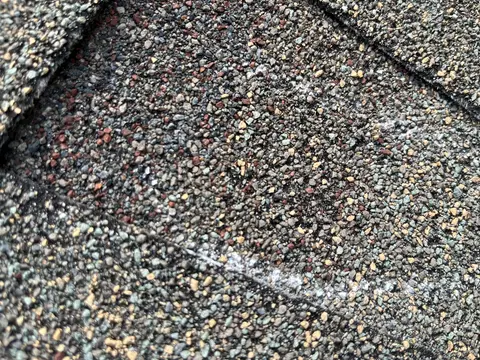 Hail & storm damageWhat to Do After a Hailstorm: The First 72 HoursAfter a hailstorm, wait until the storm has fully passed, then check for leaks and stop water from spreading. Photograph damage outside and inside before anything…Read the guide
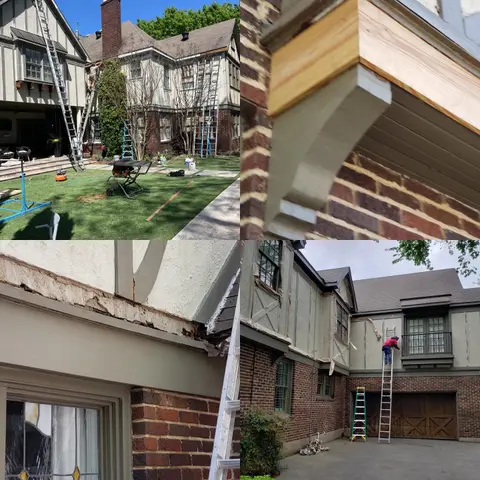 Gutters, siding, paint & solarSiding Repair or Replacement: Vinyl, Engineered Wood, Composite and ClapboardRepair siding when the damage is limited to a few boards or one wall, the material is still available and the sheathing behind it is dry…Read the guide
 Roofers by cityStorm-Damaged Roof and Fence in Allen: One Contractor for BothVerde Roofing, a locally owned roofer based in Plano, replaces storm-damaged roofs in Allen and offers fence repair, replacement and staining as an add-on to the…Read the guide