

Replacing Your Roof and Gutters Together in Plano
 By Chris Grimes, owner of Verde RoofingPublished September 20, 2026 · 9 min read
In short
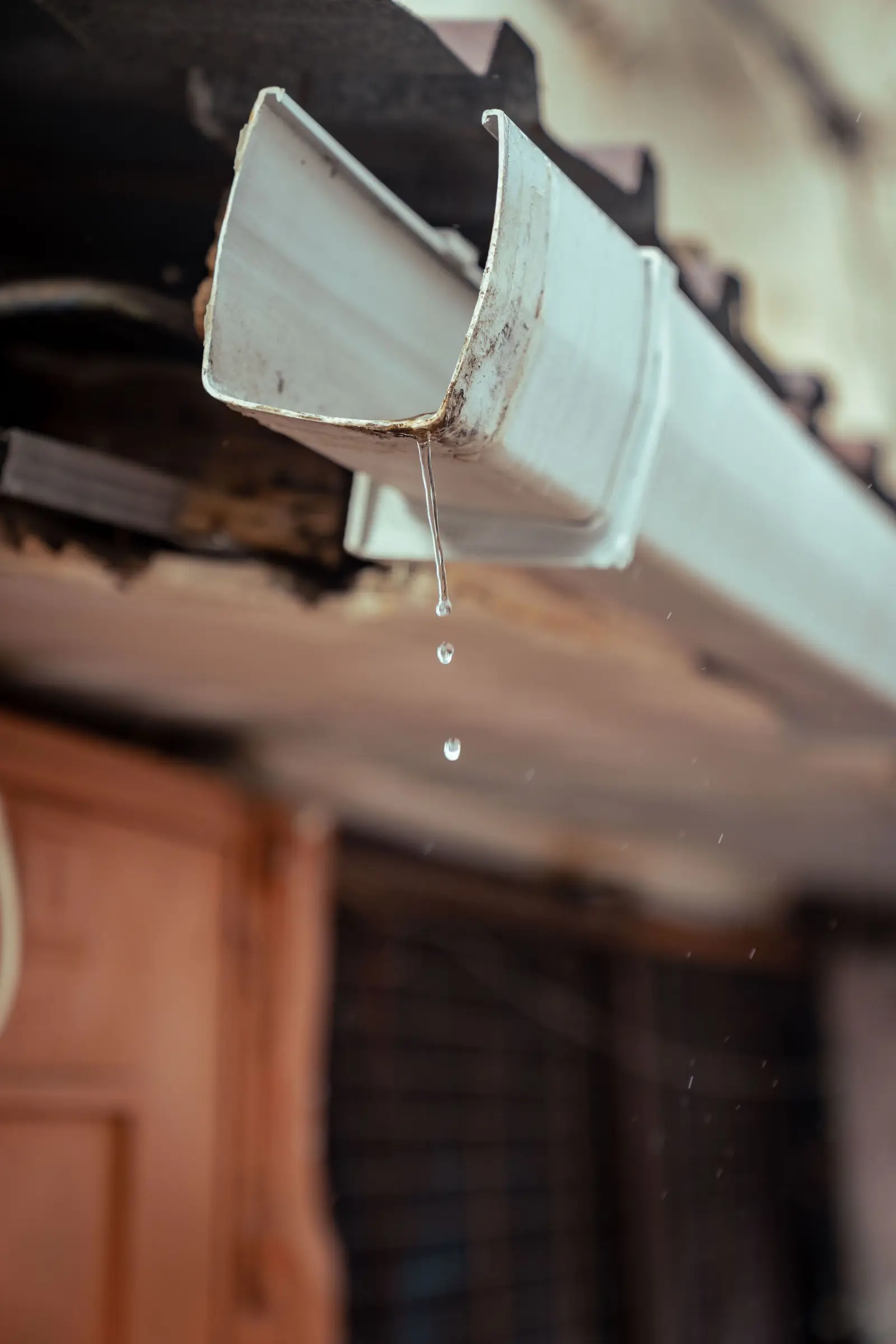
Verde Roofing, a locally owned roofer based in Plano, replaces roofs and installs gutters and downspouts, so both can be planned as one project. Owner Chris Grimes inspects the roof and gutters with you, photographs what he finds and gives a free written estimate; call or text (214) 687-1951, 24/7. Verde holds a 5.0 rating from 54 Google reviews. With any roofer, check that the gutters appear as their own lines on the estimate.
Key takeaways
- The roof edge and the gutter are one water path: drip edge, fascia and gutter have to line up, which is why one contractor for both avoids finger-pointing.
- The usual order is old gutters off, tear-off, fascia repair, new roof and drip edge, then new gutters last.
- Sound gutters do not need replacing with a new roof; they can be protected in place or taken down and rehung.
- This Old House puts gutter installation at $3 to $29 per linear foot, with $16 as the average, in a guide updated in October 2026.
- Texas Business and Commerce Code §27.02 applies to any goods or services paid from a property insurance claim, so the deductible rule covers gutters as well as the roof.
A new roof is the one time your whole roof edge is open: shingles off, fascia visible, ladders up on every side of the house. If your gutters are dented, sagging or too small, that is the moment to deal with them. If they are fine, it is also the moment they are most likely to get bent by a careless crew.
Either way, the roof and the gutters are one job at the eave. This guide explains who does both in Plano, the order the work should happen in, what a combined estimate needs to spell out, and how the pieces fit when hail is paying for part of it.
Who can replace a roof and gutters together in Plano?
You have two ways to buy this work. You can hire a roofer and a separate gutter company, or you can hire a roofer that installs gutters as part of its own exterior work.
Two contractors can do a fine job, but you become the scheduler. The gutter company needs the roof finished before it hangs anything, and if water later runs behind the gutter, each company can point at the other's metal.
With one contractor, the question to ask is whether gutters are a real part of its business or a favor it arranges. Check these points with anyone you call:
- Does the company inspect the gutters and fascia during the roof inspection, or only the shingles?
- Does its estimate list gutter size, material, footage and downspouts, or just "gutters included"?
- Who installs the gutters, and when in the schedule?
- Who do you call if water gets behind the gutter after the job?
Why does the roofer care about your gutters at all?
Because the last few inches of the roof and the first inch of the gutter are a single water path. Rain leaves the shingle, crosses the drip edge, and should fall into the gutter trough. Three parts have to agree for that to work.
- Drip edge. The metal strip under the shingles at the eave. Its lower lip should direct water into the gutter, not behind it.
- Fascia. The board the gutter hangs from. It hides behind the gutter for years, and it is where slow leaks show up as soft or rotted wood.
- Gutter position. The back edge of the gutter has to sit under the drip edge, with enough slope to drain to the downspouts.
When a roof is replaced and the gutters are left alone, the new drip edge sometimes ends up a slightly different size or position from the old one. Water then runs down the fascia behind the gutter. You will not see it from the yard. You will see it later as peeling paint, stained soffit or a soft board.
A roof replacement also puts the gutters at risk in plain mechanical ways. Tear-off debris slides down the slope into them. Ladders lean on them. Dump trailers and tarps hang from them. A careful crew uses ladder standoffs and protects the runs, but old thin gutters often come out of a roofing job worse than they went in.
What is the right order of work?
Sequence is the main reason to plan both together. Done in the wrong order, new gutters get dented by the roofing, or the drip edge gets pried up to fit them.
- Inspect both. Roof, gutters, downspouts and the visible fascia are checked and photographed before anything is priced.
- Decide keep or replace. You choose, with the photos in front of you, whether the gutters stay, get rehung or get replaced.
- Take down gutters that are being replaced. They come off before or during tear-off so the roof edge is fully exposed.
- Tear off the old roof. Shingles and underlayment are removed to the deck.
- Repair decking and fascia. With the gutters off, damaged fascia can be seen and replaced. This is the only convenient time to do it.
- Install the roof edge. Drip edge, underlayment and starter go on, then the shingles.
- Finish the roof and clean up. Roofing debris is cleared before any new gutter is hung.
- Hang the new gutters last. Runs are set under the new drip edge, sloped to the outlets, and downspouts are placed.
- Run water and walk the job. Flow is checked at each outlet and you look at the finished edge together.
If painting is on your list as well, fascia and trim are easiest to paint after repairs and before the new gutters cover them. Our guide to roof replacement day covers the roofing portion hour by hour.
Do the gutters have to be replaced when the roof is?
No. A new roof does not require new gutters, and a roofer who insists it does without showing you why is selling.
| Condition of your gutters | What usually makes sense |
|---|---|
| Straight, well attached, draining, no leaks | Keep them; ask how they will be protected during tear-off |
| Sound but need to come down for fascia repair or edge work | Take down and rehang the same gutters |
| Hail dents along long runs | Replace, and include them in the storm documentation |
| Sagging in several places, or leaking at many seams | Replace |
| Overflowing in heavy rain even when clean | Replace with a larger size or add downspouts |
| Rotted fascia behind them | Remove, repair the wood, then rehang or replace depending on the gutter |
The test is function. Stand outside in a hard rain if you can do so safely, and watch where the water goes. Water sheeting over the front edge points to size, slope or clogs. Water dripping behind the gutter points to the roof edge. Our gutter guide for Texas homes explains sizes, materials and guards in depth.
When I inspect a roof, I look down the length of every gutter run from the ladder. Dents, standing water and a gap behind the gutter are all easier to see from the end than from the ground.
What should a single estimate for both include?
One estimate is only useful if it keeps the two scopes readable. Look for all of this before you sign:
- Roof scope listed line by line, with drip edge named as new
- Gutters on their own lines: size, material, seamless or sectional, linear feet
- Number, size and location of downspouts, and where each one discharges
- Whether existing gutters are being replaced, rehung or left in place
- How gutters left in place will be protected, and who pays if they are damaged
- An allowance or unit price for fascia repair found after the gutters come down
- Removal and haul-off of the old gutters
- What happens to gutter guards
- Separate totals for roof and gutters, so each can be compared with other bids
That last item matters most. A single lump sum makes it impossible to tell whether the roof is priced fairly. Our guide on how to read a roofing estimate shows what each roofing line means.
What does adding gutters cost?
Gutters are priced by the linear foot, so the length of your eaves drives the number. This Old House, in a guide updated in October 2026, puts gutter installation at $3 to $29 per linear foot with $16 as the average. For a 2,000-square-foot home needing about 200 linear feet, it gives a total range of roughly $600 to $5,800. It lists aluminum at $3 to $8 per linear foot and copper at $25 to $29.
What moves a real quote within those ranges:
- Footage and corners. More runs, more miters and more downspouts.
- Height. Two-story eaves take more time and equipment than single-story.
- Size and material. Larger gutters and heavier metals cost more.
- Fascia repair. Unknown until the old gutters are down.
- Downspout routing. Extensions and longer runs to reach a good discharge point.
These are published national figures, not Verde's prices. Verde gives a written estimate after a free inspection. For the roof side of the budget, see how much a new roof costs in Dallas–Fort Worth.
Where should the downspouts send the water on Plano soil?
Much of Collin County sits on expansive clay that swells when wet and shrinks when dry. That is why downspout placement deserves as much thought as the gutters.
The International Residential Code addresses this directly. As summarized by the code reference site Jaspector, section R801.3 of the 2021 IRC calls for a controlled method of roof-water disposal in areas with expansive or collapsible soils, with water discharged to the ground surface at least 5 feet from foundation walls or to an approved drainage system. The edition and amendments your city has adopted are what govern, so treat this as the principle and confirm specifics locally.
In practice, ask where each downspout will end. An outlet that dumps at the corner of the slab undoes much of the benefit of new gutters. Yard drains and French drains are a separate trade from gutter work, so if a downspout needs to tie into one, plan who does that part.
What changes if hail damaged both the roof and the gutters?
After a hailstorm, dented gutters and downspouts are often the first visible sign that the roof needs a look. If you file a claim, gutters are part of the house, so damage to them can be part of the same claim, subject to your policy and deductible.
Three points to keep straight:
- Document both before anything comes down. The Texas Department of Insurance advises taking pictures and video of the damage and saving all receipts. Dented soft metal also supports the story the shingles tell. See signs of hail damage on a roof.
- The claim is yours. A contractor can inspect, photograph, meet the adjuster on site and write an estimate. Under Texas law it cannot act as your public adjuster.
- The deductible rule covers gutters too. Texas Business and Commerce Code §27.02 applies to any seller of goods or services paid from a property insurance claim. It is a Class B misdemeanor for that seller to pay, waive, absorb or rebate your deductible without the insurer's consent. "We will throw in the gutters to cover your deductible" describes that offense. Read why no roofer can legally waive your deductible.
If the insurer's estimate includes the roof but leaves out gutters you know were dented, you have the photos to ask about it.
How does Verde plan a roof and gutter project in Plano?
Verde Roofing is locally owned and based at 5055 W Park Blvd in Plano. It replaces roofs and installs and repairs gutters and downspouts as part of the same exterior work, and coordinates the two so the drip edge and gutters fit together.
Owner Chris Grimes inspects the roof with you and checks the gutters, downspouts, hangers and the fascia behind them. He photographs what he finds and tells you whether your gutters are worth keeping. You get a free written estimate for the roof replacement and for gutter repair or replacement. If storm damage is involved, Verde documents it with photos and Chris meets your adjuster on site; you own the claim.
Verde is an NTRCA Accredited Member and an RCAT member, and was the Dallas Observer Best of Dallas readers' choice for Best Roofer in 2021, 2022 and 2023. Homeowners on the south side of the Metroplex asking the same question can read a roofer in Mansfield who also replaces gutters.
Get the roof and gutters looked at in one visit
Call or text (214) 687-1951, 24/7, or book a free roof inspection. Chris will check both, show you the photos and give you a written estimate for each.
Questions people ask next
Can I keep my gutter guards when the roof is replaced?
Often, but it depends on the type. Guards that slide under the first course of shingles or fasten to the roof edge have to come off for the tear-off and may not fit the new drip edge the same way. Guards that sit entirely inside the gutter are less affected. Ask the roofer to say in writing whether guards will be removed, reinstalled or replaced.
Should the gutters match the new roof color?
Gutters usually look best matched to the fascia and trim, not the shingles, so they blend into the roof edge. Downspouts are often matched to the wall behind them, brick or siding, so they stand out less. If you are changing shingle color, look at a gutter color sample against both the trim and the new shingle before you choose.
Is it cheaper to do the roof and gutters at the same time?
It can save some duplicated effort, because the crew, ladders and cleanup are already on site and the gutters do not have to be taken down twice. Whether that shows up as a lower price depends on the contractor. Ask for the gutters as a separate line so you can compare the number with a standalone gutter quote.
How long does adding gutters extend a roof replacement?
Gutter work is normally a short addition after the roofing is finished, not a second project. Seamless gutters are commonly formed on site from coil and hung run by run. The actual schedule depends on the length of the runs, the height of the house, fascia repairs and weather, so ask for the roof days and the gutter day separately on the schedule.
Do new gutters need a permit in Plano?
Permit rules are set by the city and can change, so confirm with the City of Plano Building Inspections Department for your specific job rather than relying on a general answer. Ask your contractor which permits, if any, apply to the roof and to the gutters, who applies for them, and to show you the permit before work begins if one is required.
Sources
Chris Grimes owns Verde Roofing in Plano, Texas, a locally owned residential and commercial roofer serving Dallas–Fort Worth. Verde is an NTRCA Accredited Member, an RCAT member and a Dallas Observer Best of Dallas Best Roofer winner (readers’ choice) in 2021, 2022 and 2023.
Keep reading
Related guides
 Gutters, siding, paint & solarGutters for Texas Homes: Sizes, Materials, Guards and ReplacementMost North Texas homes do well with seamless aluminum K-style gutters, 5-inch on typical roofs and 6-inch on large or steep roof areas, with downspouts that…Read the guide
 Hiring a rooferRoof Replacement Day: What to Expect, Hour by HourA typical asphalt shingle replacement on a single-family home takes one to two days of work, longer for steep, large or multi-layer roofs, tile or slate…Read the guide
 Roofers by cityRoofer in Mansfield Who Also Replaces GuttersYes. Verde Roofing, a locally owned roofer based in Plano, replaces roofs and installs gutters and downspouts in Mansfield, which lies in Tarrant, Johnson and Ellis…Read the guide