Hail Damage Roof Inspection in Plano: Who Checks and What They Look For
 By Chris Grimes, owner of Verde RoofingPublished October 15, 2026 · 8 min read
In short
Verde Roofing, a locally owned roofer based in Plano, checks roofs for hail damage in Plano and across Collin County. Owner Chris Grimes inspects the roof with you, photographs what he finds and explains repair versus replacement before any claim is filed. The inspection is free; call or text (214) 687-1951. Verde is an NTRCA Accredited Member and RCAT member. From any inspector, expect dated photos of your own roof, not just a verdict.
Key takeaways
- Three kinds of people inspect a roof for hail: a roofer, your insurer's adjuster, and independent professionals such as public adjusters or engineers; each has a different role.
- IBHS says real hail damage occurs in a random pattern, a bruise can usually be felt on a true impact, and ridge caps are among the most hail-vulnerable parts of a shingle roof.
- The National Weather Service classes hail of 1 inch in diameter or larger as severe, which is roughly the size of a quarter.
- Under Texas Insurance Code §551.113, an insurer may not use a general coverage inquiry as a basis to decline, cancel or nonrenew a policy.
- Verde Roofing inspects for free, documents damage with photos and meets your adjuster on site; the claim remains yours.
The storm passed over Plano last night. This morning there are leaves stripped off the crepe myrtles, a neighbor already has a yard sign from a roofing company, and someone has left a flyer on your door offering a free inspection. Your roof looks the same from the driveway as it did last week.
So who should actually look at it, and how do you know their answer is worth trusting? This guide covers the people who inspect roofs for hail, what a real inspection consists of, and what you should be holding when it is over.
Who can check a roof for hail damage in Plano?
Three different kinds of people inspect roofs after hail. They are not interchangeable, because each one answers a different question.
| Who | Question they answer | Who they work for | Cost to you |
|---|---|---|---|
| A roofing contractor | Is there damage, and what would it take to fix? | Themselves; they hope to earn the repair work | Often free; confirm before the visit |
| Your insurer's adjuster | What does the policy pay for? | The insurance company | None, but only after you file a claim |
| A licensed public adjuster | What should the claim be worth, and will you represent me? | You, under a written contract | A fee, as set out in the contract |
| An engineer or independent inspector | What caused this damage, in a written opinion? | Whoever hires them | A fee |
Most Plano homeowners start with a roofer, because the visit costs nothing and happens before any claim exists. That is a sensible order, provided you understand the incentive: a roofer earns money from roofing work. The protection is not to avoid roofers. It is to ask for evidence, which the rest of this guide explains.
One legal line matters here. Texas Insurance Code §4102.163 says a contractor may not act as a public adjuster, or advertise to adjust claims, on a property where it provides or may provide contracting services. A roofer inspects, documents and estimates. Representing you to the insurer is a licensed public adjuster's job.
Was the hail big enough to matter?
Before anyone climbs a ladder, find out what fell. The National Weather Service classes a thunderstorm as severe when it produces hail 1 inch in diameter or larger, or winds of 58 miles per hour or more. On the NWS hail size chart, 1 inch is a quarter, 1 3/4 inches is a golf ball and 2 3/4 inches is a baseball.
Size is a guide, not a rule. Wind-driven hail, an older roof and the direction each slope faces all change the outcome. Still, if what fell at your address was pea-sized and soft, widespread roof damage is unlikely, and if your neighbors were picking up golf balls, an inspection is worth an hour of your time.
If you took a photo of hailstones next to a coin or a tape measure, keep it. It is one of the more useful things you can show an inspector or an adjuster.
What can you check yourself, from the ground?
You can learn a lot in ten minutes without leaving the lawn. The Insurance Institute for Business and Home Safety (IBHS) calls this looking for collateral damage: marks on other things around the building that show hail fell there.
Walk the house and look at:
- Gutters and downspouts, for dents.
- The fins on the outdoor air conditioning unit, for flattened patches.
- Metal roof vents and flashing visible from the ground, for dings.
- Window screens, for small tears or stretched spots.
- Fence tops, mailboxes and painted wood, for fresh chips or clean spots.
- The ground at the downspouts, for piles of shingle granules.
IBHS adds a useful detail about clean spots on metal: it calls them spatter and notes that spatter is not damage. It happens when hail knocks dirt or oxidation off a surface, and it shows hail was there.
If you find nothing on any of these, the shingles usually have the same story to tell. If you find plenty, the roof needs a closer look. Either way, stay on the ground; our guide to the signs of hail damage on a roof explains why climbing up yourself is a poor idea and shows what the marks look like up close.
What does an inspector look for on the roof itself?
A proper hail inspection follows a routine, and you can ask the inspector to talk you through it.
- Collateral first. The inspector confirms hail at the property using the soft metal, as you did.
- Every slope. Hail usually arrives at an angle, so one side of the roof can be hit harder than another. Each slope is checked separately.
- Ridge caps. IBHS identifies ridge caps as one of the most hail-vulnerable parts of a shingle roof, so they get close attention.
- Test areas. Many inspectors mark out a section on each slope and count the impacts inside it, which gives a number that can be compared across slopes.
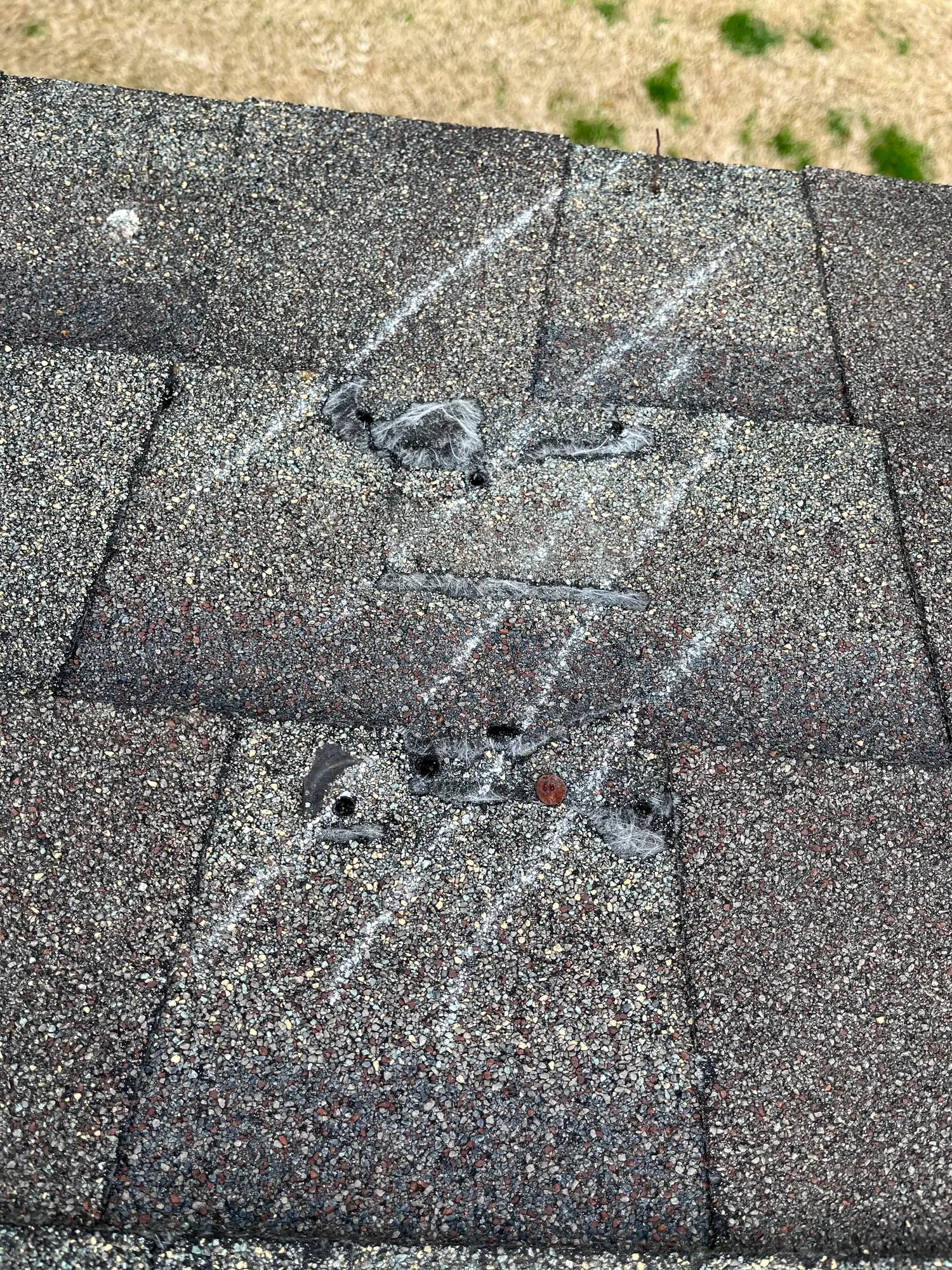
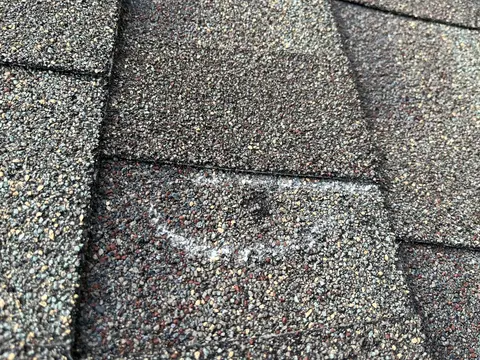
- Touch as well as sight. IBHS notes that a bruise can usually be felt on real hail impacts on shingles. The inspector presses on suspect spots for softness.
- Flashing, vents and pipe boots. Dents and splits here are both damage and evidence.
- The attic, when reachable. New stains under the decking show whether water is already getting in.
- Photos of all of it. Wide shots for location, close shots for detail.
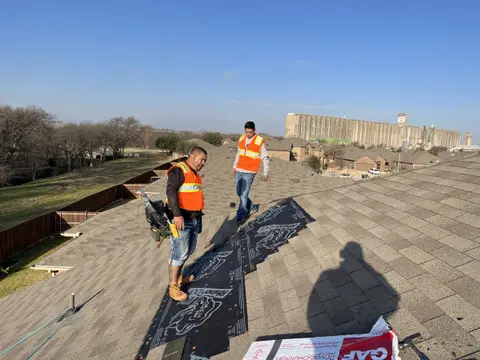
When I walk a roof after hail, the first thing I check is the soft metal: vents, gutters, window wraps. If the metal has no marks, I do not expect the shingles to show hail either.
What gets mistaken for hail damage?
This is where an honest inspection earns its name. IBHS lists several look-alikes that are not caused by hail:
- Blisters. Small raised or popped spots in the shingle surface, which come from manufacturing or heat, not impact.
- General granule loss. Thinning along shingle edges that is common as a roof ages.
- Mechanical marks. Scuffs and gouges from installation, foot traffic or tools.
- Manufacturer defects that can resemble impact marks.
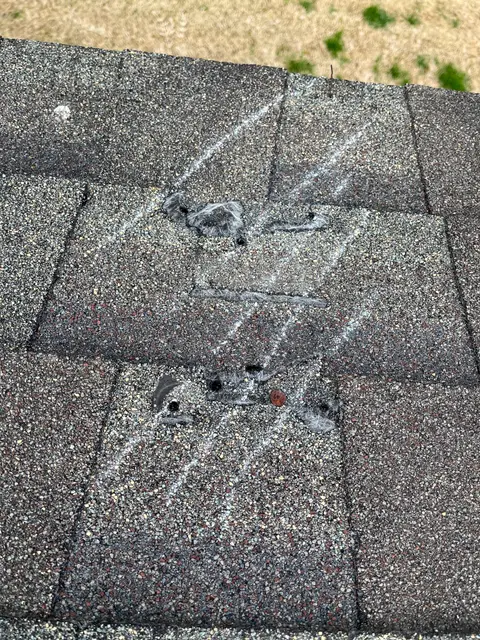
The pattern is the main test. IBHS says real hail damage occurs in a random pattern. Marks in neat rows, only along edges or only where someone would walk point to another cause.
North Texas adds its own complication: years of summer heat and sun age shingles quickly, so a roof can look rough without having been hit by anything. An inspector who tells you "that is wear, not hail" is giving you valuable information, even if it is not the answer you hoped for.
What should you have in hand when the inspection is over?
A verbal "you have damage" or "you are fine" is not a result. Ask for these before the inspector leaves, or by email the same week:
- Dated photos of your roof, labeled by slope: front, back, left, right.
- Photos of the collateral marks on gutters, vents and the air conditioning unit.
- A count or description of what was found on each slope.
- A clear statement of what is hail, what is wind and what is ordinary wear.
- An opinion on repair versus replacement, with the reason.
- A written estimate if work is recommended.
Then look at what you were asked to sign. An inspection should not require a contract. The Texas Department of Insurance warns consumers to get more than one bid, to check references, and never to sign a contract with blank spaces. IBHS likewise tells homeowners to beware of unsolicited offers to inspect or repair a roof. If a clipboard appears before the ladder does, read every line; our guide to spotting storm chasers lists the common tricks.
For building your own record alongside the roofer's, see how to document roof storm damage and the Plano-specific guide to documentation for an insurance claim.
What happens after the inspection?
There are three honest outcomes, and only one of them involves your insurer.
No hail damage. Nothing to file. You may hear about a maintenance item, such as a cracked pipe boot, that has nothing to do with the storm.
Limited damage. A handful of damaged shingles or a dented vent is usually a repair. If the repair costs less than your deductible, a claim pays nothing, and many owners simply pay for the repair.
Widespread damage. If several slopes show impacts, it is time to read your policy: the wind and hail deductible, whether it pays replacement cost or actual cash value, and the deadline for reporting a loss. If you decide to file, you make the call. The adjuster then does a separate inspection, which our guide to the insurance adjuster's roof inspection describes.
Worried that merely asking your insurer a question will count against you? Texas Insurance Code §551.113 says an insurer may not treat a customer inquiry, meaning a general question about coverage or how to file that does not lead to an investigation or claim, as a basis to decline, cancel or nonrenew a homeowners policy. A question about specific damage can cross that line, which is one reason to have the roof inspected first. Should you call a roofer or your insurer first covers the trade-offs.
How does Verde Roofing inspect for hail in Plano?
Verde Roofing is locally owned and based in Plano, with one office on West Park Boulevard, and it inspects storm damage across Collin County and ten other North Texas counties. The hail inspection is free.
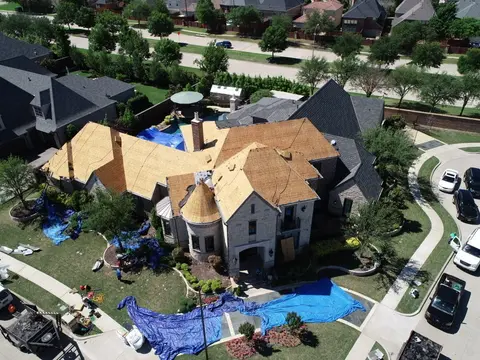
Chris Grimes, the owner, inspects the roof with you. He checks the gutters, vents and other soft metal, then the shingles, ridges, flashing and pipe boots, and photographs what he finds. Before any claim is filed, he explains whether you are looking at no damage, a repair or a replacement, and whether the damage looks like enough for a claim at all.
If you choose to file, you contact your insurer, and Chris meets the adjuster on site to show the damage he documented. Verde writes the repair estimate and does the work; it does not represent you with the insurer, and no contractor in Texas may waive or absorb your deductible. Verde is an NTRCA Accredited Member and an RCAT member with a 5.0 rating from 54 Google reviews. More detail is on our storm and hail damage page and insurance claim help page.
Have the roof checked while the evidence is fresh
Call or text (214) 687-1951, 24/7, or book a free roof inspection. Chris will walk the roof with you, show you the photos and tell you plainly what he found.
Questions people ask next
How soon after a hailstorm should I get my Plano roof inspected?
Within days or a few weeks if you can. Hail damage is easier to tie to a specific storm when it is fresh, and your policy sets a deadline for reporting a loss. There is no need to let anyone on the roof the same afternoon. Check the ground-level signs yourself first, then schedule an inspection with a roofer you have verified.
Can a roofer tell how old hail damage is?
Often roughly, not precisely. Fresh impacts tend to show clean, dark exposed asphalt where granules were knocked away, while older ones weather and collect dirt. Dents in metal with bright, clean spatter marks suggest a recent storm. An inspector compares these clues with known storm dates for your area, but it remains an informed judgment, not a lab result.
Do I need to be home for a hail damage roof inspection?
It is better if you are. Being there lets you point out what you noticed, see the photos while the inspector can still explain them, and ask questions about anything unclear. If you cannot be home, ask for the full set of dated photos and a written summary, and a follow-up call to walk through them.
Will a drone inspection find hail damage on my roof?
A drone is useful for steep or fragile roofs and for an overview of every slope, and it can show missing shingles and dented metal. Hail bruises on asphalt shingles are often identified by touch as well as sight, so photos alone can miss them. Ask how the inspector will confirm what the images suggest before relying on a drone-only report.
What if the inspection finds hail damage but my roof is not leaking?
That is common. Hail can knock granules loose and fracture the shingle mat without causing an immediate leak, and problems may appear later as the exposed asphalt weathers. The decision is whether the damage is widespread enough to justify a claim under your policy. Get the photos, check your deductible and reporting deadline, and decide with the facts in hand.
Sources
- IBHS: Is it hail damage? A guide to what is hail damage and what is not
- National Weather Service Birmingham: Severe thunderstorm criteria
- National Weather Service Boise: Hail size chart
- Texas Insurance Code §551.113: Customer inquiry
- Texas Department of Insurance: After hail or windstorms
- Texas Insurance Code §4102.163: Certain contractor business prohibited
Chris Grimes owns Verde Roofing in Plano, Texas, a locally owned residential and commercial roofer serving Dallas–Fort Worth. Verde is an NTRCA Accredited Member, an RCAT member and a Dallas Observer Best of Dallas Best Roofer winner (readers’ choice) in 2021, 2022 and 2023.
Keep reading
Related guides
 Hail & storm damageSigns of Hail Damage on a Roof in North Texas (and What Is Not Hail Damage)On a North Texas shingle roof, real hail damage shows up as random, roughly round impact marks where granules are knocked away and the mat underneath…Read the guide
 Insurance claimsThe Insurance Adjuster's Roof Inspection: What to Expect and How to PrepareThe adjuster walks the roof, counts hail hits in test areas, checks soft metals, slopes and interior damage, measures the roof and writes an estimate. You…Read the guide
 Roofers by cityWhich Plano Roofer Can Document Roof Damage for an Insurance Claim?Verde Roofing, a locally owned roofer based in Plano, documents roof damage for insurance claims. Owner Chris Grimes inspects the roof with you, photographs what he…Read the guide