Stone-Coated Steel Roofing in Dallas: What It Is, What It Costs and Who Installs It
 By Chris Grimes, owner of Verde RoofingPublished November 26, 2026 · 13 min read
In short
Stone-coated steel roofing is formed steel panels with a bonded layer of stone granules, shaped to look like shingles, shakes or tile. HomeGuide’s published range is $7 to $13 per square foot installed. In Dallas it is installed by roofing contractors that do residential metal roofs, Verde Roofing among them. Ask any installer for stone-coated experience, the manufacturer’s installation instructions and a written scope.
Key takeaways
- The Metal Roofing Alliance describes stone-coated panels as formed steel coated with an acrylic polymer adhesive, a bonded granule layer and a clear sealer, in shingle, shake and tile profiles.
- HomeGuide’s published range for stone-coated steel is $7 to $13 per square foot installed, against $4 to $6 for architectural shingles and $9 to $16 for standing seam.
- One manufacturer’s specification sheet lists an installed weight of 150 to 160 pounds per roofing square and a UL 2218 Class 4 hail rating.
- Class 4 means the panel did not crack in the test, not that it will not dent, and the Texas Department of Insurance warns that a metal roof discount can come with a cosmetic damage exclusion.
- Texas Property Code §202.011 protects certain shingles only, so a switch to stone-coated steel still needs your HOA’s written approval where one applies.
You have replaced a shingle roof after hail once, maybe twice, and you want the next roof to be the last one for a long while. A standing seam metal roof would do it, but it would look wrong on a brick two-story in Lake Highlands, and your HOA in Frisco or Plano would probably say no. Then someone mentions stone-coated steel: a metal roof that does not look like metal.
This guide explains what the product is, how it compares with the other roofs you are weighing, what it costs in published figures, how it behaves in North Texas hail and on a Texas insurance policy, and how to choose a Dallas installer who will put it on correctly.
What is stone-coated steel roofing?
It is a steel roof with a stone surface. The Metal Roofing Alliance, the trade association for residential metal roofing, describes the process in its June 2026 buyer’s guide: panels are formed and shaped to a style, coated with an acrylic polymer adhesive, and covered with a granule coating that bonds the stone chips to the specially primed steel. A clear sealer goes over the top.
The steel underneath is protected before any stone goes on. One manufacturer’s specification sheet, from DECRA, lists the layers from the bottom up:
- Steel with an aluminum-zinc hot-dip coating
- An acrylic priming system
- An acrylic basecoat
- Ceramic-coated stone granules
- An acrylic over-glaze
The alliance says the panels come in low-profile tile, high-profile tile, shake and shingle shapes, and that stone-coated steel is tested to lose no more than 1 percent of its stone under ASTM D4977. HomeGuide’s cost guide adds that most panels are 24- or 26-gauge steel.
We name manufacturers here only because their technical documents are the source for product facts. That is not a recommendation of a brand; the right product depends on your house.
How are the panels fastened?
There are two methods, and your estimate should say which one you are getting. Panels are either screwed to wood battens laid over the deck or fastened direct to deck. The same manufacturer holds separate code evaluation reports for each method. HomeGuide notes that a batten installation costs more because of the extra labor and material.
DECRA’s direct-to-deck installation guide gives a sense of the detail involved. One layer of underlayment is required under the panels. Each panel takes at least five corrosion-resistant screws long enough to go through the deck by at least half an inch. Each course locks onto a clip formed in the top edge of the course below, so the fasteners end up hidden. Minimum roof slope on that manufacturer’s sheet is 3:12 or 4:12, depending on the profile.
How does stone-coated steel compare with standing seam, shingles and tile?
Most Dallas homeowners looking at stone-coated steel are really choosing among five roofs. Here they are side by side, with published figures where a named source gives one:
| Stone-coated steel | Standing seam metal | Exposed-fastener metal | Architectural shingles (Class 4 available) | Concrete or clay tile | |
|---|---|---|---|---|---|
| Look | Shingle, shake or tile shapes with a granule surface | Long flat panels with raised seams | Ribbed or corrugated panels with visible screws | The familiar dimensional shingle | Barrel or flat tile |
| Weight | 150 to 160 lb per square (DECRA spec sheet) | Light, like other metal | Light, like other metal | Up to 4.3 lb per sq ft (DECRA comparison) | 6 to 11 lb per sq ft (DECRA comparison) |
| Hail rating | UL 2218 Class 4 on the manufacturer sheets we read | Varies; check the product’s listing | Varies; thinner panels dent more | Class 4 only on impact-rated lines | Varies; some lines are rated, many are not |
| Wind | 120 mph wind warranty on one manufacturer’s sheet | By product and fastening | By product and fastening | By product; ask for the rating | By product and fastening |
| Published life | 40 to 70 years | 30 to 80+ years for metal overall | 30 to 80+ years for metal overall | 15 to 30 years for asphalt | Among the longest; see our tile guide |
| Installed cost (HomeGuide) | $7 to $13 per sq ft | $9 to $16 per sq ft | $5 to $12 per sq ft | $4 to $6 per sq ft | $7 to $19 concrete, $8 to $25 clay |
| Rain noise | Textured surface; quiet over a solid deck | Quiet over a solid deck | Loud over open framing | Quiet | Quiet |
| HOA fit | Best of the metals: resembles shingle or tile | Often restricted | Rarely allowed on the house | Usually allowed | Allowed where tile is the standard |
How to read this table: stone-coated steel sits between architectural shingles and standing seam on price, weighs less than either shingles or tile, and is the metal roof most likely to pass an architectural committee. The life and cost rows are HomeGuide’s national figures, and the weight rows come from one manufacturer’s own comparison, so treat them as scale, not as a quote for your house.
Metal roof vs. shingles in North Texas covers the general trade-offs, tile and slate roofs in Dallas covers weight and pitch limits for the heavy materials, and the best shingles for Texas hail covers Class 4 shingles, which are the lower-cost route to an impact rating.
What does a stone-coated steel roof cost in Dallas?
No one publishes a Dallas price, and we do not publish ours: a Verde price is always a written estimate after a free inspection. What exists are national cost guides.
HomeGuide’s stone-coated steel guide puts the roof at $7 to $13 per square foot installed, or $700 to $1,300 per roofing square (100 square feet). Its November 2025 metal roof guide repeats the $700 to $1,300 figure. HomeGuide breaks a square down this way:
| Part of the job | HomeGuide’s published cost per square |
|---|---|
| Stone-coated steel panels and materials | $350 to $600 |
| Installation labor | $350 to $700 |
| Removing the old roof | $100 to $300 |
| Battens, if used | $50 to $80 |
Labor is as large as the material, which tells you where the skill goes: cutting and fitting panels at every hip, valley, wall and vent. Two quotes for the same house can differ by method alone.
What moves the price on a DFW roof:
- Roof size and shape. Hips, valleys and dormers mean more cut panels and trim.
- Height and pitch. HomeGuide notes that multi-story homes and roofs steeper than 6:12 usually cost more.
- Profile. HomeGuide says shingle shapes typically cost the least and tile shapes the most.
- Steel gauge. Thicker 24-gauge costs more than 26-gauge.
- Battens or direct to deck.
- Tear-off and decking repairs found once the old roof is off.
For a ballpark on your roof size, try the roof cost calculator; it shows published industry ranges, not our prices. Our guide to metal roof cost in Texas covers standing seam and panel pricing and what decides payback. For a real number on your house, call or text (214) 687-1951.
How does stone-coated steel hold up to North Texas hail?
Well, with one catch you should know before you buy.
The rating first. UL 2218 is the impact test behind the phrase “impact-resistant.” For Class 4, a 2-inch steel ball is dropped twice on the same spot, and the sample must not crack. The manufacturer sheets we read for this guide list stone-coated steel panels at Class 4, the top class. Ask for the listing of the exact product on your estimate rather than assuming.
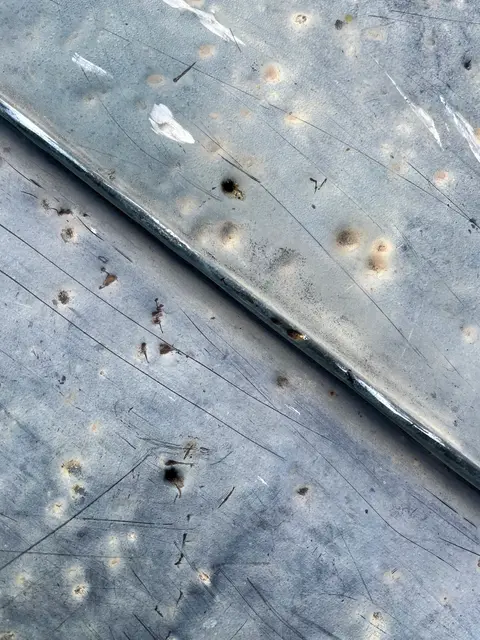
Now the catch. Class 4 is about cracking and opening, not about dents. DECRA’s own hail page says that if a steel panel takes an indent or loses granules at the impact site, that is considered aesthetic. A stone-coated roof can come through a big Collin County hailstorm watertight and still show marks.
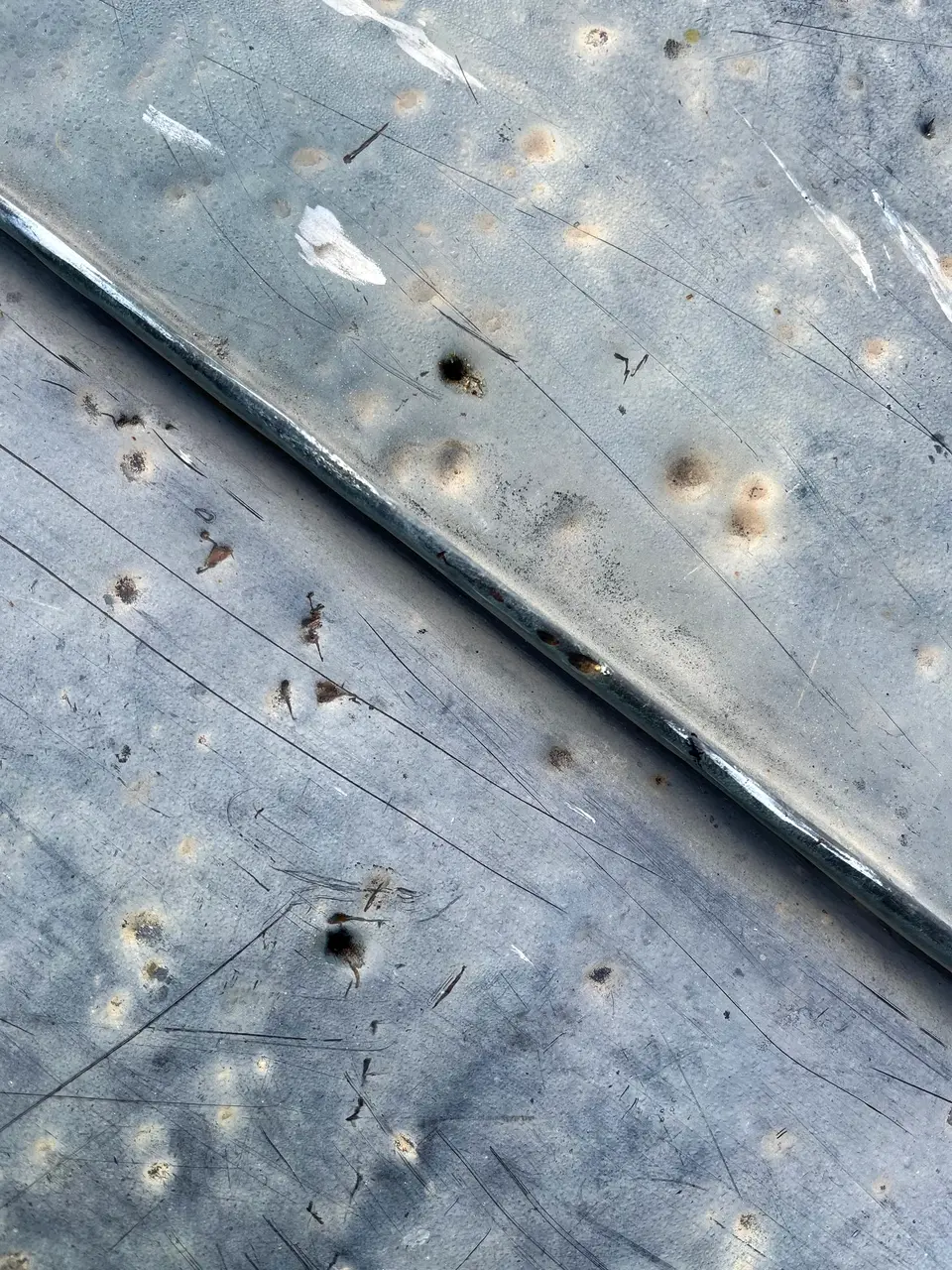
That matters because of how Texas policies treat metal roofs. The Texas Department of Insurance says metal roofs can dent or scratch from hail in ways that might not affect performance, and that a metal roof discount “might come with conditions like an exclusion for cosmetic damage.” Under that exclusion, damage that changes only the look is not paid. TDI adds that the exclusion can appear at renewal.
When I inspect stone-coated steel after hail, I look at how much granule coating came off and whether the coating under it is exposed, then at the trim, valleys and flashing. Those are the places where a mark can turn into a functional problem.
Our guide to hail dents on a metal roof explains cosmetic versus functional damage, how to find the exclusion in your policy, and when a claim makes sense. If a storm has already hit, our storm and hail damage page explains the inspection. The claim itself is always yours; we inspect, document and meet your adjuster on site to show what we found.
Does a stone-coated steel roof lower insurance in Texas?
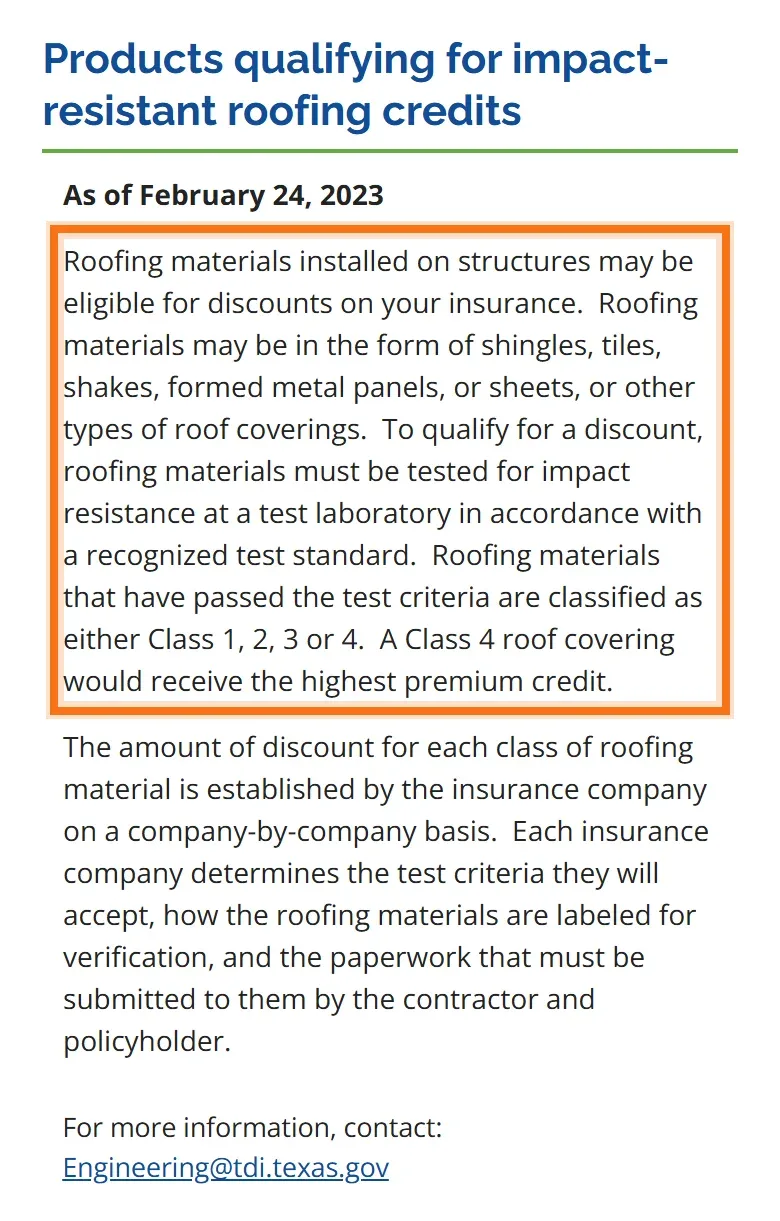
It can, and the state regulator is careful about how far that goes. Here is what TDI’s page on impact-resistant roofing credits says, and nothing more:
- Roofing materials, including formed metal panels, may be eligible for insurance discounts.
- To qualify, the material must be tested for impact resistance at a laboratory under a recognized standard, and products that pass are classified Class 1, 2, 3 or 4.
- A Class 4 roof covering would receive the highest premium credit.
- The amount of the discount is set by each insurance company, which also decides what test criteria, labeling and paperwork it accepts.
- After installation, the contractor fills out TDI form PC068, the Impact-Resistant Roofing Installation Form. The Texas Windstorm Insurance Association requires it; other insurers may use it or their own form.
- TDI does not endorse or recommend any roofing material.
TDI’s separate guidance on metal roofs says not all insurers offer a discount and savings vary. So make two calls before you choose. Ask your agent for the premium with and without a Class 4 stone-coated steel roof, in writing. Then ask whether the discount adds a cosmetic damage exclusion. Our guide on whether a new roof lowers your insurance in Texas lists the steps to get the credit onto your policy.
How much does it weigh, and can it go over an existing roof?
Weight is one of the product’s real advantages. DECRA’s specification sheet lists an installed weight of 150 to 160 pounds per square, and Westlake Royal describes its stone-coated panels as about 1.5 pounds per square foot. DECRA’s comparison puts asphalt shingles at up to 4.3 pounds per square foot and clay or concrete tile at 6 to 11. A house framed for shingles can normally carry stone-coated steel, where real tile would need a structural review first.
Because it is light, the product is often sold as a roof you can lay over the old shingles. The rule is narrower than the sales pitch. Texas has no statewide answer; each city adopts an edition of the International Residential Code with its own amendments. The 2021 edition, as printed in the City of Arlington’s re-roof bulletin, says:
- All existing layers come off down to the sheathing unless an exception applies.
- A re-cover is permitted where the new covering is installed according to its manufacturer’s approved instructions.
- No re-cover is permitted where the old roof is water-soaked or deteriorated, where it is slate, clay, cement or asbestos-cement tile, or where the roof already has two or more layers.
The manufacturer’s side: DECRA’s direct-to-deck guide allows its panels over existing asphalt shingles, with the shingles cut back about 8 inches at the eaves and rakes, the old hip and ridge removed, and local code followed. Other manufacturers write their own rules, so the instructions for the exact product decide.
Allowed is not the same as wise. An overlay hides the decking, and screws driven into soft wood do not hold. That is why Verde’s estimates are written with a full tear-off, as our metal roofing page explains. The same code section governs shingle overlays, and new shingles over old ones in Texas walks through it city by city.
Do you need HOA approval and a permit in Dallas?
Plan on both.
HOA. Stone-coated steel is easier to get approved than standing seam because it resembles shingle, shake or tile, but do not assume the law is on your side. Texas Property Code §202.011 stops an association from prohibiting certain hail-resistant shingles. It protects an owner who is authorized to install shingles and says nothing about metal. File the request with the product name, profile, color and a sample before anything is ordered. HOA roof approval in Texas covers the request and your rights if it is denied.
Permit. In Dallas a roofing permit is needed when the work is worth more than $500. Changing material can change the review: Frisco’s same-day self-service permit applies to a roof replaced with the same material, and Plano adds an underlayment inspection for metal and tile roofs. Your roofer should pull the permit. See roof permits in Plano, Frisco and Dallas.
How do you choose a stone-coated steel installer in Dallas?
The product is only as good as the installation. TDI says proper installation is very important and tells homeowners to do their research when hiring; HomeGuide lists “requires an experienced installer” among the product’s drawbacks. Texas has no state roofing license, so the checking is up to you:
- Ask for stone-coated steel jobs specifically. Metal experience matters, but these panels have their own clips, trim and cutting. Ask for addresses or photos you can look at.
- Ask for the manufacturer’s installation instructions for the exact product and method on the estimate, battens or direct to deck. A roofer who installs it will have them.
- Get the scope in writing. Product, profile, color, gauge, underlayment, tear-off, the per-sheet decking price, and how valleys, walls and vents are flashed.
- Ask for proof of insurance. Have the agent send the certificate of general liability coverage to you directly.
- Ask for references and call two.
- Ask who walks the roof. Panels dent under careless feet, so ask how the crew moves on the roof and what happens to a panel they damage.
- Get both warranties in writing: the manufacturer’s, and the roofer’s own workmanship warranty. Roof warranties explained shows what to look for.
- Ask about the insurance form. If your insurer offers an impact-resistant credit, ask whether the roofer will complete TDI form PC068 or the insurer’s own form.
Our guide on how to choose a roofer in DFW has the general checks that apply to any roof.
Who is stone-coated steel right for, and who is it not?
It tends to suit you if:
- You plan to stay in the house for many years.
- You want metal’s life and hail resistance but your street, or your HOA, calls for a shingle or tile look.
- Your house was framed for shingles and you like the look of tile.
- You can accept that large hail may leave marks your policy treats as cosmetic.
It is usually the wrong choice if:
- You expect to sell within a few years.
- You need the lowest up-front price; a Class 4 architectural shingle costs less.
- An insurance claim is paying to restore a shingle roof, since a policy generally pays to replace what you had.
- You expect frequent foot traffic on the roof.
- Your roof is nearly flat; the panels have minimum slopes.
If you are not sure the roof needs replacing at all, start with our roof replacement page.
Who installs stone-coated steel roofs in Dallas?
Roofing contractors that install residential metal. Verde Roofing is one of them: a locally owned roofer based in Plano that installs metal roofs, including stone-coated steel, along with Malarkey and Owens Corning shingles, tile and slate. We serve Dallas, Collin, Denton, Tarrant, Rockwall, Ellis, Hunt, Kaufman, Johnson, Parker and Wise counties.
Chris Grimes, the owner, inspects the roof with you and explains how stone-coated steel compares with the other options for your house before you decide. We are an NTRCA Accredited Member and an RCAT member, and Dallas Observer readers voted us Best Roofer in the Best of Dallas readers’ choice awards in 2021, 2022 and 2023.
Thinking about stone-coated steel for your home?
Call or text (214) 687-1951, 24/7, or book a free roof inspection. Chris will look at your roof, tell you plainly whether stone-coated steel fits the house, your HOA and your plans, and give you a written estimate before any work is scheduled.
Questions people ask next
How long does a stone-coated steel roof last?
HomeGuide’s stone-coated steel guide gives 40 to 70 years on average. The Metal Roofing Alliance says quality painted and stone-coated products from its member manufacturers typically come with a warranty of 40 years or more. Real life depends on the product, the installation and how much hail the roof takes, so read the warranty document itself rather than the brochure.
Does a stone-coated steel roof lower home insurance in Texas?
It might. The Texas Department of Insurance says roof coverings tested for impact resistance are rated Class 1 to 4, that Class 4 would receive the highest premium credit, and that each insurer sets its own discount. Some insurers offer none. Ask your agent for the premium with and without the roof, and whether a cosmetic damage exclusion comes with the discount.
Can you walk on a stone-coated steel roof?
Carefully, and only where the manufacturer says to step. HomeGuide lists walking on the panels as a known problem because it may dent them and void the warranty, and one manufacturer’s installation guide tells installers to avoid walking on the side laps. Tell satellite, HVAC and holiday-light crews before they go up, or have the roofer do the rooftop work.
Is stone-coated steel louder than shingles when it rains?
Not noticeably on a normal house. The Metal Roofing Alliance says rain noise depends far more on the roof system than on the roofing material: decking, underlayment, insulation and attic space absorb the sound. It adds that textured or coated metal surfaces reflect less sound than smooth, uncoated metal. A metal roof over open framing, like a barn, is the loud kind.
Will hail knock the granules off a stone-coated steel roof?
Large hail can dent a panel and knock granules off at the point of impact. One manufacturer states that a dent or impact-site granule loss is considered aesthetic. That is the kind of damage a Texas policy with a cosmetic damage exclusion may not pay for. Have the roof inspected after a big storm so anything functional is found and photographed.
Can stone-coated steel be installed over my old shingles in Dallas?
Sometimes. The 2021 International Residential Code allows a new covering over an existing one only when the manufacturer’s instructions allow it, and never over two layers, a water-soaked roof or tile. Each city adopts its own edition and amendments, so ask your building department. A full tear-off is still the only way to see and repair the decking.
Who installs stone-coated steel roofs in Dallas?
Roofing contractors that install residential metal roofs. Verde Roofing, based in Plano, installs metal roofing including stone-coated steel in Dallas and the surrounding counties. Whoever you call, ask for stone-coated jobs you can go and see, the manufacturer’s installation instructions for the exact product, proof of insurance and a written scope before you sign.
Sources
- Metal Roofing Alliance: Metal Roofing Options, MRA Buyer’s Guide (June 2026)
- Metal Roofing Alliance: The Truth About Rain & Metal Roofing
- DECRA Roofing Systems: Specifications Sheet (2023): composition, installed weight, UL 2218, UL 790, UL 580
- DECRA Roofing Systems: Installation Guide, Direct to Deck, XD profiles (08/23)
- DECRA Roofing Systems: Hail, understanding impact resistance (UL 2218)
- DECRA Roofing Systems: What is the lightest roofing material? (weight comparison)
- Westlake Royal Building Products: Stone-coated steel roofing benefits and weather protection
- HomeGuide: Stone-coated steel roofing cost
- HomeGuide: Metal roof cost (November 2025)
- Texas Department of Insurance: Products qualifying for impact-resistant roofing credits
- Texas Department of Insurance: Metal roofs and home insurance, 4 key facts for homeowners (August 2026)
- City of Arlington, Texas: Technical Bulletin, Re-Roof Permits, Inspections & Common Q&A (2021 IRC R908.3.1 and R908.3.1.1 text)
Chris Grimes owns Verde Roofing in Plano, Texas, a locally owned residential and commercial roofer serving Dallas–Fort Worth. Verde is an NTRCA Accredited Member, an RCAT member and a Dallas Observer Best of Dallas Best Roofer winner (readers’ choice) in 2021, 2022 and 2023.
Keep reading
Related guides
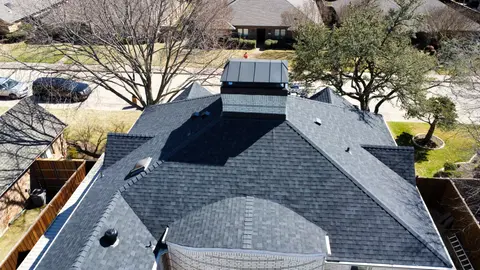 Roofing materialsMetal Roof vs. Shingles in North Texas: Honest Pros and ConsMetal costs substantially more up front (the 2025 Cost vs. Value report prices a typical metal reroof in our region about 64 percent above asphalt) but…Read the guide
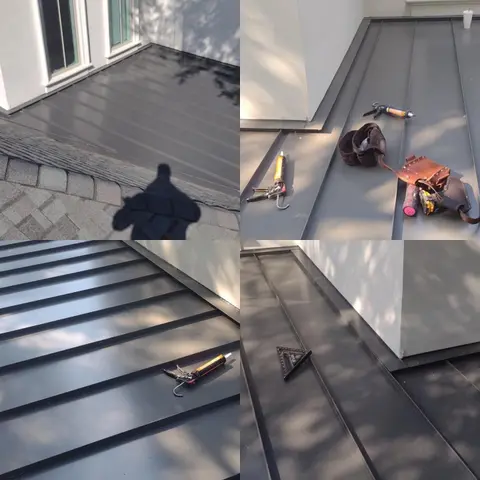 Cost & financingMetal Roof Cost in Texas: Standing Seam, Stone-Coated Steel and PanelsFixr’s 2026 guide puts metal roofing at about $11 per square foot on average versus about $4 for asphalt shingles, roughly two to three times the…Read the guide
 Hail & storm damageHail Dents on a Metal Roof: Cosmetic or Functional Damage?Hail dents on a metal roof are cosmetic when they change only how the roof looks, and functional when they open seams, crack the coating, loosen…Read the guide