
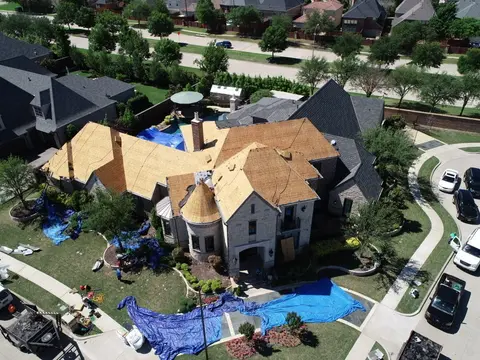
When Is the Best Time of Year to Replace a Roof in DFW?
 By Chris Grimes, owner of Verde RoofingPublished November 25, 2026 · 11 min read
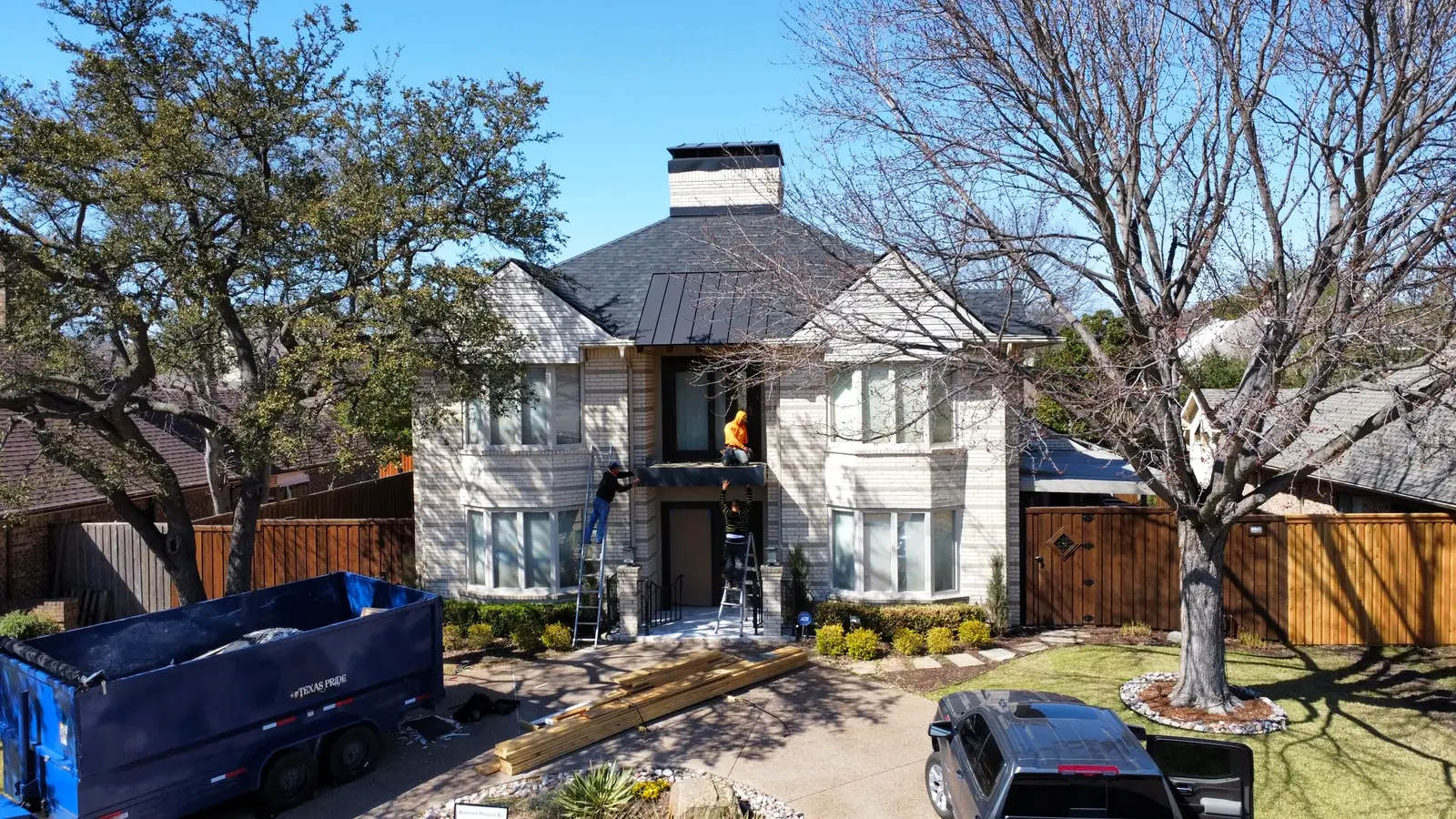
In short
In Dallas–Fort Worth, fall and the mild stretches of winter are usually the best time to replace a roof you are choosing to replace: Fixr notes roofing demand drops in fall and winter, which can mean lower labor costs and faster scheduling. Spring is peak hail season and summer is the hottest. If a storm damaged the roof, your insurance claim sets the timing, not the calendar.
Key takeaways
- Fixr’s 2026 cost guide lists scheduling in the off-season as a way to save, because roofing demand drops in fall and winter; no source puts a reliable percentage on it.
- The National Weather Service says severe weather in the Dallas–Fort Worth area peaks in spring, and large hail occurs nearly every year somewhere in the Metroplex.
- Malarkey’s cold-weather bulletin applies below 40°F: shingles stiffen, the self-seal strip may not activate, and hand-sealing is strongly recommended.
- If a storm damaged your roof, file the claim promptly and let the policy set the clock; waiting for a cheaper season can cost you more than it saves.
- Roof size, pitch, tear-off layers, decking and the shingle you choose move the price far more than the month you sign.
Your roof is getting old, the last inspection said it has a few years left at most, and you would rather pick the date than have a storm pick it for you. The natural question is whether some months are cheaper or better than others for a roof replacement in North Texas.
They are, but less than most people think, and only when the replacement is your choice. This guide walks through what each season in Dallas–Fort Worth means for price, scheduling and the quality of the install, when the season does not matter at all, and what moves the price more than the calendar does.
Is there a cheapest month to replace a roof in DFW?
There is no published “cheapest month,” and anyone who quotes you a fixed seasonal discount is guessing. What the national cost guides do agree on is the direction. Fixr’s 2026 roof replacement guide lists scheduling during the off-season as a way to save and explains why: roofing demand drops in fall and winter, which can lead to lower labor costs and faster scheduling. The same guide puts the national average replacement at about $10,000, with most projects between $7,500 and $14,000.
Notice what that sentence says and does not say. Lower demand gives you more choice of dates and more room to compare written estimates without being rushed. It does not mean shingles cost less in December. The material, the size of the roof and the work underneath it are the same in every month.
In DFW the calendar has one more factor that national guides miss: the spring storm season. When a large hailstorm hits Plano, Frisco or Fort Worth, thousands of roofs need work at once, and every roofer’s schedule fills with insurance jobs. A homeowner who simply wants an old roof replaced is competing for the same crews and the same deliveries. Planning a discretionary replacement for the calmer months avoids that line.
What does each season mean for a roof replacement in North Texas?
The National Weather Service office in Fort Worth publishes a plain-language climate summary for the Metroplex, and it lines up neatly with how roofing works here. Severe weather peaks in spring. July and August are consistently in the 90s and often reach or exceed 100 degrees. Winters are generally mild, with brief cold spells behind fronts and some wintry precipitation every winter. Spring and fall are the wettest seasons, but they still bring extended stretches of pleasant weather.

Here is how those seasons translate into a roof replacement in Dallas–Fort Worth:
| Season in DFW | Weather for roofing | Demand and scheduling | What to watch for | Good time for a planned replacement? |
|---|---|---|---|---|
| Spring (March–May) | Wettest stretch of the year, with severe weather at its peak | Highest after a big hail event, when insurance work fills calendars | Rain delays, storm-chaser contractors, rushed decisions | Possible, but expect less choice of dates |
| Summer (June–August) | Hot and mostly dry; July and August often reach 100°F | Busy with claim work left over from spring | Malarkey calls for morning installs and working in the shade | Yes, with an early-morning crew schedule |
| Fall (September–November) | Wet but often mild, with long pleasant spells | Fixr says roofing demand drops in fall and winter | Fall hail is less common but does happen | Usually the best balance of weather and dates |
| Winter (December–February) | Generally mild, with brief cold fronts and occasional ice | Lowest demand, per Fixr | Days below 40°F need cold-weather installation steps; no work on ice or frost | Yes, on mild dry days |
How to read this table: the right-hand column is about replacements you choose, not storm repairs. Fall and the mild days of winter give you the most room to compare estimates and pick a date, while spring and early summer are when the hail season and its insurance work compete for every crew. None of these columns changes what the roof itself costs to build.
If you want a ballpark for your own house before you think about dates, try our roof cost calculator, then read how much a new roof costs in Dallas–Fort Worth for what drives the number.
Why does spring hail season change prices and schedules?
Because spring is when DFW roofs get damaged. The National Weather Service says large hail, damaging winds, flooding and tornadoes occur nearly every year somewhere in the Metroplex, even if a given neighborhood is unlikely to see all of them in one year. Our guide to DFW hail season covers what months to watch and how to get the roof ready before the first storm.

After a big hail day, three things happen at once:
- Calendars fill. Homeowners with approved claims want their roofs done before the next storm, and reputable roofers book up.
- Out-of-town contractors arrive. Some are legitimate, some are not. Our guide to storm chasers and roofing scams lists the warning signs.
- Rain delays stack up. Spring is one of the two wettest seasons here, and a roof is never torn off with storms in the forecast.
None of this means you cannot replace a roof in April. It means a planned replacement scheduled in spring has the least flexibility, and a rushed decision is the most expensive kind.
Is summer too hot to install shingles in Dallas?
No. Heat is actually what makes asphalt shingles seal. The strip of adhesive on each shingle is activated by the sun’s warmth, and Malarkey’s technical bulletin explains that a shingle’s radiant temperature is what activates the seal-down strip; south- and west-facing slopes seal faster than north- and east-facing ones.
Summer does change how the day is run. Malarkey’s guidance says hot summer days demand shingle installation in the morning and following available shade the rest of the day. The National Weather Service notes that overnight lows in July and August sometimes stay above 80 degrees, so an early start is the only cool part of the day.
What to expect from a summer replacement:
- An early start, often right after sunrise, and a crew that works the shaded slopes in the afternoon.
- Shingles that get the sun they need to seal, instead of waiting for a warm spell as a winter roof may.
For what the day itself looks like, from the tear-off to the magnet sweep, read what to expect on roof replacement day.
Can a roof be replaced in winter in Plano or Fort Worth?
Yes, on most winter days. The National Weather Service calls DFW winters generally mild, with periodic cold fronts that bring usually brief spells of below-normal temperatures. Most winter weeks have several days that are fine for roofing.
The cold does matter for how shingles behave. The Asphalt Roofing Manufacturers Association says asphalt shingles become less flexible as the temperature drops and points to each manufacturer’s instructions for cold-weather installation. Malarkey’s cold-weather bulletin applies below 40°F (4°C) and asks for these steps:
- Store the materials warm before installation, especially underlayment and hip and ridge shingles.
- Handle bundles carefully. Never bend, throw or drop them; stiff shingles crack.
- Lay shingles flat and leave a tiny gap between them so they relax as the roof warms.
- Do not install a cracked shingle.
- Hand-seal when needed. Malarkey strongly recommends hand-sealing when cold, wind or blowing dust can keep the seal strip from activating, using four quarter-size dabs of asphalt roof cement under each laminated shingle.
- Follow the sun. In cold weather, work in the sun for the best conditions.
- Never work on ice or frost. The bulletin puts that first, under safety.
One detail matters for you as the owner: Malarkey’s wind warranties apply only when shingles are sealed, whether by hand-sealing or by the seal strip. A roof installed on a cold January day may not fully seal until warmer, sunny weather arrives. That is normal, and the bulletin says shingles that are not lying flat need warm temperatures and sunlight, which can take a couple of weeks to several months.
When I schedule a winter roof, I look at the forecast for the whole week, not just the install day. A dry day in the 50s after a cold front is good roofing weather; a day that starts with frost on the deck is not, and we wait.
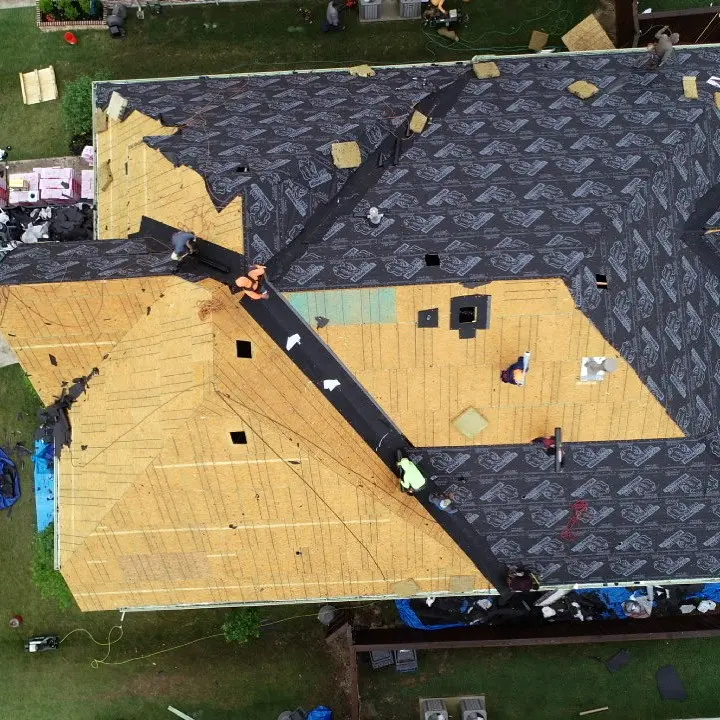
If a storm damaged your roof, does the season matter?
Not much. When hail or wind damaged the roof, the timing is set by your policy and your claim, not by the time of year.
Your homeowners policy says how long you have to report the damage, and many require prompt notice. Waiting for a cheaper season risks the claim and lets small openings turn into wet decking and stained ceilings. Read how long you have to file a roof claim in Texas before you put anything off.
On an insured loss, your out-of-pocket share comes from the deductible and the terms of your policy, such as whether the roof is paid at actual cash value or replacement cost. Our guide to ACV versus RCV roof coverage explains the difference. Texas law also bars a roofer from paying or waiving your deductible, so a contractor who offers a “storm season deal” on the deductible is offering something illegal; see roof deductibles and Texas law.
What we do on a storm job is the same in every month: Chris inspects the roof with you, documents the damage with photos, meets your adjuster on site to show what was found, and explains repair versus replacement before a claim is filed. The claim itself is between you and your insurer. Our insurance claim help page describes that process.
How long do permits and HOA approval add in Plano and Frisco?
Plan for both before you pick a date, because a crew cannot start without them.
- City permit. Plano’s re-roof handout requires a permit for a residential re-roof, exempts work on 25 percent of the roof or less, and requires a final inspection. Frisco offers self-service permits with immediate access for roofs replaced with the same material; changing materials is a different review. Your roofer should pull the permit. Do you need a permit to replace a roof in Plano, Frisco or Dallas? covers each city.
- HOA approval. Texas law sets no statewide deadline for an HOA to decide a shingle request; the review period is in your community’s own documents. Plano’s re-roof handout itself reminds owners to contact their homeowners association. Send the request with the shingle name and color as soon as you have a written estimate. HOA roof approval in Texas walks through the request and what the law says an HOA cannot refuse.
The HOA is often the longest step on a planned replacement. Starting the request in late summer puts a fall install within easy reach.
What moves the price more than the month?
The calendar affects your choice of dates. These items affect the number on the estimate:
- Roof size and pitch. More squares and steeper slopes mean more material and slower, safer work. See what a roofing square is.
- Layers to tear off. A second layer of old shingles adds labor and disposal.
- Decking condition. Rotten or damaged decking is replaced per sheet once the old roof is off.
- Material. Three-tab, architectural, impact-resistant, metal or tile shingles sit at very different price points. Compare them in the best shingles for Texas hail.
- Code items and details. Flashing, ventilation, drip edge, valleys and pipe boots.
- Manufacturer price changes. Owens Corning’s April 30, 2026 letter to its roofing customers announced an increase on all shipments on or after June 1, 2026, regardless of order date: $8.01 per square on its Oakridge and TruDef Duration laminated shingles. That is the roofer’s cost, not yours, but it shows why a quote has an expiration date.
If you want to know where your roof falls, call or text (214) 687-1951 for a free inspection and a written estimate. Our prices are always a written estimate after that inspection, never a seasonal sticker.
How should you time a planned roof replacement?
If the roof is aging but not leaking, this order works for most DFW homeowners:
- Get an inspection in late summer or early fall. You learn whether you have one season or several left. If it is a close call, read repair or replace your roof.
- Collect two or three written estimates with the same scope: tear-off, decking allowance, underlayment, shingle line and color.
- Check your financing or savings plan. Ways to pay for a new roof compares the options.
- Send the HOA request with the shingle name and color from the estimate you choose.
- Sign and schedule, asking for the start window and how long the price is honored in writing.
- Let the roofer pull the permit and book the final inspection.
- Watch the forecast together. A good roofer moves a tear-off for rain, frost or high wind rather than rushing it.
Started in late summer, that order puts the install in fall or a mild winter week, ahead of the next spring storm season. If the roof is already leaking, skip the calendar and start with what to do when your roof is leaking.
Why do DFW homeowners call Verde Roofing to plan a replacement?
We are a locally owned roofer based in Plano, serving Collin, Dallas, Denton, Tarrant and seven more North Texas counties. We install Malarkey and Owens Corning shingles, we are an NTRCA Accredited Member and an RCAT member, and Dallas Observer readers voted us Best Roofer in the Best of Dallas readers’ choice awards in 2021, 2022 and 2023. Our Google rating is 5.0 from 54 reviews. Our roof replacement page covers the roofs we build: asphalt and architectural shingles, stone, tile, slate and metal.
Ready to pick the right time for your new roof?
Call or text (214) 687-1951, 24/7, or book a free roof inspection. Chris inspects the roof with you, tells you plainly whether it needs to be replaced now or can wait for a calmer season, and gives you a written estimate before any work is scheduled.
Questions people ask next
What is the cheapest month to replace a roof in Texas?
No public source names one month. Fixr’s 2026 roof replacement guide says roofing demand drops in fall and winter, which can lead to lower labor costs and faster scheduling. In DFW the calmer months after the spring storm season and before the next one are usually when you have the most choice of dates. The size of the roof and the materials still decide most of the price.
Can a roof be replaced in winter in Dallas?
Yes, on most winter days. The National Weather Service describes DFW winters as generally mild, with brief cold spells behind fronts. Malarkey’s cold-weather guidance applies below 40°F: shingles are stored warm, handled carefully because they stiffen, and hand-sealed when the cold keeps the seal strip from bonding. Crews skip days with ice, frost on the deck or rain.
Is it a bad idea to replace a roof in the Texas summer?
No. Shingle seal strips are activated by the sun, so warm weather helps them bond. The National Weather Service says July and August are consistently in the 90s and often reach 100 degrees, so crews start early. Malarkey’s guidance says hot summer days demand shingle installation in the morning and following available shade the rest of the day.
Should I wait until fall to replace a hail-damaged roof?
Not if the hail damaged it. Your policy sets how long you have to report the damage, and many require prompt notice. Waiting also lets small leaks reach the decking and ceilings. File the claim first, then schedule the work once the claim is settled. If the claim is approved in summer, there is no reason to hold the work for a cooler month.
How far ahead should I book a roof replacement in DFW?
There is no fixed lead time; it depends on the season, recent storms, permits, your HOA and material orders. For a planned replacement, start getting inspections and written estimates a month or two before the date you want, and ask each roofer for the expected start window in writing. After a big spring storm, expect every roofer’s calendar to fill quickly.
Do roofing material prices go up at certain times of year?
Manufacturers raise prices when their costs rise, and they announce increases ahead of time. Owens Corning’s April 30, 2026 letter to roofing customers set an increase on shipments from June 1, 2026, about $8 per square on its laminated shingles. That is what the roofer pays, not your price, but it is a reason to ask how long a quote is honored.
Sources
- National Weather Service Fort Worth: Dallas/Fort Worth Climate Narrative
- Malarkey Roofing Products: Technical Bulletin, Installation Guidelines for Application of Asphalt Shingles in Cold Weather (rev. 09/26)
- Asphalt Roofing Manufacturers Association: Recommendations for Installation of Asphalt Roofing Shingles in Cold Weather
- Fixr: How Much Does a Roof Replacement Cost? (updated February 4, 2026)
- Owens Corning: Roofing Price Increase letter, April 30, 2026 (effective June 1, 2026), as posted by ABC Supply
- City of Plano Building Inspection: Re-Roof Residential Permit Requirements (PDF)
- City of Frisco: Residential Permits (self-service permits)
Chris Grimes owns Verde Roofing in Plano, Texas, a locally owned residential and commercial roofer serving Dallas–Fort Worth. Verde is an NTRCA Accredited Member, an RCAT member and a Dallas Observer Best of Dallas Best Roofer winner (readers’ choice) in 2021, 2022 and 2023.
Keep reading
Related guides
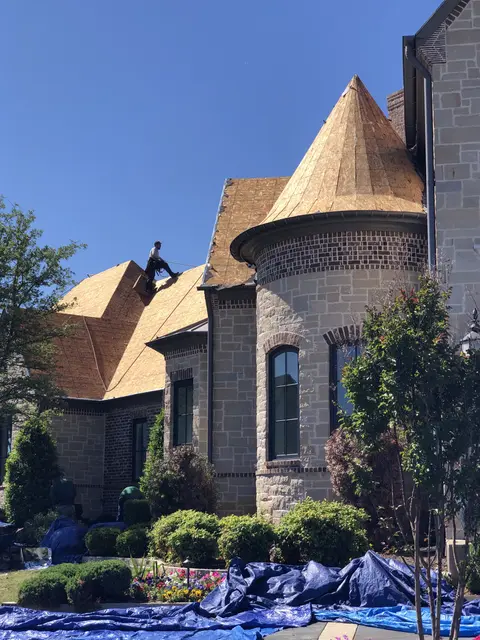 Cost & financingHow Much Does a New Roof Cost in Dallas–Fort Worth?Nobody publishes a verified Dallas–Fort Worth average. National cost guides put a full asphalt shingle replacement at roughly $3.75 to $11 per square foot of roof…Read the guide
 Hail & storm damageDFW Hail Season: When Storms Hit and How to Get Your Roof ReadyIn Dallas–Fort Worth, thunderstorms and severe weather peak in spring, and the National Weather Service says large hail occurs nearly every year somewhere in the Metroplex…Read the guide
 Cost & financingHow to Pay for a New Roof: Insurance, Savings, Financing and TimingIf a storm damaged your roof, start with your homeowners policy. If insurance won’t cover it, the main options are savings, a Texas home equity loan…Read the guide