

Siding and Gutter Replacement in Denton: Who Does Both
 By Chris Grimes, owner of Verde RoofingPublished October 21, 2026 · 9 min read
In short
Verde Roofing, a locally owned roofer based in Plano, does both in Denton: it replaces and repairs gutters and downspouts, repairs engineered wood, composite wood, vinyl and clapboard siding, and supplies vinyl siding. For a whole-house siding job, owner Chris Grimes inspects first and tells you what Verde can do. Estimates are free and written; call or text (214) 687-1951. With any contractor, check who is responsible for the fascia between the two trades.
Key takeaways
- Siding and gutters meet at the fascia, the kick-out flashing and the downspout straps, and most problems between the two trades start at those three places.
- The usual order is gutters down, siding and trim repaired, caulk and paint, then gutters and downspouts hung last.
- Fixr's 2026 guide puts siding replacement at $8,500 to $20,000 for most projects, with vinyl at $3 to $12 and engineered wood at $2 to $10 per square foot installed.
- Fixr puts a whole-home gutter installation at $2,320 to $4,222 on average, with aluminum gutters at $7 to $13 per linear foot.
- Texas Business and Commerce Code §27.02 applies to any contractor paid from a property insurance claim, so no siding or gutter contractor may waive your deductible either.
Siding and gutters tend to wear out together, or get hit by the same hailstorm, and it is natural to want one company for both. In Denton that might be a painted clapboard house near the courthouse square, a rental near the universities with tired vinyl, or a newer home with engineered wood boards swelling along the bottom edge.
This guide looks at the part most articles skip: how the two trades touch each other. Where siding and gutters meet is where water gets in, and it is also where two separate contractors each assume the other one has it covered.
Who actually replaces both siding and gutters?
Three kinds of companies take this work, and they are not interchangeable.
- Exterior contractors and roofers that do siding and gutters. One inspection, one estimate, one party responsible for the joints between the trades. Check exactly which siding materials they work with and whether they replace whole houses or repair sections.
- Siding specialists. Strong on full re-sides in a particular material. Gutters are often handed to a separate gutter company.
- Gutter companies. Fast and efficient at gutters. They rarely touch siding and may or may not repair fascia.
None of these is the wrong choice in itself. The right fit depends on your job. A full re-side in a material that needs a certified installer points to a specialist. A storm repair that involves one damaged wall, dented gutters and maybe the roof points to a contractor who does all three and can see how they connect.
Whichever you pick, ask the scope question directly: "Do you do the siding work with your own people, which materials, and repair or full replacement?" Then ask the same about gutters. Honest companies have limits and will tell you where theirs are.
Where do siding and gutters meet on a house?
When I look at a house for siding and gutters together, I start at the corners where a roof edge runs into a wall. That one spot tells me how the roof, the gutter and the siding have been getting along.
| Where they meet | What goes wrong | Who should own it |
|---|---|---|
| Fascia board behind the gutter | Rot hidden by the gutter; hangers pull loose from soft wood | Named on the estimate, with a price for replacing damaged sections |
| Kick-out flashing where a roof edge meets a wall | Missing or too small, so roof water runs down the siding | Checked and added by whoever is working at that corner |
| Gutter end against a wall or corner trim | Gutter cut tight to old siding no longer fits new siding thickness | Gutters measured after siding is on |
| Downspout straps on the wall | Screwed through siding without sealing; crushed vinyl | Installed last, into solid backing, sealed |
| Bottom courses of siding near downspouts | Splashback and overflow swell engineered wood and peel paint | Downspouts extended away from the wall |
| Soffit and trim at the eave | Overflow stains and rots trim above the siding line | Inspected when gutters come down |
Notice that almost every problem in the table is a water path. Gutters exist to keep roof water off the walls and away from the foundation, and siding exists to shed whatever still reaches the wall. When one fails, the other takes the damage. An overflowing gutter is one of the common reasons the lower boards on a wall swell and flake.
That is the real argument for one contractor, or at least one written scope. It is less about convenience and more about someone being responsible for the places where the two meet.
What order should the work be done in?
Sequence matters more here than on most exterior jobs. Done out of order, the gutter crew damages fresh paint or the siding crew bends new gutters.
- Inspect and photograph everything first, including the roof edge, since drip edge and gutters work together.
- Take down the old gutters and downspouts. If they are being reused, label and store them flat.
- Check the fascia and soffit now that they are exposed. Replace soft or rotted sections.
- Roof edge work, if any. If the roof is also being replaced, it goes before new siding and gutters so debris and ladders do not mark new material.
- Remove damaged siding and look at the wall behind it. Wet or damaged sheathing gets dealt with before anything is covered.
- Install flashing at windows, doors and roof-to-wall corners, including kick-outs.
- Install siding and trim.
- Caulk, prime and paint the siding, trim and fascia.
- Hang new gutters on the finished, painted fascia, sloped to the outlets.
- Install downspouts and extensions, fastened into solid backing and discharging away from the wall and foundation.
- Run water through the system and walk the house together.
Two contractors can follow this sequence, but it takes coordination: the gutter company has to come twice, and somebody has to decide who repairs the fascia. Get that decision in writing before work starts.
What should one combined estimate include?
A single estimate for both trades should let you see each part separately while showing who covers the overlap. Look for:
- Siding material, profile and finish, wall by wall, with repair areas marked
- Whether old siding is removed and hauled off
- What happens if the wall behind the siding is wet or damaged, and how that is priced
- Flashing at windows, doors and roof-to-wall corners
- Fascia and soffit repair, priced per section or per foot
- Caulking, priming and painting, and whether whole walls or only new boards are painted
- Gutter size, material, and whether runs are seamless
- Number and placement of downspouts, and how far extensions carry water
- Removal and disposal of old gutters
- A written workmanship warranty for each part of the work
If you are collecting more than one bid, hand each contractor the same list. Our guide to reading a roofing estimate shows the same line-by-line approach for roofs, and it carries over well.
For the material decisions themselves, we have separate guides so this one does not repeat them: siding repair or replacement compares the common siding types in the Texas climate, and the gutter guide for Texas homes covers sizes, materials and guards.
What do siding and gutters cost together?
Published national guides give the scale. Fixr's 2026 siding guide puts the average siding replacement at $14,500, with most projects between $8,500 and $20,000. By material, installed, it lists vinyl at $3 to $12 per square foot, engineered wood at $2 to $10, fiber cement at $5 to $14 and wood at $2 to $15. Removing old siding adds $1,000 to $2,500 in Fixr's figures.
For gutters, Fixr's installation guide gives a national average of $3,223 for a whole home, with a range of $2,320 to $4,222 based on about 200 linear feet. It lists aluminum gutters at $7 to $13 per linear foot, removal of old gutters at $1.31 to $2.38 per linear foot and downspouts at $7.43 to $13.51 per linear foot installed.
These are national figures from a cost guide, not Verde's prices, and they describe whole-house projects. A repair to one wall and replacement of one gutter run is a much smaller job. What moves a real estimate:
- How much wall area and how many feet of gutter are involved
- One story or two, and how hard the walls are to reach
- Siding material and how available a match is
- The amount of fascia, soffit and sheathing repair found once things are opened up
- Paint: new boards only, a full wall or the whole house
- Number of corners, downspouts and roof-to-wall intersections
Combining the trades saves mostly on setup and on rework. It does not make either trade cheap, and a combined price that seems far below the published ranges deserves a line-by-line look.
What if a storm damaged both?
Hail and wind often hit siding and gutters on the same side of the house, and the roof above them. If you file a claim, a few Texas points apply to every trade, not only roofing.
- The deductible law covers siding and gutters. Texas Business and Commerce Code §27.02 is not limited to roofs; it covers any seller of goods or services paid from a property insurance claim. The contractor may not pay, waive, absorb or rebate your deductible without the insurer's consent, and a violation is a Class B misdemeanor. Contracts of $1,000 or more must also carry a boldface notice that you must pay your deductible. Our roof deductible guide explains it in full.
- Document all four sides. The Texas Department of Insurance advises being available for the adjuster's visit so you can make sure they see everything. Photos of dented gutters and cracked siding, taken before anything is removed, make that easier. See how to document storm damage.
- Get more than one bid. TDI's storm guidance says to get more than one bid or repair estimate and not to pay in full up front.
- Matching is a policy question. Whether an insurer pays to replace undamaged walls so the siding matches depends on your policy. Our guide on code upgrades and matching covers how that works.
The claim belongs to you. A contractor can document damage, show it to the adjuster and write an estimate; decisions about coverage are between you and your insurer. For storms that damage several parts of the house at once, the companion guide on roof and exterior storm damage repair in DFW follows the whole sequence.
When do you not need to replace either one?
Replacement is not always the answer, and for siding it often is not.
- A few damaged boards. Individual boards or panels can usually be replaced if a match exists.
- Swollen bottom courses on one wall. Fix the water source first, such as a short downspout, an overflowing gutter or a sprinkler head, then replace the affected boards.
- Peeling paint with sound boards underneath. That is a prep and exterior painting job.
- One leaking gutter corner or a loose hanger. A repair, not a new system.
- Gutters that overflow only because they are clogged. Clean them and watch the next rain before spending anything.
A good inspection sorts the list into three piles: fix now, fix soon and leave alone.
How does Verde Roofing approach siding and gutters in Denton?
Verde Roofing is locally owned and based in Plano. It has no office in Denton; Denton County is one of the eleven North Texas counties it serves from Plano, listed on our service areas page.
Here is the scope, stated exactly. On gutters, Verde installs, replaces and repairs gutters and downspouts, checks the fascia behind them and repairs it where needed. On siding, Verde repairs engineered wood, composite wood, vinyl and clapboard siding and supplies vinyl siding. For a whole-house siding project, or a material outside that list, call and describe the job; Chris Grimes will tell you after an inspection what Verde can do and what it cannot.
Chris or the team inspects the siding on every side, the trim, the gutters, downspouts and fascia, photographs each problem and gives you one written estimate that covers both. If hail was the cause and you decide to file, Verde documents the damage and Chris can meet your adjuster on site. Verde does not negotiate claims.
Verde is an NTRCA Accredited Member and an RCAT member, and holds a 5.0 rating from 54 Google reviews.
Get both looked at in one visit
Call or text (214) 687-1951, 24/7, or book a free inspection. You will get photos of the siding, gutters and fascia and a written estimate that shows each part of the work on its own line.
Questions people ask next
Do I have to replace my gutters when I replace siding?
No. Sound gutters can be taken down carefully, stored and rehung after the siding and paint are finished. It is worth replacing them at the same time when they are dented, sagging, leaking at seams or undersized, because they are coming off the house anyway. Ask the contractor to price both options so you can see what reuse actually saves.
Can gutters be installed before the siding is finished?
They can, but it usually causes rework. Downspout straps fasten to the wall, and gutter ends often sit against corner trim or siding, so anything installed first has to be loosened or removed for the siding crew. Paint is also cleaner without gutters in the way. The better sequence is siding, trim, caulk and paint first, then gutters and downspouts.
What is a kick-out flashing and why does it matter for siding?
A kick-out is a small angled piece of flashing at the bottom of a roof edge that runs into a wall. It turns water away from the wall and into the gutter. Without it, roof runoff runs down the siding at that spot, and the result is often swollen or rotted boards directly below. It should be checked whenever siding or gutters are replaced.
Can new siding be matched to the rest of my Denton house if only one wall is replaced?
Often closely, sometimes not exactly. Profiles and textures change, vinyl colors fade and some products are discontinued. Painted siding such as engineered wood or clapboard is easier, because the whole wall or house can be repainted to blend. Ask to see a sample board held against the existing wall in daylight before the work is ordered.
Does homeowners insurance cover siding and gutters damaged by hail?
If a covered storm caused the damage, siding and gutters are part of the house and may be included in the claim, subject to your deductible and your policy's terms. Wear, rot and age are generally not covered. Photograph the damage on every side of the house, and read your policy or ask your agent how it treats matching undamaged walls.
Sources
Chris Grimes owns Verde Roofing in Plano, Texas, a locally owned residential and commercial roofer serving Dallas–Fort Worth. Verde is an NTRCA Accredited Member, an RCAT member and a Dallas Observer Best of Dallas Best Roofer winner (readers’ choice) in 2021, 2022 and 2023.
Keep reading
Related guides
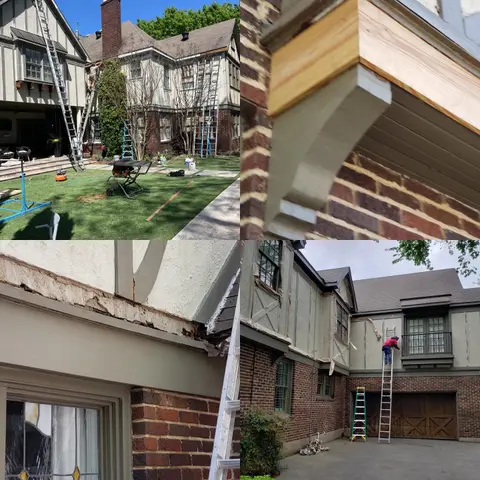 Gutters, siding, paint & solarSiding Repair or Replacement: Vinyl, Engineered Wood, Composite and ClapboardRepair siding when the damage is limited to a few boards or one wall, the material is still available and the sheathing behind it is dry…Read the guide
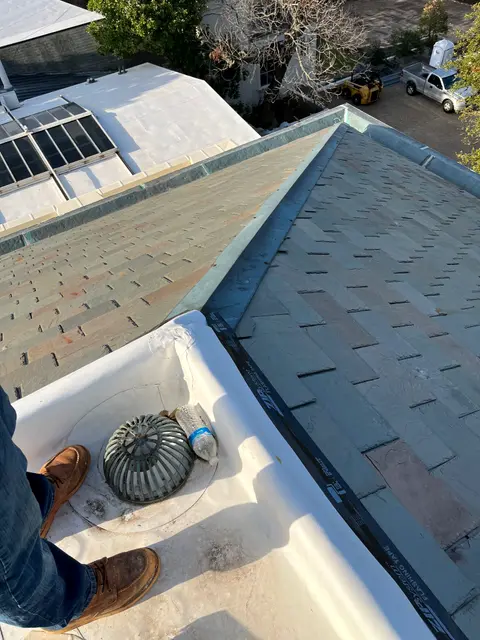 Gutters, siding, paint & solarGutters for Texas Homes: Sizes, Materials, Guards and ReplacementMost North Texas homes do well with seamless aluminum K-style gutters, 5-inch on typical roofs and 6-inch on large or steep roof areas, with downspouts that…Read the guide
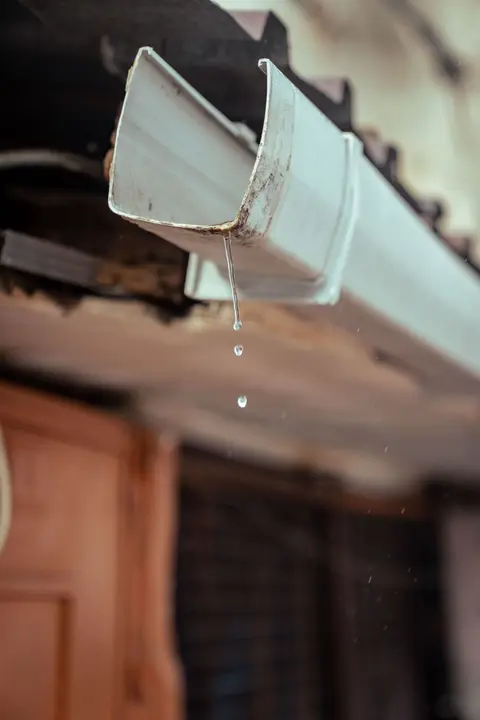 Roofers by cityReplacing Your Roof and Gutters Together in PlanoVerde Roofing, a locally owned roofer based in Plano, replaces roofs and installs gutters and downspouts, so both can be planned as one project. Owner Chris…Read the guide