

Why Is My Attic Wet When It Has Not Rained in North Texas?
 By Chris Grimes, owner of Verde RoofingPublished November 11, 2026 · 12 min read
In short
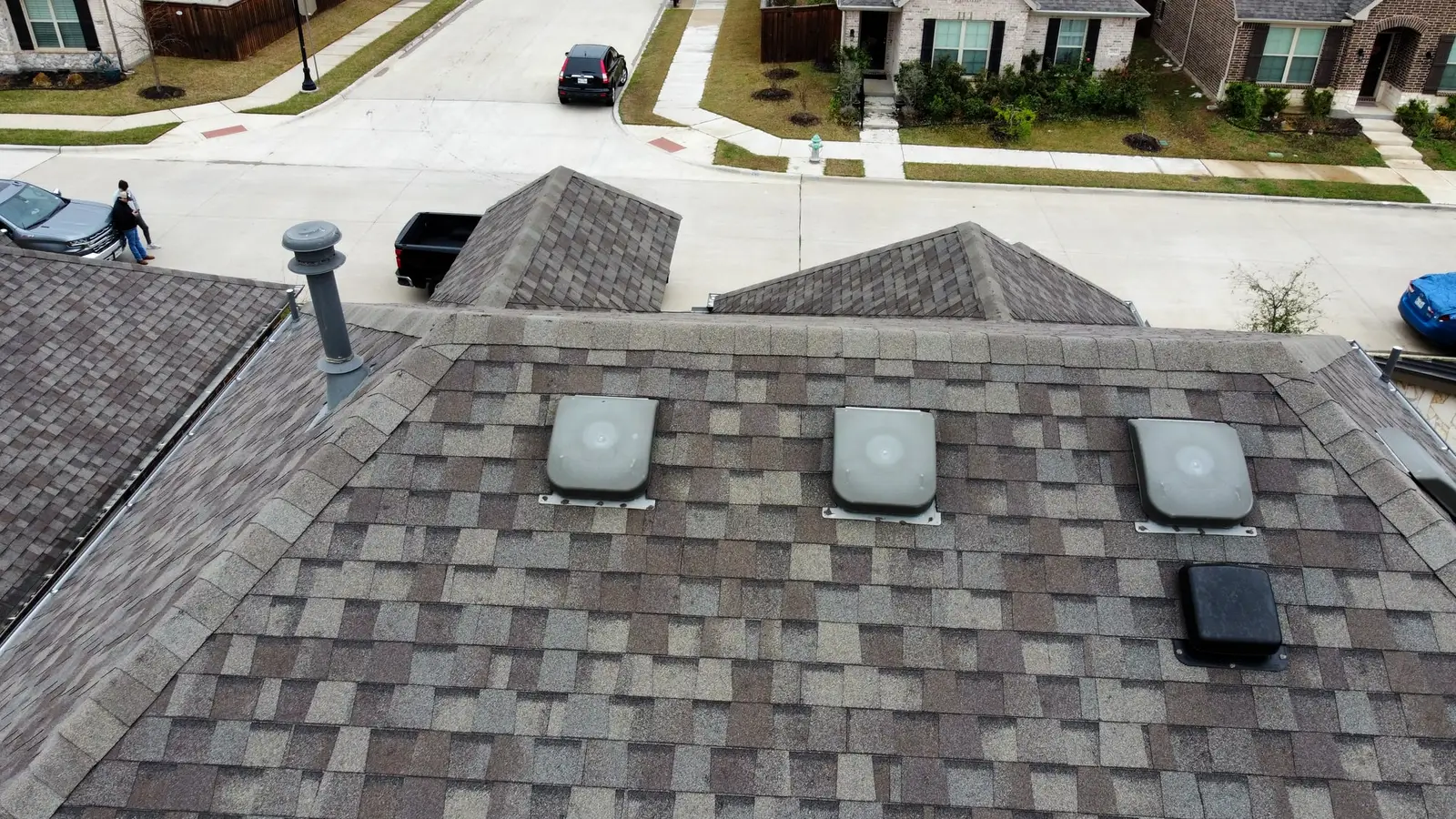
In North Texas, a wet attic in dry weather is usually not a roof leak. The common sources are a clogged air conditioner drain line or pan, a bathroom fan or dryer that vents into the attic, sweating ducts in humid weather, condensation on the roof deck after a cold night, a plumbing or flue problem, or water from an earlier rain still working its way down. Timing tells you which trade to call.
Key takeaways
- When the wet spot appears tells you most of what you need: with the AC running, after showers or laundry, on cold mornings, or a day or two after rain.
- The U.S. Department of Energy calls venting bathroom fans, kitchen ranges and dryers into the attic a major source of attic moisture and says to correct it immediately.
- An air handler in the attic can put water on the ceiling on a dry 100-degree day through a clogged condensate line or a rusted pan; that is an HVAC call, not a roofing call.
- A water heater or furnace flue that has come apart in the attic is a safety problem first and a moisture problem second.
- The EPA says wet materials dried within 24 to 48 hours will, in most cases, not grow mold, so finding the source quickly matters more than which trade finds it.
You went up for the holiday boxes and found damp insulation. Or a stain appeared on the hallway ceiling in the middle of a dry week. Your first thought is the roof, and your second is that it has not rained in days.
That second thought is the useful one. Water in an attic has more possible sources than most people expect, and several have nothing to do with shingles. Sorting them out before you call anyone saves you from paying the wrong trade to look at the wrong thing.
Is a wet attic always a roof leak?
No. The U.S. Department of Energy's consumer guide to durable attics calls moisture the number one enemy of an attic and says it can enter from any direction: above, below or from the side. Roof leaks and bad flashing are on its list. So is water vapor that enters the attic from inside or outside the home and has no way to escape.
Sources that are not a roof leak fall into three groups:
- Liquid water from equipment in the attic: the air conditioner's drain system, a water line, a water heater.
- Moist air released into the attic: a bathroom fan, a dryer, a kitchen hood, or a flue that has come apart.
- Condensation: humid air touching something cooler, such as a duct, a pipe or the underside of the roof deck.
A fourth possibility is a real roof leak with a delay, which we cover below.
What are the clues? Match the timing to the source
Before you call anyone, note three things: when it is wet, where exactly, and what was running in the house. Then compare with this table:
| Source | When it shows | What you see | Who to call first | Published national cost context |
|---|---|---|---|---|
| AC condensate drain line or pan | While the AC runs, often in the hottest, most humid weeks | Water in or around the pan under the air handler; a ceiling stain below the unit; water dripping from a pipe over a window or door | HVAC technician | HomeGuide: $75 to $250 to flush a clogged drain line; $250 to $600 for a secondary pan; $600 to $1,200 for a primary pan |
| Sweating ducts or equipment | Humid weather with the AC running | Damp or dripping duct wrap, wet insulation in a line under a duct run | HVAC technician | No single published figure; depends on duct sealing and insulation needed |
| Bathroom fan venting into the attic | After showers, worse in winter | A duct that ends in the insulation or near a vent, damp or dark decking above it | HVAC contractor or electrician; a roofer if a new roof vent is needed | HomeAdvisor: $350 to $950 for a fan vented through the roof; $250 to $800 through a wall |
| Dryer venting into the attic | After laundry | Lint on the insulation, damp decking near the duct end | HVAC or dryer vent contractor | HomeGuide: $200 to $800 to install a new dryer vent; $100 to $300 to replace one |
| Condensation on the roof deck | Cold, clear mornings in winter | Droplets on nail tips, damp sheathing across a wide area, worst on the north slope | Roofer for ventilation; insulation or home performance contractor for air sealing | Varies with what is found |
| Plumbing leak or water heater in the attic | Any time, not weather related | Steady drip, wet spot below a pipe or the heater pan | Plumber | Varies |
| Flue or plumbing vent pipe problem | When the furnace or water heater runs, or with rain if the boot leaks | A flue pipe pulled apart, rust or white residue on the pipe, a stain around a vent pipe | HVAC technician or plumber for the flue, now; roofer for the boot or flashing | Varies |
| Delayed roof leak | One to several days after rain | A defined stain or trail under one area, matted insulation | Roofer | See our roof repair cost guide |
How to read this: the second column does most of the work. If the wet spot tracks the air conditioner, showers or laundry, start with the mechanical trades. If it tracks cold mornings, think condensation. If it tracks rain, even late, start with a roofer. The cost figures are national ranges from the named guides, not Verde's prices, and Verde does not do HVAC, plumbing or insulation work.
Why is the air conditioner the first suspect in a DFW attic?
In Dallas–Fort Worth this is the first thing to rule out, because so many homes have the air handler in the attic.
An air conditioner pulls water out of the indoor air. That water collects in a pan under the cooling coil and leaves through a drain line. HomeGuide's AC repair guide explains that mold, dirt and debris clog the line, and when they do, the water collected in the pan overflows and causes water damage. It also notes that pans crack with age.
Many attic units have a second pan underneath as a backup, with its own drain that ends somewhere you will notice, often above a window. Water dripping from that pipe means the main drain is not working.
Signs that point to the AC:
- The stain is below or near the air handler.
- It appeared in hot weather with the system running hard.
- There is standing water or rust in the pan under the unit.
- It does not change with rain.
The EPA's mold guide includes this in its basic advice: keep air conditioning drip pans clean and the drain lines unobstructed and flowing properly. This is a service call for an HVAC technician, and usually a modest one.
What about ducts that sweat?
Supply ducts carry cold air through a hot, humid attic. Where the duct insulation is thin, torn or missing, or where a joint leaks cold air, the surface can be cool enough for moisture in the attic air to condense on it. The drip line on the ceiling then follows the duct.
ENERGY STAR recommends sealing ducts and insulating all the ducts you can reach in attics. An HVAC contractor does this work. If the roofer you called finds wet duct wrap and dry decking above it, the roof is not your problem.
Is a bathroom fan or the dryer venting into the attic?
This is common, and it is the one the Department of Energy singles out. Its durable attics guide says venting exhaust fans from the living space into the attic is a major source of moisture and a bad practice that can lead to mold and may violate local building codes. It adds that in many homes kitchen ranges, bathroom fans and dryers vent their moist air into the attic rather than outside, and says to correct the situation immediately.
The Building America Solution Center, run by the Pacific Northwest National Laboratory for the Department of Energy, gives the fix in its bathroom fan guide: vent the exhaust directly to the outside, not into an attic or crawlspace, seal the duct joints, and insulate the duct to minimize condensation.
What to look for from the attic hatch, with a flashlight:
- A flexible duct from the fan that simply ends in the insulation.
- A duct aimed at a roof vent or soffit but not connected to anything.
- A duct that has fallen off its roof cap.
- A long, sagging duct with a low spot. Condensation collects there and can run back to the fan and drip from the grille, which looks exactly like a ceiling leak in the bathroom.
- Lint on the insulation, which means a dryer duct is leaking or ends in the attic.
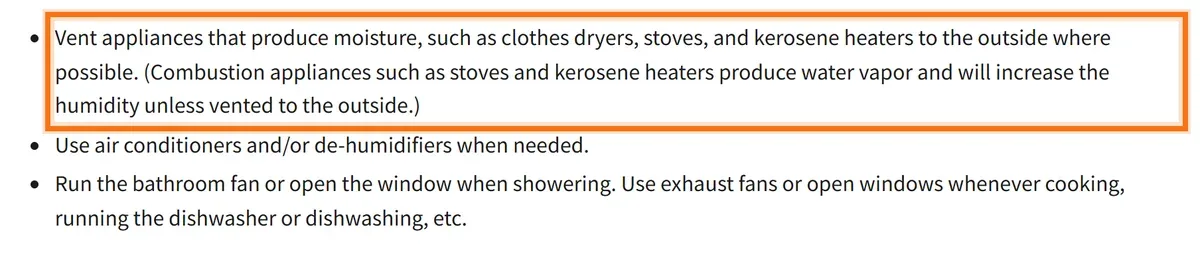
Connecting a fan to the outside often means a new roof vent or wall cap. That part is roofing work: a hole through the decking and a flashed vent. A roofer and the fan installer need to agree who does which piece. Our guide to chimney, flashing and vent leaks explains why the flashing matters as much as the duct.
Why would there be condensation on the roof deck after a cold night?
Because the underside of the roof is the coldest surface in the attic on a clear winter night, and warm, moist air from the house rises to meet it.
The Department of Energy's guide notes that warm, humid air from kitchens, bathrooms and dryers threatens attic durability, and that many homes lack sufficient air sealing between the top floor and the attic. It names the usual gaps: around ductwork, wires, plumbing, light fixtures and the attic entry. That air carries water vapor. When it touches cold decking or a cold nail tip, the vapor turns to droplets, and on the coldest nights to frost that melts and drips when the sun reaches the roof.
North Texas does not have long winters, but it has sharp cold snaps after mild, damp days, and those are the conditions that produce it. The clues are distinctive: many small drops instead of one stream, rusty nail tips, and dampness spread across a slope, usually the north one.
Three things work together here:
- Air sealing keeps house air out of the attic in the first place.
- Insulation keeps the ceiling warm and the attic closer to outdoor temperature. The Department of Energy also recommends baffles at the eaves so insulation does not block the soffit vents.
- Ventilation carries off what moisture does get in. The same guide says improper attic ventilation allows moisture to build up and can cause mold, ruin insulation and damage wood, and recommends soffit vents paired with a ridge vent.
When I check an attic for this, I look at the nail tips first and the soffits second. Rusty nail tips across a whole slope tell me the moisture has been coming for more than one winter, and blocked soffits usually explain why it stays.
Ventilation is the part a roofer handles. Our guide to roof underlayment and attic ventilation explains intake, exhaust and the common mistakes. Air sealing and insulation belong to an insulation or home performance contractor.
Moisture that keeps returning does slow damage. Decking that is wetted and dried over and over can swell and lose its hold on fasteners, which is one path to nail pops and to the wavy or sagging roof lines people notice from the street.
Could it be a plumbing vent, a water line or a flue?
Three different things, and one of them is urgent.
Water lines and water heaters. Many North Texas homes have water piping, and sometimes the water heater itself, in the attic. A pinhole or a failed fitting drips whatever the weather. If the wet spot never dries and has no pattern, call a plumber.
Plumbing vent pipes. These are the pipes that pass through the roof with a rubber boot around them. The pipe carries air, not water, so a stain at one usually means the boot has cracked, and that is a roof leak that shows after rain. If the timing is unclear, a roofer can check the boot in a few minutes.
Flues. Gas furnaces and water heaters send their exhaust up a metal flue through the attic and out the roof. The EPA notes that combustion appliances produce water vapor. If a flue joint has separated in the attic, that vapor, along with the rest of the exhaust, is released under your roof.
A disconnected flue is a carbon monoxide hazard before it is a moisture problem. If you see a flue pipe pulled apart or loose, stop using the appliance and call an HVAC technician or plumber the same day.
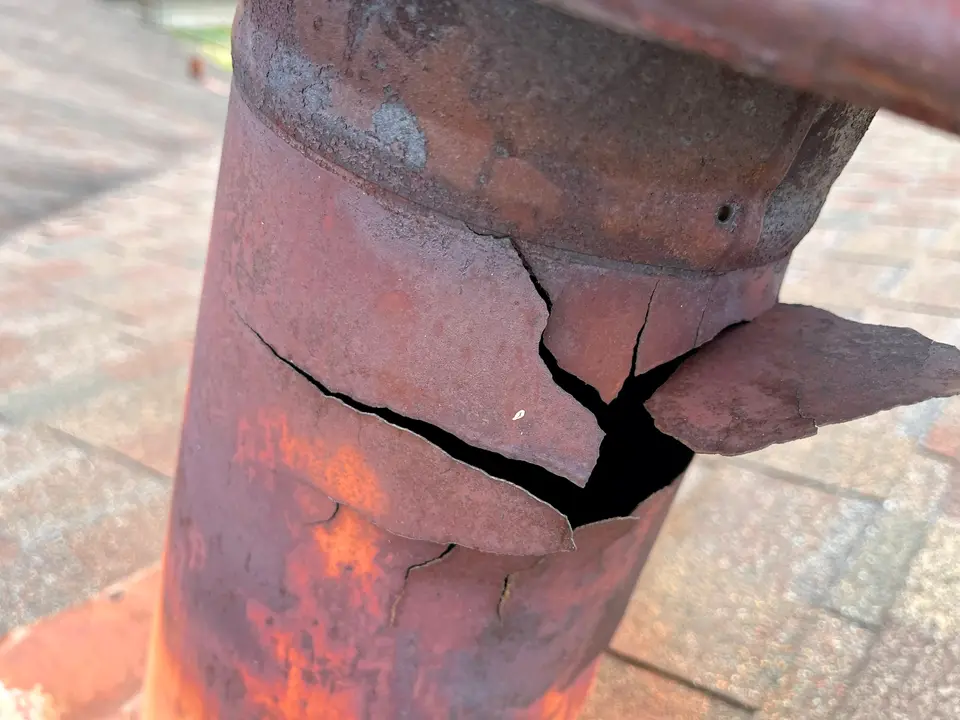
Flues get knocked loose during roof work more often than you would think, because roofers pull and reset the caps. Plano's permit inspection for a re-roof includes an attic check of exactly this, as our guide to roof permits in Plano, Frisco and Dallas explains. If the moisture started soon after a new roof went on, read who should fix a new roof that is leaking and call the roofer who did the job.
Could it still be the roof, days after the last rain?
Yes, and this is the case where waiting costs the most.
Water that gets past the shingles does not fall straight down. It soaks into the decking, runs along a rafter or the top of the ceiling drywall, and saturates insulation, which holds it like a sponge. The stain can appear a day or two later and several feet from the entry point. Slow leaks at flashing, a valley or a pipe boot behave this way.
Signs that point back to the roof:
- The stain appeared within a few days of rain, even if not during it.
- There is one defined wet area or trail on the decking, not a general dampness.
- It is below a valley, a wall, a chimney, a skylight or a pipe.
- It gets worse after wind-driven storms from one direction.
Our guide on what to do when your roof is leaking explains how roofers trace a leak from the attic. A metal roof over an open porch or shop is its own case: condensation dripping from the underside of the panels is easy to confuse with a leak, as we explain in metal roofs leaking at screws or seams.
What should you do now, and in what order?
- Stay safe. Step only on framing in the attic, never on the drywall between joists. Do not touch wet wiring or fixtures. Do not go on the roof.
- Take photos of the wet area, anything above it, and the nearest duct, pipe, flue and fan.
- Write down the timing: weather for the past week, and whether the AC, heat, showers or dryer were in use.
- Check the easy ones. Is there water in the AC pan? Does the bath fan duct reach the outside? Is a flue pipe apart?
- Call the trade that matches the clue, using the table above. If the clues are mixed, or anything points to rain, start with a roofer, because a roof leak gets worse with every storm.
- Dry it. The EPA says that if wet or damp materials are dried within 24 to 48 hours, in most cases mold will not grow. Pull back soaked insulation so the drywall and framing can dry.
- Then deal with the damage. Our guide on who repairs wet insulation and ceiling damage covers that part.
If you are not sure which it is, call or text us at (214) 687-1951. An attic inspection that ends with “it is not the roof” is still a useful answer, and we will tell you which trade to call next.
What a roofer can and cannot settle
A roofer can rule the roof in or out: shingles, flashing, pipe boots, vents, decking and whether the attic has balanced intake and exhaust. Verde's roof repair work covers leaks, flashing and vents. We do not service air conditioners, plumbing or insulation, and we will say so plainly when the water is coming from one of them.
A yearly look in the attic, before summer and again after the first cold snap, catches most of this early. It is on our roof maintenance checklist for Texas, and Verde offers maintenance plans if you would rather have the roof checked on a schedule.
Not sure whether it is the roof? Have it checked
Call or text (214) 687-1951, 24/7, or book a free roof inspection. Chris inspects the roof and attic with you, photographs what he finds, and tells you whether it is a roofing repair or a job for another trade.
Questions people ask next
Can a roof leak show up days after it rains?
Yes. Water that gets under the roofing can soak into decking and insulation and travel along a rafter before it reaches the ceiling, so the stain may appear a day or more after the storm and some distance from the entry point. If the timing follows rain at all, even loosely, have a roofer check the roof and attic before assuming condensation.
How do I know if it is condensation or a roof leak?
Look at the pattern and the timing. A roof leak usually leaves a defined stain or trail below one spot and follows rain. Condensation tends to be spread out: droplets on many nail tips, damp decking across a slope, or wet duct wrap, and it follows cold nights, humid spells or the use of fans, showers and the dryer.
Is it against code for a bathroom fan to vent into the attic?
The U.S. Department of Energy says venting exhaust fans into the attic is bad practice and may violate local building codes, and Building America’s guidance says to vent bath fan exhaust directly to the outside, not into an attic or crawlspace. Your city’s adopted code is what applies to your house, so ask the building department if you need a formal answer.
Who do I call for water in the attic if it is not the roof?
Match the trade to the source. Water at the air handler, its pan or drain line: an HVAC technician. A bath fan or dryer duct that ends in the attic: an HVAC contractor or electrician to duct it outside, with a roofer for the roof vent. A dripping pipe: a plumber. Widespread condensation with thin or wet insulation: an insulation or home performance contractor.
Does wet attic insulation need to be replaced?
It depends on the material and how long it stayed wet. Insulation that got damp once and dried quickly may be fine. Insulation that is matted, stained, moldy or was wet for days generally loses performance and is replaced. HomeGuide’s cost guide puts attic insulation removal at $1 to $2 per square foot nationally. Fix the water source first.
Will a roofer charge me to find out it is not the roof?
Ask before the visit. Verde Roofing offers free inspections and estimates, and an honest inspection sometimes ends with the answer that the roof is fine and another trade is needed. That is still worth knowing, because it stops you from paying for roof repairs that would not have stopped the water.
Can poor attic ventilation cause water to drip from the ceiling?
By itself, rarely, but it makes every other moisture source worse. Ventilation is what carries water vapor out of the attic. If soffit vents are blocked or there is too little exhaust, moisture from the house, a fan duct or humid outdoor air stays longer and is more likely to condense on cool surfaces.
Sources
- U.S. Department of Energy, Energy Saver: Consumer Guide to Durable Attics (fact sheet DOE/EE-2466, PDF)
- PNNL Building America Solution Center: Bathroom Exhaust Fans
- U.S. EPA: A Brief Guide to Mold, Moisture and Your Home
- ENERGY STAR: Duct sealing
- HomeGuide: AC repair cost (August 2025)
- HomeAdvisor: Cost to install a bathroom fan (updated June 2026)
- HomeGuide: Dryer vent installation cost (January 2026)
- HomeGuide: Attic insulation cost (January 2026)
Chris Grimes owns Verde Roofing in Plano, Texas, a locally owned residential and commercial roofer serving Dallas–Fort Worth. Verde is an NTRCA Accredited Member, an RCAT member and a Dallas Observer Best of Dallas Best Roofer winner (readers’ choice) in 2021, 2022 and 2023.
Keep reading
Related guides
 Roofing materialsUnderlayment, Ventilation and Decking: The Parts of a Roof You Don't SeeUnder the shingles sit the decking (plywood or OSB), underlayment (synthetic or felt), self-adhered ice and water barrier at valleys and other leak-prone spots, drip edge…Read the guide
 Repair or replaceRoof Leaking? What to Do Right Now and How Leaks Get FoundTurn off power to any wet light fixture, catch the water, relieve a bulging ceiling with a small hole over a bucket, move valuables, and photograph…Read the guide
 Repair or replaceWho Repairs Wet Insulation and Ceiling Damage After a Roof Leak in DFW?After a roof leak in Dallas–Fort Worth, the work goes in a fixed order and usually to different companies. A roofer stops the water first. A…Read the guide