Sagging Roof or Wavy Shingles on a DFW Home: How Urgent Is It?
 By Chris Grimes, owner of Verde RoofingPublished November 17, 2026 · 12 min read
In short
On a DFW home, shingles that look wavy or rippled are usually a surface issue: decking seams showing through, wrinkled underlayment or a second shingle layer. That is rarely urgent. A ridge that dips, a slope that sags between rafters or walls that lean are movement in the deck or framing and need prompt inspection. A sag that appears suddenly, or with new ceiling cracks, is an emergency. Framing questions go to a structural engineer.
Key takeaways
- Waves that follow a regular grid usually trace the joints between decking panels; the Asphalt Roofing Manufacturers Association says moisture-related deck effects line up with deck joints, while wrinkled underlayment shows up at random.
- APA, the engineered wood association, says buckled panels leave structural properties unaffected, so telegraphed seams are mainly an appearance problem.
- A ridge line that dips in the middle or a roof plane that bows points to framing, and framing adequacy is a structural engineer’s call, not a roofer’s.
- Fixr’s 2026 guide puts sagging roof repairs at $800 to $5,000 nationally, and its engineer guide puts a structural engineer at $500 to $2,000.
- New shingles follow the deck beneath them, so reroofing over a sag hides nothing and fixes nothing.
From the street, your roof used to look like a flat plane. Now, when the sun is low, you see ripples across one slope. Or the ridge that should be a straight line has a slight dip in the middle, and you cannot remember whether it was always like that.
Two very different things produce those views. One is the surface showing what is under it, which is mostly about looks. The other is the deck or the frame of the house moving, which is about safety and money. This guide helps you sort your roof into the right group and decide how fast to act.
Is a sagging or wavy roof an emergency?
Usually not, but one version of it is. Match what you see to a row:
| What you see | Likely source | How urgent | Who looks first |
|---|---|---|---|
| Faint ripples in a regular grid, most visible in low sun | Decking panel seams showing through the shingles | Low: schedule an inspection | Roofer |
| Random wrinkles or ridges on a roof installed recently | Underlayment that wrinkled under the shingles | Low, but report it now | The installing roofer, in writing |
| A lumpy, uneven surface on a roof with two layers | The old shingles underneath | Low: plan for a tear-off at the next roof | Roofer |
| A scalloped look, dipping between each rafter | Decking that is thin, unsupported at its edges or weakened by moisture | Medium: within a few weeks | Roofer, with an attic check |
| One soft dip, often with a ceiling stain below | Decking rotted by a leak | High: within days | Roofer |
| A ridge that sags in the middle, or a whole plane that bows | Framing: rafters, ridge, braces or trusses | High: before any roofing work | Roofer to document, then a structural engineer |
| A sag that is new or growing, with cracking sounds, fresh ceiling or wall cracks, or doors that suddenly stick | Framing under active stress, or damage from a tree, a storm or a heavy load | Emergency: today | Keep people out from under it; call 911 if collapse looks possible, then your insurer and a roofer for emergency protection |
How to read it: the top three rows are surface appearance, and the roof is doing its job while it looks imperfect. The middle two are the deck, which a roofer repairs. The bottom two are the structure, where a roofer's role is to document and protect while an engineer decides what the frame needs. If a tree or limb caused it, go to what to do when a tree falls on your roof.
How can you tell surface from structure without getting on the roof?
Do not walk a roof that looks saggy. Soft decking gives no warning. Everything below can be checked from the ground, the attic hatch and inside the house.
- Sight the ridge. Stand across the street, in line with the ridge, and look at it against the sky. A straight ridge with wavy slopes below it points to the surface. A ridge that dips points to framing.
- Look in low light. Early morning and late afternoon sun rakes across the shingles and shows every ripple. Photograph it. Note whether the waves run in straight lines at regular spacing or wander at random.
- Check the eaves and walls. Look down the top of the exterior walls from a corner. A wall that bows outward near the top, or a gap opening between the soffit and the wall, suggests rafters pushing out.
- Open the attic hatch with a flashlight. Stay on the framing; never step between joists. Look for cracked or split rafters, braces that have been cut or removed, dark-stained or sagging decking, and daylight.
- Walk the rooms below. New cracks at ceiling corners, a ceiling that has dropped, or interior doors that have started to stick under that part of the roof matter.
- Ask what changed. A recent reroof, a second layer of shingles, a heavier roofing material, new attic equipment or a foundation repair are all clues.
Photos from steps 1, 2 and 4, with dates, are the most useful thing you can hand a roofer or an engineer.
What makes shingles look wavy when the framing is fine?
The Asphalt Roofing Manufacturers Association (ARMA) has a technical bulletin on exactly this, and its opening line is the short answer: buckling “is most often the result of wrinkles in the roofing underlayment or movement of the wood decking.”
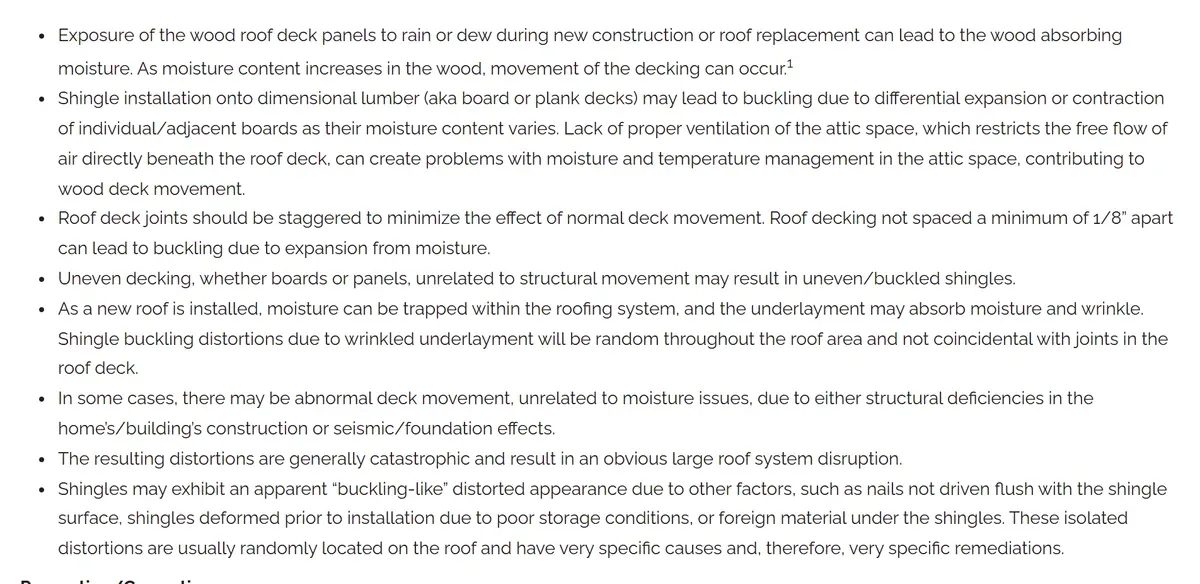
The bulletin gives a field test that works from the driveway:
- Waves that line up with the deck joints are the decking. ARMA says moisture-related deck effects typically show a pattern that coincides with the joints between panels or boards.
- Waves that wander at random are the underlayment. ARMA says distortions from wrinkled underlayment are random across the roof and do not follow the deck joints.
Behind those two patterns are a handful of specific causes.
Panels installed tight. Wood swells with moisture. ARMA says decking not spaced at least 1/8 inch apart can buckle as it expands, and APA, the engineered wood association, recommends that same 1/8 inch gap on all panel edges. APA also says something reassuring: although the waviness affects appearance, the panels' structural properties are unaffected.
Decking that got wet during the job. ARMA notes that panels exposed to rain or dew during a reroof absorb moisture and move. A roof that looked wavy the first cool morning after installation and settles down over a dry month often had this.
A hot, damp, under-ventilated attic. ARMA lists lack of attic ventilation as a contributor to deck movement. This is the North Texas version of the problem, and it is covered in our guide to roof underlayment and ventilation. If the attic is damp on dry days, see why an attic is wet when it has not rained.
Board decks. Older Dallas homes often have plank decking. ARMA says shingles laid on boards can buckle as individual boards expand and contract at different rates.
Missing edge support. Panel edges that land between rafters are commonly supported with small metal clips, often called H-clips, or with blocking. Where the support is missing and the panel is thin, the edges dip under load and the seam shows as a line.
A second layer. New shingles nailed over old ones take the shape of what is underneath. Owens Corning's installation instructions for its Supreme shingles say the surface must be smooth before shingles are installed, and that installing its shingles over existing laminate shingles is not recommended. See putting new shingles over old ones in Texas.
Raised fasteners. ARMA adds that nails not driven flush, or debris under the shingles, create isolated bumps that can be mistaken for buckling. Those are covered in roof nail pops.
What causes a roof to actually sag in North Texas homes?
When the dip is in the wood and not just the shingles, the causes fall into two groups.
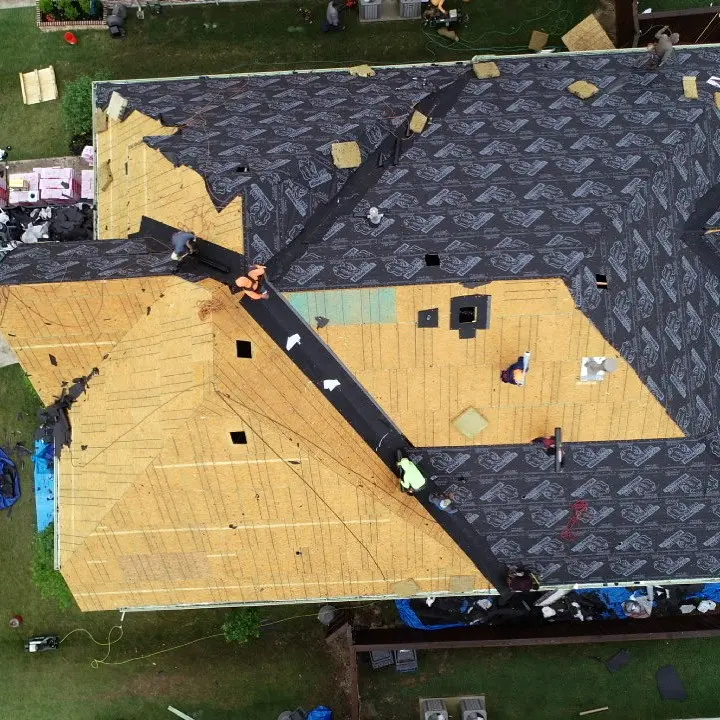
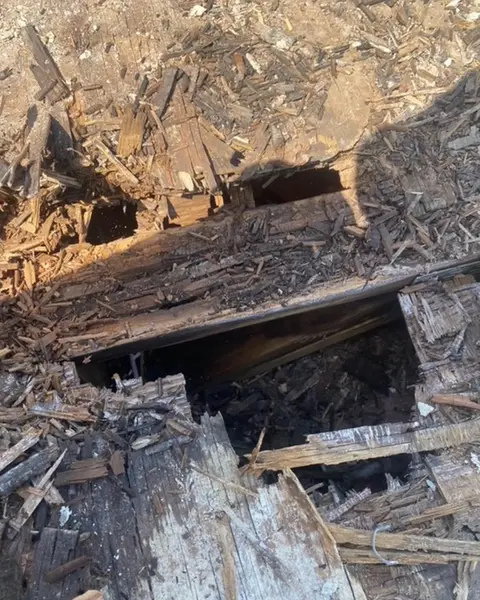
The deck. Decking that has been wet for a long time loses stiffness and sags between the rafters. So does decking that was thin for the rafter spacing to begin with. This usually shows as a scalloped pattern or as one soft area below a long-running leak, often near a valley, a chimney or a plumbing vent. It is repaired by replacing sheets. Our guides to roof decking replacement cost in DFW and leaking roof valleys cover the two most common settings.
The frame. A ridge that dips or a plane that bows means the rafters, the ridge, the braces or the trusses are deflecting. Common reasons a roofer or inspector will note for an engineer:
- Rafters that are long for their size, with braces that were undersized, cut or removed during a remodel or an equipment install.
- A cracked or split rafter.
- Truss members cut or altered. A truss should never be cut without an engineer's design.
- Added weight: multiple layers of roofing, or a heavier material such as tile or slate placed on framing sized for shingles. See tile and slate roofs.
- Walls spreading at the top because the ties that hold the rafters together are missing or failing.
- Movement from below. ARMA's bulletin names structural deficiencies and foundation effects as causes of abnormal deck movement, and North Texas clay soil moves foundations.
Notice the wording: “will note for an engineer.” Verde Roofing is a roofing company. We can show you what we see, measure the dip and photograph the framing from the attic. Whether that framing is adequate, and how to correct it, is an engineering judgment we do not make.
When does a roofing inspection need a structural engineer?
Bring one in before any roofing work when:
- The ridge sags, or an entire roof plane bows.
- Exterior walls lean or bow outward near the top.
- A rafter, brace or truss member is cracked, cut or missing.
- The sag appeared after a storm, a fallen tree or another sudden event.
- You plan to change to a heavier roofing material.
- An insurer, a buyer or a lender asks for a letter about the structure. See what roof inspection report an insurer, buyer or lender will accept.
In Texas, engineers are licensed by the Texas Board of Professional Engineers and Land Surveyors. The board's website has a public roster search where you can look up an engineer by name or license number and see the license status before you hire.
The order of work matters, because each step depends on the one before it:
- Roofer. A free inspection with photos of the roof surface, the deck and what is visible in the attic. This often settles it as a surface or decking issue.
- Structural engineer. If the frame is in question, the engineer evaluates it and writes the repair, usually as a letter or a stamped detail.
- Framing contractor. A carpenter or general contractor carries out the structural repair to the engineer's specification. Check the permit: the City of Dallas, for example, says its roofing permit covers shingles and decking only, and structural repairs to rafters or joists require a separate building alteration permit.
- Roofer again. New decking where needed, then the roof system.
Fixr's structural engineer cost guide, updated January 2025, gives a national range of $500 to $2,000 for hiring a structural engineer, with an average of $1,200. That fee is small next to the cost of roofing over a problem and tearing the new roof off to fix it later.
What are the repair options, and what does each one solve?
Side by side, from doing nothing to rebuilding:
| Option | When it fits | What the work includes | What it does not solve | Typical published cost |
|---|---|---|---|---|
| Monitor it | Faint seam telegraphing, straight ridge, dry attic, shingles sealed | Dated photos twice a year; an inspection after major storms | The look | Inspection only; ours is free |
| Improve attic ventilation and moisture control | Waves that come and go with the weather; damp or stagnant attic | Clearing or adding intake and exhaust vents; bath fans routed outdoors | Panels already installed too tight; framing | Quoted after inspection |
| Correct the underlayment or shingles in one area | Random wrinkles or isolated bumps, especially on a recent roof | Removing shingles, flattening or replacing underlayment, reinstalling or replacing shingles | Deck or framing movement | $150 to $700 for shingle repairs (Fixr 2026) |
| Replace decking sections | Soft, rotted, delaminated or undersized sheets; scalloping between rafters | Tear back shingles, replace sheets with edge support, new underlayment and shingles | The leak that caused the rot, unless repaired in the same visit; framing | $150 to $1,000 for decking (Fixr 2026) |
| Full tear-off with deck correction | Widespread telegraphing or a second layer on a roof due for replacement | Remove all layers, replace or re-space decking as needed, correct ventilation, new roof | Framing deflection | Priced as a replacement |
| Structural repair to an engineer's specification | Ridge sag, bowed planes, cracked or altered framing | Reinforcing or replacing rafters, braces or trusses; then decking and roofing | Nothing, if the cause was correctly identified | $800 to $5,000 for a sagging roof; rafters $300 to $5,000; trusses $500 to $5,000 (Fixr 2026) |
How to read it: work down the table only as far as the inspection takes you. Most wavy roofs stop in the first three rows. The cost figures are national published ranges from Fixr, not our prices, and the structural row in particular swings with how much framing is involved and whether the roof covering has to come off to reach it. ARMA's own advice for the surface rows is to remediate the root cause first, then reinstall the existing shingles flat or replace them if they have been compromised.
If you are not sure which row your roof belongs in, call or text (214) 687-1951 and we will come look at it with you.
Can you just put a new roof over it?
No. Shingles are a flexible skin. They take the shape of the deck, and the deck takes the shape of the frame. A new roof installed over a sagging deck has a sag in it on day one.
An overlay is the worst version of this choice. It adds weight to a roof that is already deflecting and covers the decking nobody has inspected. If a contractor proposes roofing over a visible sag without explaining its cause, get another opinion.
There is one piece of good news here. If the cause is decking, a replacement is the natural time to fix it, because the sheets are exposed anyway. Ask that the estimate include a per-sheet decking price, edge support for new panels, and photos of what was found. Signs you need a new roof explains how a sagging line fits with the other signs.
Will insurance pay for a sagging roof?
It depends on why it sagged. The Texas Department of Insurance says plainly that an insurer will not pay for a new roof just because it is old or worn out, and a sag that developed over years of moisture or undersized framing falls on the owner. The same page says you can file a claim if a storm, a tree or something else damaged your roof.
So the date matters. If the sag appeared after a specific event, photograph it, note the date and call your insurer. If it has been there as long as you can remember, treat it as a repair you plan and budget for. Either way, your own policy governs, and only your insurer can tell you what it covers.
What should a written quote for a wavy or sagging roof include?
- The roofer's finding: surface, deck or possible framing, with photos.
- Whether the pattern follows the deck joints or is random.
- What was seen in the attic, including moisture and ventilation.
- The specific work, and what it is not expected to fix.
- A per-sheet decking price and how panel edges will be supported.
- A plain statement of whether an engineer's evaluation is recommended before the work.
- Who pulls any permit.
- The warranty on the repair, in writing.
Our roof repair page describes how we approach decking and leak repairs, and how long a roof repair should last covers the warranty line.
Want a straight answer on whether it is the shingles or the structure?
Call or text (214) 687-1951, 24/7, or book a free roof inspection. Chris inspects the roof with you, photographs the surface, the decking and what he can see in the attic, and tells you whether it is a roofing repair or something an engineer should look at first. Roofing work comes with a written estimate before anything starts.
Questions people ask next
Is a sagging roof dangerous?
It depends on what is sagging and how fast. Ripples in the shingles from decking seams are an appearance issue. A long-standing, slight dip in an older ridge may have been stable for decades but still deserves an evaluation. A sag that is new, growing, or paired with cracking sounds, fresh ceiling cracks or sticking doors should be treated as unsafe: stay out from under it and get it looked at immediately.
Why do my shingles look wavy on a new roof?
On a new roof the usual causes are underlayment that wrinkled after absorbing moisture, decking panels installed without a gap that swelled, or shingles laid over an old layer. The Asphalt Roofing Manufacturers Association says underlayment wrinkles appear at random while deck movement follows the panel joints. Report it to the installer in writing with photos taken in low sunlight.
Will wavy shingles flatten out on their own?
Sometimes partly. Ripples caused by moisture in the decking or underlayment can relax as the roof dries and the attic ventilates, and they often look worse in cool, damp weather. Do not count on it. If the waves are still visible after a dry, warm stretch, or shingles are not sealing, have the cause identified. Waves from uneven decking or a second layer will not go away.
Can a roofer fix a sagging roof?
A roofer fixes what is in the roof covering and the deck: shingles, underlayment, and decking sheets that are rotted, thin or poorly supported. If the sag is in the rafters, trusses, ridge or walls, a structural engineer should evaluate it and specify the repair, a framing contractor carries it out, and the roofer then replaces the decking and roof over it.
How much does it cost to fix a sagging roof?
Fixr’s 2026 roof repair guide gives a national range of $800 to $5,000 for a sagging roof, with rafter repairs listed at $300 to $5,000 and truss repairs at $500 to $5,000. Those are published national figures, not our prices. The cause, how much framing is involved, access and whether the roof covering must come off all move the number.
Does homeowners insurance cover a sagging roof in Texas?
Not when the sag developed slowly. The Texas Department of Insurance says an insurer will not pay for a new roof because it is old or worn out. Sudden damage is different: the same page says you can file a claim if a storm, a tree or something else damaged your roof. Your own policy governs, so read it and ask your agent.
Can I put a new roof on over a sag?
You can, but the new roof will have the same sag in it. Shingles follow the surface they are nailed to. If the cause is decking, the fix happens during tear-off when sheets are replaced. If the cause is framing, it should be evaluated and repaired before the new roof goes on, especially if you are changing to a heavier material.
Sources
- Asphalt Roofing Manufacturers Association: Plain Facts About Buckled Shingles (technical bulletin, revised March 2024)
- APA – The Engineered Wood Association: Minimizing Buckling of Wood Structural Panels (technical note)
- Owens Corning: Supreme Shingles Installation Instructions (deck and reroofing requirements)
- Fixr: How Much Does It Cost to Repair a Roof? (2026 data, updated January 21, 2026)
- Fixr: Structural engineer cost (updated January 31, 2025)
- Texas Board of Professional Engineers and Land Surveyors: PE roster search
- City of Dallas: Planning & Development Guide (re-roofing permit scope and structural repairs)
- Texas Department of Insurance: Insurance and your roof
Chris Grimes owns Verde Roofing in Plano, Texas, a locally owned residential and commercial roofer serving Dallas–Fort Worth. Verde is an NTRCA Accredited Member, an RCAT member and a Dallas Observer Best of Dallas Best Roofer winner (readers’ choice) in 2021, 2022 and 2023.
Keep reading
Related guides
 Repair or replace12 Signs You Need a New RoofThe clearest signs you need a new roof are age near the end of the material's expected life, curling or brittle shingles, heavy granule loss with…Read the guide
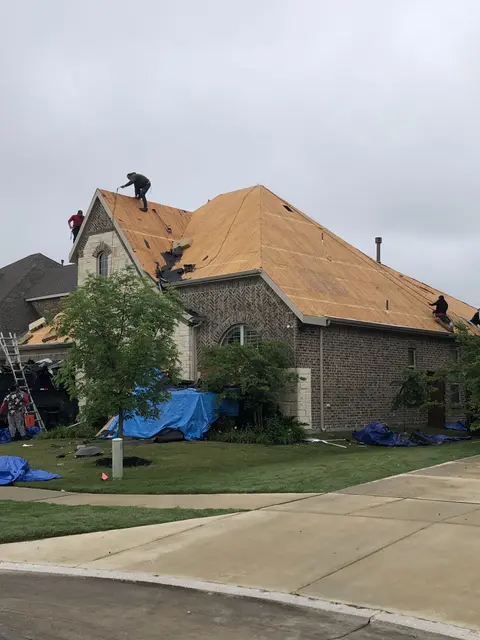 Cost & financingHow Much Does Roof Decking Replacement Cost in DFW?Nobody publishes a verified Dallas–Fort Worth price for roof decking. Fixr's 2026 roof replacement guide lists decking replacement at $2 to $8 per square foot of…Read the guide
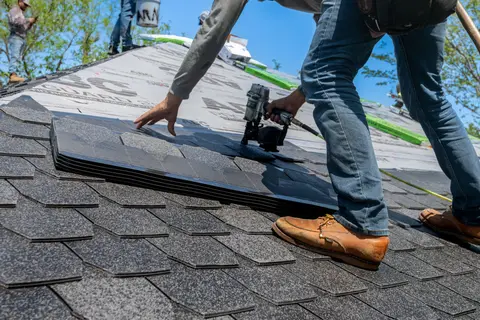 Repair or replaceRoof Nail Pops in North Texas: Why Shingles Lift and What a Proper Repair IncludesRoof nail pops happen when a nail backs out of the decking and lifts the shingle above it. In North Texas the usual causes are underdriven…Read the guide