Metal Roof Leaking at Screws or Seams in Texas: What Repair Will Last?
 By Chris Grimes, owner of Verde RoofingPublished November 14, 2026 · 12 min read
In short
A lasting repair fixes the part that failed, not the surface above it. On a screw-down metal roof in Texas that means replacing backed-out or worn fasteners with new long-life screws, one size larger where the hole is stripped. On standing seam it means opening the seam, lap or flashing and rebuilding it with the sealant the panel maker specifies. Caulk smeared on top is temporary.
Key takeaways
- Exposed-fastener roofs leak mostly at the screws: backed out, over-driven, under-driven, angled, or with a rubber washer that has aged in the sun.
- Standing seam roofs have no exposed screws in the panel field, so their leaks are usually at end laps, penetrations, flashings and trim.
- A Texas metal panel manufacturer’s own maintenance guide says leaks should never be repaired by applying roof cement or caulk to the surface.
- HomeGuide’s 2026 cost guide puts replacing metal roof screws at $150 to $1,000 and resealing seams at $250 to $1,100, nationally.
- A coating can extend a sound roof, but it is not a fix for loose fasteners, open laps or rusted panels underneath.
A metal roof is supposed to be the one you stop thinking about. So a drip at a screw line, or a stain that follows a seam, is frustrating, and more so when someone has already been up there with a caulk gun and it is leaking again.
The repair that lasts depends on which kind of metal roof you have and exactly which part let go. This guide covers both common systems, what an inspection has to establish, the realistic repair options with published cost ranges, and what to have written in the quote.
Which kind of metal roof do you have?
Everything else follows from this, and you can tell from the ground.
Exposed-fastener panels (often called screw-down, R-panel or corrugated) are ribbed sheets fastened through the face. You can see rows of screw heads, each with a rubber washer under it. They are common on shops, barns, patio covers and some homes across North Texas.
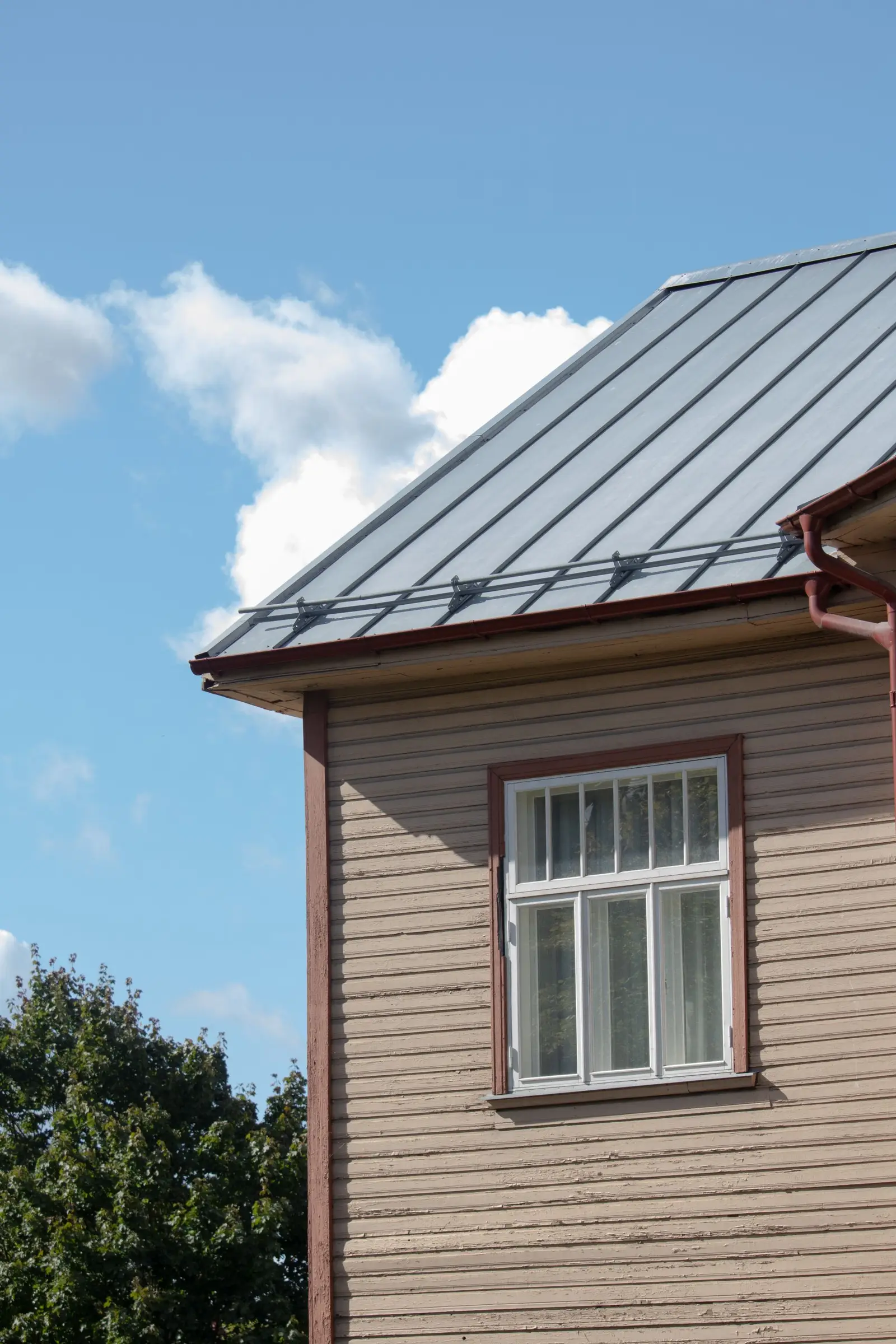
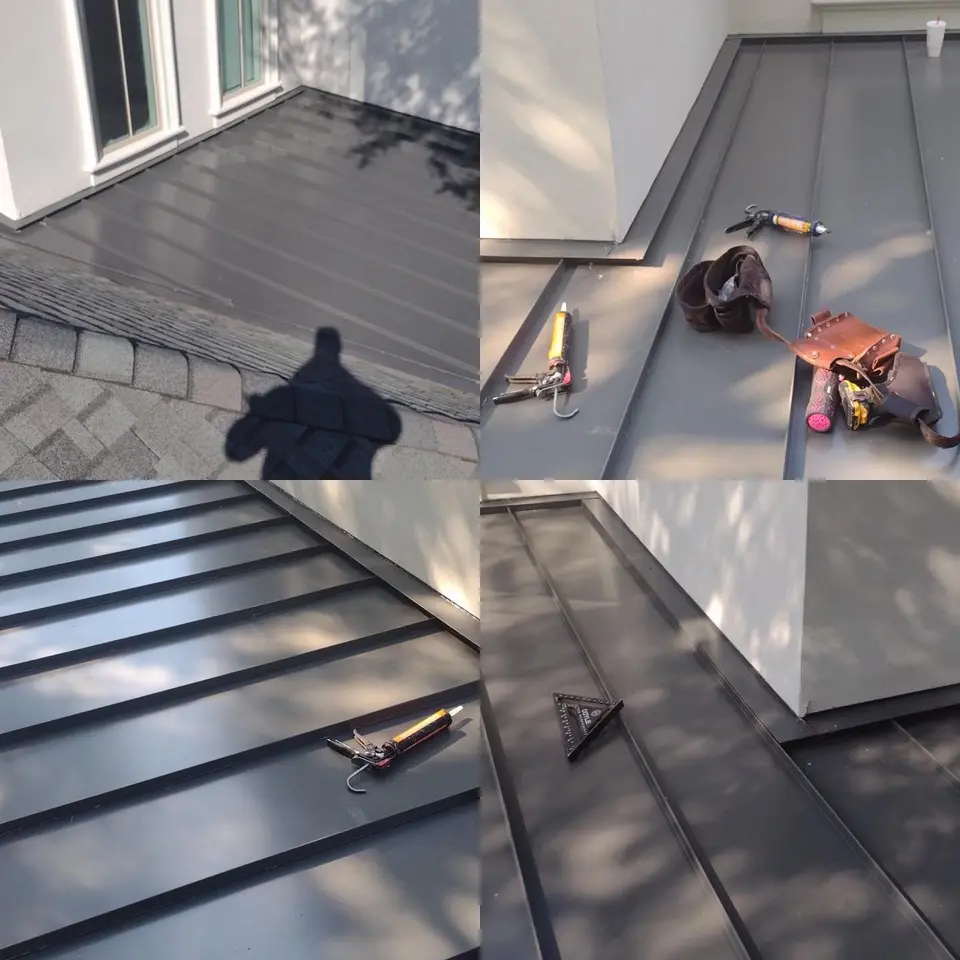
Standing seam has flat pans between raised vertical seams and no screws visible in the field of the panel. The fasteners or clips are hidden under the seams. This is the system most often used on houses.
Our guide to metal roof cost in Texas explains the systems in more detail. Here is where each one typically leaks, and what the lasting repair is:
| System | Where it leaks | Usual cause | The repair that lasts |
|---|---|---|---|
| Exposed fastener | At individual screws | Screw backed out, washer cracked or flattened, screw over-driven, under-driven or angled, or it missed the framing | New long-life screw with a new washer, larger diameter where the hole is stripped |
| Exposed fastener | Along a side lap or end lap | Lap sealant tape missing or aged, stitch screws loose, lap too short for the slope | Open the lap, new sealant tape, refasten |
| Both | At a pipe, vent or skylight | Boot cracked, boot set across a rib or seam, flashing relying on surface sealant | New boot or curb flashing fitted to the panel, sealed under the flange, not over it |
| Both | At a wall, chimney, valley or ridge | Closure strips missing or shrunk, trim fastened so panels cannot move, flashing too short | Remove the trim, replace closures and sealant, refasten |
| Standing seam | At a panel end lap or the eave or ridge | Sealant in the lap failed, panel end not closed, panel pinned at both ends | Rebuild the detail as the panel manufacturer specifies |
| Standing seam | At the seam itself | Seam not fully engaged or seamed, or damaged by foot traffic or impact | Re-engage or re-seam; replace the panel if the seam is deformed |
How to read this: on a screw-down roof the leak is nearly always at a fastener or a lap, and the fix is mechanical. On standing seam, look at the details where panels end or meet something else. In both cases the right-hand column involves taking something apart and putting it back correctly, not adding material on top.
Why do the screws on a metal roof start to leak?
A screw-down roof has thousands of fasteners, and every one is a hole sealed by a small rubber washer. The Metal Construction Association's technical bulletin on fasteners says that where fasteners are used externally they must provide a weather-tight seal under all load conditions, and that a fastener must be as durable as the roof panel itself. That is a high bar, and several things work against it:
- Movement. Metal panels grow and shrink with temperature every day. HomeGuide's repair cost guide notes that thermal expansion and contraction cause fasteners to loosen or back out over time. A North Texas summer afternoon followed by a thunderstorm is about as hard a cycle as a roof sees.
- Over-driven screws. McElroy Metal, a panel manufacturer, says overdriving can dimple the panel around the screw, causing water to pool and the washer to seat improperly, and can destroy rubber washers.
- Under-driven screws. The same guidance says under-driving lets water seep under the unseated washer.
- Angled screws. Fasteners should go into the framing straight. A tilted head compresses one side of the washer and leaves the other open.
- Misses. A screw that missed the purlin or the wood below holds nothing and seals nothing.
- Aged washers. The rubber is exposed to sun and heat for years. It hardens, cracks and shrinks.
- Rust. A rusting screw head stains the panel and, if left, can spread corrosion into it. Our guide to rust on a metal roof covers that decision.
Where does a standing seam roof leak?
Not usually in the middle of a panel. With the fasteners hidden, the weak points are the places where a panel ends or is interrupted.
The Metal Construction Association notes in its guide to standing seam clips that most standing seam installations need specific fastening techniques to allow for thermal expansion and contraction. When a long panel is fixed so it cannot move, the stress goes into the details: fastener holes elongate, sealant in a lap is worked loose, and trim pulls away.
An inspection of a leaking standing seam roof checks, in roughly this order:
- Penetrations upslope of the stain: pipe boots, vents, skylight curbs. A boot that straddles a seam is a frequent find.
- Flashings: walls, chimneys, valleys and the transitions at dormers.
- Ridge and eave: whether panel ends are closed and sealed, and whether the ridge trim has closures.
- End laps, where two panels overlap along the slope.
- The seams themselves, for sections that are not fully locked or have been bent by foot traffic or hail. After a storm, read hail damage on a metal roof for how cosmetic and functional damage are told apart.
Why do caulk-only repairs fail?
Because they treat the surface, and the surface was not the problem.
Berridge Manufacturing, a metal roofing manufacturer based in San Antonio, is blunt about it in its maintenance and repair guide:
The guide explains the mechanism. Surface-applied sealant weathers and loses its grip on the metal. Water then collects between the sealant and the roof, and rust follows. So a caulk repair can leave the roof worse than a small leak did.
The proper method, according to the same document, is to remove the panels around the leak and reinstall them with the proper sealant at joints and between layers of metal, and to replace the whole panel where it has been punctured. It also advises consulting the panel manufacturer before any repair.
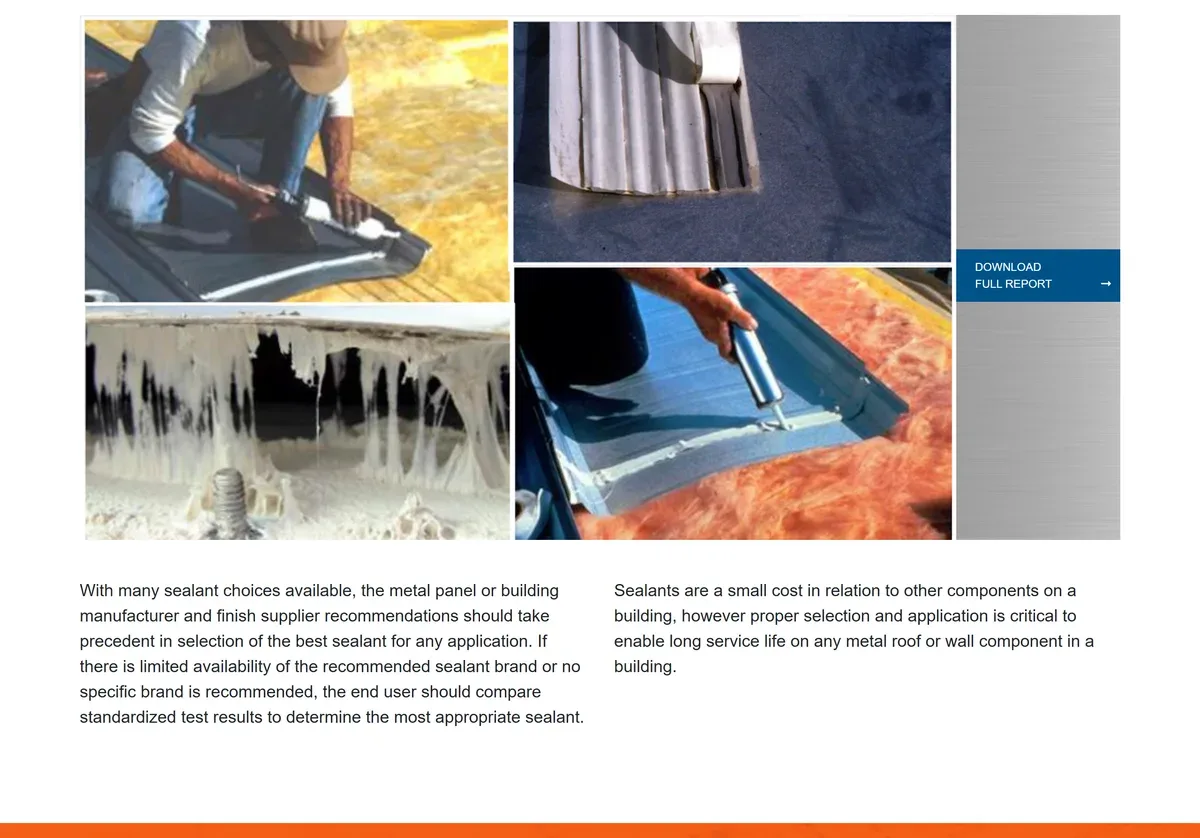
Sealant still has a place, but inside the joint, where the metal protects it from the sun and compresses it. The Metal Construction Association's sealant bulletin says the manufacturer's and finish supplier's recommendations should take precedence when choosing one. Not every sealant is compatible with every finish.
One situation where a bead of sealant is acceptable: as a stated temporary measure to get through a storm, written on the invoice as temporary, with the real repair scheduled.
What should a proper diagnosis include on a North Texas metal roof?
A quote written from the driveway is a guess. Before anyone prices a repair, the inspection should establish:
- The system. Panel type, and the manufacturer if it can be identified from paperwork or panel markings.
- What is under the panels. Solid decking with underlayment, or open framing. This decides what a new screw can bite into.
- The entry point, from the attic or underside where possible, matched to a location on the roof.
- A fastener count. How many screws are backed out, rusted, crooked or have failed washers, as a share of the roof or of one slope.
- Whether screws still hold. A screw that spins in its hole needs a larger one or a new location.
- Condition of laps, closures, boots and flashings near the leak and elsewhere.
- Rust: on fastener heads only, or on the panels.
- Whether it is a leak at all. On an uninsulated metal porch or shop roof, condensation dripping from the underside is easily mistaken for a leak. See why an attic can be wet when it has not rained, and our guide to porch, patio and garage roofs that keep leaking.
When I look at a screw-down roof, I walk the screw lines over the framing and count. Ten bad screws in one area is a repair. Bad screws in every row is a roof telling you the fasteners have reached the end of their life together.
Ask for photos of what was found. Do not climb onto a metal roof yourself; panels are slick when damp or dusty, and stepping on seams or trim damages them.
What are the repair options, and what do they cost?
These are the options a roofer should be able to explain for your roof:
| Option | When it is reasonable | What the work includes | What it does not solve | Published national cost range |
|---|---|---|---|---|
| Replace individual fasteners | A limited number of failed screws, the rest sound | Remove each bad screw, install a new long-life screw and washer, larger diameter if the hole is stripped | Other screws of the same age that will follow | HomeGuide: $150 to $1,000 depending on the number of screws |
| Full re-screw with oversized fasteners | Failed washers or loose screws across the roof, panels and framing still good | Every exposed screw replaced with a larger-diameter long-life fastener, driven straight and to the right compression | Rusted panels, bad laps, failed flashings | Not published as a separate line; priced by fastener count and roof size |
| Rebuild a lap, seam or flashing | Leak traced to one detail | Take the trim or panel end apart, new sealant tape and closures, refasten | Problems elsewhere on the roof | HomeGuide: resealing seams $250 to $1,100; leak repair $200 to $1,000 |
| Replace panels | Punctured, deformed or rusted-through panels | Remove and replace affected panels and their trim; profile and color must be matched | Aging fasteners on the rest of the roof | HomeGuide: $3 to $14 per square foot |
| Coating system | Roof is tight and structurally sound after repairs, finish is worn | Clean, repair fasteners and seams first, then coat | Loose screws, moving laps, rust through the panel | HomeGuide: $0.50 to $4.00 per square foot |
| Replace the roof | Leaks throughout, panels rusted, or the substrate no longer holds screws | Tear-off or approved retrofit, new system | Nothing left to solve | HomeGuide: $5 to $16 per square foot |
How to read this: the ranges are national figures from HomeGuide's February 2026 guide, which puts the average metal roof repair at $300 to $1,500. HomeAdvisor's guide, updated June 2026, gives a normal range of $640 to $3,196 and says a hidden or stubborn leak can cost about double a simple one. None of these are Verde's prices. Roof height and pitch, access, the number of fasteners, panel matching and what is found underneath all move the number.
When is a re-screw with larger fasteners the right call?
When the panels are sound and the fasteners are not. McElroy Metal's guidance for maintaining these roofs is to replace missing screws with larger-diameter screws to keep the fastening tight. The larger thread bites fresh material in a hole the old screw has worn.
A re-screw is reasonable when:
- the panels have little or no rust and are not deformed;
- the framing or decking under them is solid;
- the laps and flashings are in good order or are being repaired in the same job.
It is not the answer when the wood below is soft, when panels are rusting around the screw holes, or when the leaks are at flashings. In those cases new screws are money spent on the wrong part.
Is a coating a real option?
A limited one. A coating can protect a worn finish and seal very small gaps on a roof that is already tight. It cannot hold a loose panel down or bridge a joint that moves an eighth of an inch every afternoon. It may also affect the panel finish warranty, so ask the manufacturer first. Our guide to roof coating versus replacement explains what a coating can and cannot do.
If you want to compare a repair quote against the cost of starting over, our roof cost calculator gives a typical DFW range for a new roof on your house in about two minutes.
What should be written in the repair quote?
- The cause and location of the leak, with photos.
- The fastener specification: type, diameter, length, head and washer, and that they are long-life fasteners compatible with your panel.
- How many fasteners are being replaced, or “all exposed fasteners” for a re-screw.
- The sealant or tape to be used inside laps and under flashings, and that it follows the panel manufacturer's recommendation.
- What comes apart. Which trim, laps or panels will be removed and reinstalled.
- Panel replacement details, if any: profile, gauge, finish and color match.
- What is excluded, and the price for decking or framing repair if bad wood is found.
- The warranty on the repair, in writing. Our guide on how long a roof repair should last and what its warranty should cover explains what to expect.
If the roof is still under the installer's workmanship warranty, call the installer before you hire anyone else. A repair by another company can end that coverage. Our roof warranty guide explains how workmanship and manufacturer warranties differ.
How do you keep a metal roof from leaking again?
Metal needs little maintenance, but not none. MBCI, a metal panel manufacturer, recommends a roof inspection at least once a year and replacing any loose or rusty screws that are found. Berridge's guide adds an inspection after severe weather: after high wind for loose flashing and trim, and after hail for damage to the coating and for loose fasteners.
Keep valleys and gutters clear, keep branches off the panels, and keep other trades from walking on seams and trim. Our roof maintenance checklist for Texas has a seasonal list, and Verde offers maintenance plans that put those checks on a schedule.
If you are weighing whether metal was the right choice at all, metal roofs versus shingles compares repairability honestly. Verde installs and repairs metal roofs across Dallas–Fort Worth; our metal roofing page shows the systems we work with.
Have the leak traced before the next rain
Call or text (214) 687-1951, 24/7, or book a free roof inspection. Chris inspects the roof with you, photographs the fasteners, seams and flashings that have failed, and gives you a written estimate that says what will be taken apart and what will be replaced.
Questions people ask next
Can I just caulk the screws on my metal roof?
It will usually stop the drip for a while and then fail. Surface sealant weathers and loses its grip on the metal, and water that gets under it is held against the panel, which leads to rust. If the washer is worn or the screw is loose, the lasting repair is a new long-life screw with a new washer, driven correctly.
How often should metal roof screws be replaced?
There is no single schedule, because it depends on the fastener quality, the sun exposure and how the screws were driven. One large metal panel manufacturer recommends a roof inspection at least once a year and replacing any loose or rusty screws as needed. On an older screw-down roof, a full re-screw is often more sensible than chasing individual leaks.
Why does my metal roof only leak in heavy or wind-driven rain?
That pattern points to a lap, a flashing or a closure rather than a single screw. Wind pushes water sideways and uphill into end laps, ridge caps, wall flashings and the gaps at panel ribs that light rain never reaches. Tell the roofer which direction the storm came from; it narrows the search considerably.
Is water dripping from my metal roof always a leak?
No. Metal cools quickly, and humid air can condense on the underside of panels that have no solid decking and underlayment beneath them, which is common on porches, shops and barns. If the dripping appears on cool mornings in dry weather and is spread evenly rather than in one spot, suspect condensation before you pay for a leak repair.
Does a standing seam metal roof ever leak?
Yes, though less often than a screw-down roof, because the fasteners are hidden under the seams. When standing seam leaks, the usual places are end laps, pipe and vent penetrations, valleys, wall and chimney flashings, and ridge or eave trim. Panels that were fastened so they cannot move with temperature can also stress those details over time.
Will a roof coating stop my metal roof from leaking?
Only if the roof under it is sound. A coating is a surface layer; it does not tighten loose screws, close a lap that moves, or stop rust that has gone through a panel. Fasteners, seams and flashings have to be repaired first. Ask the panel manufacturer whether a coating affects the finish warranty before you agree to one.
When should a leaking metal roof be replaced instead of repaired?
Consider replacement when leaks are spread across the roof, panels are rusted through, or the wood under the screws no longer holds a fastener. HomeAdvisor’s cost guide suggests thinking about replacement when repair quotes pass about half the cost of a new roof. An inspection that counts the failed fasteners and checks the substrate gives you that comparison.
Sources
- Berridge Manufacturing Company: Maintenance & Repair of Metal Roofing (PDF)
- Metal Construction Association: Best Practices, Metal Building Sealant Types and Application Guidelines
- Metal Construction Association: Fastener Compatibility with Profiled Metal Roof and Wall Panels
- McElroy Metal: Tips for selecting and installing screws in metal roofing (January 2026)
- MBCI: Preventing roof damage from rusted fasteners
- HomeGuide: Metal roof repair cost (February 2026)
- HomeAdvisor: Metal roof repair cost (updated June 2026)
Chris Grimes owns Verde Roofing in Plano, Texas, a locally owned residential and commercial roofer serving Dallas–Fort Worth. Verde is an NTRCA Accredited Member, an RCAT member and a Dallas Observer Best of Dallas Best Roofer winner (readers’ choice) in 2021, 2022 and 2023.
Keep reading
Related guides
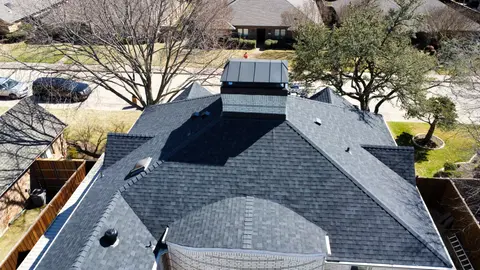 Roofing materialsMetal Roof vs. Shingles in North Texas: Honest Pros and ConsMetal costs substantially more up front (the 2025 Cost vs. Value report prices a typical metal reroof in our region about 64 percent above asphalt) but…Read the guide
 Roofing materialsRust on a Metal Roof in Texas: Repair the Finish or Replace the Panels?It depends on how deep the rust goes. On a Texas metal roof, rust at a scratch, a cut edge or a screw head is usually…Read the guide
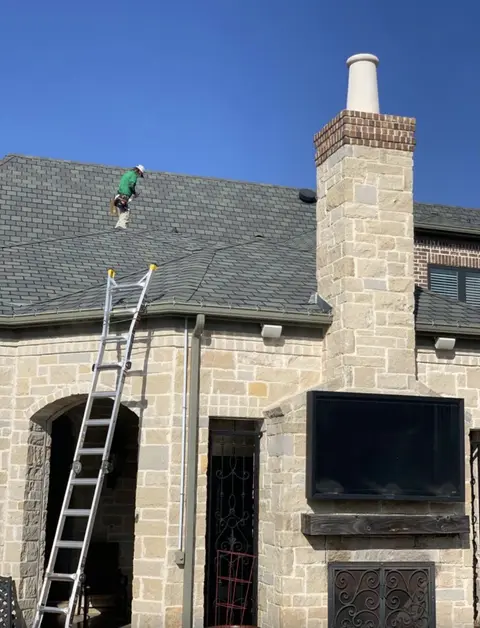 Hiring a rooferHow Long Should a Roof Repair Last in Texas, and What Should Its Warranty Cover?A roof repair in Texas that replaces the failed part, such as a pipe boot, flashing or damaged shingles, should last as long as the roof…Read the guide