Roof Nail Pops in North Texas: Why Shingles Lift and What a Proper Repair Includes
 By Chris Grimes, owner of Verde RoofingPublished November 12, 2026 · 11 min read
In short
Roof nail pops happen when a nail backs out of the decking and lifts the shingle above it. In North Texas the usual causes are underdriven nails, decking that swells and shrinks with attic heat and moisture, and wood too wet or thin to hold a nail. A proper repair removes the nail, seals the hole, re-nails in sound wood and replaces any damaged shingle. Widespread pops point to installation or decking.
Key takeaways
- A nail pop is a nail backing out of the roof deck; the raised shingle above it cannot seal, and the nail head eventually wears a hole that leaks.
- The Asphalt Roofing Manufacturers Association says shingle nails must reach at least 3/4 inch into the deck, or through thinner sheathing by at least 1/8 inch, and must not be underdriven, overdriven or crooked.
- A few scattered pops on an older roof are a small repair; pops in straight lines, across a whole slope or on a new roof point to decking or installation.
- Hammering the nail back into the same hole does not last; the correct repair pulls it, seals the hole and places a new nail nearby in sound wood.
- Fixr’s 2026 leak guide puts a nail-pop repair at $200 to $500 nationally; decking replacement and attic moisture fixes are separate costs.
You are looking at your roof from the driveway in the evening light and something is off. A few shingles have small bumps in them, like a pencil pushed up from underneath. Or a home inspector's report says “nail pops noted, recommend evaluation by a roofer.”
A nail pop is a small thing that tells you something about what is under the shingles. Sometimes the message is “one nail worked loose.” Sometimes it is “this deck is moving” or “this roof was nailed badly.” This guide helps you tell which, and what a repair should include so the same nail does not come back up next summer.
What is a nail pop, and why does it make a shingle lift?
Every shingle is held to the roof deck by nails that sit hidden under the shingle above. A nail pop is one of those nails backing up out of the wood. As it rises, its head pushes the overlapping shingle up into a small tent.
Two different nails can do this. The first is a shingle nail. The second, which people overlook, is a decking nail, one of the nails holding the plywood or OSB sheets to the rafters. A decking nail that missed the rafter, or only caught its edge, has little to hold it. When it works up, it lifts everything above it. Which nail it is changes the repair, so a roofer should say.
A raised shingle causes three problems, in this order:
- It cannot seal. Shingles bond to each other with a sealant strip. A shingle held up by a nail head stays unsealed, which gives wind something to grab.
- It wears through. The shingle flexes over the nail head with every hot day and every gust until the head shows through as a dark dot with a ring of missing granules.
- It leaks. Once the head is exposed, water runs down the nail shank into the deck. These leaks are slow and often show up as a small stain far from any vent or wall.
What causes nail pops on a roof?
The Asphalt Roofing Manufacturers Association (ARMA) publishes a technical bulletin on nailing shingles, and most causes of nail pops are the opposite of something in it.
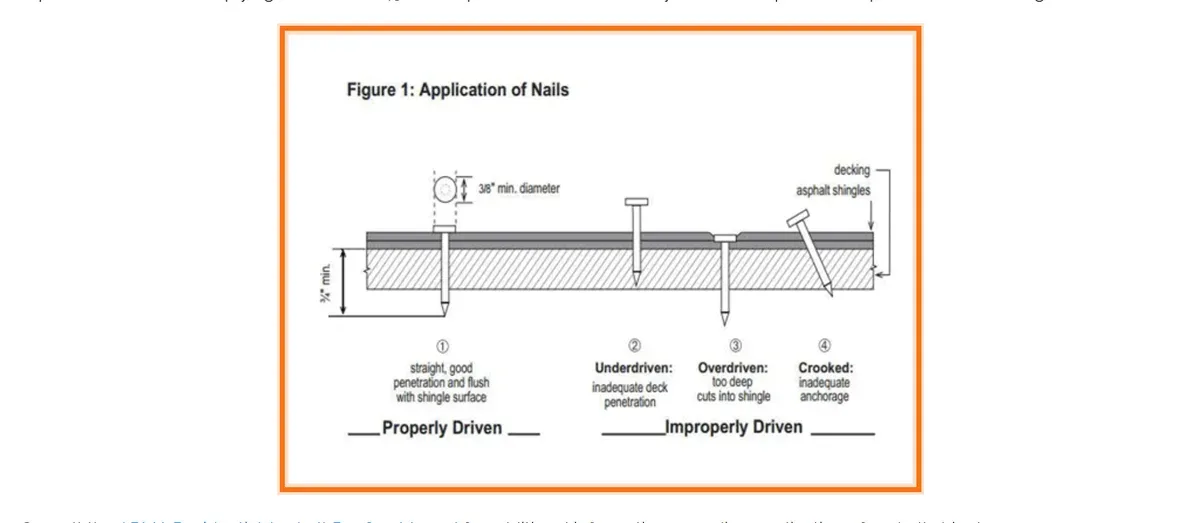
- Underdriven nails. ARMA says nails must be driven so the entire head bears tightly against the shingle, and that they are “not to be underdriven, overdriven (to break or cut into the shingle), or driven crookedly.” A nail gun with the pressure set too low leaves heads standing proud from day one. The bulletin warns that a poorly adjusted pneumatic system can lead to sealing failures, raised tabs, distortions and blow-offs.
- Crooked nails. ARMA's figure labels a nail driven at an angle as having “inadequate anchorage.” One edge of the head stands up and cuts the shingle above.
- Nails that are too short. ARMA says to choose nails long enough to penetrate at least 3/4 inch into the roof deck, or through sheathing thinner than that by at least 1/8 inch, and to account for the number of shingle layers. A second layer of shingles nailed with standard-length nails is a common source. See putting new shingles over old ones in Texas.
- Nails in gaps, cracks or knots. ARMA says not to drive nails into knot holes, cracks or spaces in the deck. This matters on older Dallas homes with board decking, where gaps between boards are everywhere.
- Decking that moves. Wood swells when it takes on moisture and shrinks when it dries. ARMA's bulletin on buckled shingles ties deck movement to moisture and to attics without proper ventilation, and lists “fasteners backing out of the deck” among the root causes to check when shingles will not lie flat.
- Decking that cannot hold a nail. Owens Corning's installation instructions call for a deck with “adequate nail holding capacity and a smooth surface,” and set minimums of 3/8 inch plywood or 7/16 inch OSB. Wood that has been wet from a leak, or that is delaminating, lets go of nails.
- Decking nails that missed the framing. A sheet nailed beside the rafter instead of into it will shed those nails over time.
Why do nails back out more in North Texas attics?
Because the deck here goes through a wide swing every day for half the year. A dark roof in a Dallas–Fort Worth summer heats the decking hard through the afternoon and lets it cool overnight. Wood and steel do not expand at the same rate, and each cycle works a marginal nail a little looser.
Moisture does the rest. Decking picks up moisture from humid air, from bath fans that vent into the attic instead of outdoors, and from small leaks. APA, the engineered wood association, explains that wood panels expand as their moisture rises and recommends a 1/8 inch gap at panel edges so they have room to do it. Panels installed tight against each other have nowhere to go but up, and they take their nails with them.
Attic ventilation is the lever a homeowner actually controls. An attic that can breathe runs cooler and drier, and the deck moves less. Our guide to roof underlayment and ventilation explains intake and exhaust, and if you are seeing moisture in the attic on dry days, start with why an attic is wet when it has not rained.
Is it a few isolated pops or a pattern?
This is the question that decides everything else. The pattern tells you where to look:
| What you see | Most likely cause | What it calls for |
|---|---|---|
| A handful of pops scattered across an older roof | Ordinary deck movement working marginal nails loose over the years | Individual repairs at each pop |
| Pops in straight lines up the slope or across it, at regular spacing | Decking nails backing out along a rafter, or panel edges moving | A look at the deck from the attic along those lines, then repair or re-nailing |
| Pops clustered in one area, with a ceiling stain or soft feel underfoot | Decking wet from a leak and no longer holding nails | Find and fix the leak; replace the damaged decking |
| Pops across a whole slope of a roof only a few years old | Underdriven nails from installation | A written report to the installer under the workmanship warranty |
| Pops on a roof with two layers of shingles | Nails too short to reach sound decking | Individual repairs buy time; the lasting fix is at the next tear-off |
| Raised or missing caps along the ridge or hips | Cap nails exposed or backing out | A ridge repair; see missing ridge cap shingles |
How to read it: the first row is maintenance. Every other row is a symptom of something a nail-by-nail repair will not cure by itself, and the right-hand column is what the inspection or quote should address. If your roof is new and matches the fourth row, read who should fix a brand-new roof that leaks before anyone else touches it.
Nail pops also show up on lists of aging signs, but they do not carry the weight of curling or bald shingles. Signs you need a new roof puts them in context.
What does an inspection for nail pops have to establish?
A roofer who looks at three pops, quotes “fix nail pops” and leaves has not done the job. The inspection should answer:
- How many, and where. A count and a rough map or marked photos, slope by slope.
- Which nail. Shingle nails, decking nails, or both.
- The deck under them. Firm or soft, panel or board, and thickness where it can be measured at an edge or from the attic.
- The attic. Stains, damp insulation, daylight, and whether bath fans and dryer vents exit outdoors.
- Ventilation. Whether intake and exhaust exist and are open.
- The shingles. Their age, whether they are sealed, and whether they can be lifted for a repair without cracking.
- Layers. One or two.
When I walk a roof with nail pops, I press on the deck beside each one with my boot. A nail that popped out of firm wood is a nail problem. A nail that popped out of wood that gives under my foot is a decking problem, and no amount of re-nailing will fix it.
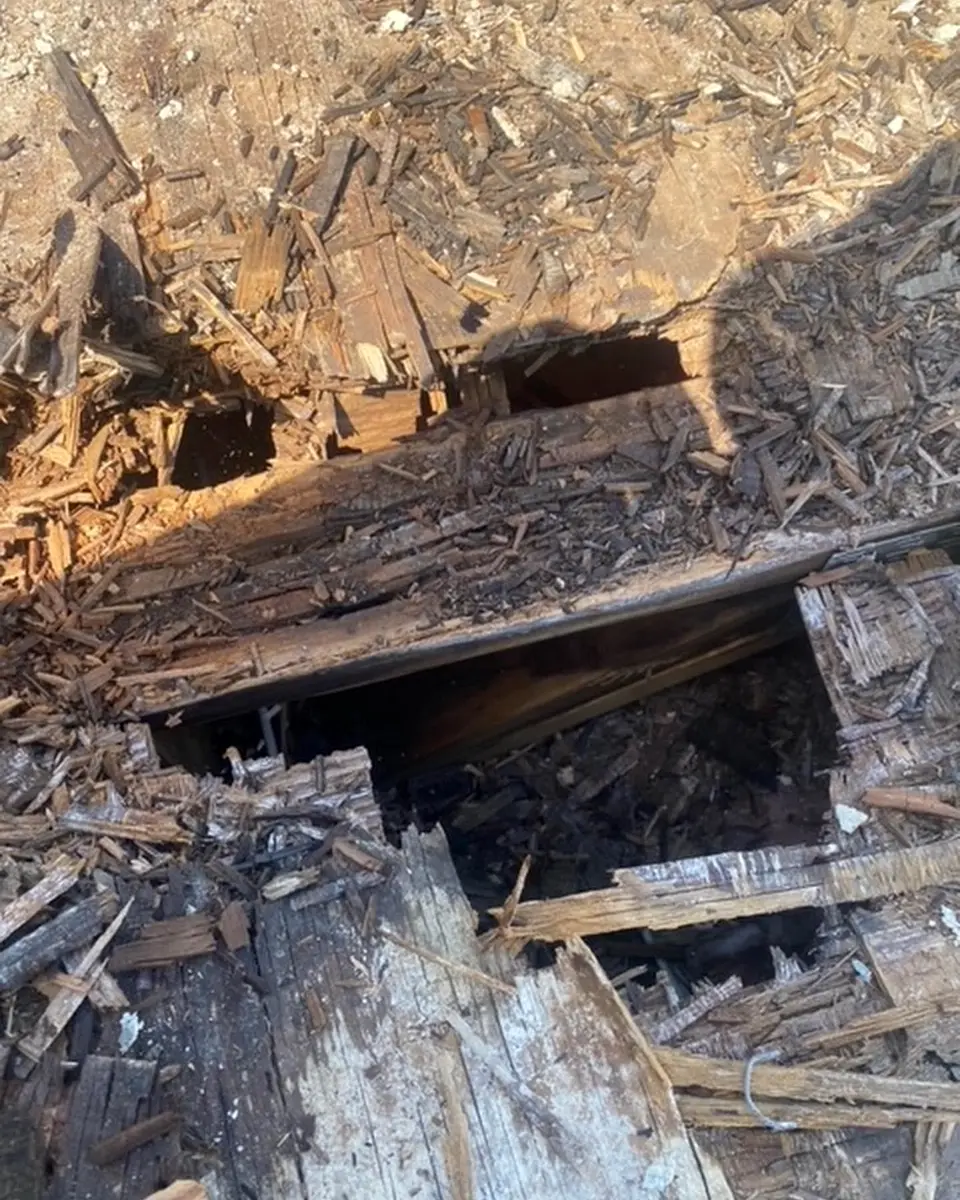
You can do the ground-level part yourself: look at each slope in low light, and photograph what you see. Leave the roof itself to someone with the equipment. Never walk a steep or wet roof to count nail heads.
What are the repair options, and when does each one fit?
From the lightest touch to the heaviest:
| Option | When it fits | What the work includes | What it does not solve | Typical published cost |
|---|---|---|---|---|
| Hammer the nail down and dab sealant on it | Only as a stopgap before rain | Driving the same nail back into the same hole | The loosened hole; the nail usually backs out again | Not listed separately in Fixr’s guides |
| Proper spot repair | Isolated pops, firm decking, shingles that still flex | Lift the shingle, pull the nail, seal the hole with asphalt roof cement, drive a new nail nearby into sound wood, hand-seal the shingle | Whatever made the deck move | $200 to $500 (Fixr 2026 leak guide, nail pops) |
| Spot repair plus shingle replacement | The nail head has worn through or torn the shingle | The steps above, plus new shingles woven in | A color match on a weathered roof is never exact | $150 to $700 for shingle replacement (Fixr 2026 repair guide) |
| Replace the decking in that area | Soft, wet, delaminated or undersized decking under the pops | Remove shingles, replace sheets, new underlayment and shingles over them | The leak or attic moisture that damaged the wood, unless fixed in the same visit | $150 to $1,000 for decking (Fixr 2026 repair guide) |
| Correct the attic moisture or ventilation | Pops in patterns with a damp or stagnant attic | Open or add intake and exhaust vents; route bath fans outdoors | Nails that have already popped | Depends on the fix; quoted after inspection |
| Replace the slope or the roof, re-nailing the deck | Pops across whole slopes, failing decking, or brittle shingles that cannot be lifted | Tear-off, deck inspection and re-nailing, new roof system | Nothing left to solve on that slope | Priced as a replacement |
How to read it: the second row is what “fix the nail pops” should mean on a quote, and it follows the correction ARMA describes for an improperly driven nail: remove it, repair the hole with asphalt roof cement and place another nail nearby, or replace the whole shingle if that is not practical. The cost figures are national published ranges from Fixr, not our prices. Count, pitch, height and the state of the wood move them.
One note on trades. Roof vents and decking are roofing work. A bath fan or dryer duct that ends in the attic is rerouted by an HVAC contractor or a handyman, and it should be done before or along with the roof repair, or the deck will keep moving.
For a rough sense of where replacement would land if the inspection points that way, try our roof cost calculator, and see how much roof decking replacement costs in DFW for the per-sheet question.
When do nail pops point to an installation or decking problem?
Four signs, any one of which should change the conversation from “repair” to “why”:
- The roof is young. Pops in the first few years are rarely about age.
- They are everywhere on one slope. That is the footprint of a nail gun set too low while that side was being shingled.
- They come back. Pops repaired last year that reappear in new places nearby mean the deck is still moving.
- The deck is soft or thin. No nail holds in wood like that.
If it is installation, the path runs through the installer and the workmanship warranty, in writing, with photos. If it is decking, the lasting fix happens with the shingles off. And if a repair is all the roof needs, ask what stands behind it: how long a roof repair should last and what its warranty should cover lists the terms.
One more possibility is rare but worth naming. ARMA notes that abnormal deck movement can come from structural deficiencies or foundation effects. If the pops come with a roofline that dips or waves, read sagging roof or wavy shingles. That evaluation belongs to a structural engineer, not a roofer.
What should the written quote say?
For anything more than a single pop, ask for these on the estimate:
- The number of pops and the slopes they are on.
- The cause the roofer believes is behind them.
- The method: nails removed and relocated, holes sealed, shingles replaced where damaged.
- How lifted shingles will be re-sealed.
- A per-sheet price for decking, in case soft wood is found.
- Photos before and after.
- The warranty on the repair, with its length and what it excludes.
A roof that is inspected once a year gets its nail pops caught at the bump stage, long before the stain stage. That is one of the items on our Texas roof maintenance checklist. Our roof repair page describes how we handle small repairs like this one.
Want the bumps on your roof looked at?
Call or text (214) 687-1951, 24/7, or book a free roof inspection. Chris inspects the roof with you, photographs each nail pop and the decking around it, and tells you plainly whether it is a small repair or a sign of something underneath. You get a written estimate before any work.
Questions people ask next
Are nail pops on a roof serious?
One or two are a small repair, but they should not be ignored. A raised nail holds the shingle above it up, so the sealant strip cannot bond and wind can get under it. Over time the nail head wears through the shingle and water follows the nail into the deck. Dozens of pops, or pops in lines, mean the cause is under the shingles and needs an inspection.
Can I just hammer a popped roof nail back down?
It rarely holds, and you should not be on the roof to try. A nail that backed out has already loosened its hole, so driving it back in the same place usually means it backs out again. The lasting repair removes the nail, seals the hole with asphalt roof cement, and places a new nail nearby in sound wood, replacing the shingle if it is torn or worn through.
Why does my new roof have nail pops?
On a roof that is only months or a few years old, look at installation and decking first: nails left underdriven by a nail gun set too low, nails driven into gaps or cracks in the deck, nails too short for the layers, or shingles installed over decking that was wet or too soft to hold fasteners. Report it to the installer in writing; this is what a workmanship warranty is for.
Do nail pops mean I need a new roof?
Not by themselves. Isolated pops are repaired one at a time. Replacement enters the conversation when pops are spread across whole slopes, when the decking under them is soft, thin or delaminating, or when the shingles are too brittle to lift for a repair without cracking. An inspection that maps the pops and checks the deck from the attic answers it.
Does homeowners insurance cover nail pops?
Usually not as a claim of their own. The Texas Department of Insurance says an insurer will not pay for a roof because it is old or worn, and nail pops are normally treated as an installation or maintenance issue, not sudden storm damage. If a storm also damaged the roof, that damage is a separate question. Your own policy governs, so ask your agent.
How much does it cost to fix nail pops on a roof?
Fixr’s 2026 roof leak guide lists nail-pop repairs at $200 to $500 as a national range. That is not our price. The number of pops, the roof’s pitch and height, whether shingles must be replaced and whether the decking under them is sound all move it. If decking has to be replaced, Fixr’s repair guide lists $150 to $1,000 for that work.
Can nail pops be seen from the ground?
Often, yes. Look in low morning or evening light for small raised bumps or tents in the shingles, a tab that does not lie flat, or a dark dot where a nail head has worn through. Binoculars help. Do not climb on the roof to check. From the attic you can look for water stains or daylight, but you usually cannot see a pop from below.
Sources
- Asphalt Roofing Manufacturers Association: Nail Application of Asphalt Shingles (technical bulletin, revised July 2024)
- Asphalt Roofing Manufacturers Association: Plain Facts About Buckled Shingles (technical bulletin, revised March 2024)
- Owens Corning: Supreme Shingles Installation Instructions (deck and fastener requirements)
- APA – The Engineered Wood Association: Minimizing Buckling of Wood Structural Panels (technical note)
- Fixr: How Much Does It Cost to Repair a Roof Leak? (2026 data, updated January 27, 2026)
- Fixr: How Much Does It Cost to Repair a Roof? (2026 data, updated January 21, 2026)
- Texas Department of Insurance: Insurance and your roof
Chris Grimes owns Verde Roofing in Plano, Texas, a locally owned residential and commercial roofer serving Dallas–Fort Worth. Verde is an NTRCA Accredited Member, an RCAT member and a Dallas Observer Best of Dallas Best Roofer winner (readers’ choice) in 2021, 2022 and 2023.
Keep reading
Related guides
 Roofing materialsUnderlayment, Ventilation and Decking: The Parts of a Roof You Don't SeeUnder the shingles sit the decking (plywood or OSB), underlayment (synthetic or felt), self-adhered ice and water barrier at valleys and other leak-prone spots, drip edge…Read the guide
 Cost & financingHow Much Does Roof Decking Replacement Cost in DFW?Nobody publishes a verified Dallas–Fort Worth price for roof decking. Fixr's 2026 roof replacement guide lists decking replacement at $2 to $8 per square foot of…Read the guide
 Hiring a rooferHow Long Should a Roof Repair Last in Texas, and What Should Its Warranty Cover?A roof repair in Texas that replaces the failed part, such as a pipe boot, flashing or damaged shingles, should last as long as the roof…Read the guide