

My Brand-New Roof Is Leaking in Texas. Who Should Fix It?
 By Chris Grimes, owner of Verde RoofingPublished November 18, 2026 · 13 min read

In short
In Texas, the roofer who installed the roof should come back first, because most leaks on a brand-new roof trace to an installation detail covered by the workmanship warranty. Photograph the leak, notify the installer in writing, protect the house, and let them inspect before anyone else opens the roof. A product defect goes to the manufacturer, storm damage to your insurer, and a wet ceiling under an attic air handler to an HVAC technician.
Key takeaways
- The cause decides who pays: workmanship goes to the installer, a product defect to the manufacturer, storm damage to your homeowners policy, and an air conditioning or plumbing leak to that trade.
- Notify the installer in writing the same day and keep photos, dates and receipts; Texas Property Code chapter 27 builds its whole process on written notice and a chance to inspect.
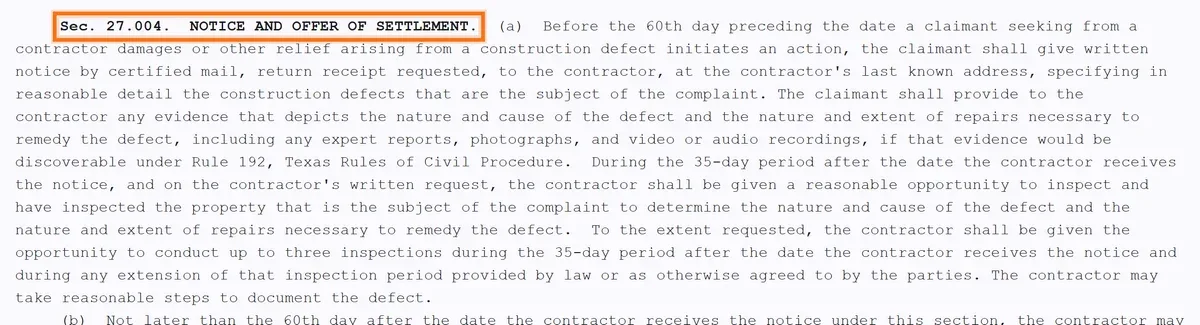
- Under Property Code §27.004, a contractor who asks in writing gets a reasonable opportunity to inspect during the 35 days after receiving a certified-mail notice of a construction defect.
- Owens Corning’s standard shingle warranty has no workmanship coverage, so on most roofs the installer’s own written warranty is the one that answers for a leak.
- A second opinion documents the cause with photos; it should not open or alter the roof before the original installer has had the chance to look.
The roof is weeks or months old. You paid for it, or your insurer did, and now there is a brown ring on the ceiling or a drip in the garage after the first hard rain. It feels like the one thing that should not be possible.
It happens, and it is usually fixable in an afternoon once someone finds the detail that was missed. The hard part is not the repair. It is getting the right party to own it, without doing something in the first week that makes the argument harder. Here is the order to do things in.
Who is responsible when a brand-new roof leaks in Texas?
Start with the company that installed it. A new roof that leaks is leaking at a detail far more often than through a defective shingle, and details are workmanship. But responsibility follows the cause, and there are five realistic causes.
Here is how each cause maps to the party that should answer for it:
| What caused the leak | Who is responsible | What usually proves it | The paper that applies |
|---|---|---|---|
| Installation: a pipe boot, flashing, a valley, exposed or raised nails, underlayment laps | The roofing contractor | Photos of the detail, compared with the manufacturer's installation instructions | Your contract and the written workmanship warranty |
| A defect in the shingles or accessories | The manufacturer | The manufacturer's own claim review, often with shingle samples | The manufacturer warranty registered for your roof |
| Hail, wind or a fallen limb after the roof went on | You, through your homeowners policy | Storm date after the install date, plus damage photos | Your insurance policy and its deductible |
| Another trade on the roof afterward: solar, satellite, HVAC, a chimney sweep | That trade | A penetration or damage that was not there at final inspection | That company's contract and insurance |
| Not the roof at all: air conditioning condensate, plumbing, attic condensation, a window or wall above the stain | Nobody's roof warranty | The leak appears without rain, or water testing the roof stays dry | Your HVAC, plumbing or wall repair |
How to read this: the left column is the question an inspection has to answer before anyone argues about money. Until the cause is established with photos, every party can point at another one. Once it is established, the right-hand column tells you which document to open.
One more category sits between the rows: parts of the roof that were never in the contract. If the scope said the existing skylight, chimney flashing or wall flashing would be reused, a leak there may be outside the workmanship warranty even though the roof around it is new. That is a scope question, and the contract answers it.
What should you do first? Seven steps, in order
- Contain the water inside. Bucket, towels, move furniture and electronics, and poke a small drain hole in a bulging ceiling so it does not come down in one piece. Our guide on what to do when the roof leaks covers the first hour.
- Document before you clean. Photograph the ceiling, the attic above it if you can reach it safely from the framing, and the outside of the roof from the ground. Note the date, the time and how hard it was raining. Video with sound is better than a still.
- Notify the installer in writing the same day. Call, then follow with an email or text that states the address, the install date, what you see and when it started, with photos attached. Ask for a date and time for an inspection. Keep the message.
- Protect the property. If water is still coming in, ask the installer for an emergency tarp. If they cannot come quickly, any roofer can tarp it; keep the receipt and photos of the roof before the tarp goes on. Our guide to emergency roof tarping explains what a proper tarp looks like.
- Leave the roof as built until the installer has looked. No sealant from a tube, no handyman patch, no second roofer lifting shingles. Protection is fine. Alteration removes the evidence.
- Get the cause in writing. After the inspection, ask the installer for a short written explanation with photos: where the water entered, why, and what they will do.
- Agree on the whole repair, including the inside. The roof detail, any wet insulation and the ceiling. Put it in an email at minimum.
Never go on the roof yourself to look for the leak. A wet shingle roof is slick. Everything you need for the first report can be photographed from the ground and the attic hatch.
What does Texas law say about notice and the roofer's chance to inspect?
Texas has a statute written for exactly this kind of dispute: the Residential Construction Liability Act, chapter 27 of the Property Code. It is not only about new houses. Its definition of a “construction defect” covers a deficiency in the construction or repair of a new residence and in “an alteration of or repair or addition to an existing residence,” and its definition of a contractor includes a person who contracts with an owner for the repair or alteration of an existing home.
We are roofers, not lawyers, and whether chapter 27 governs your particular dispute is a question for a Texas attorney. But reading the statute shows why the steps above are in that order. Section 27.004 says, in plain terms:
- Written notice comes first. Before the 60th day before filing a lawsuit or arbitration, the owner must give the contractor written notice by certified mail, return receipt requested, describing the defects in reasonable detail.
- Evidence is shared. The owner provides evidence that shows the nature and cause of the defect, including expert reports, photographs and video.
- The contractor may inspect. On written request, the contractor gets a reasonable opportunity to inspect during the 35 days after receiving the notice, up to three times.
- The contractor may offer to repair. Within 60 days of the notice the contractor may make a written offer, which can be an agreement to repair. Repairs under an accepted offer are due within 60 days unless something outside the contractor's control delays them.
- Refusing has a price. An owner who rejects a reasonable offer, or does not allow a reasonable opportunity to inspect or repair, is limited in what can be recovered later.
Two other lines in the chapter matter to a homeowner. Section 27.003 says a contractor is not liable for damage caused by someone else's failure to mitigate, to maintain the home or to give timely notice. That is the legal reason to tarp, dry things out and report the leak right away. And §27.004(m) says that when a defect from the contractor's work creates an imminent threat to health or safety, the contractor must take reasonable steps to cure it as soon as practicable, and the owner may have it cured and recover the reasonable cost if the contractor does not.
Most new-roof leaks never get near a courtroom. An email and a return visit settle them. Certified mail is the step for when the emails stop being answered.
How is the cause of a new-roof leak established?
A useful inspection, whoever does it, has to answer five questions and show a photo for each:
- Where does the water enter? Traced from the stain up through the attic to the underside of the deck, and from there to the roof surface. A controlled water test with a hose, starting low and moving up, confirms it on a dry day.
- Which component is it? A pipe boot, step flashing, a valley, a vent, a skylight, a ridge, a fastener.
- Was that component in the contract scope? Replaced, reused or excluded.
- Does the installation match the manufacturer's instructions? Nail placement and depth, flashing laps, underlayment, starter and sealant strips. The Asphalt Roofing Manufacturers Association's nailing bulletin, for example, says nails must not be underdriven, overdriven or crooked, and must never be placed where they will be visible after the roof is complete.
- Has anything happened to the roof since the final inspection? A hailstorm, a limb, a solar or satellite install, a new vent for a remodel.
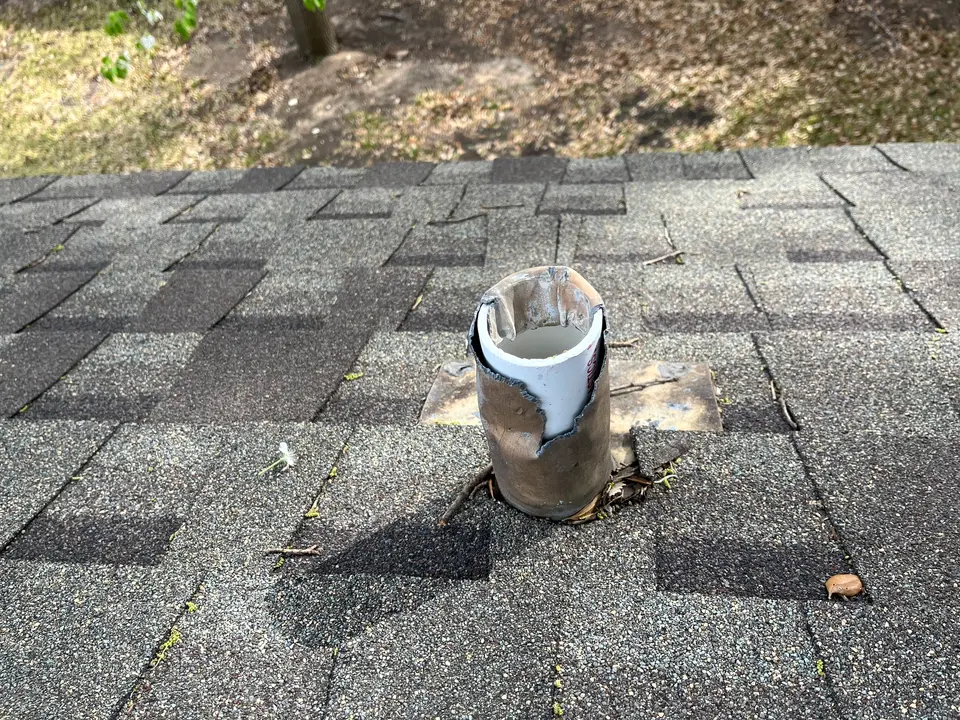
When I trace a leak on a roof that is only a few months old, I start at the penetrations and the walls, not in the open field of shingles. Water almost always gets in where the roof is interrupted. Our guides to chimney flashing and vent leaks, leaking roof valleys and roof nail pops show what each of those failures looks like.
Rule out the lookalikes early. Many North Texas homes have the air handler in the attic, and a clogged condensate line can stain a ceiling on a dry afternoon. If the water shows up without rain, read why an attic is wet when it has not rained before you call anyone about the roof. And if panels went on after the roof, see roof leaks under solar panels.
What do your contract and the two warranties actually say?
Pull three documents: the signed contract, the workmanship warranty and the manufacturer warranty registration.
The contract tells you the scope (what was replaced and what was reused), the legal name of the company you hired, how notice must be given, and whether disputes go to arbitration. Our guide to roofing contract red flags explains those clauses.
The workmanship warranty is the roofer's promise about their own labor. There is no standard length or wording. Look for whether it covers interior damage from a covered leak and how a claim is made.
The manufacturer warranty covers defects in the product, and usually nothing about how it was installed. Owens Corning's published warranty table shows “None” for workmanship coverage under both its standard warranty and its System Protection warranty; workmanship coverage appears only in the Preferred Protection tier (first 10 years) and the Platinum Protection tier. Malarkey's warranty page describes a 25-year workmanship warranty within its Certified Premium warranty. Those tiers require a contractor in the manufacturer's program and exist only if they were actually registered. Roof warranties explained goes through the tiers.
So the practical question is which warranty is registered on your roof. Ask the installer for the registration confirmation if you never received it.
What are your options, and what does each one solve?
These are the five routes homeowners actually take, side by side:
| Option | When it fits | What it includes | What it does not solve | Typical published cost |
|---|---|---|---|---|
| The installer returns and repairs under the workmanship warranty | The cause is an installation detail and the company responds | Finding the entry point, correcting the detail, a written explanation | Interior damage, unless the warranty or the roofer agrees to cover it | Set by the written warranty; covered work is normally not billed, so check yours |
| An independent second-opinion inspection | The installer denies the leak is theirs, blames a storm, or has made two repairs that did not hold | Photos, a written finding of the cause, sometimes a water test | Nothing by itself; it is evidence, not a repair | Fixr lists an average roof inspection at $100 to $600; many roofers, including us, inspect at no charge |
| Another roofer repairs it at your cost | The installer is gone or unresponsive and water is still getting in | A paid repair with its own written terms | Reimbursement from the installer is not automatic and may be harder afterward | Fixr's 2026 leak guide: $350 to $1,500 for most leak repairs, national average $800 |
| A claim on your homeowners policy | A storm, a tree or another sudden event damaged the new roof | The insurer's inspection and, if covered, payment less your deductible | Installation errors; the Texas Department of Insurance notes insurers do not pay because a roof is worn | Your deductible |
| A manufacturer warranty claim | The shingles or accessories themselves are failing | The manufacturer's review; Owens Corning asks for two full shingle samples | Leaks at flashing and other installation details | Per the warranty terms; labor may or may not be included |
How to read it: the first row is where nearly everyone should start, and the second is what to add when the first row stalls. The costs are national published figures, not our prices, and they move with roof pitch and height, how hard the source is to reach and how much wood got wet.
If you want a second set of eyes on a new roof that is leaking, call or text us at (214) 687-1951. We will tell you what we see and put it in photos.
What is a second opinion for, and what is it not for?
It is for evidence. A second roofer who was not part of the job looks at the leak path and the detail, photographs it and writes down the likely cause. You then hand that to the installer. In most cases that is enough, because a clear photo of a flashing lap run the wrong way does not leave much to argue about.
It is not for quietly fixing the roof behind the installer's back, and it is not a legal opinion. A second-opinion inspection should document and explain. Nothing should be lifted or resealed unless you have decided to hire that roofer for the repair and understand what that may mean for the original warranty. If your disagreement is about a full replacement that was recommended instead, see our page on getting a second opinion on a roof replacement, and for the kind of written report other parties accept, what roof inspection report an insurer, buyer or lender will accept.
What if the installer will not come back?
Work up the ladder one rung at a time.
- Send the certified letter. Describe the leak, the dates and your earlier messages, attach photos and ask for an inspection. This is the notice §27.004 describes.
- Check for manufacturer-backed workmanship coverage and open a claim with the manufacturer if your warranty tier includes it.
- Ask your insurance agent how your policy treats the interior water damage. Your own policy governs, and the answer differs between policies.
- Talk to a Texas construction or consumer attorney before the repair if the cost is significant.
- Protect the house in the meantime. Tarp, dry, photograph, keep receipts.
Texas does not license roofers at the state level, so there is no state roofing board to file a complaint with. Our guide to Texas roofing licenses and insurance explains what exists instead.
Who pays for the ceiling, the insulation and the paint?
This is the part people forget to settle. A workmanship warranty that fixes the flashing but says nothing about interior damage leaves you with a stained ceiling and wet insulation. Ask the installer directly, in writing, whether the warranty covers resulting damage. If it does not, ask whether they will cover it anyway, and ask your insurance agent the same question about your policy.
Wet insulation and drywall need attention within days, not weeks. A roofer does not do that work; drying is a water-damage restoration company's job, and the ceiling is a drywall and paint job after the roof is fixed. Who repairs wet insulation and ceiling damage after a roof leak lays out the order.
What should the repair agreement say in writing?
Before the installer, or anyone else, makes the permanent repair, get these seven lines on paper or in an email:
- The cause, in one sentence, with photos.
- The exact work: which component is replaced, not just “seal leak.”
- That the repair is done at no charge under the workmanship warranty, or the price if it is not.
- What happens to interior damage and who pays.
- That the original workmanship warranty continues unchanged for the rest of the roof.
- What happens if the same spot leaks again. See how long a roof repair should last and what its warranty should cover.
- Before-and-after photos sent to you when the work is done.
A roofer who stands behind the job will not mind any of these. Our roof repair page describes how we approach a leak, whoever installed the roof.
Need someone to look at a new roof that is leaking?
Call or text (214) 687-1951, 24/7, or book a free roof inspection. Chris inspects the roof with you, documents what he finds with photos and explains what he would ask the installer to correct. If it turns out you need a repair from us, you get a written estimate first.
Questions people ask next
Is it normal for a new roof to leak in the first heavy rain?
No. A correctly installed roof should not leak in rain, including wind-driven rain. A leak in the first storms usually points to one detail: a pipe boot, flashing at a wall or chimney, a valley, a skylight that was reused, or a fastener. It is normally a small repair, but it should be found and fixed by the installer, not sealed over from inside.
How long does a roofer have to fix a leaking new roof in Texas?
Your contract and written workmanship warranty set the response terms, so read them first. If the dispute becomes a legal claim, Texas Property Code §27.004 gives the contractor 35 days after receiving your certified-mail notice to inspect on written request and 60 days to make a written repair or settlement offer. An accepted repair offer must generally be completed within 60 days.
Can I hire another roofer to fix my new roof and send the bill to the installer?
Be careful. Emergency protection such as a tarp is reasonable, and you should keep the receipt. A permanent repair by someone else before the installer has inspected can remove the evidence of what went wrong and may conflict with your warranty terms. Chapter 27 of the Property Code is also built on giving the contractor a chance to inspect. Ask an attorney before you rely on reimbursement.
Does homeowners insurance cover a leak caused by bad roof installation?
It depends on your policy, and only your insurer or agent can answer for your policy. The Texas Department of Insurance says you can file a claim when a storm, a tree or something else damaged the roof, and that insurers will not pay because a roof is old or worn. That page does not say how installation errors or the water damage they cause are treated, so ask your insurer in writing before you assume either way.
What if the roofing company that installed my roof went out of business?
Check which manufacturer warranty was registered. Owens Corning’s Preferred and Platinum warranties and Malarkey’s Certified Premium warranty include workmanship coverage backed by the manufacturer; standard warranties do not. If there is no such coverage, you will likely pay another roofer for the repair. Keep the contract, photos and invoices, and ask a Texas attorney whether anyone else can be held responsible.
Should I stop payment or withhold the final payment if the new roof leaks?
Read the payment terms in your contract before you do anything, because withholding money the contract says you owe can create a second dispute on top of the leak. The safer path is to notify the roofer in writing, describe the leak, and ask for the repair and a written explanation of the cause before the final payment is due. If the amounts are large, talk to an attorney.
Will a second opinion void my roof warranty?
Looking does not change anything. An inspection that only observes and photographs the roof and the attic leaves everything as the installer built it. What can complicate a warranty is another company removing shingles, adding sealant or changing flashing. Ask the second roofer to document only, and give the installer the report.
Sources
- Texas Property Code, Chapter 27: Residential Construction Liability (§27.001, §27.002, §27.003, §27.004)
- Owens Corning: Roofing warranties (standard and extended coverage table)
- Malarkey Roofing Products: Warranties
- Texas Department of Insurance: Insurance and your roof
- Fixr: How Much Does It Cost to Repair a Roof Leak? (2026 data, updated January 27, 2026)
- Asphalt Roofing Manufacturers Association: Nail Application of Asphalt Shingles (revised July 2024)
Chris Grimes owns Verde Roofing in Plano, Texas, a locally owned residential and commercial roofer serving Dallas–Fort Worth. Verde is an NTRCA Accredited Member, an RCAT member and a Dallas Observer Best of Dallas Best Roofer winner (readers’ choice) in 2021, 2022 and 2023.
Keep reading
Related guides
 Hiring a rooferRoof Warranties Explained: Manufacturer vs. WorkmanshipA new roof usually carries two warranties. The manufacturer’s warranty covers defects in the shingles and accessories; the contractor’s workmanship warranty covers installation mistakes. Neither covers…Read the guide
 Hiring a rooferHow Long Should a Roof Repair Last in Texas, and What Should Its Warranty Cover?A roof repair in Texas that replaces the failed part, such as a pipe boot, flashing or damaged shingles, should last as long as the roof…Read the guide
 Repair or replaceWho Repairs Wet Insulation and Ceiling Damage After a Roof Leak in DFW?After a roof leak in Dallas–Fort Worth, the work goes in a fixed order and usually to different companies. A roofer stops the water first. A…Read the guide