Can My DFW Business Stay Open During a Roof Replacement?
 By Chris Grimes, owner of Verde RoofingPublished November 5, 2026 · 12 min read
In short
In most cases, yes. A commercial roof in Dallas–Fort Worth is normally replaced in sections while the building stays in use. What makes it work is a written logistics plan: phasing by roof area, a watertight tie-in every afternoon, interior protection under tear-off areas, controlled noise and odor, scheduled crane days and HVAC shutdowns, a safety perimeter and tenant notices. Food service, medical, data and retail spaces need extra planning.
Key takeaways
- Most commercial roofs are replaced in sections with the building occupied; the roofing system and the written logistics plan decide how disruptive it is.
- EPA's building air quality guide advises scheduling odor-producing work such as roofing operations for when the building is unoccupied and telling occupants in advance.
- Every open section has to be sealed to the old roof before the crew leaves; one manufacturer's specification requires a temporary tie-in to be checked daily if it stays more than overnight.
- In Dallas, construction on or next to a residential use is limited to 7 a.m. to 7 p.m. on weekdays and 8 a.m. to 7 p.m. on Saturdays and legal holidays unless the city issues a written permit.
- In Texas, air conditioning contracting requires a state license, so disconnecting, lifting and reconnecting rooftop units belongs to a licensed HVAC contractor, coordinated with the roofer.
The roof has to be replaced and the building cannot go dark. You have tenants with leases, a store with customers, a kitchen with a lunch rush or a clinic with a full schedule, and nobody wants to hear that the answer is to close for three weeks.
In most cases it is not. Commercial roofs are replaced over occupied buildings every day. What separates a project nobody remembers from one that produces complaints and a wet ceiling is how the work is planned, and whether that plan is written down before the first roll of membrane arrives.
Can a business really stay open while the roof is replaced?
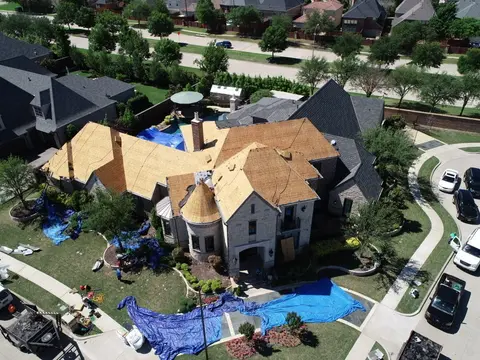
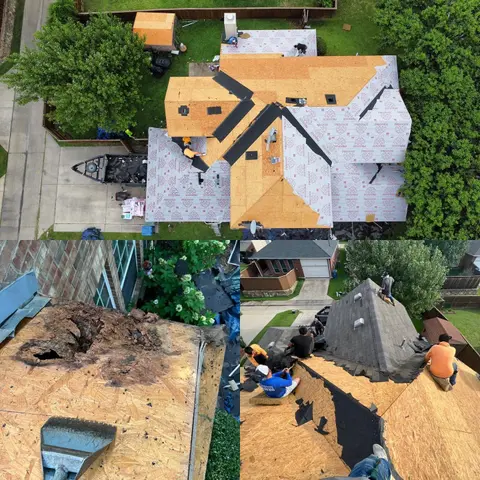
Usually yes. A low-slope roof is replaced in sections. The crew opens only as much old roof as it can make watertight the same day, then moves on. The people underneath notice some noise, a delivery or two, a blocked row of parking spaces and perhaps a smell on certain days.
Three things decide how much they notice:
- The scope. A full tear-off is louder, dirtier and more exposed to weather than a recover over the existing roof. Whether a recover is even possible is covered in can a new commercial roof go over the existing roof.
- The system. How the new membrane is attached changes the noise and the odor.
- The plan. Hours, phasing, access, protection and communication.
A business does not have to close. It does have to be told the truth about which days will be hard.
What actually disrupts an occupied building, and how is each handled?
Here is what tenants and customers experience, and what a well-run project does about each item:
| Source of disruption | What people inside notice | How it is managed | What it does not solve |
|---|---|---|---|
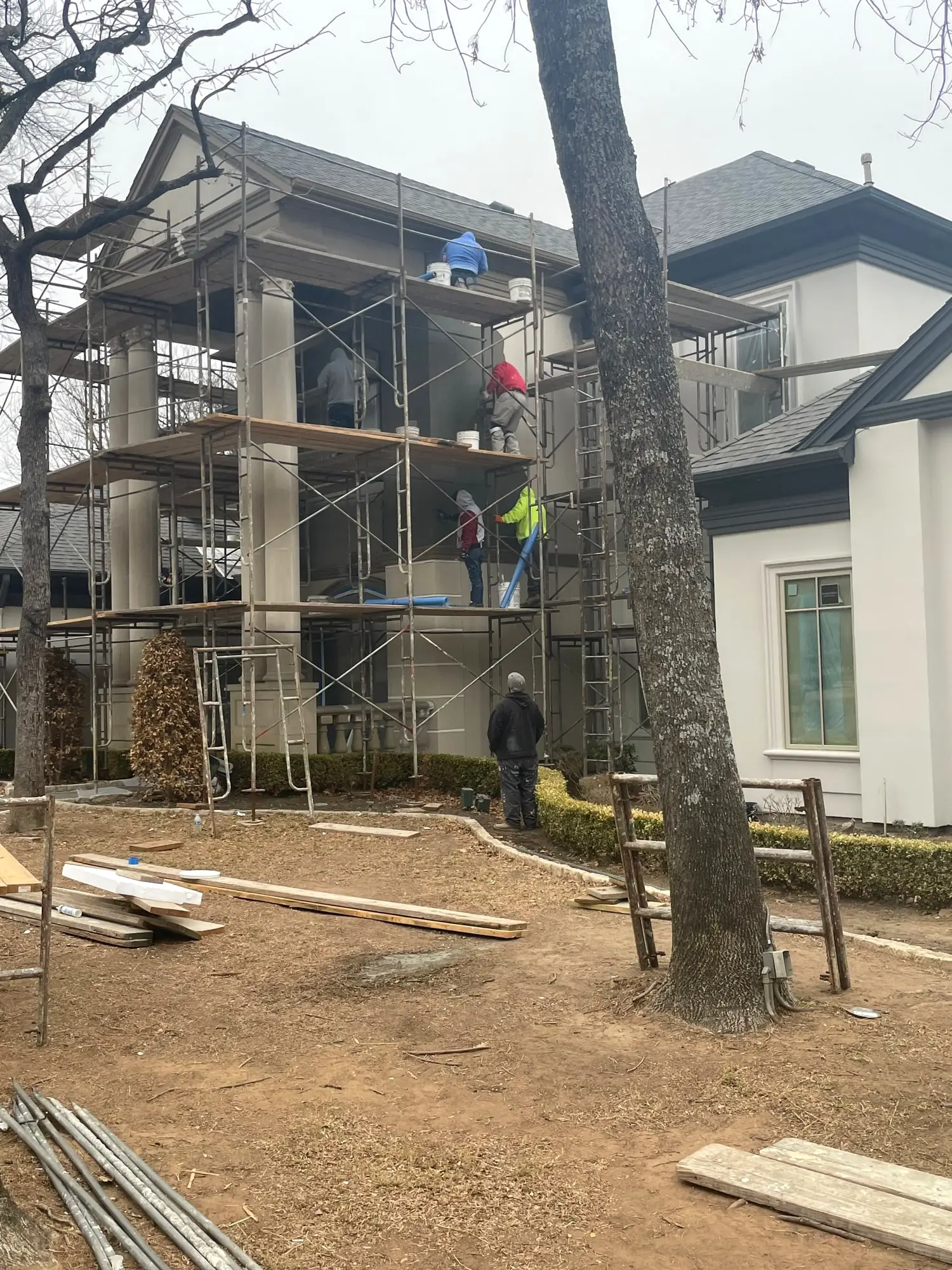
| Tear-off | Scraping, banging, dust and debris falling into the ceiling space on some deck types | Section-by-section removal, interior protection, sensitive areas done outside business hours | Tear-off is never quiet; someone under it will hear it |
| Fastening into the deck | Drilling noise carried through a steel deck into the space below | Scheduling by section, advance notice per tenant, a system with fewer fasteners | Fasteners still go into the deck on most systems |
| Adhesives and primers | Odor, especially near outdoor air intakes and open doors | Low-odor products where the manufacturer allows, intake control, work when the space is empty | Odor is reduced, not always eliminated |
| Deliveries and hoisting | Blocked parking or dock, a crane or lift on site, a closed entrance for a short time | Scheduled crane days, flaggers, an alternate entrance, early-morning lifts | Space is still taken from the lot for the duration |
| Rooftop unit work | Heating or cooling off for a period | Short planned shutdowns per unit, done by a licensed HVAC contractor | Comfort in a Texas summer during the shutdown |
| Weather | A leak during the project | Small daily sections, tie-ins every afternoon, a storm plan | A severe storm can still test any temporary seal |
How to read it: every row has a management method and a limit. A bid that promises no disruption has left the last column blank. The useful question for each row is which days, which areas and who gets notice.
How does the roofing system change the noise and the odor?
The membrane may be the same white TPO in every bid, attached three different ways. This is general guidance, and the manufacturer's specification for your building controls:
| Attachment method | Noise below | Odor | Published material price (HomeGuide, 45 mil, not installed) |
|---|---|---|---|
| Mechanically attached (plates and screws in the seams) | Fastening noise across the roof | Little: seams are heat-welded | $2.00–$3.00 per sq ft |
| Fully adhered (membrane glued to the board below) | Less fastening at the membrane; insulation may still be fastened | Adhesive odor during application | $2.80–$3.20 per sq ft |
| Induction-welded (membrane welded to coated plates from above) | Fastening noise for the plates | Little: no membrane adhesive | Not listed by HomeGuide |
Read the price column as a rough ranking only. HomeGuide lists those figures for materials alone and puts an installed TPO roof at $4 to $10 per square foot nationally. They are not our prices, and they do not include any premium for restricted hours.
On induction welding, one manufacturer, IKO, says in its product literature that the process does not require VOC-containing adhesives and can use up to 50 percent fewer fasteners and plates than an in-seam mechanically attached system. That is a manufacturer's claim about its own system, and it shows why the method is often raised for occupied buildings. Ask whether your bidder installs it. Our comparison of TPO and other flat roof systems covers the membranes themselves.
On odor, the federal guidance is plain. The EPA and NIOSH guide for building owners advises scheduling maintenance that produces odors and emissions, and it names roofing operations as an example, so that it occurs when the building is unoccupied, and informing occupants when such activities are scheduled.
In practice that means asking for the safety data sheet of every adhesive, primer and sealant, mapping the outdoor air intakes, and agreeing which hours the adhesive work happens over which spaces.
How is the building kept dry at the end of every day?
This is the part of the plan that protects your inventory, ceilings and tenants. Each afternoon the edge of the new roof has to be sealed to the old roof so that water running across either one cannot get under the new work. Roofers call it a tie-in, a night seal or a water cutoff.
Manufacturers write it into their specifications. IKO's commercial technical documents, for example, state that temporary closures must be used to protect the finished roof system from water during inclement weather, that a temporary tie-in left more than overnight must be checked daily to confirm it has remained sealed, and that it must be completely removed before the installation continues.
What to require:
- No more old roof opened in a day than can be covered and sealed that day.
- A named person who checks every tie-in before the crew leaves and photographs it.
- A forecast rule: at what chance of rain tear-off does not start.
- A storm response: who comes back, how fast and with what materials, including nights and weekends.
- Daily confirmation that drains and scuppers are clear, because debris from the work is what blocks them.
North Texas weather makes the forecast rule matter. Spring storms build quickly in the afternoon, so a crew that tears off until 3 p.m. in April is betting your ceiling on the radar.

What happens inside under a tear-off area?
What falls depends on the deck. A concrete deck sheds almost nothing. A steel deck lets dust, old insulation crumbs and the occasional fastener drop through the flutes and laps onto the ceiling below. Wood decks and older gypsum or lightweight fills vary.
Before I price an occupied building, I want to walk the inside as well as the roof. What sits under each section, a sales floor, a kitchen line, a server closet, decides the order of the work more than the roof does.
Reasonable interior protection includes:
- Plastic sheeting or drop cloths over merchandise, equipment and desks under the day's work area
- Temporary protection above open ceilings in warehouses and stock rooms, where there is no ceiling tile to catch debris
- Covering or moving sensitive equipment, and deciding in writing who does that: the tenant or the contractor
- A daily cleanup inside, not only on the roof
- Photos of ceilings and walls before work starts, so existing stains are not argued about later
If a leak does reach the interior during the job, the drying and repair work is a different trade. Our guide on who repairs wet insulation and ceiling damage after a roof leak explains the order of work.
How are deliveries, crane days and the safety perimeter handled?
Material goes up and debris comes down. On a low building that may be a conveyor or a telehandler. On a taller or larger one it is a crane or hoist for a few scheduled days.
The ground below is the risk. OSHA's construction rule on falling objects requires an employer either to erect a canopy and keep objects back from the edge, or to barricade the area where objects could fall and keep people out of it. That rule is written for workers, but the same barricade-or-canopy logic is what keeps your customers and tenants safe at the entrances. On the roof, OSHA's warning line rules keep work and stored material back from the edge: not less than 6 feet, and 10 feet where mechanical equipment runs toward it.
The plan should show, on a site drawing:
- Where material is staged and where the dumpster sits
- Which entrances stay open and how they are protected overhead
- Crane or lift days and hours, and which parking rows are closed
- Who directs traffic and pedestrians during lifts
- Where the crew parks and which restrooms it uses
Near Dallas Love Field, DFW Airport and Addison Airport, ask the crane company one more question. Federal rule 14 CFR 77.9 requires notice to the FAA for construction that exceeds certain heights near airports, and the notice form generally has to be filed at least 45 days ahead. Whether your lift needs it, and who files, is for the crane company to confirm in writing.
What about rooftop units and HVAC shutdowns?
A reroof touches every curb. Units may need to be disconnected and lifted so curbs can be raised or re-flashed, gas and electrical lines may need new supports, and condensate lines get rerouted.
Texas law makes the division of labor clear. The Occupations Code says a person may not engage in air conditioning and refrigeration contracting without a state license. Disconnecting, moving and reconnecting equipment is HVAC work, so a licensed mechanical contractor does it, on a schedule coordinated with the roofer. It is not a roofing service, so be cautious of any roofing bid that quietly includes it without naming the licensed contractor.
Put each shutdown on the calendar by unit and by tenant. Then plan how the trades treat the new roof afterward. See how HVAC and other rooftop work damages a commercial roof and who to call for a roof leak near an AC unit.
Is night or weekend roofing allowed in Dallas–Fort Worth?
It is a common request and it has three limits: the contractor's capability, quality and safety in the dark, and city rules.
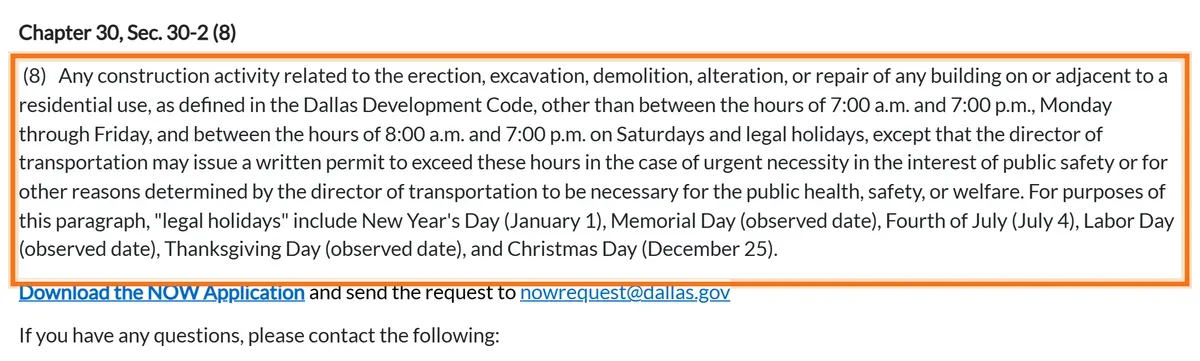
Dallas publishes its rule. Section 30-2(8) of the city code treats construction activity on or adjacent to a residential use as a noise violation outside 7:00 a.m. to 7:00 p.m. Monday through Friday and 8:00 a.m. to 7:00 p.m. on Saturdays and legal holidays, unless the director of transportation issues a written permit.
So an apartment community, or a retail center that backs up to houses, cannot simply move the loud work to midnight in Dallas. Other cities have their own ordinances, and we have not checked each one. Ask the city before the schedule is fixed.
Whether night, weekend or crane work is available depends on the contractor and on the building. Do not assume it. Settle it in the written plan with these questions, for us and for every other bidder:
- Do you perform after-hours or weekend work, and with your own crew?
- What does it add to the price, shown as its own line?
- How are welded seams and tie-ins inspected when the work is done under lights?
- Who arranges the crane or hoist, who is the operator, and whose insurance covers the lift?
We found no published cost guide that prices after-hours commercial roofing, so we will not quote a percentage. The line item in your bid is the number.
Which businesses need extra planning?
- Food service. Open tear-off above a kitchen or prep area is the hard case: debris and dust over food and equipment. Plan those sections for closed hours or a short planned closure, protect hoods and make-up air units, and ask your local health department whether it expects notice.
- Medical and dental. Noise and vibration during procedures, odors near patients, and air handling that cannot simply be switched off. Schedule by room, around the appointment book.
- Data and server rooms. Water is the risk and cooling cannot stop. Do the section above first, in the best weather window, with protection inside and someone watching during the work.
- Retail. Entrances, signs and parking matter most. Keep the front door clear, avoid peak days and seasons, and keep the storefront looking open.
- Apartments and condos. Many households, cars under every edge and residents home during the day. Our guide to HOA and multifamily roofing covers notices and approvals.
- Warehouses. Open ceilings and high racks mean debris protection over inventory, and dock schedules to work around.
What should the written logistics plan include?
Ask for it as a document attached to the contract, not a conversation:
- A roof plan divided into numbered sections, with the order and approximate dates
- Working hours, and which tasks are restricted to which hours
- The daily tie-in procedure and the weather and storm rules
- Interior protection by area, and who moves or covers contents
- A site plan for staging, dumpster, crane days, entrances and parking
- HVAC shutdowns by unit, date and duration, and the mechanical contractor's name
- Odor control: products, safety data sheets, intake control and timing
- A single contact on site every day, with a phone number tenants can use
- A notice schedule for tenants
- Insurance certificates, and who is responsible for interior damage
Tenant notices work best in three steps: a general letter two weeks ahead with dates and the contact, a section-specific notice a few days before the crew is overhead, and a same-day message when weather changes the plan.
A good plan costs money to carry out, and it belongs in the comparison of bids. Our guide to commercial roof replacement cost explains how access and occupied-building conditions move the price. If you want to walk your building and talk through the phasing, call or text (214) 687-1951.
After the job, the same habits protect the new roof. A commercial roof inspection and maintenance program and a clear rooftop access rule keep the warranty in force, as explained in what a no dollar limit warranty covers.
Planning a roof replacement around an open business?
Verde Roofing installs TPO roofs on offices, convenience stores, warehouses and multi-family buildings across Dallas–Fort Worth. See our commercial roofing page, then call or text (214) 687-1951, 24/7, or book a free roof inspection. Chris will walk the roof and the spaces below with you and give you a written estimate. Ask for the phasing around your hours to be put in writing with it.
Questions people ask next
How long will my building be disrupted by a roof replacement?
It depends on roof size, whether the old roof is torn off or recovered, weather and how much work is limited to certain hours. A small store may be a matter of days and a large warehouse or apartment complex several weeks. Ask for a phased schedule that shows which section is worked on each day, so each tenant knows their own noisy days.
Is the smell from roofing adhesive harmful to my employees or customers?
We are roofers, not industrial hygienists, so we will not give a medical answer. The practical steps are known: ask for the safety data sheet for every adhesive and primer, keep outdoor air intakes near the work closed or off while it is applied, schedule that work when the space is empty, and consider a system that needs little or no adhesive.
Can roofing work be done at night or on weekends in Dallas–Fort Worth?
Sometimes. It depends on the contractor, on safety and lighting, and on city rules. Dallas limits construction on or next to a residential use to daytime hours unless a written permit is issued. Night work also changes cost and quality control. Ask each bidder whether they offer it, what it costs and how seams and tie-ins are inspected in the dark.
Do I have to shut off the air conditioning during roof work?
Only for specific steps: when units are disconnected or lifted to raise or re-flash curbs, and near outdoor air intakes while adhesive or primer is applied. In a North Texas summer that has to be scheduled carefully. A licensed HVAC contractor should do the disconnecting and reconnecting, and the plan should say which units, which days and for how long.
Who pays if water gets in while the roof is open?
That is a contract and insurance question, so settle it before work starts. Ask for the contractor's certificate of insurance, a written procedure for daily tie-ins and storm response, and a clause on who protects and who pays for interior damage. Tell your own property insurer and your tenants about the project dates. Your policies and the contract govern.
Should I close for a few days instead of working around the roofers?
It can be the cheaper choice when the work area is small and the business is sensitive: a commercial kitchen, a treatment room or a server room directly under a tear-off. Compare the cost of a short planned closure with the cost of after-hours work, extra protection and a longer schedule. A good bid prices both ways.
Sources
- U.S. EPA and NIOSH: Building Air Quality, A Guide for Building Owners and Facility Managers, Section 5 (PDF)
- OSHA 29 CFR 1926.501: Duty to have fall protection (roofing work on low-slope roofs; protection from falling objects)
- OSHA 29 CFR 1926.502: Fall protection systems criteria and practices (warning line systems)
- City of Dallas: Noise ordinance waiver, Chapter 30, Sec. 30-2(8)
- Texas Occupations Code Section 1302.251: License required (air conditioning and refrigeration contracting)
- IKO Commercial: InnoviWeld induction welding system brochure (PDF)
- IKO Commercial: Technical documents, Part 15, Temporary Closures (Night Seals)
- eCFR: 14 CFR 77.9, Construction or alteration requiring notice (FAA)
- HomeGuide: TPO roofing cost
Chris Grimes owns Verde Roofing in Plano, Texas, a locally owned residential and commercial roofer serving Dallas–Fort Worth. Verde is an NTRCA Accredited Member, an RCAT member and a Dallas Observer Best of Dallas Best Roofer winner (readers’ choice) in 2021, 2022 and 2023.
Keep reading
Related guides
 Commercial roofingCommercial Roof Replacement Cost: What Building Owners Should BudgetNational cost guides put a TPO flat roof at roughly $4 to $14 per square foot installed, with HomeGuide citing $5 to $12 once tear-off, insulation…Read the guide
 Commercial roofingCan a New Commercial Roof Go Over the Existing Roof in Texas?Often yes. Texas has no statewide rule: Dallas, Plano, Fort Worth and other cities adopt their own edition of the International Building Code. The model code…Read the guide
 Commercial roofingHow Can HVAC and Other Rooftop Work Damage a Commercial Roof in Texas?On Texas commercial buildings, HVAC, electrical, satellite, sign and solar crews damage roofs by dropping screws and panels, dragging equipment, cutting unflashed penetrations and letting grease…Read the guide