Commercial Roof Warranties in Texas: What Does No Dollar Limit Actually Cover?
 By Chris Grimes, owner of Verde RoofingPublished November 6, 2026 · 13 min read
In short
On a Texas commercial roof, a no dollar limit (NDL) warranty means the manufacturer puts no cap on what it spends to repair a leak the warranty covers: one caused by its materials, the installer’s workmanship or normal weathering. It does not cover hail, wind above the stated speed, damage by other trades, unapproved alterations or neglect, and it never pays for interior damage. Get the type, term and issuer in writing before you sign.
Key takeaways
- No dollar limit removes the cap on repairing a covered leak; it does not widen what counts as covered, and the remedy is repair of the leak, not a new roof or interior repairs.
- The sample NDL warranties we read from Carlisle, Johns Manville and Elevate all exclude hail and other natural disasters in their base form, and two of the three samples stop at 55 mph wind.
- All three samples require notice within 30 days of a leak and make the owner pay for the investigation when the cause is not covered.
- A material-only warranty is a different product: Johns Manville’s sample caps liability at $150 per roofing square, excludes workmanship and is void if the building is sold.
- Transfer on sale is not automatic: the samples require a fee, and Carlisle’s also requires an inspection; Johns Manville’s requires the fee within 30 days of the ownership change.
Two bids for the same roof are on your desk. One says “20-year NDL warranty.” The other says “20-year manufacturer warranty” and costs less. A third line in each mentions the contractor’s own workmanship warranty. They sound alike and they are not.
“No dollar limit” is the most reassuring phrase in commercial roofing and one of the most misread. To write this guide we read current sample warranty documents published by three membrane manufacturers, Carlisle, Johns Manville and Elevate, line by line. What follows is what those documents say, in their own terms, and what to get in writing before you sign anything.
One thing first. This article does not say Verde Roofing can provide any particular manufacturer’s warranty on your building. Whether a given warranty is available depends on the manufacturer, the system, the installer’s standing with that manufacturer and an inspection. Ask any contractor, us included, to put the warranty type, term and issuer in the written proposal.
What does no dollar limit actually mean?
It means there is no cap on what the manufacturer will spend to repair a leak that the warranty covers. That is all it means.
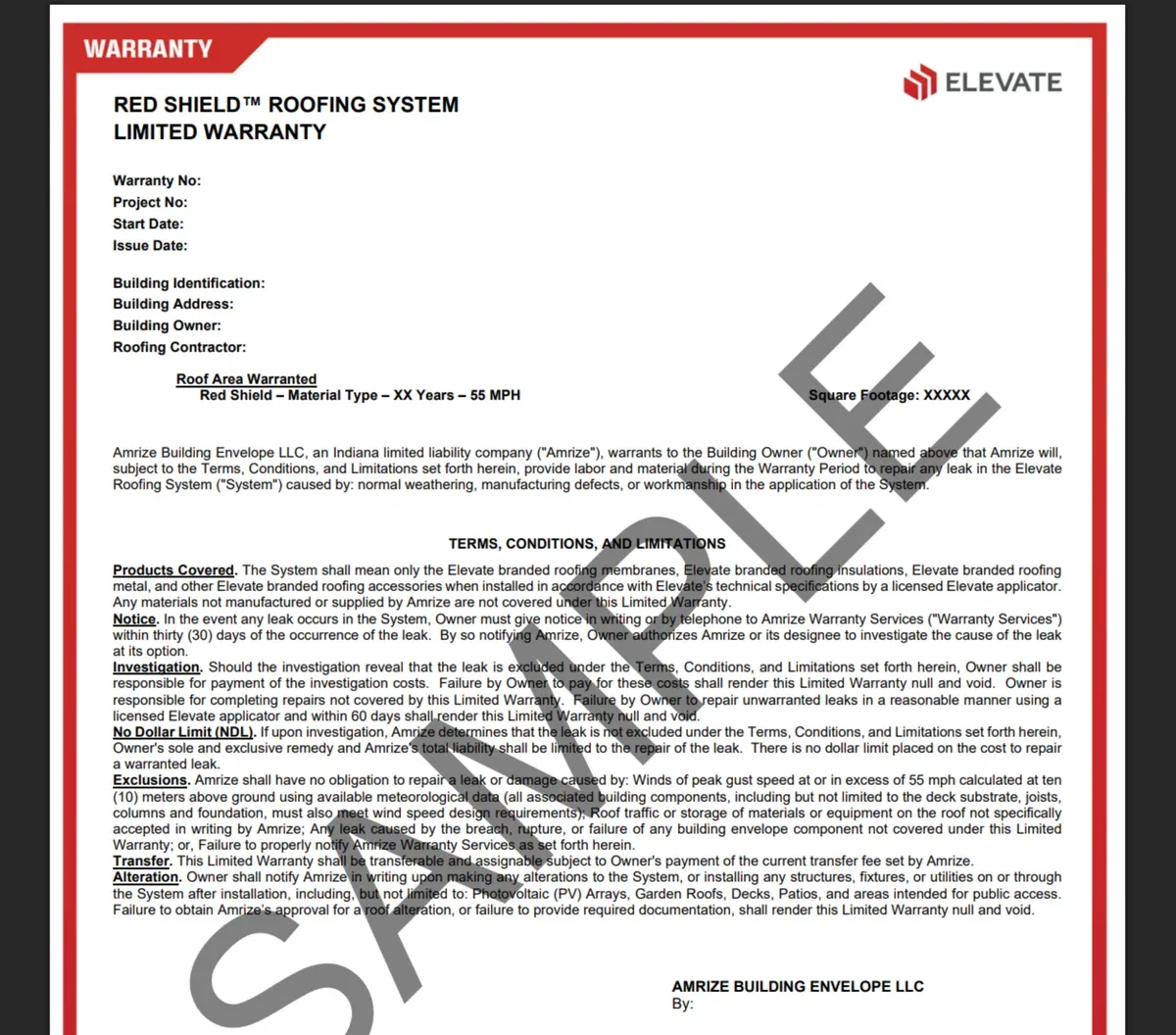
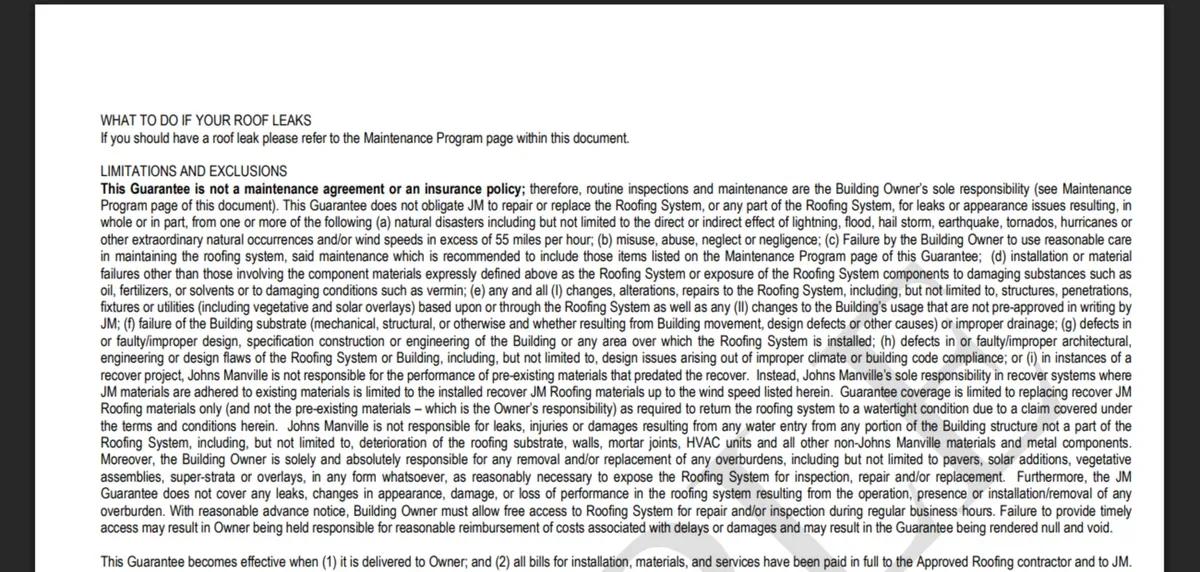
The Elevate Red Shield sample states it most directly. If the manufacturer determines the leak is not excluded, the owner’s sole and exclusive remedy is the repair of the leak, and there is no dollar limit placed on the cost to repair a warranted leak. Carlisle’s Golden Seal sample says its liability is limited to its repair of the leak and that Carlisle has sole responsibility for determining the method of repair. Johns Manville’s Peak Advantage sample promises the materials and labor reasonably required, in its discretion, to return the roofing system to a watertight condition.
So an NDL warranty answers one question, “how much will they spend?”, and leaves three others to the rest of the document:
- What causes are covered? Manufacturing defects, the installer’s workmanship in applying the system, and ordinary weathering.
- What is the remedy? Repair of the leak. Not replacement, not a refund.
- What about the damage inside? Excluded. All three samples disclaim incidental and consequential damages, including damage to the building and its contents and loss of profits.
Johns Manville’s sample says it in a sentence owners should remember: the guarantee is not a maintenance agreement or an insurance policy.
What are the types of commercial roof warranty?
Four different promises get called “the warranty.” This table sets them side by side:
| Type | Who issues it | What it promises | Dollar limit | Covers the installer’s workmanship? | Main gaps |
|---|---|---|---|---|---|
| Contractor workmanship warranty | The roofing contractor | To fix leaks or defects from its own installation, for the period in the contract | Whatever the contract says | Yes, that is its purpose | Only as good as the contractor’s terms and how long the company is around; terms vary widely |
| Manufacturer material-only warranty | The manufacturer | That the membrane is free of manufacturing defects and will not weather to the point of leaking | Yes. Johns Manville’s sample caps liability at $150 per roofing square, labor and material combined | No. Workmanship is exclusion number one in the Johns Manville sample | No coverage of flashings by others, drainage problems or installation errors; the Johns Manville sample is void if the building is sold |
| Manufacturer system warranty with a dollar limit | The manufacturer | To repair leaks from the covered system’s materials and workmanship | Yes, a stated maximum | Yes, by the manufacturer’s authorized installer | The cap can be reached on a large repair; same exclusions as an NDL |
| Manufacturer system warranty, no dollar limit (NDL) | The manufacturer | To repair leaks from the covered system’s materials and workmanship | No cap on covered repairs | Yes, by the manufacturer’s authorized installer | Every exclusion below; owner duties; only the manufacturer’s own components are covered |
How to read it: the first row and one of the other three usually exist together, and they do different jobs. The contractor’s warranty is your first call in the early years and the only one that covers work outside the manufacturer’s system. The manufacturer’s warranty is the long-term backstop for the system itself. A bid that says only “manufacturer warranty” has not told you which of rows two, three or four you are buying, and the difference is large.
The National Roofing Contractors Association makes the same distinction in its consumer bulletin on roof system warranties: even the most comprehensive manufacturer warranties generally provide only that the manufacturer will repair leaks that result from specific causes, and a material-only warranty typically provides only replacement material.
Note the word “system.” Carlisle’s sample defines the covered system as newly installed Carlisle brand membrane, flashings, adhesives, insulation, cover boards and fasteners. Johns Manville’s lists the covered components and states in capitals that all other non-JM components are excluded. Elevate’s covers only Elevate-branded products installed by a licensed applicator. Edge metal, drains or insulation from another maker may sit outside the warranty unless they are written in.
For the residential version of this topic, with shingle warranties, see our guide to roof warranties explained.
What does an NDL warranty exclude?
The exclusions do most of the work in these documents. Across the three samples:
- Hail and other natural events. All three list hail. Also lightning, tornadoes, hurricanes, earthquakes and fire in various combinations.
- Wind above the stated speed. Johns Manville’s sample excludes wind speeds in excess of 55 miles per hour. Elevate’s excludes peak gusts at or in excess of 55 mph calculated at 10 meters above ground. Carlisle’s leaves the speed blank to be filled in per project, measured as a 3-second peak gust.
- Wind-blown debris, vandalism, accidents, misuse. Carlisle and Elevate both list them.
- Other parts of the building. Walls, mortar, roof deck, structure and HVAC units appear by name in all three. If water enters at a parapet wall or through a rooftop unit, it is not a warranty leak. Our guide to a roof leak near a rooftop AC unit explains how that is sorted out.
- Roof traffic and work by others. Elevate excludes roof traffic or storage of materials on the roof not accepted in writing.
- Unapproved alterations. Covered in its own section below, because it can void the warranty rather than just exclude a repair.
- Lack of maintenance. All three tie coverage to reasonable care and name their own maintenance guide as the standard.
- Chemicals, oils and grease. Acids, oils and harmful chemicals in the Carlisle and Elevate samples; oil, fertilizers and solvents in Johns Manville’s.
- Condensation. Moisture generated inside the building is excluded by Carlisle and Elevate.
- Design. All three say the manufacturer does not warrant that the system was the right choice or was correctly engineered for the building, including wind uplift calculations and drainage.
- The old roof in a recover. Johns Manville’s sample says that in a recover it is not responsible for pre-existing materials. Carlisle disclaims liability for prior existing roofing material under its system. That matters when you are deciding whether a new roof can go over the existing one.
- Blisters that do not leak. Johns Manville’s sample specifically excludes non-leaking blisters. See our guide to blisters on a flat roof.
- Anything installed on top. Solar arrays, pavers, roof gardens: the owner pays to remove and reinstall them for a repair in all three samples.
What about ponding water?
It depends on the document, so read yours for the words “ponding” and “drainage.” None of the three NDL samples we read has a clause that excludes ponding by that name. Johns Manville’s excludes leaks resulting from improper drainage, and its material-only sample excludes deterioration resulting from inadequate drainage. Carlisle’s care guide, which the warranty makes part of the owner’s duty, says ponded water should evaporate within 48 to 72 hours after a rainfall and tells owners to keep debris from blocking drainage.
In practice that means a clogged drain is your problem, and a roof that holds water because of its slope is a design question the manufacturer has already disclaimed. Our guide to standing water on a flat roof covers the fixes.
How do hail and wind exclusions play out in North Texas?
This is where a warranty written for the whole country meets Dallas–Fort Worth weather.
The National Weather Service defines a severe thunderstorm as one with winds of at least 58 mph or hail at least one inch in diameter. A 55 mph wind limit therefore sits below the threshold of the storms that North Texas springs are known for. And hail, the storm damage North Texas owners ask about most, is excluded outright in the base form of all three samples.
Manufacturers do offer more. Carlisle’s warranty services page describes warranties with terms of up to 30 years and options covering hail up to three inches and winds up to 120 mph, and it publishes a separate Golden Seal version titled “with Limited Coverage for Hail.” We did not read the terms of that hail version, and these options are generally tied to specific assemblies, so do not assume any of it applies to a bid unless the document says so. Ask three questions:
- What wind speed is written on this warranty, and is it a peak gust?
- Is hail covered, to what stone size, and what does “covered” mean: leaks only, or punctures too?
- What does the roof assembly have to include to qualify, and is that assembly the one in this bid?
Whatever the answers, hail damage is first a property insurance matter. Our guide to hail damage on a commercial roof explains the inspection and the claim steps. The claim is yours and your policy governs. Verde inspects, documents the damage with photos, meets the adjuster on site to show what was found and writes the repair estimate.
What must the owner do to keep the warranty in force?
More than most owners realize. The duties below are drawn from the three samples:
| Duty | Carlisle sample | Johns Manville sample | Elevate sample |
|---|---|---|---|
| Report a leak | Written notice within 30 days | Immediately, and no later than 30 days after discovery | In writing or by phone within 30 days |
| Inspect | At least every six months, after severe weather, and after maintenance of any rooftop unit | At least semi-annually, and after severe weather | Twice a year and after severe weather; one inspection a year by the installer is recommended |
| Keep records | Warranty, inspection logs, rooftop traffic logs, service logs, invoices | Guarantee, invoices, logs of all inspections and repairs | Inspection and maintenance records with photos, invoices, names and dates |
| Alterations | Written authorization first, or the warranty is null and void | Pre-approval in writing, or leaks from the change are not covered | Written notice and approval, or the warranty is null and void |
| Non-covered leaks | Owner pays investigation and repair | Owner makes the repairs JM specifies, promptly, or coverage ends for the affected area | Owner pays investigation; repair within 60 days by a licensed applicator, or the warranty is void |
| Payment | No obligation while any installation or warranty bills are unpaid | Not in force until all bills are paid in full | No obligation until the manufacturer and applicator are paid in full |
How to read it: the first three rows are routine and cheap, and they are the ones owners skip. A leak reported on day 45, or a claim with no inspection records behind it, gives the manufacturer a reason to say no that has nothing to do with the roof. Our guide to a commercial roof inspection and maintenance program shows how to set up the twice-yearly visits and the file.
The alterations row is the one that ends warranties. A new rooftop unit, a satellite mount or a solar array added without the manufacturer’s approval is enough under the Carlisle and Elevate wording. Our guide to how HVAC and other rooftop work damages a commercial roof has the access rules that prevent it.
If you would like the inspections and records handled for you, ask about our maintenance plans: call or text (214) 687-1951.
How is a warranty claim made?
The samples describe nearly the same sequence:
- Confirm the water is coming through the roof. Carlisle’s care guide says to contact them after verifying the leak is through the roofing system. Rule out the rooftop units and the walls first if you can.
- Give notice within 30 days, by the method the document names, and keep proof. By giving notice you authorize the manufacturer to investigate.
- Make only essential temporary repairs. Johns Manville’s sample allows reasonable, essential temporary repairs in an emergency and reimburses them only if the leak turns out to be covered. Carlisle’s says to use its lap sealant or a good-grade rubber caulk, not asphaltic roof cement, and that it does not pay for temporary repairs.
- The manufacturer inspects. Give access during business hours. Elevate’s and Johns Manville’s samples let them charge you for delays caused by restricted access.
- If covered, the manufacturer has the leak repaired. It chooses the method.
- If not covered, you pay for the investigation and must have the repair made by an authorized contractor to keep the rest of the warranty alive.
- If you disagree, the samples send disputes to mediation first, and then to courts in the manufacturer’s home state: Pennsylvania for Carlisle, Tennessee for Elevate. Johns Manville’s is governed by Colorado law. A Texas owner should know that before a dispute, not during one.
During the first years, the practical first call for any leak is usually the contractor who installed the roof, under its workmanship warranty. Still send the manufacturer’s notice within the 30 days. The two do not replace each other. If the roof is brand new, our guide to who fixes a new roof that leaks covers the order of calls.
Does the warranty transfer when the building is sold?
Only if the document allows it and someone completes the process:
- Carlisle sample: transferable on a change of ownership when the owner has completed certain procedures, including a transfer fee and an inspection of the roofing system by a Carlisle representative.
- Elevate sample: transferable and assignable subject to the owner’s payment of the current transfer fee.
- Johns Manville NDL sample: not assignable by the owner. On a sale the owner may request a transfer, which JM may grant in its sole discretion after receiving satisfactory information and a transfer fee, and the fee must be paid no later than 30 days after the date of the ownership transfer.
- Johns Manville material-only sample: any sale or transfer of the building voids the warranty.
For a seller, a transferable warranty with clean maintenance records is something to put in the listing package. For a buyer, the 30-day window in the Johns Manville sample is short enough to belong on the closing checklist. Ask for the warranty document itself, the maintenance records and any approvals for rooftop alterations during due diligence. Our guide to the roof inspection when buying a commercial building lists the rest.
What should you get in writing before you sign?
When I go through a commercial proposal with an owner, the warranty line is where I slow down, because it is the line most often left vague.
Ask every bidder for these, on paper:
- The type: contractor workmanship, manufacturer material-only, system with a dollar limit, or NDL
- The issuer of each warranty, by legal name
- The term in years, and the start date
- A sample copy of the exact warranty form, with the wind speed and any hail coverage filled in
- What is in the covered system and what is not: edge metal, drains, insulation, existing layers
- Whether the contractor is authorized by that manufacturer to install a warranted system, confirmed by the manufacturer if it matters to you
- Who pays the warranty fee, and whether it is in the price
- The manufacturer’s inspection: when it happens and what happens if punch-list items are found
- The contractor’s own workmanship warranty: length, what it covers, and how to make a claim
- The owner’s duties, so you can decide now whether you will actually meet them
Then weigh it the way the NRCA suggests: on the roof system’s suitability for your building first, and the warranty’s length second. A warranty is a reason to expect a repair. It is not a reason to expect a roof that needs none. For the systems themselves, see our comparison of TPO and other flat roof systems and our guide to commercial roof replacement cost.
Verde Roofing installs and repairs commercial roofs, including TPO systems, for offices, convenience stores, warehouses and multifamily properties across Dallas–Fort Worth. Our own warranty terms, and any manufacturer warranty available for your project, belong in the written proposal, and we will walk you through them before you sign.
Want a commercial proposal with the warranty spelled out?
Call or text (214) 687-1951, 24/7, or book a free roof inspection. Chris inspects the roof with you, documents its condition with photos, and gives you a written estimate that states the warranty type, term and issuer in plain words.
Questions people ask next
Does a no dollar limit roof warranty cover hail damage in Texas?
Not in its base form. The Carlisle, Johns Manville and Elevate samples we read each list hail among excluded natural events. Some manufacturers publish separate hail versions or riders with a stated hailstone size, issued only for qualifying roof assemblies. If hail coverage matters to you, the words must be on the warranty itself. Otherwise hail belongs to your property insurance, and your policy governs.
Is an NDL warranty the same as a roof replacement guarantee?
No. The Elevate sample says the owner’s sole remedy is the repair of the leak, and that there is no dollar limit on the cost to repair a warranted leak. Carlisle’s says its liability is limited to repair of the leak and that Carlisle decides the method. Nothing in the samples promises a new roof, a leak-free roof or payment for damage inside the building.
Can a commercial roof warranty be transferred to a new owner?
Often, but only if someone asks and pays. Carlisle’s sample says transfer requires certain procedures including a transfer fee and an inspection by a Carlisle representative. Elevate’s is transferable subject to the current transfer fee. Johns Manville’s sample says the fee must be paid no later than 30 days after the ownership transfer and that the transfer is at JM’s discretion. Its material-only sample is void on sale.
What voids a commercial roof warranty?
In the samples we read: alterations or attachments to the roof without the manufacturer’s written approval, failure to use reasonable care in maintaining the roof, failure to pay for an investigation of a non-covered leak, and under Elevate’s wording, failure to repair a non-covered leak within 60 days using a licensed applicator. Late notice of a leak is an exclusion or a ground for termination in all three.
How soon do I have to report a leak under a roof warranty?
Thirty days in each of the three samples. Carlisle’s requires written notice within 30 days of any leak. Elevate’s requires notice in writing or by telephone within 30 days of the occurrence of the leak. Johns Manville’s says immediately upon discovery and in no event later than 30 days. Your signed warranty governs, so check it and report in a way that leaves a record.
Who provides the workmanship warranty on a commercial roof?
Two parties can. The roofing contractor gives its own workmanship warranty, with terms that vary by company and must be in the contract. A manufacturer’s system or NDL warranty also covers the installer’s workmanship in applying the system, for the warranty term. A material-only warranty does not: Johns Manville’s material sample lists workmanship first among its exclusions.
Is a longer roof warranty always better?
No. The National Roofing Contractors Association advises that a warranty’s length should not be the primary criterion in selecting a roof system, because it does not necessarily provide assurance of satisfactory performance. A well-designed and well-installed roof with maintenance records is worth more than a long document with exclusions you cannot meet. Compare what is covered and what you must do.
Sources
- Elevate (Amrize): Red Shield Roofing System Limited Warranty, sample (forms 1001.001.2026 and 1003.001.2026)
- Carlisle SynTec: Golden Seal Total Roofing System Warranty, sample copy with Care and Maintenance Guide (form F0001, Rev 12/24)
- Johns Manville: Peak Advantage Guarantee Sample (No Dollar Limit), with Maintenance Program
- Johns Manville: Limited Labor and Material Warranty Sample (RS-2357)
- NRCA Consumer Advisory Bulletin: Roof System Warranties
- Carlisle SynTec: Warranty Services
- National Weather Service: Severe weather definitions
Chris Grimes owns Verde Roofing in Plano, Texas, a locally owned residential and commercial roofer serving Dallas–Fort Worth. Verde is an NTRCA Accredited Member, an RCAT member and a Dallas Observer Best of Dallas Best Roofer winner (readers’ choice) in 2021, 2022 and 2023.
Keep reading
Related guides
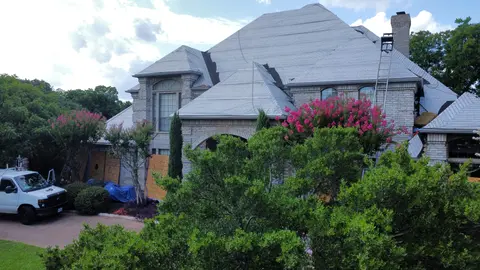 Hiring a rooferRoof Warranties Explained: Manufacturer vs. WorkmanshipA new roof usually carries two warranties. The manufacturer’s warranty covers defects in the shingles and accessories; the contractor’s workmanship warranty covers installation mistakes. Neither covers…Read the guide
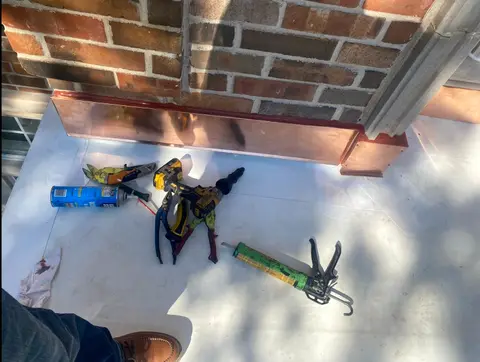 Commercial roofingHow Can HVAC and Other Rooftop Work Damage a Commercial Roof in Texas?On Texas commercial buildings, HVAC, electrical, satellite, sign and solar crews damage roofs by dropping screws and panels, dragging equipment, cutting unflashed penetrations and letting grease…Read the guide
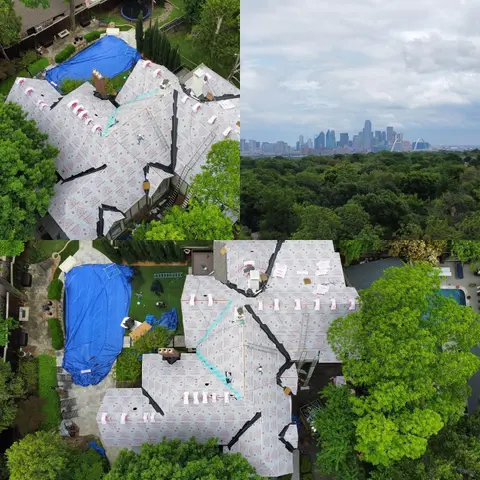 Commercial roofingBuying a Commercial Building in DFW: What Should the Roof Inspection Include?Before you close on a commercial building in Dallas–Fort Worth, the roof inspection should identify the roof system and its age, give an opinion of remaining…Read the guide