Can a New Commercial Roof Go Over the Existing Roof in Texas?
 By Chris Grimes, owner of Verde RoofingPublished November 6, 2026 · 11 min read
In short
Often yes. Texas has no statewide rule: Dallas, Plano, Fort Worth and other cities adopt their own edition of the International Building Code. The model code allows one new roof over an existing one when it follows the manufacturer's instructions, and bars it where the old roof is water-soaked, deteriorated or already two layers. Moisture, drainage, added weight, deck condition and the new system's requirements decide the rest.
Key takeaways
- The model building code treats a roof recover as allowed by exception: the default for a roof replacement is removal of every layer down to the deck.
- A recover is not permitted where the existing roof is water-soaked or too deteriorated to serve as a base, or where the roof already has two or more applications of roof covering.
- The reroofing section is numbered 1511 in the 2018 International Building Code and 1512 in the 2021 edition, and Dallas, Fort Worth, Plano and Frisco are not all on the same edition.
- IIBEC says the manufacturer of the new roof typically requires a moisture survey before a recover, and that every non-destructive scan has to be confirmed with core samples.
- National cost guides put old-roof removal at $1 to $5 per square foot, so the saving is real, but it disappears if wet insulation is sealed under the new membrane.
Two proposals for the same building are on your desk. One removes the old roof down to the deck. The other installs a new membrane over what is already there, for noticeably less money and fewer days of disruption. Both contractors say their way is fine.
Both can be right, and one of them can be badly wrong for your building. Whether a new roof may go over the old one is partly a code question and mostly a condition question, and you can settle both before you sign. This guide covers low-slope commercial roofs. For a pitched shingle roof, read our separate guide on putting new shingles over old ones in Texas.
What does the building code say about a new roof over an old one?
The model code uses two terms. A roof replacement removes all existing layers down to the roof deck. A roof recover installs a new roof covering over the existing one. The reroofing section of the 2021 International Building Code states the default first: a roof replacement includes removal of all existing layers of roof assembly materials down to the deck.
A recover is the permitted exception. In the 2021 edition it is allowed in four situations:
- The new roof covering is installed in accordance with the roof covering manufacturer's approved instructions.
- The new roof is a complete and separate system, such as a standing-seam metal system, designed to carry its loads directly to the building structure.
- Metal panels, metal shingles or tile go over an existing wood shake roof under specific conditions.
- A new protective roof coating is applied over an existing coating, metal roof, built-up roof, spray foam, modified bitumen or single-ply membrane.
The first item is the one that covers a new TPO membrane over an old flat roof. It also means the manufacturer's recover instructions are part of the rule, not a suggestion.
Then come the hard stops. The code says a roof recover is not permitted where any of these occur:
- The existing roof or roof covering is water-soaked, or has deteriorated to the point that it is not adequate as a base for additional roofing.
- The existing roof covering is slate, clay, cement or asbestos-cement tile.
- The existing roof has two or more applications of any type of roof covering.
One thing to know when you look this up: the section number moves between editions. Reroofing is Section 1511 in the 2018 International Building Code and Section 1512 in the 2021 edition, with the recover rules at 1511.3 and 1512.2 respectively. The International Existing Building Code repeats the same rules in Section 705 of its 2018 and 2021 editions, and in Section 706 of the 2015 edition. A proposal that cites “1511” and one that cites “1512” may be describing the same rule.
Which code edition applies in Dallas, Plano, Fort Worth and Frisco?
Texas does not have one statewide commercial building code that every city uses unchanged. Each city adopts an edition and adds its own amendments, and the cities around you are not on the same edition. From each city's own pages and ordinances, as of November 2026:
- Dallas lists Chapter 53 of the city code as the 2021 International Building Code with Dallas amendments, effective May 12, 2023, and Chapter 58 as the 2021 International Existing Building Code with Dallas amendments.
- Fort Worth says it has adopted the 2021 International Building and Existing Building Codes, each with local amendments, and that it typically adopts new codes every other cycle.
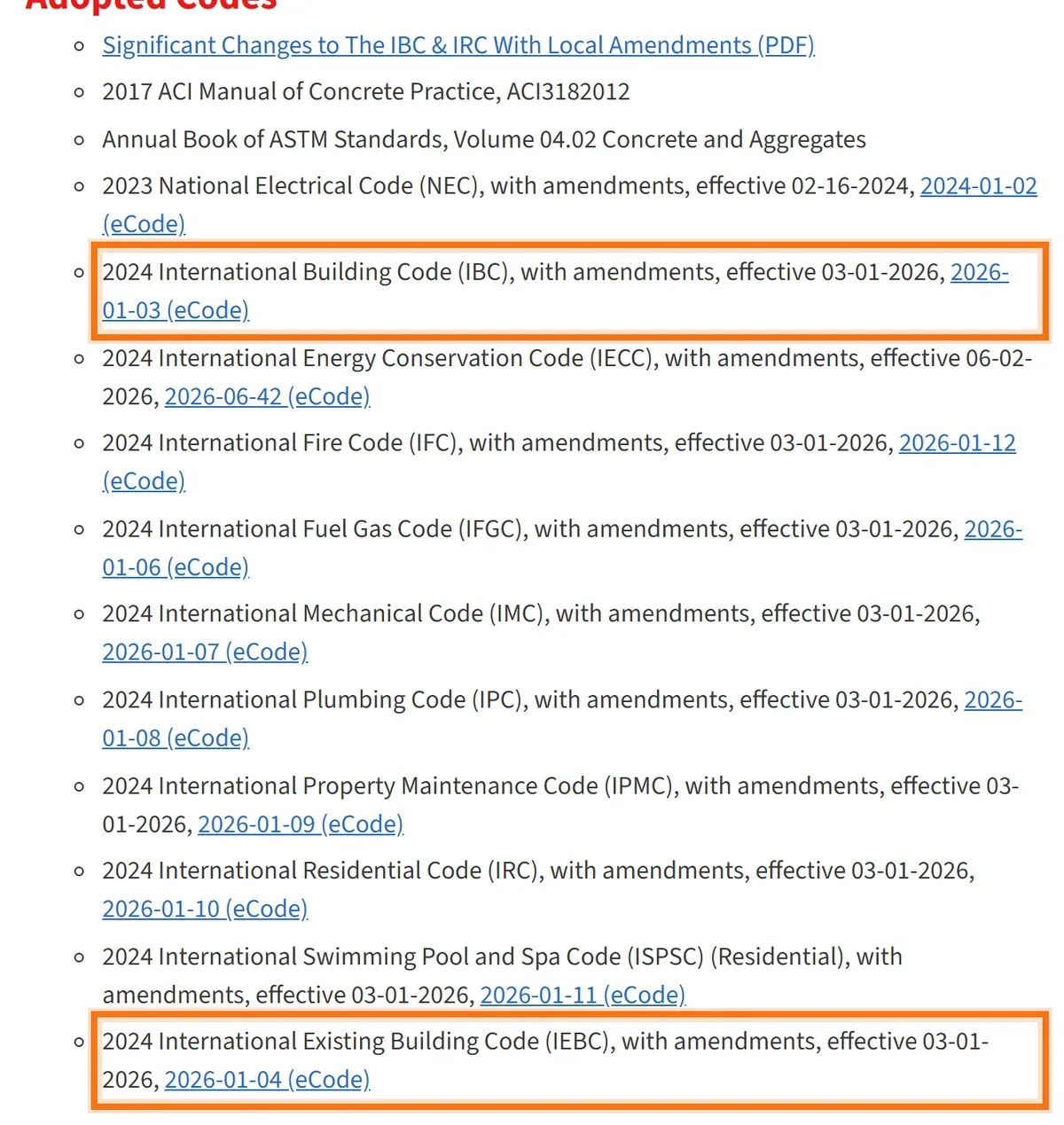
- Plano adopted the 2024 edition of the International Building Code by Ordinance No. 2025-6-14, with additions, deletions and amendments.
- Frisco lists the 2024 International Building Code and the 2024 International Existing Building Code, with amendments, effective March 1, 2026.
We read the model code text, not every local amendment. Before you rely on any section number, ask the building department which edition and amendments it enforces for your address, and ask the contractor to write that into the proposal. Our guide to roof permits in Plano, Frisco and Dallas covers the residential side of the same patchwork.
What six things decide recover versus tear-off on a North Texas building?
The code tells you when a recover is forbidden. It does not tell you when one is wise. These six checks do.
1. Moisture in the existing roof
This is the deciding factor. Wet insulation under a new membrane stays wet. It loses insulating value, it can rust a steel deck or rot a wood one, and it can undermine the attachment of the new roof.
The International Institute of Building Enclosure Consultants (IIBEC) says that for recover projects that leave the existing membrane in place, a roof moisture survey is typically required by the manufacturer of the new roof system. It lists the common non-destructive methods: infrared imaging, nuclear gauges and electrical impedance scanners. It adds that all of them require confirming the findings by extracting roof core samples.
Isolated wet areas can often be cut out and replaced before a recover. Widespread moisture turns the job into a tear-off. Our guide on how wet insulation is found under a commercial roof explains the test methods and what to pay for.
2. The number of existing roofs
Two applications of roof covering already in place means no recover under the model code. The count is not always obvious from the surface. A core cut or an exposed edge shows it, and so do old permit records and prior proposals.
3. Drainage
A recover follows the shape of the roof underneath. If water stands for days today, it will stand on the new membrane too unless slope is added or drains are lowered or added.
The code gives existing buildings some room here. In the 2021 edition, a low-slope recover or replacement does not have to meet the quarter-inch-per-foot minimum design slope if the roof provides positive drainage, and existing secondary (overflow) drains or scuppers may not be removed unless they are replaced. So the practical question is whether the finished roof will actually drain. See standing water on a flat roof: fix the drain, add slope or replace.
4. Added load
A second roof adds weight to a structure that was designed decades ago. The 2021 International Existing Building Code says that where an alteration increases the design dead, live or snow load on a structural element by more than 5 percent, the element must be shown to carry current code loads or be strengthened. There is an exception for a second layer of roof covering weighing 3 pounds per square foot or less over a single existing layer.
Insulation, cover board, ballast and equipment all count. If the recover adds real thickness or the building has a light steel or wood structure, the person to answer the load question is a structural engineer, not the roofer.
5. Deck condition
A tear-off exposes the deck. A recover does not. Rusted steel deck, deteriorated wood or a damaged lightweight concrete fill stays hidden unless someone looks from below and at core locations.
It also matters for attachment. A mechanically attached recover puts new fasteners through the old roof into the deck, and the manufacturer may require fastener pull tests to prove the deck will hold them.
6. What the new system requires
The new membrane's manufacturer decides what it will accept and warrant. Typical requirements include a separation or cover board over the old surface, a specific attachment method, removal of wet materials and compatibility with the existing roof type.
Two details catch owners out. First, added insulation and cover board raise the roof surface, which reduces the flashing height left at walls, curbs, door thresholds and rooftop units. Second, a recover over active blisters or bubbles in the old roof or over open seams needs those defects dealt with first, not bridged.
Energy code is the other side of that coin. NRCA's summary of the 2018 codes notes that a full replacement with insulation above the deck generally has to meet current insulation levels, while a recover is exempt if energy use is not increased. A tear-off may therefore cost more and deliver a better-insulated building. That belongs in the comparison.
Recover or tear-off: where does your roof fall?
Use this table after the roof has been investigated, not before:
| What the investigation finds | Recover is | Why |
|---|---|---|
| One existing roof, dry insulation confirmed by survey and cores, sound deck, roof drains | Allowed and sensible | The old assembly is a good base, and the manufacturer's recover requirements can be met |
| One existing roof, a few isolated wet areas that are cut out and replaced | Allowed and sensible, with the wet areas in the scope | Moisture is removed, not sealed in; the scope must give a unit price for more |
| One existing roof, dry, but water stands for days | Allowed but risky | The recover copies the low spots unless slope or drains are corrected in the scope |
| One existing roof, dry, but flashing heights are already low at walls and units | Allowed but risky | Added thickness can leave too little flashing height; curbs or units may need raising |
| One existing roof, structure of uncertain capacity, heavier new assembly | Allowed but risky until an engineer signs off | Added load beyond the code's allowance needs a structural evaluation |
| Wet or deteriorated across large areas | Not allowed | Water-soaked or inadequate as a base under the model code |
| Two or more roofs already in place | Not allowed | Two or more applications of roof covering under the model code |
| Existing roof covering is slate, clay, cement or asbestos-cement tile | Not allowed | Listed as a bar to recover in the model code |
How to read it: the top two rows are the only ones where the cheaper proposal is also the sound one. The middle rows are legal recovers that fail early when the risk is left out of the scope. In the bottom rows the recover price is not a real option, whatever the proposal says.
How much does a recover actually save?
The saving is mainly the removal and disposal of the old roof. HomeGuide's TPO cost guide says old roof removal adds $1 to $2 per square foot. HomeAdvisor's flat roof guide, updated in June 2026, puts roof removal at $1 to $5 per square foot. For scale, the same guides put an installed TPO roof at $4 to $10 per square foot (HomeGuide) and $4 to $14 (HomeAdvisor).
These are national figures that lean toward small projects, and they are not our prices. What moves the real number on your building:
- Size, height and access for removal and hauling
- The number of layers and the type of old roof
- How much wet insulation has to come out either way
- Whether a recover needs a cover board, added slope or raised curbs
- Whether a tear-off triggers more insulation under the energy code
- Deck repairs found once the roof is open
A recover also brings less noise, less debris and less exposure of the interior to weather, which matters in an occupied building. Our guide on keeping a business open during a roof replacement covers that side.
For the full budget picture, see what a commercial roof replacement costs. If you want a written number for both options on your building, call or text (214) 687-1951.
What should be investigated before anyone prices a recover?
- Count the roofs. Core cuts or an exposed edge, plus any records you have. Two already means tear-off.
- Survey for moisture. A non-destructive scan of the whole roof, confirmed by cores. Ask who performs it. It may be a testing firm or roof consultant, not the roofing contractor.
- Map where water stands 48 hours after rain, and check every drain and scupper.
- Look at the deck from below where it is visible, and at each core.
- Measure flashing heights at walls, curbs, units and thresholds against the added thickness.
- Ask the load question. Get the weight of the new assembly per square foot, and an engineer's opinion if it is not clearly minor.
- Get the manufacturer's recover requirements for your existing roof type, in writing, with the sample warranty.
- Confirm the code edition and permit requirement with the city.
When I look at a flat roof someone wants to recover, the first two things I want to know are how many roofs are already up there and where the water sits after a rain. Those two answers rule out more recovers than anything else.
If the roof passes, a recover is one of three ways to extend it. The others are a coating, covered in roof coating versus replacement, and targeted repairs such as re-welding or patching open TPO seams.
What must the written recover scope include?
A recover proposal you can hold someone to states:
- The code edition and section the recover is filed under, and who pulls the permit
- The moisture survey method, who performed it, and a roof plan marking wet areas and core locations
- The square footage of wet insulation included for removal, and a unit price per square foot beyond that
- A unit price for deck repair
- The separation or cover board, insulation and attachment method
- How drainage is corrected, or a plain statement that it is not
- What happens at each wall, curb, unit, drain and edge, including any curbs to be raised and by which trade
- The manufacturer, the system, and the exact warranty offered for a recover
Compare that last line carefully. The differences between warranty types are covered in what a no dollar limit warranty actually covers, and the system choices in TPO versus other flat roof systems.
If you are buying the building instead of owning it, the same questions belong in the due diligence. See what a roof inspection should include when you buy a commercial building.
Want both options priced on the same facts?
Verde Roofing installs TPO systems on offices, convenience stores, warehouses and multi-family buildings across Dallas–Fort Worth. Our commercial roofing page shows what we do. Call or text (214) 687-1951, 24/7, or book a free roof inspection. Chris will walk the roof with you, document what he finds with photos, tell you plainly what still needs a moisture survey or an engineer, and give you a written estimate.
Questions people ask next
How many roof layers are allowed on a commercial building in Texas?
There is no single Texas number, because each city adopts its own code edition. Under the model International Building Code, a recover is not permitted where the existing roof already has two or more applications of any type of roof covering. So one existing roof plus one new roof is the usual ceiling. Confirm the edition and local amendments with your city's building department.
Can TPO be installed over an old modified bitumen or built-up roof?
It can be, if the existing roof is dry, firmly attached and a single layer, and the TPO manufacturer's instructions for that recover are followed. Those instructions usually call for a separation or cover board and a specific attachment method. Ask the contractor for the manufacturer's written recover requirements for your existing roof type before you compare prices.
Does a roof recover need a permit in Dallas or Plano?
Assume a commercial reroof needs a permit and ask the building department before work starts. The code rules for recover and replacement apply whether or not anyone checks. Permit thresholds differ by city, so have the contractor state in the proposal who pulls the permit, which code edition the city enforces and whether the work is filed as a recover or a replacement.
Will a recover get the same manufacturer warranty as a tear-off?
Not always. Each manufacturer sets its own conditions for warranting a recover, and they often include a moisture survey, removal of wet areas and an inspection. Warranty length or type can differ from a full replacement. Ask for the sample warranty and the manufacturer's recover requirements in writing, and do not assume the terms match a tear-off.
Does a recover have to meet the current energy code for insulation?
Usually a full replacement triggers the insulation requirement and a recover does not. NRCA's summary of the 2018 International Energy Conservation Code says a roof replacement with insulation entirely above the deck must meet new-construction levels, while a recover is exempt if energy use is not increased. Your city's adopted energy code and amendments control.
What happens to the next roof if I recover now?
The next reroof will almost certainly be a full tear-off of both layers, because the code does not allow a recover over two applications of roof covering. That means more removal and disposal next time. A recover is a way to get one more service life from a sound assembly, not a way to avoid tear-off forever.
Sources
- 2021 International Building Code, Chapter 15, Section 1512 Reroofing (code text as published by UpCodes)
- 2021 International Existing Building Code, Chapter 7, Sections 705 Reroofing and 706 Structural (code text as published by UpCodes)
- NRCA, Professional Roofing: Reroofing by the book (Mark S. Graham, February 2019)
- IIBEC Technical Advisory No. 016-2018: Reuse of Roof Insulation
- City of Dallas: City Codes & Ordinances (Chapter 53 and Chapter 58, 2021 codes with Dallas amendments)
- City of Fort Worth: Building & Energy Codes
- City of Plano: Ordinance No. 2025-6-14, adopting the 2024 International Building Code (PDF)
- City of Frisco: Adopted Codes
- HomeGuide: TPO roofing cost
- HomeAdvisor: How much does it cost to replace a flat roof?
Chris Grimes owns Verde Roofing in Plano, Texas, a locally owned residential and commercial roofer serving Dallas–Fort Worth. Verde is an NTRCA Accredited Member, an RCAT member and a Dallas Observer Best of Dallas Best Roofer winner (readers’ choice) in 2021, 2022 and 2023.
Keep reading
Related guides
 Commercial roofingCommercial Roof Replacement Cost: What Building Owners Should BudgetNational cost guides put a TPO flat roof at roughly $4 to $14 per square foot installed, with HomeGuide citing $5 to $12 once tear-off, insulation…Read the guide
 Commercial roofingHow Do Roofers Find Wet Insulation Under a Commercial Roof in Texas?On a Texas commercial roof, wet insulation is found in two steps. A scan (infrared at night, a nuclear gauge or an electrical impedance meter read…Read the guide
 Commercial roofingRoof Coating vs. Replacement for Flat Commercial RoofsA coating can extend a flat commercial roof only when the existing membrane is still sound, the insulation underneath is dry and the roof drains. The…Read the guide