Commercial Roof Leak Near an AC Unit in DFW: Roofer or HVAC Contractor?
 By Chris Grimes, owner of Verde RoofingPublished November 7, 2026 · 13 min read
In short
On a Dallas–Fort Worth commercial building, a leak near a rooftop AC unit can come from the unit or from the roof, so neither trade should assume. If it drips only while the unit runs, start with a licensed HVAC contractor. If it drips only during rain, start with a roofer. If both, have them inspect together and document the cause before anyone repairs or bills a warranty.
Key takeaways
- Timing is the first clue: a leak in dry weather while the unit is cooling points to condensate, and a leak only during rain points to the roof or to rain entering the unit cabinet.
- In Texas, anyone who installs, repairs or maintains air conditioning must hold a TDLR license, so a roofer should not open the unit, and an HVAC technician should not patch the membrane.
- The usual roof-side sources are curb flashing, pitch pans, gas and electrical penetrations and cuts in the membrane where technicians kneel and set down panels.
- Manufacturer sample warranties from Carlisle, Johns Manville and Elevate exclude leaks caused by HVAC units and bill the owner for the investigation when the cause is outside coverage.
- The cheapest way to settle who pays is a joint visit with dated photos of the unit, the curb and the membrane before anything is cleaned up or sealed.
A ceiling tile is stained, and when maintenance climbs the ladder the stain sits almost directly under a rooftop unit. The roofer says it is the air conditioner. The HVAC company says it is the roof. Each sends an invoice for looking, and the tile is wet again two weeks later.
This happens because a rooftop unit is the one place where two trades, two warranties and a dozen possible water paths share a few square feet. The fix is not to pick the right contractor by guessing. It is to make the two of them establish the cause, in writing, before anyone repairs anything.
Who do you call first for a roof leak near an AC unit in Dallas–Fort Worth?
Let the timing of the leak decide who goes up first:
- It leaks on dry days while the unit is cooling: call the HVAC contractor first.
- It leaks only during or right after rain: call the roofer first.
- It leaks in both conditions, or you do not know: schedule both for the same visit.
In a North Texas summer a rooftop unit can run most of the day and pull a steady stream of water out of humid air. That water has to leave through a drain pan, a trap and a line. In spring, the same roof takes heavy rain driven sideways by storm winds. Both seasons put water at the same spot from different directions, which is why the first report is so often wrong.
If water is coming in now, protect what is under it and call. We answer calls and texts 24/7 and offer emergency service for commercial roofing across Dallas–Fort Worth. If the unit turns out to be the source, we will tell you so and you will need your mechanical contractor.
What can leak around a rooftop unit?
More than most owners expect. Working from the unit outward:
- Condensate drain, trap and pan. A clogged line or trap backs water up until the pan overflows inside the unit and runs down through the curb opening. A rusted pan does the same thing with no clog at all. A report prepared for the Roof Consultants Institute and published by Facilitiesnet says clogged condensation drains, broken sealants and dirty filters can allow leaks even on sunny days.
- The unit cabinet. Missing or loose access panels, failed cabinet seams and worn gaskets let rain into the unit, and from there it follows the same path down through the curb. This leak happens only in rain, so it is routinely blamed on the roof.
- Ducts and the curb interior. Supply ducts that are poorly insulated or poorly sealed sweat in humid weather. Engineering firm Rimkus also describes humid interior air condensing at gaps around deck penetrations, which produces drips in dry weather.
- Curb flashing. The membrane turns up the side of the curb and is fastened and sealed at the top, under the unit’s base rail. Open corners, a flashing that has pulled loose, or a curb too low for the water that collects around it are roof problems.
- Pitch pans. These pockets of pourable sealer around pipes and conduit shrink and crack. Rimkus calls them a recurring weak point that typically requires regular maintenance.
- Gas and electrical penetrations. Gas lines, conduit and control wiring often enter beside the unit. Rimkus notes a specific mistake on insulated lines: the flashing gets sealed to the insulation jacket rather than the bare pipe, so water runs down inside the jacket.
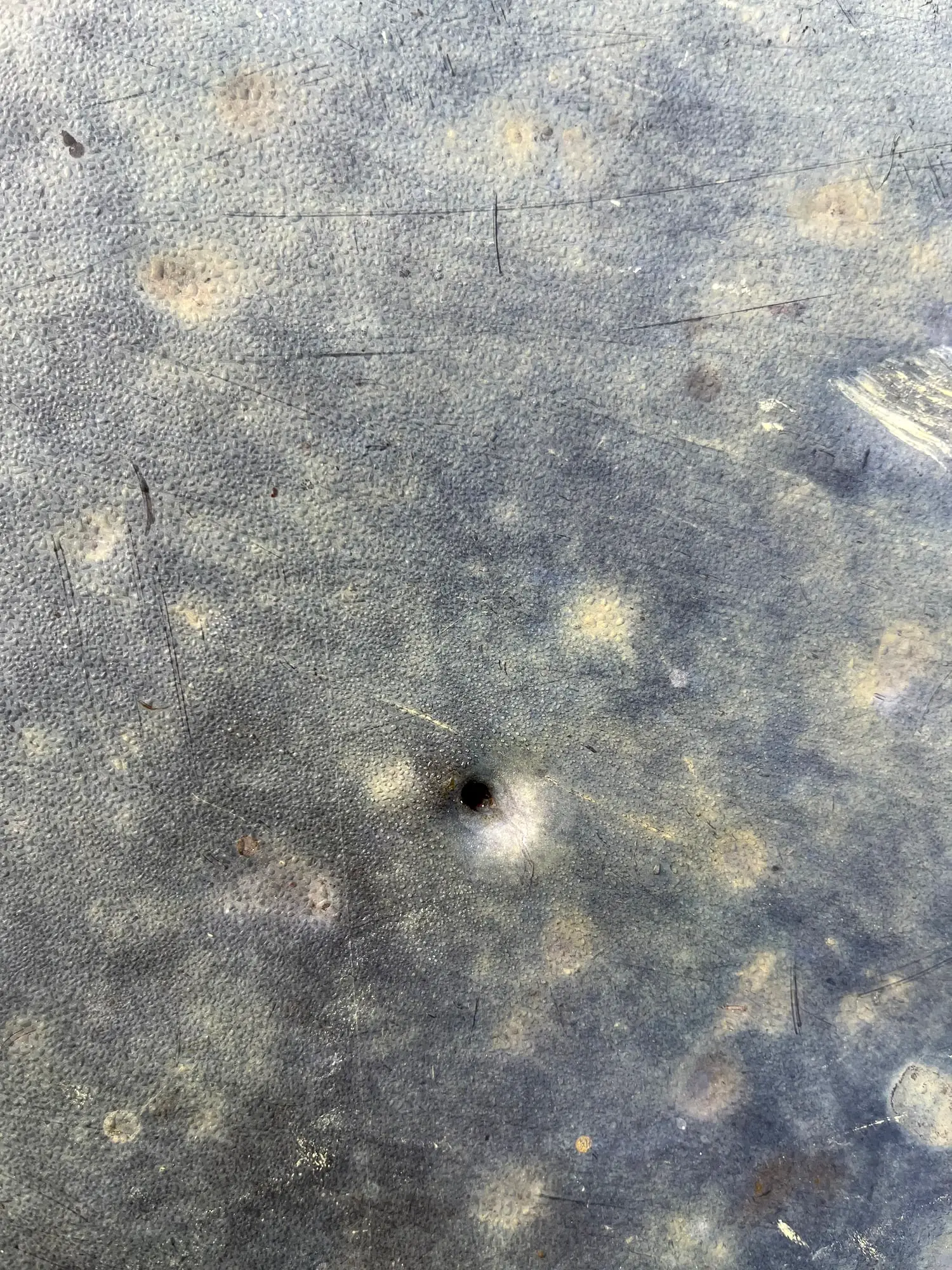
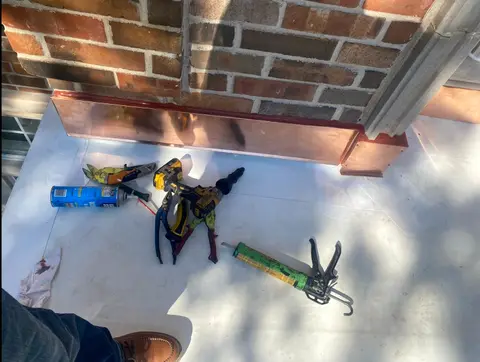
- The membrane around the unit. Technicians kneel, set down panels and drop screws on the service side. Cuts and punctures cluster there. Our guide to how rooftop trades damage a commercial roof covers that pattern and how to stop it.
- Where the condensate goes. A line that simply empties onto the roof keeps one area permanently wet. Rimkus recommends routing condensate to a proper drain. If the roof already holds water there, read our guide to standing water on a flat roof.
The Insurance Institute for Business and Home Safety sums up the pattern in its commercial roof maintenance guide: roof-mounted equipment such as HVAC units, exhaust fans and stacks are common sources of leaks, and owners should verify that flashing around equipment curbs is secure and intact.
What does the timing of the leak tell you?
Before anyone climbs up, write down when the leak appears. This table shows how the three patterns sort the likely causes:
| When it leaks | Most likely sources | Who inspects first | What settles it |
|---|---|---|---|
| Only while the unit runs, including dry days | Clogged condensate drain or trap, overflowing or rusted pan, sweating ducts, condensation at the curb opening | HVAC contractor | Water in the pan or the base of the unit, a blocked trap, wet duct insulation, and a dry roof surface around the curb |
| Only during or just after rain | Curb flashing, pitch pans, gas or conduit flashings, punctured membrane, an open seam nearby, or rain entering the unit cabinet | Roofer, with the HVAC contractor on call for the cabinet | A defect found at a roof detail, or a controlled water test that wets one detail at a time while someone watches inside |
| Both, or at random | Two sources at once, or a wet area that drains slowly after each rain | Both, on the same visit | Each trade rules its own items in or out in writing, and the roofer checks whether the insulation is already wet |
| Only in hard, wind-driven rain | Unit cabinet, hoods and louvers, the top of the curb flashing, counterflashing | Both | Missing panels or gaskets, water tracks inside the cabinet, an unsealed flashing top |
How to read it: the table tells you who looks first, not who is at fault. A leak that shows up in both conditions is common on older buildings, because a slow condensate problem and a tired curb flashing can exist side by side. Do not let either contractor close the ticket on the first defect found until the other pattern is explained too.
One caution on timing. Water can travel along the deck or the top of a duct before it drops, and wet insulation can keep dripping for days after rain stops. A stain that appears three days after a storm is not proof of condensate.
Why should the roofer stay out of the unit, and the HVAC tech off the membrane?
Because in Texas the line between the two trades is a licensing line, and on a warranted roof it is a warranty line as well.

The Texas Department of Licensing and Regulation states that contractors who install, repair or maintain systems related to air conditioning, refrigeration or heating must have a TDLR license. Drain pans, traps, coils, cabinet panels and ducts are that system. Verde Roofing does not do HVAC work, and a roofer who offers to “take a look inside” is outside the trade.
Roofing has no statewide license in Texas, as our guide on what to verify instead of a roofing license explains, but the roof has its own gatekeeper: the warranty. Carlisle’s sample system warranty says alterations to the roofing system must be completed by a Carlisle authorized applicator. Johns Manville’s sample guarantee says damage from foot traffic or service work, loose clamps at penetrations and poorly sealed penetration pockets must be repaired by a JM approved roofing contractor only.
So the most common shortcut, an HVAC technician running a bead of caulk or a smear of roof cement around the curb, is wrong twice. It rarely stops the leak, and on a warranted roof it is an unauthorized repair. Carlisle’s care guide specifically says not to use asphaltic roof cement for temporary repairs on its membranes.
How should the two trades coordinate without assuming the cause?
A joint visit costs less than three separate ones. This is the order that works:
- Record the pattern first. Dates, weather, whether the unit was running, where the water appeared. Photograph the stain and mark its location on a simple roof plan.
- Look from inside. Remove the tile. Is the water on the duct, on the deck, or coming down the inside of the curb? A photo from below often answers the question before anyone is on the roof.
- HVAC checks the unit. Pan, trap, condensate line and where it discharges, cabinet panels and gaskets, duct connections inside the curb. Findings in writing, with photos.
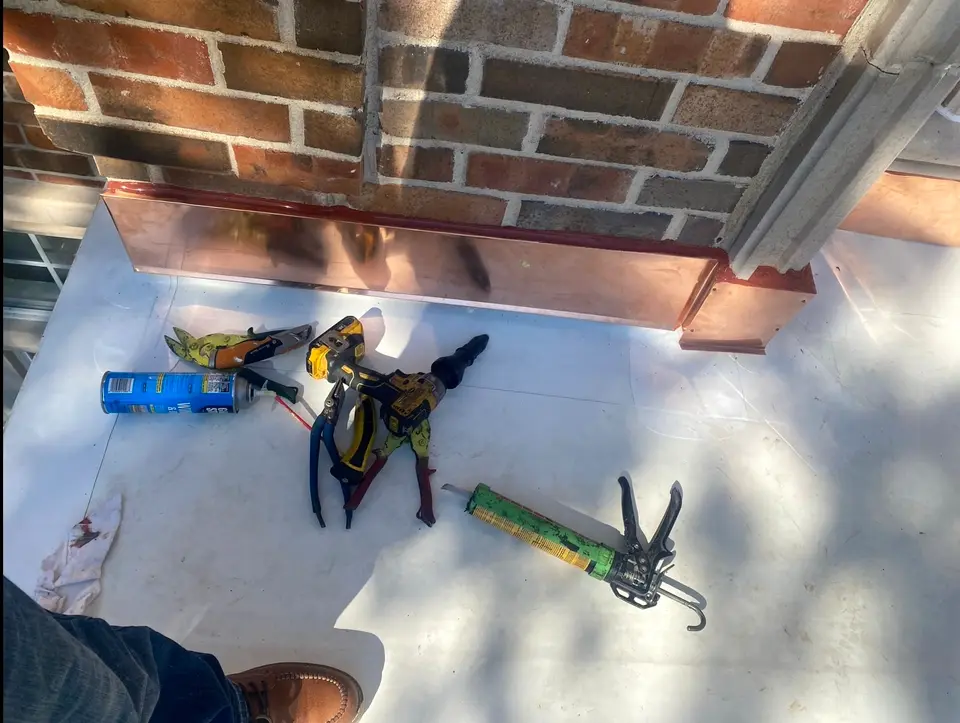
- Roofer checks the roof. Curb flashing and all four corners, the flashing top, pitch pans, gas and conduit penetrations, the membrane and seams within several feet of the unit, especially on the service side. Findings in writing, with photos.
- Test only if needed. If neither inspection finds a clear source, a controlled water test wets one detail at a time, lowest first, with the unit off and someone watching inside. Then the unit runs with the roof dry.
- Agree on the cause before the repair. One short statement both contractors can accept: what leaked, why, and whose scope it is.
- Check for wet insulation. A leak that has run for a season leaves wet insulation that a surface repair does not fix. Our guide on how wet insulation is found under a commercial roof explains the survey methods and when to pay for one.
When I walk a roof for a leak near a unit, the first thing I look at is not the curb. It is the service side of the unit, where the access panels are, because that is where people stand, kneel and set things down.
Which repair fits which cause?
Once the cause is established, the repair is usually modest. These are the common ones and what each does not solve:
| Repair | When it fits | What the work includes | What it does not solve | Whose scope |
|---|---|---|---|---|
| Clear and repair the condensate system | Leak tracks with unit run time | Clear the line and trap, repair or replace the pan, route discharge to a drain | Any rain-related leak; insulation already wet | Licensed HVAC contractor |
| Seal the cabinet and ducts | Leak only in wind-driven rain, water tracks inside the unit | Replace panels, gaskets and missing screws, seal and insulate duct connections | Flashing defects at the curb | Licensed HVAC contractor |
| Re-flash the curb | Open corners, loose or short flashing, failed termination | New membrane flashing up the curb, corners, fastening and seal at the top; may require lifting or disconnecting the unit | Water entering through the unit itself | Roofer; HVAC contractor if the unit must be moved |
| Refill or replace pitch pans | Cracked or sunken filler, water standing in the pocket | Refill as maintenance, or replace with a pre-molded or field-wrapped pipe flashing | Leaks at the curb or in the field | Roofer |
| Flash gas and electrical penetrations properly | Flashing sealed to pipe insulation, unsealed conduit, abandoned holes | Flash to the bare pipe, cap or remove abandoned penetrations | Leaks inside the unit | Roofer, with the plumber or electrician if lines must be disconnected |
| Patch the membrane and add walkway pads | Cuts and punctures on the service side | Membrane patches matched to the roof system, pads where technicians work | Whatever keeps bringing sharp objects to that spot without rules | Roofer |
How to read it: every row fixes one water path and nothing else. That is why a repair made before the cause is agreed so often fails, and why two rows are sometimes needed on the same unit.
We have not put prices in the table. We could not find a published cost range for these specific repairs from a source we would trust, and the real number depends on the membrane type, whether the unit must be lifted, access, and how much insulation is wet. Our guide to commercial roof replacement cost covers the larger numbers. For a repair, you get a written estimate after a free inspection: call or text (214) 687-1951.
What should each contractor document?
Ask for these in writing before the visit, so nobody is surprised:
From the HVAC contractor
- Unit make, model and location on the roof plan
- Condition of the pan, trap and condensate line, and where the line discharges
- Condition of access panels, gaskets and cabinet seams, with photos of anything missing
- Whether ducts inside the curb are sealed and insulated
- A plain statement: the unit is, is not, or may be a source
From the roofer
- Photos of all four sides of the curb, the corners and the flashing top
- Condition of every pitch pan and penetration near the unit
- Any cuts, punctures or open seams, with a measurement from a fixed point
- Whether the insulation feels soft or wet under foot around the unit
- A plain statement: the roof is, is not, or may be a source, and the membrane type
Dated photos from both, taken before anything is cleaned or sealed, are what a warranty issuer, an insurer or the other contractor’s office will ask for. Keep them with your roof file. Our guide to a commercial roof inspection and maintenance program shows what else belongs in that file.
Who pays under a roof warranty when another trade caused the leak?
Not the warranty. We read current sample warranties from three manufacturers, and they agree on the points that matter here:
- HVAC units are excluded. Carlisle’s sample excludes leaks caused by deterioration or failure of building components including HVAC units, and separately excludes condensation. Johns Manville’s sample says it is not responsible for water entry from any portion of the building that is not part of the roofing system, and names HVAC units. Elevate’s general terms list HVAC units and rooftop hardware or equipment.
- Traffic and acts of others are excluded. Carlisle excludes damage from acts, accidents, misuse and abuse. Elevate’s sample excludes roof traffic not accepted in writing.
- You pay for the investigation if it is not covered. All three samples say so. Elevate’s goes further: unwarranted leaks must be repaired by a licensed applicator within 60 days, or the warranty is void.
- You still have to report. Each sample requires notice within 30 days of the leak.
So the practical order is: report the leak to the warranty issuer within the notice period, have both trades document the cause, and if the cause is the other trade, send the roof repair invoice to that contractor with the photos. A written term in your HVAC service agreement that the contractor pays for roof damage it causes makes that conversation short. Our guide to what a no dollar limit warranty actually covers explains the notice and repair rules in detail, and if the leak follows a roof repair done by someone else, read how long a roof repair should last and what its warranty should cover.
If the leak followed hail or wind and the unit itself is dented, that is a different path. See our guide to hail damage on a commercial roof. The claim is yours, and your policy governs.
What should the written repair scope say?
Whichever trade does the work, the scope should state:
- The cause found, in one sentence, and the evidence for it
- The exact detail being repaired and the materials, matched to the roof system
- Whether the unit must be lifted or disconnected, and who does that
- Whether wet insulation was found and how much is being replaced
- Whether the roof is under a manufacturer warranty, and that the repair meets its terms
- What is not included, such as interior ceiling repair. Our guide on who repairs wet insulation and ceiling damage after a leak covers that hand-off.
- Before-and-after photos delivered with the invoice
If the same unit has leaked more than twice, ask for one more line: what will be checked at the next routine visit. A maintenance plan that includes a look at every curb and pitch pan after HVAC service season catches most of these before the ceiling does.
Need the roof side checked?
Call or text (214) 687-1951, 24/7, or book a free roof inspection. Chris inspects the roof around the unit, documents what he finds with photos and tells you plainly whether the roof is the source, the unit is, or both. You get a written estimate for the roof work, and a clear note for your HVAC contractor if the rest is theirs.
Questions people ask next
Why does my commercial roof leak near the AC unit when it is not raining?
Dry-weather water near a rooftop unit almost always comes from the cooling process, not the roof. The usual causes are a clogged condensate drain or trap, a rusted or overflowing drain pan, or uninsulated ductwork sweating above the ceiling. A report prepared for the Roof Consultants Institute notes that clogged condensation drains can cause leaks even on sunny days. Start with a licensed HVAC contractor.
Can a roofer fix a leaking rooftop AC unit in Texas?
A roofer can repair everything that belongs to the roof: the curb flashing, the membrane, pitch pans and penetration flashings. A roofer should not work inside the unit. The Texas Department of Licensing and Regulation says contractors who install, repair or maintain air conditioning, refrigeration or heating systems must have a TDLR license. Drain pans, condensate traps, cabinet panels and ducts belong to the HVAC contractor.
Will my roof warranty cover a leak caused by the HVAC unit?
Usually not. The sample system warranties we read from Carlisle, Johns Manville and Elevate each list HVAC units among the building components whose failure is excluded, and each says the owner pays the investigation cost when the cause turns out to be outside the warranty. Report the leak within the notice period anyway, because failing to give notice is its own exclusion.
What is a pitch pan and why does it leak?
A pitch pan, also called a penetration pocket, is a small metal or plastic box around a pipe or conduit that is filled with pourable sealer. The sealer shrinks and cracks with heat and age, and the pocket then holds water against the penetration. Engineering firm Rimkus calls pitch pans a recurring weak point that needs regular maintenance. Refilling is maintenance. Replacing the pocket with a proper pipe flashing is the longer-lasting repair.
Who pays when the HVAC contractor damaged the roof?
The contractor who caused the damage, or its insurer, is the normal answer, but only if you can show it. The roof warranty will not pay for traffic damage or work by others. That is why a roof access log, before-and-after photos and a roofer’s written finding matter. Your service agreement with the HVAC company should say it repairs roof damage it causes, using a roofer acceptable to the warranty issuer.
How do roofers find the exact spot where water gets in near a rooftop unit?
They start with timing and the ceiling stain, then inspect the curb flashing, corners, penetrations and nearby seams by eye and by probing. If that is not conclusive, a controlled water test wets one detail at a time, lowest first, while someone watches inside. Electronic leak detection and infrared moisture scans exist for harder cases. Ask the contractor whether they perform those tests or bring in a testing firm.
Sources
- Texas Department of Licensing and Regulation: Air Conditioning and Refrigeration Contractors
- Rimkus: How MEP Coordination Failures Affect Commercial Roofs (2026)
- Facilitiesnet: Keeping Tabs on Roofs, a report prepared on behalf of the Roof Consultants Institute (2004)
- Carlisle SynTec: Golden Seal Total Roofing System Warranty, sample copy with Care and Maintenance Guide (form F0001, Rev 12/24)
- Johns Manville: Peak Advantage Guarantee Sample
- Elevate (Amrize): Red Shield Roofing System Limited Warranty, sample (form 1003.001.2026)
- IBHS: Commercial Roof Inspection and Maintenance Guide
Chris Grimes owns Verde Roofing in Plano, Texas, a locally owned residential and commercial roofer serving Dallas–Fort Worth. Verde is an NTRCA Accredited Member, an RCAT member and a Dallas Observer Best of Dallas Best Roofer winner (readers’ choice) in 2021, 2022 and 2023.
Keep reading
Related guides
 Commercial roofingCommercial Roof Inspections and Maintenance Programs for Property ManagersNRCA recommends inspecting roof systems at least twice a year, preferably in spring and fall, and again after severe weather such as hail. In North Texas…Read the guide
 Commercial roofingHow Can HVAC and Other Rooftop Work Damage a Commercial Roof in Texas?On Texas commercial buildings, HVAC, electrical, satellite, sign and solar crews damage roofs by dropping screws and panels, dragging equipment, cutting unflashed penetrations and letting grease…Read the guide
 Commercial roofingCommercial Roof Warranties in Texas: What Does No Dollar Limit Actually Cover?On a Texas commercial roof, a no dollar limit (NDL) warranty means the manufacturer puts no cap on what it spends to repair a leak the…Read the guide