How Can HVAC and Other Rooftop Work Damage a Commercial Roof in Texas?
 By Chris Grimes, owner of Verde RoofingPublished November 4, 2026 · 13 min read
In short
On Texas commercial buildings, HVAC, electrical, satellite, sign and solar crews damage roofs by dropping screws and panels, dragging equipment, cutting unflashed penetrations and letting grease or condensate sit on the membrane. Prevent it with one controlled access point, a sign-in log, walkway pads, before-and-after photos and a rule that only a roofer cuts or flashes the roof. Manufacturer warranties exclude this damage and can be voided by unapproved alterations.
Key takeaways
- Most trade damage is small and unreported: a dropped screw, a dragged panel, a pipe pushed through the membrane and sealed with caulk.
- Carlisle’s sample system warranty is null and void if alterations are made on or through the roof, or objects are attached to it, without the manufacturer’s written authorization first.
- Carlisle’s care guide requires walkways where traffic is regular or rooftop equipment is serviced every 30 days or less, and asks owners to keep rooftop traffic logs.
- Grease from kitchen exhaust must be regularly removed from TPO and PVC and the surface cleaned with soap and water, according to Carlisle’s care guide; Elevate’s guide suggests grease traps or a sacrificial membrane layer.
- OSHA’s general industry rule sets fall protection for work on low-slope roofs by distance from the edge: under 6 feet, 6 to 15 feet, and 15 feet or more.
A commercial roof rarely gets hurt by the people who built it. It gets hurt in the years after, by everyone else who has a reason to be up there: the HVAC technician on a July service call, the electrician adding a circuit, the crew mounting a dish or a sign, the solar installer, the hood cleaner.
None of them is a roofer, and none of them is paid to think about the membrane. A report prepared for the Roof Consultants Institute put it bluntly years ago: HVAC repairs are perhaps the biggest culprit of roof-related problems, and technicians can damage the roof system and not tell anyone.
You cannot keep trades off the roof. You can decide how they get up, where they walk, what they may cut and what they must hand you before they leave.
How does rooftop work damage a commercial roof?
In four ways, and almost all of it is small at the start:
- Punctures and cuts from dropped tools, screws, sheet-metal panels and sharp equipment edges
- Crushed insulation and worn membrane where people walk, kneel and stage materials
- New holes for pipes, conduit, mounts and anchors that are never properly flashed
- Contamination from grease, oils, chemicals and condensate left on the surface
Elevate’s maintenance guide for building owners lists the same findings its roofers are told to look for near mechanical equipment: excessive wear in high-traffic areas, cuts and punctures caused by tools or debris, and crushed or compressed roof insulation. It also makes a point about why small damage matters on a flat roof. A small puncture on a well-drained surface may cause minor damage, but the same puncture in an area of standing water may allow significant water infiltration. If your roof holds water near the units, read our guide to ponding water on a flat roof.
What does each trade typically do to the roof?
Each trade has its own signature. This table shows what to look for after each kind of visit and the one rule that prevents most of it:
| Trade | Typical damage | Where to look | The rule that prevents it |
|---|---|---|---|
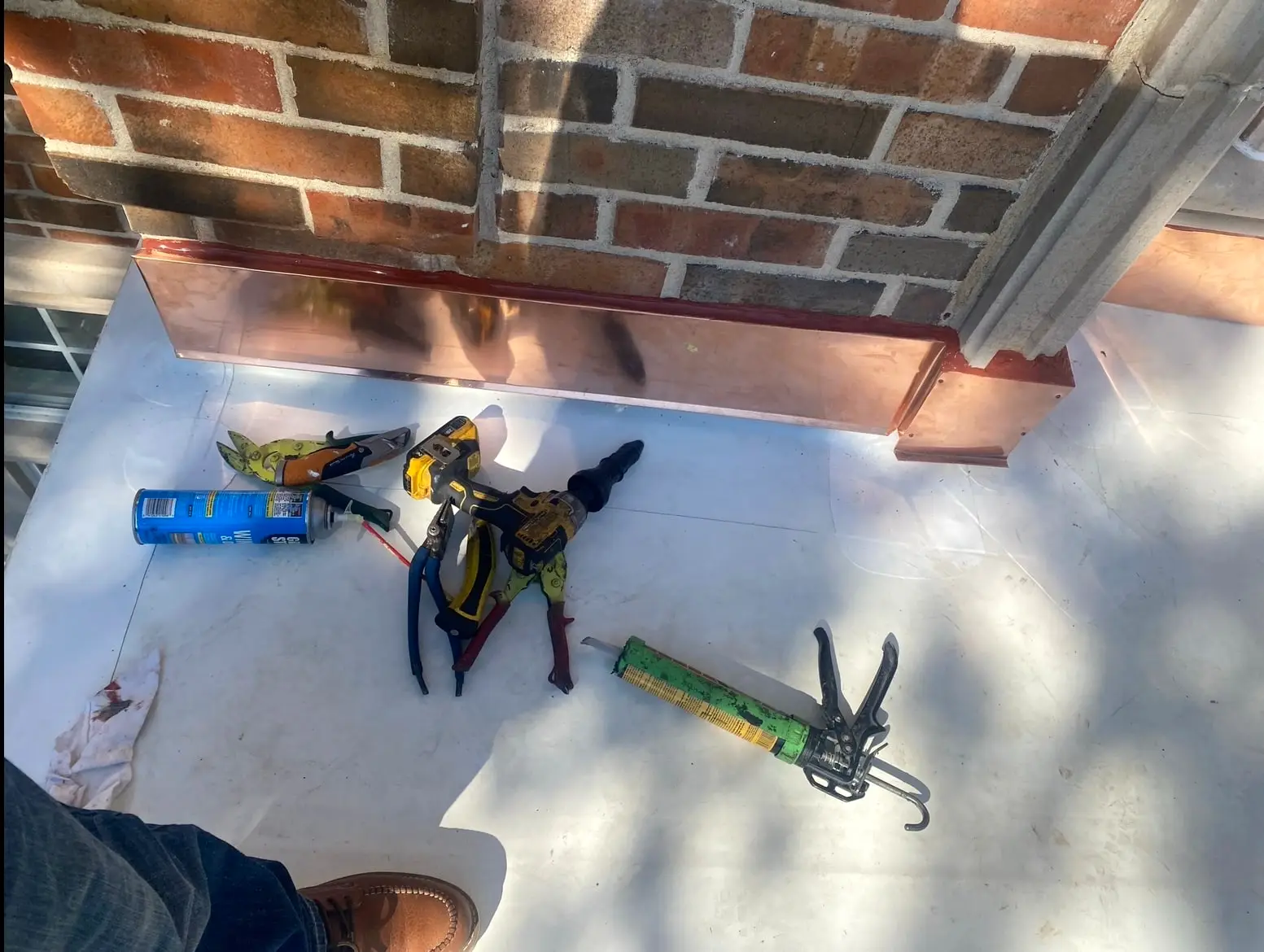
| HVAC service and replacement | Access panels and screws left on the membrane, cuts from panel corners, units or coils dragged across the roof, condensate discharged onto the surface | Service side of every unit, the path from the hatch, around old and new curbs | Panels go on a pad or mat, never the bare membrane; magnet or hand sweep for screws; a roofer flashes any new or changed curb |
| Electricians | Conduit run across the roof on wood blocks, unflashed penetrations, conduit routed over drains | Along conduit runs, at every point a line goes through the roof, at drain bowls | No penetration without the roofer; supports on pads; nothing over a drain |
| Satellite, telecom and security | Mounts lagged through the membrane into the deck, ballast blocks set directly on the roof, cable anchors | Parapets, roof corners, anywhere a dish or camera sits | Non-penetrating mounts on protection pads, or a penetration flashed by the roofer |
| Sign installers | Fasteners through coping and parapet flashing, wiring holes, damaged edge metal | Parapet tops and the back of the sign wall | Attachments and wiring routes approved before the work; coping repaired by the roofer |
| Solar installers | Many attachment points, heavy foot traffic during installation, a roof that can no longer be inspected or repaired without moving panels | Every attachment, the staging area, pathways | Manufacturer’s written approval before installation; roofer flashes attachments; removal costs agreed in advance |
| Kitchen exhaust and hood cleaners | Grease around the fan, softened or swollen membrane, wash-down chemicals | Downwind and downslope of each exhaust fan | Grease containment on the fan, scheduled cleaning, a sacrificial membrane layer if the roofer recommends one |
| Everyone | Wear paths, crushed insulation, debris in drains | Hatch, ladder landing, the straight line to each unit | One access point, walkway pads, a log |
How to read it: the right-hand column is the part you control. None of these rules needs a roofer on site for every service call. They need to be written into the vendor’s agreement and checked a few times a year.
Two rows deserve a closer look.
Grease. Carlisle’s care and maintenance guide treats membranes differently: do not exhaust animal fats or vegetable oils directly onto EPDM at all, and on TPO and PVC those fats and oils must be regularly removed and the surface cleaned with a mixture of soap and water. Elevate’s guide says oils and fats can cause membranes to lose strength and resiliency, and that a roofer may recommend a redundant layer of membrane in areas of concern or installing grease traps. For a retail strip with restaurant tenants, that makes the exhaust fans a line item in the lease and the maintenance plan. Our comparison of TPO and other flat roof systems explains why PVC is the usual choice under restaurant exhaust.
Solar. Rooftop solar is not a problem in itself, and we install it. The problem is solar added to a warranted roof without telling the manufacturer. Carlisle’s sample warranty names solar arrays specifically, and makes the owner responsible for removing and reinstalling the array if the roof under it needs repair, including the cost of lost power generation. Plan the roof and the array together. Our guide to a roof leak under solar panels shows what happens when they were not.

Why is this a bigger issue on Dallas–Fort Worth buildings?
Three local conditions add up.
The cooling season is long, so rooftop units get more service visits here than in a mild climate, and every visit is foot traffic on the same path. Hail damages condenser coils and unit housings as well as roofs, so after a spring storm the mechanical contractor is often on the roof replacing or repairing units before, or right after, the roofer has finished. And a typical North Texas retail strip or convenience store has food service somewhere under the roof.
The order of work after a storm matters most. If units are being replaced and the roof is being replaced, the new curbs should be set and flashed as part of the roofing work, not cut in afterward. The Roof Consultants Institute report notes that curbs are many times cut into roof decking as an afterthought, and that support frames too low to work under leave the membrane vulnerable. Our guide on keeping a business open during a roof replacement covers how to sequence the trades.
How do manufacturer warranties treat unauthorized alterations?
Harshly, and in plain words. We read three current sample warranties rather than rely on summaries.
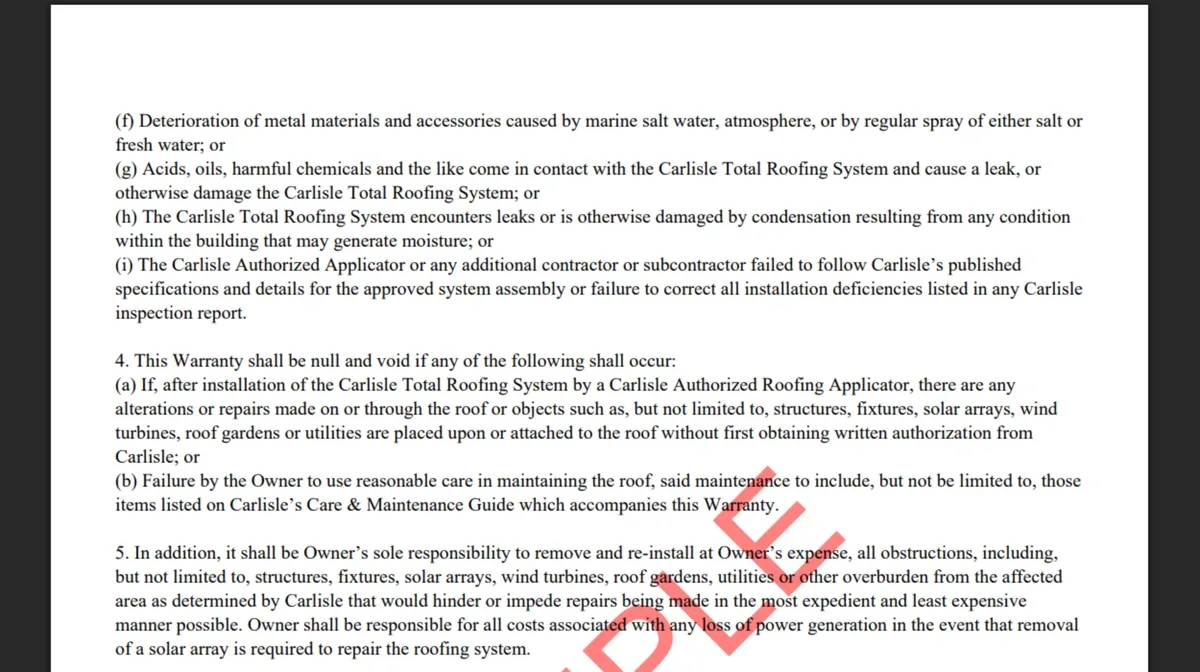
- Carlisle (Golden Seal Total Roofing System Warranty, sample form Rev 12/24). Null and void if, after installation, alterations or repairs are made on or through the roof, or objects such as structures, fixtures, solar arrays or utilities are placed on or attached to it, without first obtaining written authorization from Carlisle. Also null and void if the owner fails to use reasonable care in maintaining the roof. Its care guide adds that alterations must be completed by a Carlisle authorized applicator.
- Elevate (Red Shield Roofing System Limited Warranty, sample form 2026). The owner must notify the manufacturer in writing upon making any alteration or installing any structures, fixtures or utilities on or through the system. Failure to obtain approval for a roof alteration, or to provide required documentation, renders the warranty null and void. Roof traffic or storage of materials on the roof not accepted in writing is excluded.
- Johns Manville (Peak Advantage Guarantee, sample). No obligation for leaks resulting in whole or in part from changes, alterations or repairs to the roofing system, including penetrations, fixtures or utilities, that are not pre-approved in writing. Its maintenance page says not to allow service personnel to make penetrations.
Two distinctions are worth keeping straight. Damage from traffic or dropped tools is excluded: the warranty stays in force, but that repair is yours to pay for, by an authorized roofer. An unapproved alteration can end the warranty altogether under the Carlisle and Elevate wording. These are samples, and your signed document governs, so read yours. Our guide to what a no dollar limit warranty covers goes through the rest of the terms.
If you do not know whether your roof is under a warranty or who issued it, that is the first thing to find out. It is also one of the documents to request when you are buying a commercial building.
What roof access rules should a property manager put in place?
Nine rules cover nearly everything. Put them on one page and attach it to every vendor agreement.
- One access point, locked. A hatch or ladder that is locked and opened by building staff means every trip is known.
- A sign-in log. Elevate’s example log has four columns: name, company, time on and off, and reason for access. Carlisle lists rooftop traffic logs and service logs among the records an owner must retain.
- Walkway pads on the routes. From the access point to each unit and on the service side of each unit. Carlisle requires walkways where traffic is regular or equipment is serviced every 30 days or less. Rimkus adds a caution: pads should not hide defects over flashings or seams, so a roofer should place them.
- Penetrations by the roofer only. No vendor cuts, drills or fastens through the membrane, flashing, coping or edge metal. If a line must go through, the vendor’s price includes the roofer.
- Written approval before alterations. New units, curbs, mounts, solar and anything attached to the roof go to the warranty issuer for approval before work starts.
- Before-and-after photos. The vendor photographs the work area on arrival and before leaving. It takes two minutes and settles most disputes.
- Nothing left behind. Panels, screws, wire offcuts, filters and packaging leave with the crew. Old equipment is not stored on the roof.
- Liquids kept off the membrane. Condensate is piped to a drain, not onto the roof. Oils and coil-cleaning chemicals are caught, not rinsed across the surface. Carlisle’s guide says to keep liquids containing petroleum products or chemicals off the membrane.
- A roofer’s look after major work. Carlisle’s guide says rooftop maintenance inspections should occur after regular maintenance of any rooftop unit. At minimum, have the roofer check after a unit replacement, a solar installation or any work that involved a crane.
These add to, not replace, the routine inspections in our guide to a commercial roof inspection and maintenance program. If you would rather hand the checking to someone, that is what our maintenance plans are for: call or text (214) 687-1951 to talk through your buildings.
Which protections do the most for the least effort?
Not every building needs all nine on day one. This comparison shows what each main measure actually buys you:
| Measure | What it prevents | What it takes | What it does not do |
|---|---|---|---|
| Locked access and sign-in log | Unknown visits; gives you a name when damage appears | A lock, a clipboard or a shared form, and staff who enforce it | Stop a careless technician from causing damage |
| Walkway pads | Wear, punctures and crushed insulation on routes and at units | A one-time installation by a roofer, matched to the membrane | Protect areas off the path, or seams hidden under a badly placed pad |
| Penetration-by-roofer rule | Unflashed holes, caulked pipes, warranty problems | A contract clause and a roofer the vendors can call | Fix penetrations that are already there |
| Before-and-after photos | Disputes over who did it and when | Two minutes per visit, and somewhere to store the files | Find damage nobody photographed |
| Roofer’s check after major work | Small cuts becoming wet insulation | A short visit after unit replacements and installations | Replace the twice-yearly inspections manufacturers ask for |
How to read it: the log and the photos do not prevent damage, they assign it. Pads and the penetration rule prevent it. A building with heavy service traffic needs both kinds. We do not publish a price for pads or inspections, because it depends on the membrane, the length of the routes and the number of units; you get a written estimate after a free inspection.
What should vendor agreements say about the roof?
Short clauses, agreed before the first visit:
- The vendor follows the building’s roof access rules and signs the log.
- The vendor makes no penetrations or attachments to the roof. Any that are needed are flashed by the owner’s roofer at the vendor’s cost.
- The vendor is responsible for roof damage caused by its employees and subcontractors, and repairs are made by a roofer acceptable to the roof warranty issuer.
- The vendor reports any damage it causes or notices on the day, with photos.
- The vendor’s workers follow the fall protection rules that apply to their work.
Lease language matters as much as vendor language. A tenant’s HVAC, sign and satellite contractors are the ones you never hired and never met. The lease should require tenants to use the building’s access procedure and to get approval before anything is added to the roof.
What are the fall protection basics for people working on your roof?
Safety is the vendor’s duty as the employer, but it is your roof, and a building with parapets lower than a guardrail or with unprotected skylights is a hazard you should know about.
OSHA’s general industry rule, 29 CFR 1910.28(b)(13), sets the requirement for work on low-slope roofs by distance from the roof edge:
- Less than 6 feet from the edge: each employee must be protected by a guardrail system, safety net system, travel restraint system or personal fall arrest system.
- 6 feet to less than 15 feet: the same protections, except that a designated area may be used when the work is both infrequent and temporary.
- 15 feet or more: the same protections or a designated area, and no fall protection is required if the work is both infrequent and temporary, provided the employer enforces a work rule keeping employees from going within 15 feet of the edge without protection.
The same section treats skylights as holes: employees must be protected from falling through any hole, including skylights, that is 4 feet or more above a lower level, by covers, guardrails, travel restraint or personal fall arrest.
That is a summary of one rule, not safety or legal advice. Roofing and other construction work is covered by OSHA’s separate construction standards, which we do not summarize here. For a property manager the practical points are simple: know where the units sit relative to the edge, know whether your skylights are guarded, and ask each vendor how its people are protected when a unit is within 15 feet of the edge.
What should you do when you find damage after a service visit?
- Photograph it before anyone touches it, with something for scale and a wide shot showing which unit it is next to.
- Check the log for who was on the roof since the last inspection.
- Notify the vendor in writing the same day.
- Call the roofer, and on a warranted roof use one the manufacturer accepts. A temporary patch is fine. A technician’s caulk is not a repair.
- Ask whether water got in. A cut that has been open through a few rains may have wet the insulation around it. Our guide on finding wet insulation under a commercial roof explains when a survey is worth paying for.
- Send the roofer’s finding and invoice to the vendor.
If the first sign is a ceiling stain under a unit rather than a visible cut, the cause is not settled yet. Our guide to a roof leak near a rooftop AC unit explains how the roofer and the HVAC contractor sort it out together.
Verde Roofing repairs and replaces commercial roofs, including TPO systems, on offices, convenience stores, warehouses and multifamily buildings across Dallas–Fort Worth. We do not do HVAC or electrical work, and we will tell you when a problem belongs to another trade.
Want your roof checked after other trades have been on it?
Call or text (214) 687-1951, 24/7, or book a free roof inspection. Chris walks the routes and the service side of every unit, documents what he finds with photos, and gives you a written estimate for any repairs along with a short list of access rules that fit your building.
Questions people ask next
Does HVAC work void a commercial roof warranty?
Routine service does not, but what the technician does to the roof can. The sample warranties we read exclude damage from traffic, accidents and acts of others, so the manufacturer will not pay to fix it. Cutting a new penetration or setting a new unit without the manufacturer’s written approval is more serious: Carlisle’s and Elevate’s samples say that makes the warranty null and void.
Who should flash a new pipe or conduit through a commercial roof?
A roofer, and on a warranted roof, one authorized by the manufacturer. Johns Manville’s sample guarantee tells owners not to allow service personnel to make penetrations, which are to be made only by a JM approved roofing contractor. Carlisle’s care guide says alterations must be completed by a Carlisle authorized applicator, who then notifies Carlisle that the work is complete.
Do I need walkway pads on a TPO roof?
If people cross the roof regularly, yes. Carlisle’s care guide says walkways must be provided if regular traffic is required or if rooftop equipment has a maintenance schedule of 30 days or less. Elevate’s maintenance guide recommends protective walkways and reminds owners that the membrane is waterproofing, not a traffic surface. Pads go at the access point, along the route and on the service side of each unit.
Does restaurant grease damage a TPO roof?
It can. Elevate’s maintenance guide says membrane durability can be adversely affected by oils and fats and tells roofers to look for swelling, splitting or cracking. Carlisle’s care guide says animal fats and vegetable oils must be regularly removed from TPO and PVC and the surface cleaned with soap and water. A grease containment system on the exhaust fan and a cleaning schedule are the usual answer.
What should a roof access log include?
At minimum the four columns in the example log Elevate publishes in its maintenance guide: name, company, time on and off, and reason for access. We suggest two more: the area or unit visited, and a yes or no for whether any panel, screw, pipe or cable was left on the roof. Keep the log with dated photos, because Carlisle’s care guide lists rooftop traffic logs among the records an owner must retain.
Who pays when a contractor damages my roof?
The contractor that caused it, or its insurer, if you can show it. That depends on evidence: the access log showing who was up, photos from before and after, and a roofer’s written finding. Put it in the vendor agreement in advance that the vendor pays for roof repairs it causes and that the repair is made by a roofer acceptable to the warranty issuer.
Do rooftop service workers need fall protection on a flat roof?
OSHA’s general industry rule, 29 CFR 1910.28(b)(13), requires the employer to protect workers on low-slope roofs with guardrails, safety nets, travel restraint or personal fall arrest when they work less than 6 feet from the edge. Between 6 and 15 feet a designated area is allowed for infrequent, temporary work. It is the vendor’s duty as employer, but ask to see the plan.
Sources
- Carlisle SynTec: Golden Seal Total Roofing System Warranty, sample copy with Care and Maintenance Guide (form F0001, Rev 12/24)
- Elevate (Amrize): Roofing System Maintenance Guide, Version 5, with example roof access log
- Elevate (Amrize): Red Shield Roofing System Limited Warranty, sample (form 1003.001.2026)
- Johns Manville: Peak Advantage Guarantee Sample, with Maintenance Program
- OSHA: 29 CFR 1910.28, Duty to have fall protection and falling object protection
- Rimkus: How MEP Coordination Failures Affect Commercial Roofs (2026)
- Facilitiesnet: Keeping Tabs on Roofs, a report prepared on behalf of the Roof Consultants Institute (2004)
Chris Grimes owns Verde Roofing in Plano, Texas, a locally owned residential and commercial roofer serving Dallas–Fort Worth. Verde is an NTRCA Accredited Member, an RCAT member and a Dallas Observer Best of Dallas Best Roofer winner (readers’ choice) in 2021, 2022 and 2023.
Keep reading
Related guides
 Commercial roofingCommercial Roof Inspections and Maintenance Programs for Property ManagersNRCA recommends inspecting roof systems at least twice a year, preferably in spring and fall, and again after severe weather such as hail. In North Texas…Read the guide
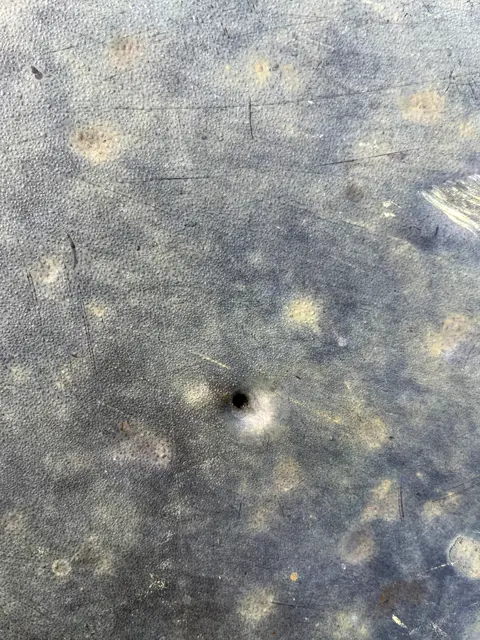 Commercial roofingCommercial Roof Leak Near an AC Unit in DFW: Roofer or HVAC Contractor?On a Dallas–Fort Worth commercial building, a leak near a rooftop AC unit can come from the unit or from the roof, so neither trade should…Read the guide
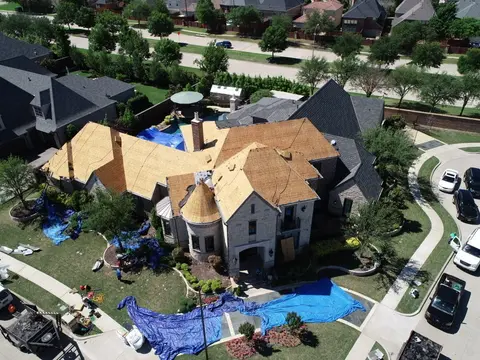 Commercial roofingCommercial Roof Warranties in Texas: What Does No Dollar Limit Actually Cover?On a Texas commercial roof, a no dollar limit (NDL) warranty means the manufacturer puts no cap on what it spends to repair a leak the…Read the guide