Rust on a Metal Roof in Texas: Repair the Finish or Replace the Panels?
 By Chris Grimes, owner of Verde RoofingPublished November 9, 2026 · 11 min read
In short
It depends on how deep the rust goes. On a Texas metal roof, rust at a scratch, a cut edge or a screw head is usually a repair: clean it, touch it up, replace the fasteners and remove whatever caused it. Red rust that has broken through the metallic coating across a panel, or rusted a hole, means replacing those panels. A chalky, faded finish is not rust at all.
Key takeaways
- Chalking and fading are paint wearing in the sun; rust is the steel underneath corroding. They are covered by different warranties and need different answers.
- Rust that starts at a fastener can spread into the panel, so rusty screws are worth replacing early.
- Common hidden causes are contact with copper, treated lumber, metal filings left from cutting, and wet leaves or debris sitting on the panel.
- HomeGuide’s 2026 cost guide puts metal roof rust and corrosion repairs at $300 to $3,000 and replacement panels at $3 to $14 per square foot, nationally.
- Check the finish and substrate warranties before any coating or repainting: the wrong repair can end coverage you still have.
You bought a metal roof partly because it was not supposed to do this. Now there are orange streaks below a row of screws, a brown line along the bottom edge of the panels, or a dull patch on the slope that faces the afternoon sun.
Some of that is cosmetic, some is an early warning, and some means a panel is finished. This guide shows how to tell which you have, what usually caused it, and when cleaning and touch-up is enough versus new fasteners, a coating or new panels.
What are you actually looking at: rust, or a worn finish?
Start by separating two things that are often confused.
A steel roof panel has layers. The steel core is covered by a metallic coating, either zinc (galvanized) or an aluminum-zinc alloy sold as Galvalume, and on most homes a factory paint finish goes over that. Sheffield Metals, a metal roofing supplier, gives the Galvalume coating as 55 percent aluminum, 43.4 percent zinc and 1.6 percent silicon.
Chalk and fade are the paint wearing. The same supplier describes chalking as the white residue left when the paint resin breaks down under ultraviolet light, and fading as loss of color. A dark roof that has turned lighter and leaves powder on your hand is weathering, not corroding. After enough North Texas summers, every painted roof does some of this.
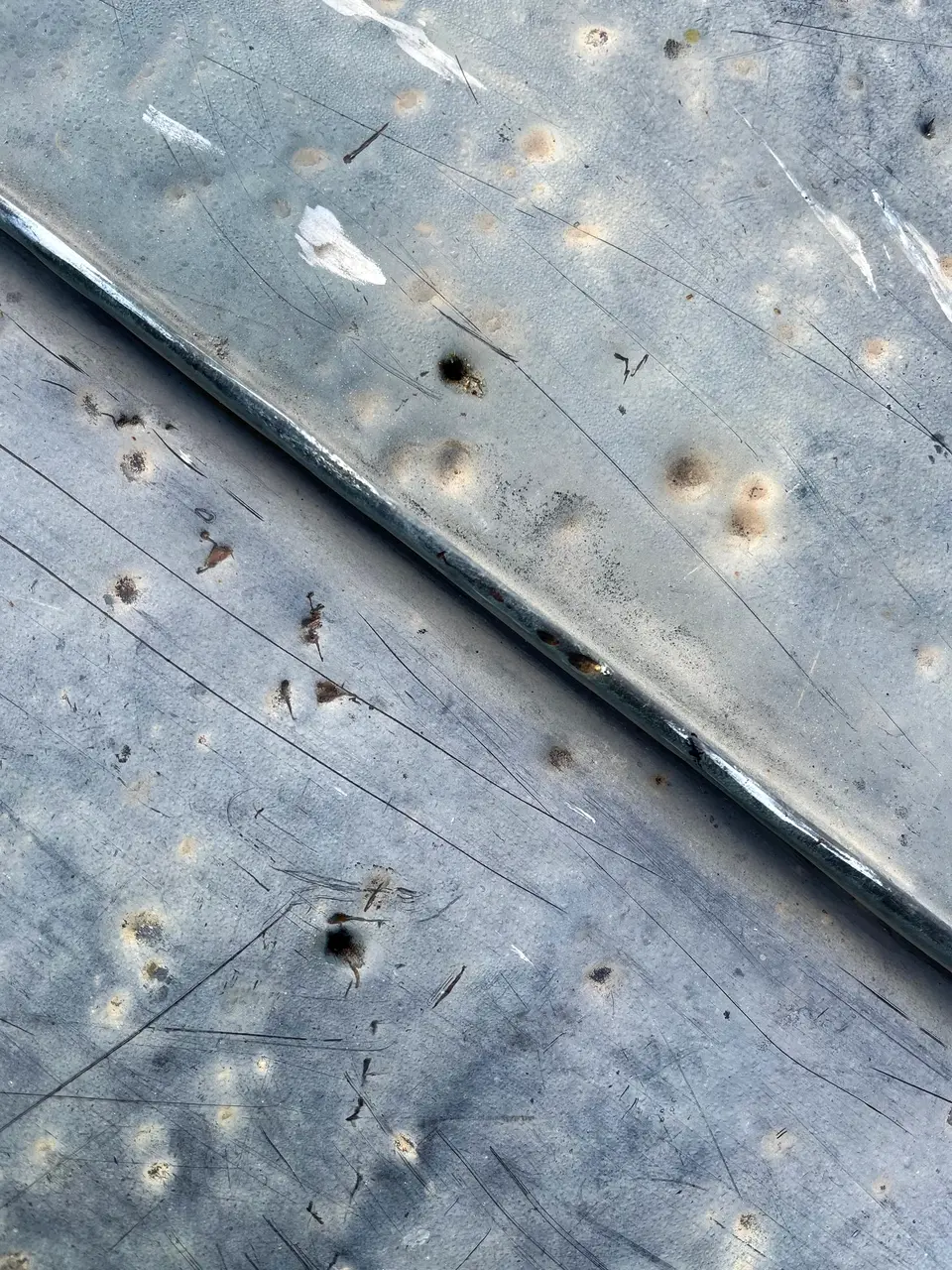
Rust is the steel corroding. It appears where the paint and the metallic coating have both been broken or used up, so that bare steel meets water and air.
Here is how the common patterns compare:
| What you see | What it usually is | How urgent |
|---|---|---|
| Lighter color, white powder on the surface, no orange | Chalk and fade of the paint finish | Not urgent. A finish warranty question, not a leak risk. |
| Orange specks scattered on a newer roof | Metal filings from cutting or drilling left on the panels, rusting on the surface | Clean soon, before they stain or damage the finish. |
| Thin rust line at a scratch | Finish and coating cut through to steel | Touch up soon. Small and contained if handled early. |
| Brown or orange line along panel ends and cut edges | Edge rust where the panel was cut and the steel core is exposed | Monitor. Often limited and slow; worse if the edge sits in water or debris. |
| Rust on screw heads, streaks below them | Fasteners corroding faster than the panels | Replace fasteners before the rust spreads into the panel. |
| Black or white staining followed by rust near masonry, a chimney or an AC drain | Chemical or dissimilar-metal attack | Find and remove the cause first. |
| Red rust across the flat of a panel, pitting, flaking | Metallic coating consumed; the steel is corroding | Panel is near the end of its life. |
| Holes, soft spots, rust showing on the underside | Perforation | Replace the panel. |
How to read this: the first five rows are repairs. The sixth is a repair only once the cause has been removed. The last two are replacement, at least for the panels involved. The location of the rust tells you more than its color does.
What causes rust on a metal roof in North Texas?
Age alone is rarely the whole story. In most of the cases worth worrying about, something specific broke the protection or held water against it.
Scratches and cut edges
Every panel is cut somewhere, and every cut exposes a thin line of steel. The metallic coating is designed for this. Sheffield Metals says Galvalume's self-healing characteristics help control red rust at cut or exposed edges, and that this edge creep is minimal and eventually stops. Hemming the panel ends, which means folding the cut edge under, and touching up exposed edges further limit it.
Scratches from installation, foot traffic or branches are similar: narrow, and slow if treated.
Metal filings and debris from other work
U.S. Steel's technical bulletin on conditions corrosive to galvanized and Galvalume sheet lists iron debris and saw fines left over from cutting panels among the materials that should not be left in contact with the roof. Those filings rust within days and can take the finish with them. It also lists pencil marks, because graphite is corrosive to these coatings.
Dissimilar metals
The same bulletin tells installers to avoid contact with copper, including drainage from copper pipes such as air conditioning units, and with lead. The Metal Construction Association's bulletin on dissimilar metals adds that the metals do not even have to touch. Water running off a copper roof, pipe or gutter onto a Galvalume surface can stain and corrode it, and so can condensate dripping from rooftop cooling equipment.
Treated lumber
Pressure-treated wood is usually preserved with copper compounds. The Metal Construction Association says copper-containing treated lumber should be separated from metal panels with a barrier membrane, and its dissimilar-metals bulletin warns that lumber is porous and traps moisture against the metal. Treated boards screwed straight to the back of a panel, or left sitting on the roof, are a common source of rust that starts from the hidden side.
Trapped debris and standing water
U.S. Steel's bulletin names materials that hold moisture, including piles of leaves, dust and other organic debris, and ponding water. A valley full of live oak leaves or a low spot behind a chimney stays wet long after the rest of the roof has dried, and that is where coating gets used up first. Clean gutters matter here too; see our gutter guide for Texas homes.
Mortar, stucco and masonry cleaners
Wet mortar and stucco are strongly alkaline. The Metal Construction Association's bulletin describes a conspicuous black or white stain on the panel that is followed by red rust. Acid brick cleaners do similar damage. If the rust is below a chimney or a wall that was built or cleaned after the roof went on, this is a likely cause.
Fasteners that do not match the roof
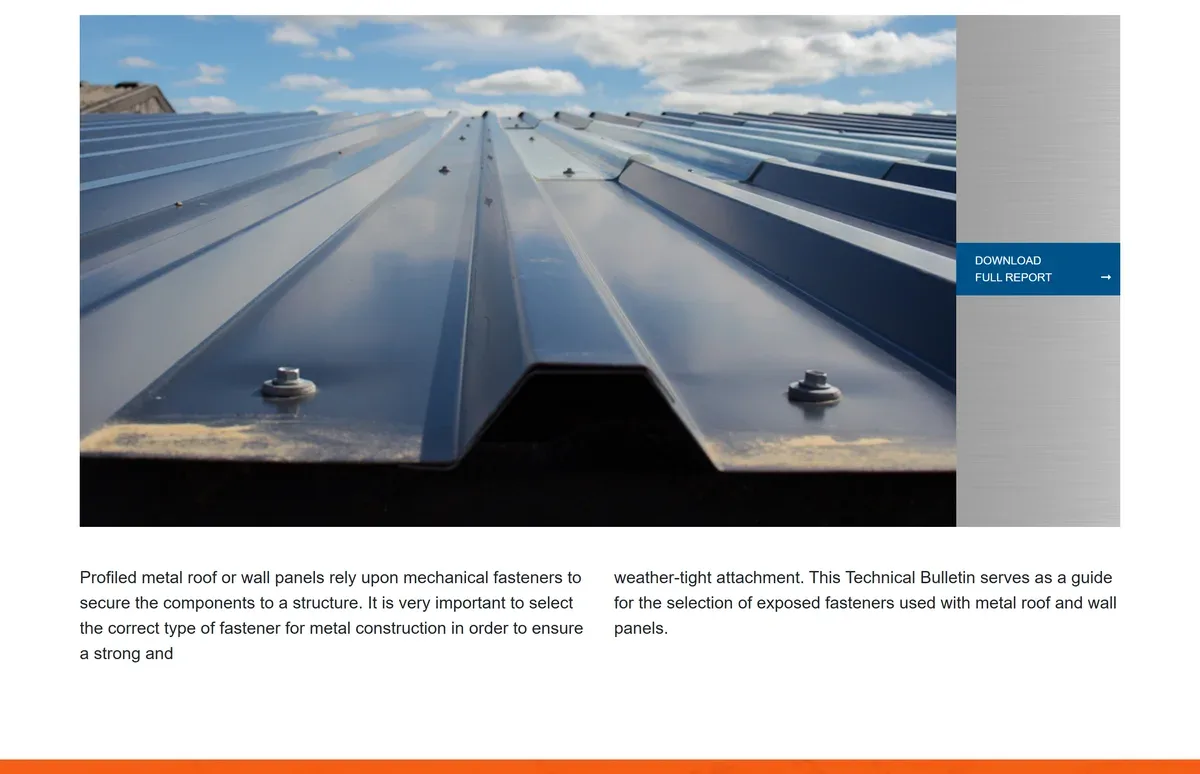
The Metal Construction Association's fastener bulletin says a fastener must be designed to be as durable as the roof cladding itself. When it is not, the screw rusts first. MBCI, a panel manufacturer, warns that rust starting at a fastener spreads to the roof panel, and that if it is caught early you can simply change out the screws.
What should an inspection establish before you decide?
A useful inspection answers six questions, with photos:
- Where is the rust? Edges, scratches, fasteners, one area, or the open field of the panels.
- How deep? Surface staining, coating loss, pitting, or perforation. The underside, seen from the attic or below an open-framed roof, often tells more than the top.
- How much of the roof? A count of affected panels and fasteners, by slope.
- What caused it? Copper, treated wood, debris, filings, masonry, drainage from equipment, or mismatched screws.
- What is the roof? Bare Galvalume, galvanized or painted; panel profile and manufacturer if it can be identified.
- Is it leaking yet? Rust and leaks are separate findings. If water is already getting in at screws or laps, read what repair lasts on a leaking metal roof.
When I look at rust on a metal roof, the first thing I want to know is what is touching it. If the cause is still there, any repair is temporary.
Do not walk the roof yourself to check. Metal is slippery with dew, dust or pollen on it, and stepping on seams and trim causes the kind of damage this article is about.
Repair the finish or replace the panels: what are the options?
These are the options a roofer should be able to lay out for your roof:
| Option | When it fits | What the work includes | What it does not solve | Published national cost range |
|---|---|---|---|---|
| Clean and touch up | Filings, rust stains, scratches, limited edge rust | Remove debris, clean gently, touch-up paint on the scratch only | Rust that is already under the surrounding finish | HomeGuide: rust and corrosion repairs start at about $300 |
| Remove the cause | Copper runoff, treated wood, debris, equipment drainage | Reroute the drain, add a barrier, replace the wood, clear the valley | Damage already done to the panel | Varies with the cause; no published range |
| Replace fasteners | Rusting screw heads, panels still clean | New long-life fasteners compatible with the panel, larger diameter where needed | Panels already rusted around the holes | HomeGuide: $150 to $1,000 depending on the number of screws |
| Treat, prime and coat or repaint | Widespread finish wear with light surface rust, metal still solid | Remove rust, rust-inhibiting primer, coating or paint system | Pitting, perforation, failing laps and fasteners | HomeGuide: painting $1.20 to $2.70 per square foot; coating $0.50 to $4.00 per square foot |
| Replace panels | Red rust through the coating, pitting, holes, on some panels | Remove and replace affected panels and trim, matched profile and color | Whatever caused it, unless that is fixed too | HomeGuide: $3 to $14 per square foot |
| Replace the roof | Corrosion across most of the roof | New roof system | Nothing left to solve | HomeGuide: $5 to $16 per square foot |
How to read this: HomeGuide's February 2026 guide puts metal roof rust and corrosion repairs at $300 to $3,000 overall, and HomeAdvisor's guide, updated June 2026, gives $500 to $3,000 with an average of $1,750. These are national figures, not Verde's prices. Roof size, pitch, access, the number of panels and whether the profile can still be matched all move the cost. Verde's price is a written estimate after a free inspection.
How do touch-up and cleaning work?
Lightly. Berridge Manufacturing, a metal roofing manufacturer in San Antonio, advises touching up a scratch with a small artist's brush, applying paint only to the scratch and not to the surrounding area. Touch-up paint weathers differently from the factory finish, so a wide patch becomes more visible over time than the scratch was. For rust stains it recommends a mild cleanser, rubbed only as much as needed, and notes that no product removes them completely.
When does a coating make sense?
When the metal is still solid and the wear is in the finish. HomeAdvisor's description of a rust repair is sanding and scraping the area, adding a rust-inhibiting primer, then sealing it, with severely corroded panels replaced. A coating over loose fasteners or pitted steel only hides the problem for a few seasons. Our guide to roof coating versus replacement covers what coatings can and cannot do.
When is replacement the honest answer?
When the rust is in the panel itself and widespread. HomeAdvisor's rule of thumb is that damage to less than about 30 percent of the surface favors a targeted repair, and more than that, or a roof near the end of its expected life, favors replacement. MBCI makes the same point from the manufacturer's side: once rust has compromised the roof, the panels have to be changed.
Matching can decide it. A replacement panel must have the same profile, and a new painted panel next to fifteen-year-old ones will not match in color. Sometimes replacing one whole slope is the cleaner result. To compare against the cost of a new roof, our roof cost calculator gives a typical DFW range for your house, and metal roof cost in Texas explains what drives it.
How do the finish and substrate warranties affect the choice?
They can decide who pays, and they can be lost by the wrong repair.
A painted metal roof normally carries two manufacturer warranties. Sheffield Metals explains that the paint warranty covers only the paint applied over the metal, with film integrity and chalk and fade covered separately, while corrosion of the metal falls under the substrate warranty. MBCI notes that Galvalume coatings typically carry a 20-year warranty against perforation from rust. Your own documents state your terms.
Common exclusions listed in that guidance include scratches from handling during installation, corrosion from dissimilar metals, corrosive chemicals and hail. Berridge's maintenance guide states that contact with or runoff from copper, lead or graphite voids its finish, material and watertightness warranties.
In practice:
- Find the paperwork before any work: the panel manufacturer, the finish type and the install date.
- Ask the manufacturer whether touch-up, coating or repainting affects coverage.
- Report in writing, promptly. One supplier's warranty requires claims within 30 days of noticing the condition.
- Check the installer's workmanship warranty if the cause is an installation choice, such as the wrong screws or treated wood against the panels. Our roof warranty guide explains the difference, and how long a roof repair should last covers what to expect from the warranty on the repair itself.
Rust also turns up in paperwork you did not ask for. If an insurer's inspection or a buyer's inspector has flagged it, see which roof inspection report an insurer, buyer or lender will accept. If the marks appeared after a storm, hail damage on a metal roof explains cosmetic versus functional damage.
How do you keep rust from coming back?
- Keep valleys, gutters and the areas behind chimneys clear of leaves.
- Trim branches that rub the panels.
- Do not let anyone set treated lumber, copper pipe or equipment that drains onto the roof.
- After any trade works on the roof, have metal shavings swept off the same day.
- Have fasteners, sealants and flashings looked at once a year and after hail. Our Texas roof maintenance checklist lists what to check, and Verde's maintenance plans put it on a schedule.
Still deciding whether metal is worth it? Metal roofs versus shingles compares the two honestly, and our metal roofing page shows the systems Verde installs.
Find out how deep the rust goes
Call or text (214) 687-1951, 24/7, or book a free roof inspection. Chris inspects the roof with you, photographs where the rust is and what is causing it, and gives you a written estimate for the repair that fits, whether that is a few fasteners or new panels.
Questions people ask next
Is surface rust on a metal roof a serious problem?
Not immediately, but it should not be ignored. Rust at a scratch or a screw head means the protective layers are broken at that spot. Caught early, it is cleaned, touched up or the fastener is replaced. Left for years, it can spread into the panel around it, and at that point the repair becomes a panel replacement.
Why is my metal roof rusting only around the screws?
Usually because the screws are less durable than the panels. A fastener with a thinner protective coating than the roof corrodes first, and a screw whose own coating was scratched or damaged corrodes sooner still. The fix is new long-life fasteners matched to the panel. Have the panel around each rusty screw checked for rust that has spread.
Is the white chalky film on my metal roof a sign of rust?
No. A powdery white residue on a painted metal roof is chalking, which is the paint resin breaking down under ultraviolet light. Fading is the color getting lighter. Both are finish wear, not corrosion of the steel. They are addressed by the paint warranty, if it still applies, and they do not by themselves mean the roof will leak.
Can I paint over rust on a metal roof?
Not directly. Paint over active rust traps it and peels. Published repair guidance describes removing the rust, applying a rust-inhibiting primer and then sealing or painting. On a factory-finished panel, manufacturers recommend touching up only the scratch itself, sparingly. Ask the panel manufacturer first, because repainting can affect a finish warranty that is still in force.
Does a warranty cover rust on a metal roof?
It depends which warranty and what caused the rust. The paint warranty covers the paint film: chalk, fade, peeling. A separate substrate warranty covers the metal against perforation from corrosion. Both commonly exclude damage from scratches during installation, contact with dissimilar metals and corrosive materials. Read the documents you were given, and make a claim in writing promptly.
Will insurance pay for a rusted metal roof?
Rust from age, wear or an installation problem is generally a maintenance matter rather than a sudden loss, but your own policy governs, so read it or ask your agent. Storm damage is different: hail that breaks the coating or opens a seam should be documented with photos soon after the storm, before rust has time to make the cause harder to show.
How long does a Galvalume metal roof last before it rusts?
There is no single number, because it depends on the environment and on what touches the roof. One panel manufacturer says a properly installed Galvalume standing seam roof can be expected to last 60 years or more. That assumes compatible fasteners, no contact with copper or treated wood, good drainage and no debris left sitting on the panels.
Sources
- U.S. Steel technical bulletin: Conditions Corrosive to Hot-Dip Galvanized and GALVALUME Coated Steel Sheet (PDF, hosted by McElroy Metal)
- Metal Construction Association technical bulletin: Dissimilar Metal Corrosion in Roofing Installations (PDF, hosted by ATAS)
- Metal Construction Association: Fastener Compatibility with Profiled Metal Roof and Wall Panels
- Metal Construction Association technical bulletin: Metal Roof and Wall Panel Components in Contact with Preservative-Treated Lumber (PDF, hosted by ATAS)
- Sheffield Metals: What is Galvalume steel and how is it used in metal roofing?
- Sheffield Metals: Metal roof paint warranties in simple terms
- Berridge Manufacturing Company: Maintenance & Repair of Metal Roofing (PDF)
- MBCI: Preventing roof damage from rusted fasteners
- HomeGuide: Metal roof repair cost (February 2026)
- HomeAdvisor: Metal roof repair cost (updated June 2026)
Chris Grimes owns Verde Roofing in Plano, Texas, a locally owned residential and commercial roofer serving Dallas–Fort Worth. Verde is an NTRCA Accredited Member, an RCAT member and a Dallas Observer Best of Dallas Best Roofer winner (readers’ choice) in 2021, 2022 and 2023.
Keep reading
Related guides
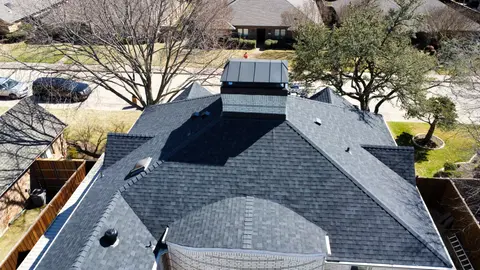 Roofing materialsMetal Roof vs. Shingles in North Texas: Honest Pros and ConsMetal costs substantially more up front (the 2025 Cost vs. Value report prices a typical metal reroof in our region about 64 percent above asphalt) but…Read the guide
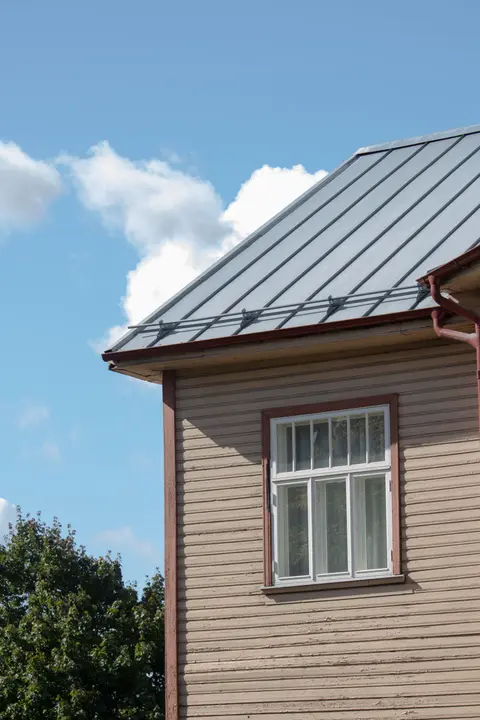 Roofing materialsMetal Roof Leaking at Screws or Seams in Texas: What Repair Will Last?A lasting repair fixes the part that failed, not the surface above it. On a screw-down metal roof in Texas that means replacing backed-out or worn…Read the guide
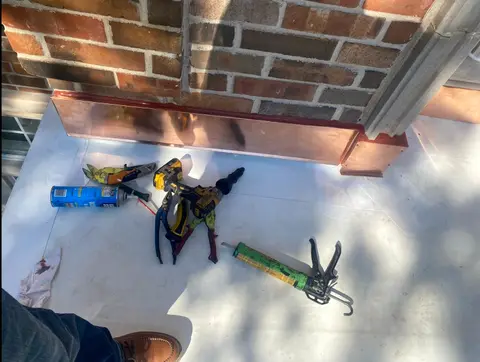 Commercial roofingRoof Coating vs. Replacement for Flat Commercial RoofsA coating can extend a flat commercial roof only when the existing membrane is still sound, the insulation underneath is dry and the roof drains. The…Read the guide