
Why Does My Porch, Patio or Garage Roof Keep Leaking in North Texas?
 By Chris Grimes, owner of Verde RoofingPublished November 15, 2026 · 11 min read
In short
A porch, patio or garage roof in North Texas that leaks again and again usually has one of two problems: the slope is too low for the shingles on it, or the joint where it meets the house wall was never flashed correctly. The model residential code allows asphalt shingles only at 2:12 or steeper, with doubled underlayment below 4:12. Below that, the lasting fix is a low-slope membrane, not another patch.
Key takeaways
- The 2021 International Residential Code allows asphalt shingles only on slopes of 2:12 or steeper, and requires double underlayment from 2:12 up to 4:12.
- Low-slope membranes such as modified bitumen and TPO are allowed by the same code down to a quarter inch of fall per foot.
- Most repeat leaks on attached porch and patio roofs are at the top edge, where the small roof meets the house wall, a window or the main roof's eave.
- Fixr's 2026 guide puts most flat roof leak repairs around $700 and modified bitumen replacement at $4 to $8 per square foot.
- A targeted repair is reasonable when the covering suits the slope and one detail failed; when the covering is wrong for the slope, patches only buy time.
The main roof is fine. It is the small one that drips: the front porch, the covered patio out back, the flat-looking roof over the garage or the breakfast room that was added years ago. Someone has patched it, maybe more than once, and it held until the next long rain.
Roofs like these leak for reasons that have little to do with the age of the shingles. They leak because of how they are built. Once you know which of a handful of causes you have, the choice between another repair and a different kind of roof becomes much easier.
Why do porch, patio and garage roofs leak more than the main roof?
Three things set them apart.
They are flatter. A porch or patio roof has to fit under the upstairs windows or the main roof's eave, so the builder flattens it. Water leaves a steep roof in seconds. On a low one it moves slowly, backs up behind debris and finds every lap and nail.
They end against the house. The top edge of an attached porch roof meets a wall, a window sill or the fascia of the main roof. That joint is the most demanding detail on any roof, and on an add-on it was often done after the siding or brick was already finished.
They are often additions. A patio cover or converted garage may have been built by a different trade, years after the house, with whatever material was on the truck.
North Texas weather does the rest. A spring thunderstorm puts a lot of water on a small, flat surface quickly, and wind pushes rain uphill under laps that would shed a gentle shower. Then months of heat and sun dry out the sealant that the last repair depended on.
How flat is too flat for shingles?
This is the first thing to establish, because it decides everything after it. Slope is written as rise over run: 2:12 means the roof rises 2 inches for every 12 inches it runs.
The 2021 International Residential Code sets the limits. Your city may have adopted a different edition or amended it, so confirm locally, but the model rules are:
- Asphalt shingles: only on slopes of 2:12 or greater (R905.2.2).
- From 2:12 up to 4:12: shingles are allowed, but only with a double layer of underlayment.
- Below 2:12: shingles are not allowed. The roof needs a covering made for low slope.
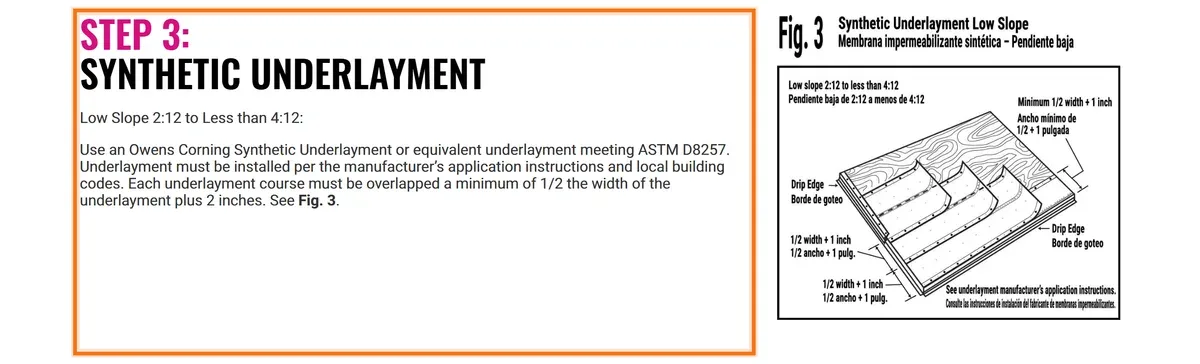
Shingle manufacturers draw the same line. Owens Corning's instructions call 2:12 to less than 4:12 “low slope” and require each underlayment course to overlap the one below by half its width plus 2 inches, so the deck is covered twice.
The coverings the same code allows on flatter roofs:
| Roof covering | Minimum slope in the 2021 IRC | What that means for a porch or patio |
|---|---|---|
| Asphalt shingles, standard underlayment | 4:12 | Fine on a porch with a visible pitch |
| Asphalt shingles, double underlayment | 2:12 | Allowed, but only if the doubled underlayment is really there |
| Mineral-surfaced roll roofing | 1:12 | Allowed on a shallow roof; lapped seams are its weak point |
| Lapped metal panels without seam sealant | 3:12 | Typical patio and carport panels need more pitch than they often get |
| Standing seam metal | 1/4 inch per foot | Works on low slopes when detailed for it |
| Modified bitumen membrane | 1/4 inch per foot | Made for nearly flat roofs |
| TPO and other thermoplastic single-ply membranes | 1/4 inch per foot | Made for nearly flat roofs |
How to read it: find your roof's slope, then check whether the covering on it appears at or above that line. A shingled porch at 1:12 is not a roof with a leak. It is a roof with the wrong covering, and no patch changes that.
You can estimate slope without getting on the roof. From a ladder at the edge of an open porch, hold a 12-inch level against the underside of a rafter, level it, and measure the gap at the far end. Do not walk a low roof that is wet or soft; decking under a long-term leak may not hold you.
What are the usual causes, and how are they told apart?
Five causes come up most often on small attached roofs.
1. Shingles on a slope that is too low. Water backs up under the laps in long or wind-driven rain. The clue: it leaks in big storms, in several places, and nobody can find a single hole.
2. The tie-in to the house wall. The 2021 IRC requires flashing at wall and roof intersections and wherever the roof changes slope or direction (R903.2.1), and requires sidewall flashing to be continuous or step flashing (R905.2.8.3). The Building America Solution Center, a U.S. Department of Energy resource, says step flashing should extend at least 4 inches up the wall and 4 inches onto the roof, and that siding should end at least an inch above the roof surface. On add-on roofs the flashing is often a bead of caulk. The clue: stains at the top of the porch ceiling, next to the house.
3. Where the main roof drains onto it. An upper eave or a valley that empties onto a porch roof concentrates water on a covering that can least handle it. The clue: a leak below a downspout outlet or below the end of an upper valley. Our guide to repairing a leaking roof valley covers the upper half of that problem.
4. Ponding and blocked drainage. The model code requires roofs to drain: unless a roof is sloped to drain over its edges, drains go at each low point (R903.4). A low roof with a sagging middle, a clogged scupper or a gutter set too high holds water for days. The clue: a dirty ring or algae patch on the roof, and leaks that start a day after the rain.
5. Patio-cover connections and fasteners. Metal or polycarbonate patio covers are fastened to the wall or the fascia, and their panels are screwed through the face. Every one of those points relies on a washer or sealant. The clue: drips in a line along a panel lap or along the wall. For the panel side of this, see a metal roof leaking at screws or seams.
When I look at a small roof that keeps leaking, I measure the slope before I look for the hole. If the covering is wrong for the pitch, finding the hole only tells me where it leaked this time.
What does an inspection have to establish?
Ask for these six findings, with photos:
- The slope, measured, and the covering that is on it.
- What is under the covering: underlayment type and whether it is doubled, if the roof is shingled between 2:12 and 4:12.
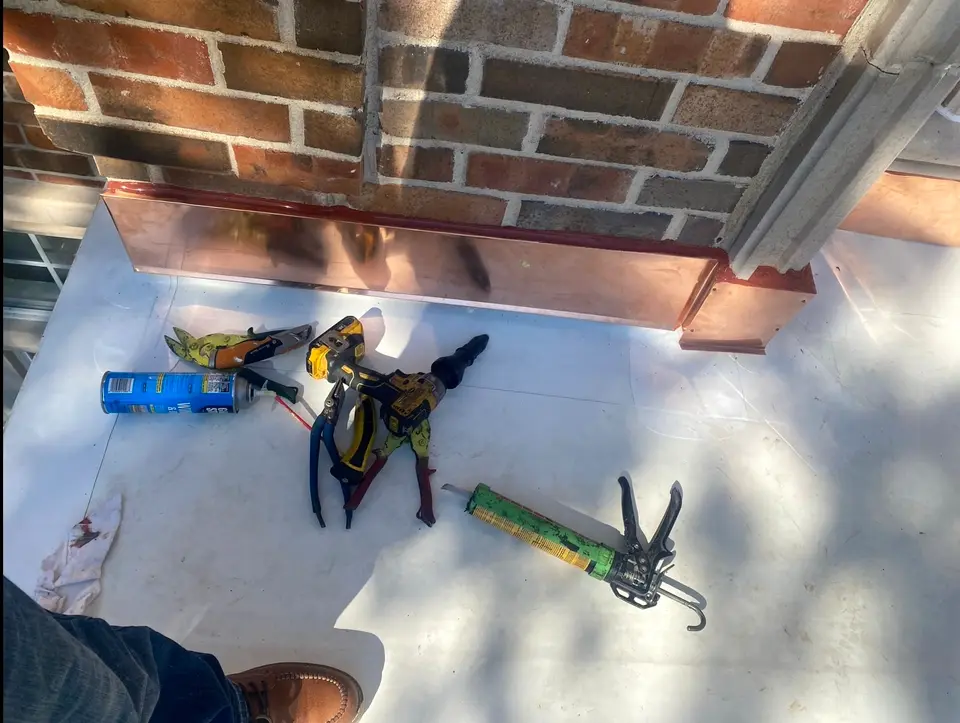
- The wall joint: what flashing is there, whether it laps under the siding, brick counterflashing or the upper roofing, and whether there is a kick-out at the bottom end.
- Where water comes from: upper roof areas, valleys and downspouts that drain onto the small roof.
- Where water goes: low spots, gutter height and slope, scuppers, and where the downspout empties.
- The condition of the deck and framing from below: stains, soft spots, a sag between supports.
Leaks at the house wall sometimes mean the cladding has to be opened to flash it properly. Roof leaking where it meets a wall explains when siding has to come off and when it does not. For flashing at chimneys, pipes and vents that sit on a porch roof, see chimney, flashing and vent leaks.
Targeted repair or a new roof assembly: which one fits?
Here are the realistic options side by side. Cost context is from Fixr's flat roof repair and flat roof replacement guides, both updated January 27, 2026. They are national figures, and small roofs do not always scale down neatly because of setup and minimum labor. The six options:
| Option | When it fits | What the work includes | What it does not solve | Published cost context |
|---|---|---|---|---|
| Targeted leak repair | Covering suits the slope; one detail failed | Find the entry point, replace damaged material, reseal or reflash that spot | A covering that is wrong for the slope; ponding | Most flat roof leak repairs around $700; range $150 to $4,000+ (Fixr) |
| Rebuild the wall tie-in | Leak is at the house wall; rest of the roof is sound | Remove roofing at the wall, install step or continuous flashing lapped under the cladding or counterflashing, relay roofing | Leaks in the field of the roof | Flat roof flashing repairs $200 to $750 (Fixr); more if siding must be opened |
| Correct drainage | Ponding, a high gutter or a blocked outlet is the cause | Re-pitch or lower gutters, clear or add an outlet, fill or reframe a low spot | A failed covering | Water pooling repairs $70 to $750 (Fixr) |
| Re-cover with a low-slope membrane | Slope is under 2:12, or shingled low slope keeps failing | Tear off to the deck, replace bad decking, membrane with sealed seams, edge metal, wall flashing | Framing that sags or holds water | Modified bitumen $4 to $8 per sq ft; TPO $4 to $14 per sq ft (Fixr) |
| Re-shingle correctly at 2:12 to 4:12 | Slope is in that band and you want it to match the house | Tear off, double underlayment, new shingles, new flashing | Leaks if the real slope is under 2:12 | Not priced separately by the guides we opened |
| Change the slope | Roof is nearly dead flat and ponds | Reframe or add tapered insulation under a membrane | Nothing left unsolved, but it is the largest job | Written estimate only; a framing change may need a permit and an engineer |
How to choose: the first three rows are repairs, and they are the right call when the roof was built properly and one thing went wrong. The last three change the assembly. If the inspection shows the covering is below its minimum slope, start reading at row four. A sealant or coating over a roof that is the wrong type for its pitch is a short-term measure, and our guide to roof coating versus replacement explains when coatings do make sense.
For a small low-slope roof, modified bitumen and TPO are the two membranes most often proposed. Our comparison of TPO and other flat roof systems explains how they differ. Verde installs TPO systems on commercial buildings and repairs residential roofs; which membrane we would use on your porch or garage is stated in the written estimate after we see it.
Not sure which row your roof is in? Ask for a free inspection and we will measure the slope and photograph the wall joint before recommending anything.
Which other trades might be involved?
A small roof can pull in more than a roofer. The order matters.
- Roofer first. Stopping the water comes before anything else. If water is coming in now, see what to do when the roof leaks.
- Framing or structural engineer. If the roof sags, bounces or the posts have moved, the structure is checked before new roofing goes on.
- The patio cover builder. If a manufactured cover is leaking at its own seams or gutter, its installer or a patio contractor knows that system. The joint to the house is still a flashing problem.
- Siding or masonry. When flashing has to go behind cladding, someone has to open and close it. Verde repairs several kinds of siding; brick work may need a mason.
- Gutters. Re-pitching or lowering the porch gutter is often part of the fix. See our gutters and downspouts page.
- Interior repairs last. Porch ceilings, garage drywall and insulation are replaced after the roof has been through a rain. Our guide on who repairs wet insulation and ceiling damage covers that sequence.
Rot at the edge of a porch roof is common too, since the gutter sits right at the wall. Rotten fascia and soffits explains how that source is tracked down, and if the deck is soft, roof decking replacement cost explains how it is priced.
What should the quote for a low-slope roof in DFW say?
Use this as a checklist before you sign:
- The measured slope and the covering proposed for it, by name.
- For shingles between 2:12 and 4:12: double underlayment, stated.
- For a membrane: type, thickness, how seams are sealed and how it is attached.
- The wall detail: step, continuous or counterflashing, and whether siding or brick is being opened and by whom.
- Edge metal and gutter work included or excluded.
- A unit price for decking found rotten at tear-off.
- What is excluded: framing, interior ceilings, paint.
- Permit, if your city requires one for the scope.
- The workmanship warranty in writing, and the manufacturer's terms for the product. How long a roof repair should last lists what to look for.
For price context on repairs in general, see roof repair cost, and for the bigger question of when patching stops paying, see repair or replace the roof. Our roof repair page shows what a repair visit includes.
Ready to find out why it keeps leaking?
Call or text (214) 687-1951, 24/7, or book a free roof inspection. Chris will measure the slope, check the wall joint and the drainage, show you the photos, and give you a written estimate for the repair that fits the roof you have.
Questions people ask next
What is the minimum roof slope for asphalt shingles?
The 2021 International Residential Code, section R905.2.2, allows asphalt shingles only on slopes of 2:12 or greater, meaning 2 inches of rise for every 12 inches of run. From 2:12 up to 4:12 it requires a double layer of underlayment. Owens Corning's instructions use the same line: low slope is 2:12 to less than 4:12, with underlayment courses overlapped by half their width plus 2 inches.
Can I just put a second layer of shingles or roll roofing on a leaking porch roof?
It rarely fixes the cause. If the slope is under 2:12, shingles are the wrong covering no matter how many layers there are. Mineral-surfaced roll roofing is allowed by the model code down to 1:12, but its lapped seams are the weak point on a roof that holds water. A membrane with sealed seams, such as modified bitumen or TPO, is made for that slope.
Why does my patio cover leak where it attaches to the house?
Because that joint depends on flashing, and patio covers are often added after the house was built. If the cover is fastened to the wall or the fascia and sealed only with caulk, water running down the wall or off the main roof gets behind it once the caulk cracks. The lasting fix is metal flashing lapped under the wall cladding or under the roofing above.
How much does it cost to fix a leaking flat porch or garage roof?
Fixr's flat roof repair guide, updated January 27, 2026, says most homeowners pay around $700 for a flat roof leak repair, within a range of $150 to $4,000 or more, and lists flashing repairs at $200 to $750. Replacing the covering with modified bitumen runs $4 to $8 per square foot in Fixr's flat roof guide. These are national figures, not our prices.
Is a metal roof a good fix for a low-slope porch?
It can be, with the right panel. The model code allows standing seam metal down to a quarter inch per foot, but lapped metal panels without seam sealant need 3:12. The exposed-fastener panels common on patio covers and carports are lapped panels, so on a nearly flat cover they depend on sealant and washers that age in the Texas sun.
Will insurance pay to fix a porch roof that has leaked for years?
Probably not. The Texas Department of Insurance says most home policies do not cover water damage from gradual leaks or seepage. A porch or garage roof damaged by a covered storm is a different case, and the interior damage a sudden leak causes may be treated separately. Your own policy governs, so check it or ask your agent before assuming either way.
Sources
- 2021 International Residential Code, Chapter 9: R903.2.1, R903.4, R905.2.2, R905.5.2, R905.10.2, R905.11.1, R905.13.1 (UpCodes, Texas)
- Owens Corning: Supreme Shingles Installation Instructions (low slope underlayment, step flashing)
- U.S. DOE Building America Solution Center (PNNL): Step and Kick-Out Flashing at Roof-Wall Intersections
- Fixr: Flat Roof Repair Cost (updated January 27, 2026)
- Fixr: Flat Roof Replacement Cost (updated January 27, 2026)
- Texas Department of Insurance: When are water damage and mold covered by insurance?
Chris Grimes owns Verde Roofing in Plano, Texas, a locally owned residential and commercial roofer serving Dallas–Fort Worth. Verde is an NTRCA Accredited Member, an RCAT member and a Dallas Observer Best of Dallas Best Roofer winner (readers’ choice) in 2021, 2022 and 2023.
Keep reading
Related guides
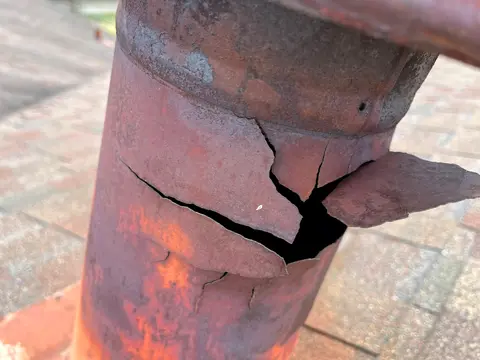 Repair or replaceRoof Leaking? What to Do Right Now and How Leaks Get FoundTurn off power to any wet light fixture, catch the water, relieve a bulging ceiling with a small hole over a bucket, move valuables, and photograph…Read the guide
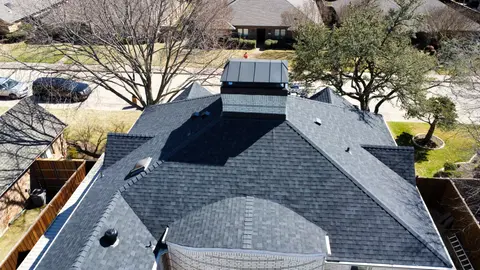 Repair or replaceRoof Leaking Where It Meets a Wall in DFW: Will Siding Need to Come Off?Often yes, but usually only the bottom course or two. On a Dallas–Fort Worth home, step flashing has to sit behind the siding, so a real…Read the guide
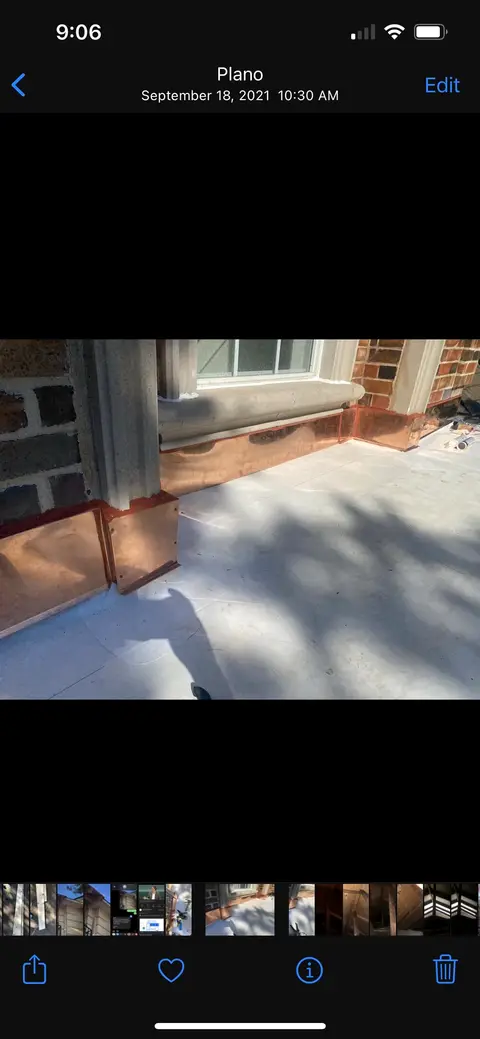 Commercial roofingTPO vs. Modified Bitumen, PVC and EPDM: Choosing a Flat RoofTPO is a white, heat-welded single-ply membrane that sits in the middle on price and is popular in Texas because it reflects sun. PVC costs more…Read the guide