
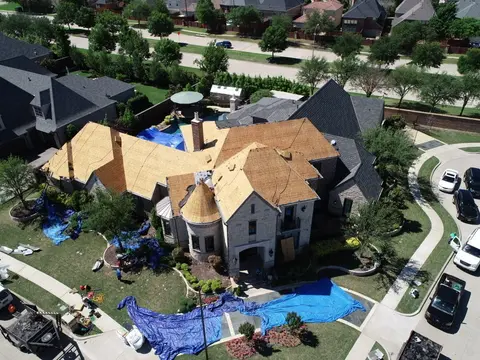
Missing Ridge Cap Shingles in North Texas: Small Repair or Sign of a Bigger Problem?
 By Chris Grimes, owner of Verde RoofingPublished November 10, 2026 · 11 min read
In short
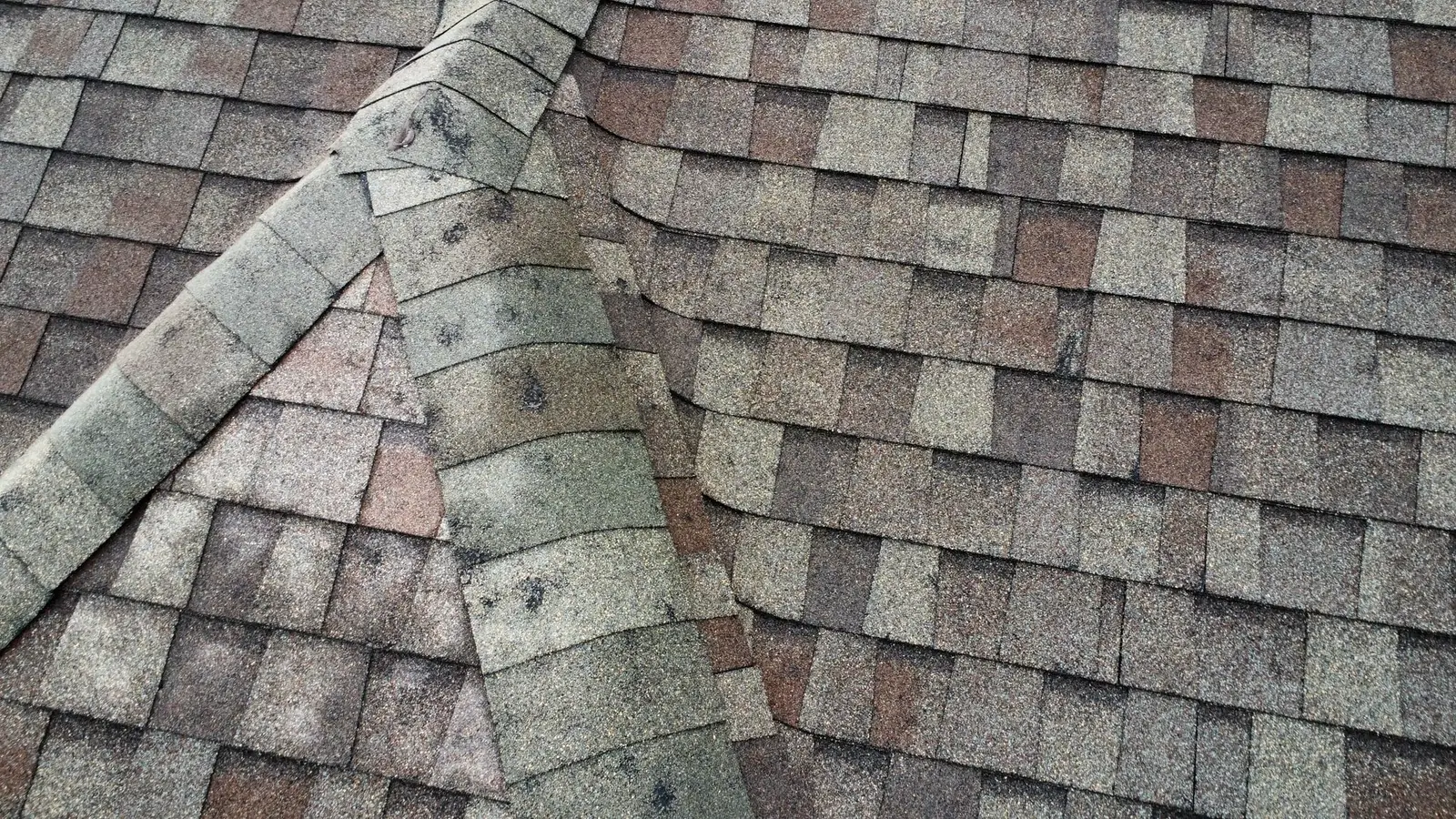
On a North Texas roof, a few missing ridge caps are usually a small repair: new cap shingles nailed and sealed over the peak. It becomes a sign of a bigger problem when the caps still in place lift by hand, crack when bent, were nailed wrong along the whole ridge, or when field shingles are creased or missing too. Until it is fixed, the peak is open to rain.
Key takeaways
- Ridge caps are separate shingles bent over the peak and the hips; under them is the seam where two roof planes meet, and often the open slot of a ridge vent.
- Caps come off because of wind, age and brittleness, sealant that never bonded, nails that were too short, misplaced or overdriven, or the wrong product on the ridge.
- Fixr's January 2026 roof repair guide lists ridge capping repairs at $200 to $750; HomeGuide lists replacing up to 25 missing shingles at $100 to $300.
- The caps still on the roof tell the story: if they are sealed and flexible it is a spot repair, and if they lift easily the whole run needs redoing.
- Wind damage may be an insurance question, but a small ridge repair is often below a wind and hail deductible; your own policy governs.
You found a strip of shingle in the yard after a windy night, narrower than a normal shingle and bent down the middle. Or a neighbor pointed up at your roof and said the top looks different at one end. From the driveway you can see a bare patch along the peak.
Those are ridge cap shingles, and losing a few is one of the most common wind repairs in North Texas. Most of the time it is a small, quick job. Sometimes it is the first visible sign that the whole ridge, or the whole roof, is letting go. This guide shows how to tell the difference before you pay for either.
What are ridge caps, and how are they different from the rest of the roof?
A shingle roof has three things at the peak that people tend to mix up.
Field shingles cover the flat slopes. They are laid in overlapping rows from the eave up, and each row is sealed to the one below by a strip of adhesive that bonds in the sun.
Ridge caps (also sold as hip and ridge shingles) are separate, narrower pieces bent over the peak and over the hips, the outside corners where two slopes meet. The Insurance Institute for Business & Home Safety (IBHS) describes them as shingles designed to bend more, folded over the ridge and nailed on each side above the sealant strip. IBHS also notes the history: roofers used to cut three-tab shingles by hand for this, and purpose-made cap shingles became common as architectural shingles took over the market.
A ridge vent, if your roof has one, is the attic exhaust vent that runs along the peak. A slot is cut in the roof deck on both sides of the ridge, a vent strip covers the slot, and the ridge caps are nailed on top of the vent. Our guide to underlayment, ventilation and decking explains how that vent works with the intake vents at the eaves.
What is under a missing cap matters. On an unvented ridge it is the top edge of the last row of field shingles on each side and the seam between them. On a vented ridge it is the vent, and if the vent strip came off with the caps, an open slot straight into the attic.
Why do ridge caps blow off North Texas roofs?
The ridge and the hips are the most exposed lines on the roof. Wind hits them from both sides, and unlike field shingles, each cap is bent, sits on a narrow bearing and relies on two nails and a small area of sealant. Spring thunderstorm gusts and fall cold fronts across North Texas find the weak ones.
The usual causes, roughly from least to most worrying:
- A strong gust and nothing else. Sound, well-installed caps can still lose a piece or two in a severe storm.
- Age and brittleness. Caps are bent and take sun from both sides. Years of Texas heat dry them out, and they crack along the fold before the field shingles show their age.
- Sealant that never bonded. Caps installed in cold weather or on a dusty roof may never have sealed. They stay on until the first real wind.
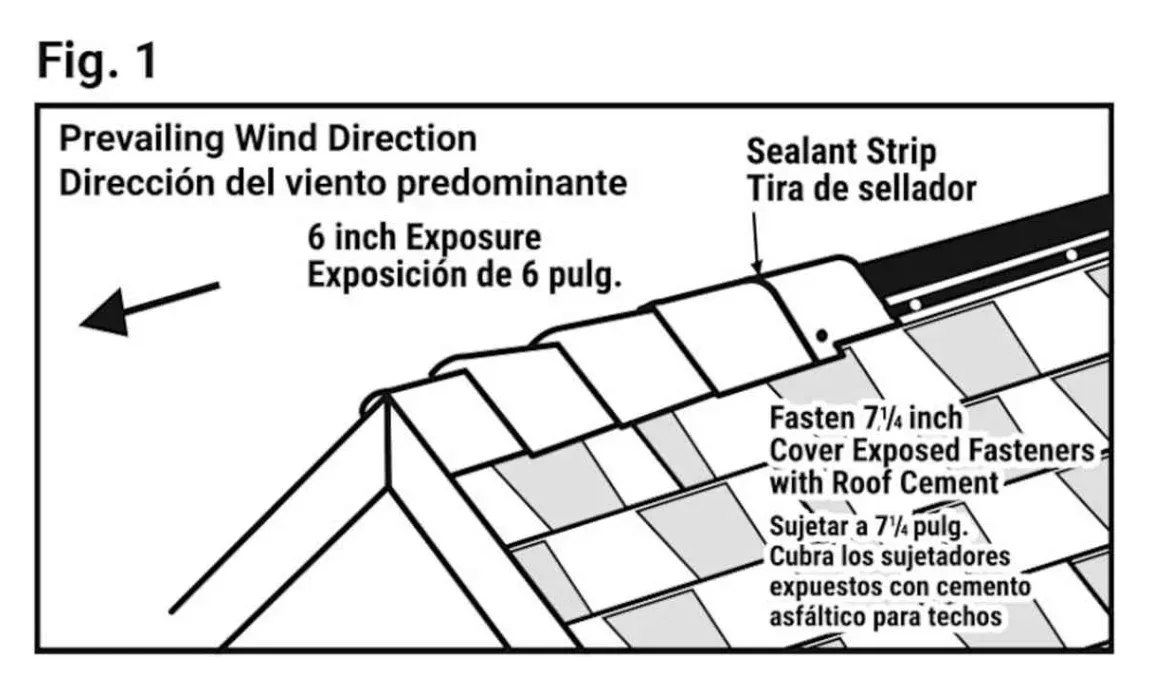
- Nailing. Owens Corning's instructions for its ProEdge hip and ridge shingles put one fastener on each side, 1 inch from the edge and 7 1/4 inches from the exposed end, with all fasteners penetrating at least 3/4 inch into the deck or completely through the sheathing. The same instructions warn that an improperly adjusted nail gun leaves raised fasteners that can cause sealing failure, leaks or blow-off, and say not to fasten in the sealant strip. Over a ridge vent the nail has to pass through the vent first, so nails that are too short hold the cap to the vent and not to the roof.
- Direction. The same instructions say to begin at the end of the ridge opposite the prevailing wind, so the exposed edges face away from it. Caps laid the other way give the wind an edge to lift.
- The wrong product. Field shingles cut into strips and bent over the ridge of an architectural roof are thick, stiff and prone to cracking at the fold.
- Earlier hail. Caps sit on a peak with little support under the bend, so hail bruises them easily, and a bruised cap fails in the next wind.
A nail that has backed out can lift a cap the same way it lifts a field shingle. Our guide to roof nail pops explains why nails rise and what a proper fix includes.
Is it a small repair or a sign of something bigger?
The missing pieces do not answer that. The pieces still on the roof do. Signs that point each way:
Probably a small repair
- One short gap, a handful of caps, after a storm with strong wind.
- The caps on either side are sealed down, flexible and have their granules.
- No shingles missing or creased on the slopes.
- The roof is in the first half of its expected life.
Probably a bigger problem
- Gaps in more than one place, or on several ridges and hips.
- Neighboring caps lift by hand, or crack when gently flexed.
- Exposed nail heads, nails through the sealant strip or nails that are not into the deck.
- The ridge vent is loose, cracked or came off with the caps.
- Field shingles are creased, lifted or missing too, especially along the edges and near the ridge.
- Granules are worn off the caps and the fold lines are cracked along the whole run.
- The roof is nearly new, which points at installation.
When caps are missing, I look at the ones still on the roof before I look at the gap. If I can lift the next cap with two fingers, the whole run was never sealed, and replacing three pieces will not fix that.
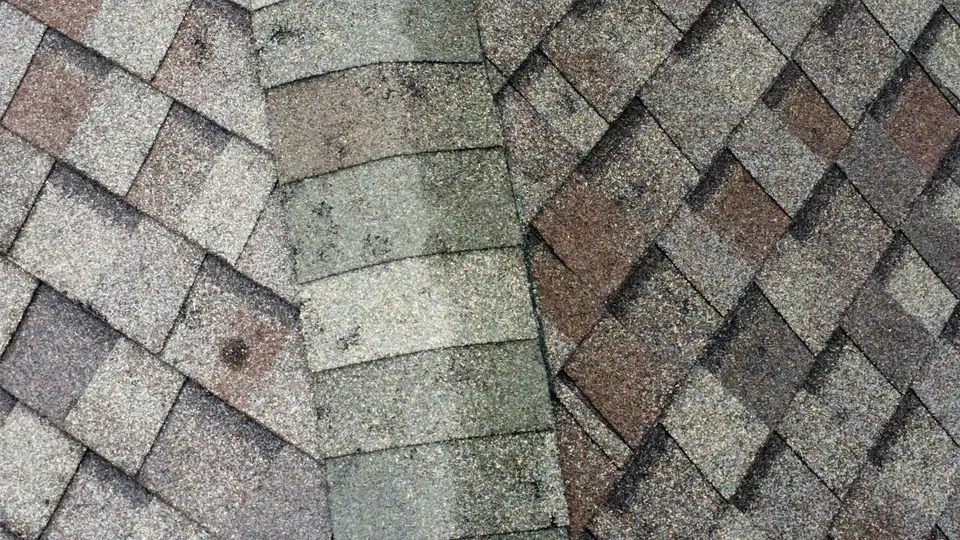
If the damage came with a storm, the rest of the roof deserves the same look. Our guide to wind damage on roof shingles shows what creased and unsealed field shingles look like and how many it takes before a repair stops making sense.
What does an inspection have to establish?
- How many caps are gone, and where. Ridge, hips or both; one gap or several.
- What is under the gap. Shingle seam, ridge vent, or an open slot. Whether underlayment or decking is exposed.
- Whether the remaining caps are bonded and flexible. A gentle lift test along the whole run, not just beside the gap.
- How the caps were nailed. Nail position, nail length, and whether they reach the deck through any ridge vent.
- What product is on the ridge. Purpose-made caps or cut field shingles, and whether a match is still available.
- The condition of the ridge vent. Cracked, loose or missing sections.
- The field shingles. Creases, lifted tabs and missing pieces on the slopes, plus dents on vents and other soft metal if hail is suspected.
- The attic side. Daylight at the peak where there should be none, damp decking, wet insulation.
Every one of these should come back to you as photos. If a pattern like short nails shows up along the entire ridge of a roof that was replaced recently, that is a workmanship question, and who should fix a leak in a brand-new roof explains who to call first.
What are the repair options, and what do they cost?
Here are the realistic scopes, smallest to largest, with national cost context from guides we opened in November 2026:
| Option | When it fits | What the work includes | What it does not solve | Typical published cost |
|---|---|---|---|---|
| Replace the missing caps | One gap, neighbors sealed and sound, vent intact | Matching cap shingles nailed to the manufacturer's pattern, tied into the existing run, last exposed nails sealed | Brittle or unsealed caps elsewhere on the ridge; color difference | $200 to $750 for ridge capping (Fixr). HomeGuide: $100 to $300 for up to 25 missing shingles, minimum fees $150 to $300 |
| Re-cap the whole ridge or hip | Caps brittle, unsealed or misnailed along the run; field shingles still sound | All caps on that ridge removed and replaced with one product, correct nails, correct direction | Worn field shingles; a damaged vent, unless it is included | Upper part of Fixr's $200 to $750 range or above it, depending on length and number of ridges |
| Re-cap and replace the ridge vent | Vent cracked, loose or blown off; slot exposed | Old vent removed, slot and decking checked, new vent, new caps over it with nails long enough to reach the deck | Intake ventilation problems at the eaves | HomeGuide lists roof vent replacement at $200 to $700, or $7 to $15 per linear foot depending on the vent type |
| Repair or replace slopes | Field shingles creased or missing as well; widespread wind or hail damage | Shingle repairs on the slopes, or replacement of slopes or the roof, with new caps as part of it | Nothing on the ridge alone; this is a different decision | Depends on the roof; see the guide linked below |
How to read it: the first row is the common one. The second and third rows are what a careful inspection turns up when the "few missing caps" were a symptom. The last row is not a ridge repair at all, and nobody should arrive there without photos of damaged field shingles to show you. All figures are national and typical, not Verde's prices. Ours is a written estimate after a free inspection.
What moves the price: the length of ridge and hip involved, roof pitch and height, one story or two, whether a ridge vent is under the caps, whether the cap product can still be matched, and whether any decking at the peak is soft. HomeGuide lists roof deck repair at $200 to $500 per 100 square feet. For how repairs are priced in general, see what common roof repairs cost, and for the larger decision, our repair or replace guide.
If you can see a gap at the peak from the ground, call or text (214) 687-1951 and send a photo. It is usually enough to tell you how soon it needs attention.
What should you do before the roofer arrives?
- Stay off the roof. The ridge is the highest point, and a roof that just lost shingles is not one to walk. Never go up on a wet, steep or damaged roof.
- Photograph from the ground. The gap, the whole ridge line and each side of the house. A phone zoom or binoculars is enough.
- Collect the pieces. Caps that landed in the yard show what product was used and where the nails were. Keep them.
- Check the attic at the peak. In daylight, look for light where there was none and feel for damp wood or insulation.
- Note the date and the weather. If a claim is ever filed, the date of the wind matters.
- Ask about a temporary cover if rain is coming. The Texas Department of Insurance advises preventing more damage and saving receipts, and says your policy may pay for temporary repairs. Our guide to emergency roof tarping explains what that should include.
Is wind-blown ridge cap an insurance claim?
It can be, and it often is not worth making one. Both things are true, so take them in order.
The Texas Department of Insurance tells homeowners to file a claim as soon as they can if hail or strong winds damaged the home, to take pictures and video, and to be available when the adjuster visits. It also says to ask your agent whether your deductible for wind and hail is different from your deductible for other damage, because if it is, you may pay more out of pocket after a storm.
That second point is the practical one for ridge caps. A small ridge repair frequently costs less than a wind and hail deductible, in which case a claim pays nothing. And the department is equally clear that an insurer will not pay for a roof just because it is old or worn out, so caps that failed from age are not storm damage.
A sensible order:
- Get the damage inspected and photographed, with a written estimate. Our guide on how to document roof storm damage lists what to capture.
- Compare the estimate with your deductible. Our guide to your roof deductible under Texas law explains how the deductible works and why no contractor may waive it.
- If the inspection found damage well beyond the ridge, talk to your agent or insurer about filing. That decision and the claim are yours.
We can inspect, document what we find with photos and meet your adjuster on site to show the damage. We cannot tell you what your policy covers, and nobody but your insurer can promise that a claim will be paid. Verde's storm and hail damage page describes what that inspection includes.
What should be written in the quote?
- How many caps or how many linear feet of ridge and hip are being replaced, and where.
- The cap product: brand, line and color, and that it is a purpose-made hip and ridge shingle compatible with your field shingles.
- Nailing to the manufacturer's instructions, including nail length where there is a ridge vent.
- Whether the ridge vent is reused, repaired or replaced, and the vent product if new.
- What happens if soft decking is found at the peak, with a unit price.
- Photos before and after.
- The workmanship warranty on the repair, in writing. Our guide on how long a roof repair should last covers what to ask for.
A ridge repair is normally a one-trade job. A roofer does all of it. The exception is water that got inside before the repair: wet attic insulation or a stained ceiling under the peak is interior work, covered in who repairs wet insulation and ceiling damage after a roof leak.
Get the ridge checked while it is still a small job
Call or text (214) 687-1951, 24/7, or book a free roof inspection. Chris will check the ridge, the hips and the slopes, show you photos of what he finds, and give you a written roof repair estimate, whether that is six cap shingles or a conversation about the rest of the roof.
Questions people ask next
Will my roof leak if ridge cap shingles are missing?
It can. The ridge cap covers the seam at the peak where the two slopes meet, and on many roofs it also covers the slot cut for a ridge vent. With caps gone, rain can reach the top edge of the field shingles, the underlayment or the vent opening. A light shower may do nothing, but wind-driven rain can get in. Treat it as a repair to schedule promptly, not next season.
Can I replace ridge cap shingles myself?
The ridge is the highest and most exposed place on the roof, so we do not recommend it. A fall from the peak is the main risk, and old shingles nearby crack easily underfoot. Never walk a wet, steep or damaged roof. From the ground you can photograph the gap, collect any pieces that fell and check the attic at the peak for daylight or dampness.
How much does it cost to replace ridge cap shingles?
Fixr's January 2026 roof repair guide lists ridge capping repairs at $200 to $750. HomeGuide's February 2026 guide lists replacing up to 25 missing shingles at $100 to $300 and notes typical minimum call-out fees of $150 to $300. These are national figures, not Verde's prices. A steep or two-story roof, a damaged ridge vent or soft decking raises the cost.
Are ridge caps and ridge vents the same thing?
No. A ridge vent is the exhaust vent that runs along the peak over a slot cut in the roof deck, letting hot attic air out. Ridge caps are the shingles that cover the peak, and on a vented ridge they are nailed over the vent. A roof can have ridge caps with no ridge vent, but a shingle-over ridge vent always has caps on top of it.
Does homeowners insurance cover ridge caps blown off by wind in Texas?
Wind is a covered cause of loss on many Texas home policies, but coverage, deductibles and conditions vary, and your own policy governs. The Texas Department of Insurance advises asking whether your wind and hail deductible differs from your regular one. A small ridge repair can cost less than that deductible. Photograph the damage, get a written estimate, and then decide whether to file.
Will new ridge caps match my old roof?
Close, but rarely exactly. New caps have all their granules and have not been through Texas summers, so they look darker and sharper along the peak for a while. If the original cap product or color is discontinued, the difference stays. For a short gap most people accept it. If appearance matters, ask about re-capping the whole ridge so the line is uniform.
Sources
- IBHS: Roof 101 (hips and ridges, shingle installation)
- Owens Corning: ProEdge Hip & Ridge Shingles installation instructions
- Fixr: How Much Does It Cost to Repair a Roof? (January 2026)
- HomeGuide: How much does roof repair cost? (February 2026)
- Texas Department of Insurance: After hail or windstorms
- Texas Department of Insurance: Insurance and your roof
Chris Grimes owns Verde Roofing in Plano, Texas, a locally owned residential and commercial roofer serving Dallas–Fort Worth. Verde is an NTRCA Accredited Member, an RCAT member and a Dallas Observer Best of Dallas Best Roofer winner (readers’ choice) in 2021, 2022 and 2023.
Keep reading
Related guides
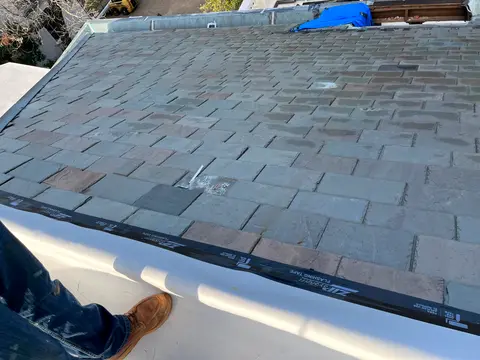 Hail & storm damageWind Damage to Roof Shingles: Creased, Lifted and Missing ShinglesA few missing or creased shingles on a sound roof are usually a repair. Wind damage points toward replacement when creased or unsealed shingles are spread…Read the guide
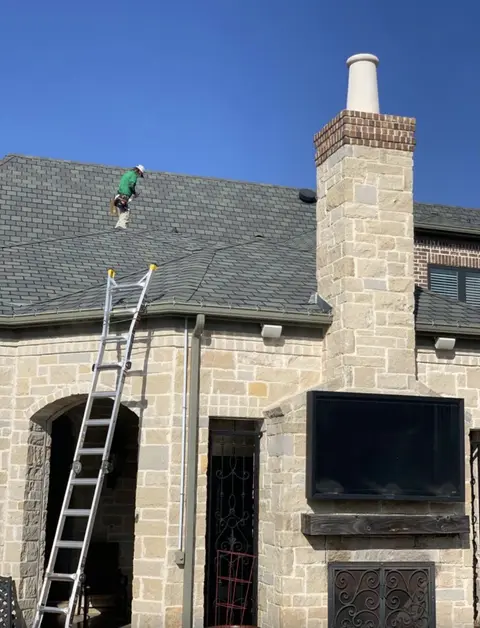 Hiring a rooferHow Long Should a Roof Repair Last in Texas, and What Should Its Warranty Cover?A roof repair in Texas that replaces the failed part, such as a pipe boot, flashing or damaged shingles, should last as long as the roof…Read the guide
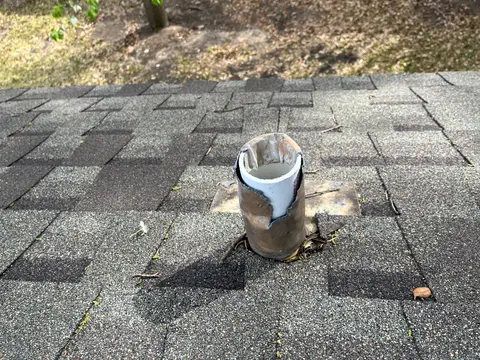 Repair or replaceRepair or Replace Your Roof? An Honest Decision GuideRepair when the roof is reasonably young, the damage is limited to one area and the rest of the roof is sound. Replace when the roof…Read the guide