Siding Repair and House Painting in Dallas: One Contractor for Both
 By Chris Grimes, owner of Verde RoofingPublished October 17, 2026 · 9 min read
In short
Verde Roofing, a locally owned roofer based in Plano, repairs engineered wood, composite wood, vinyl and clapboard siding and paints home exteriors in Dallas, so both can go on one written estimate. Owner Chris Grimes inspects the walls with you and photographs what he finds; the estimate is free. Call or text (214) 687-1951. Whoever you hire, make sure damaged boards are replaced and primed before any paint goes on.
Key takeaways
- Siding repair comes before paint, because paint over soft, swollen or cracked boards fails first in exactly those spots.
- One contractor doing both jobs removes the gap where a painter caulks over rot or a carpenter leaves bare boards unprimed.
- HomeGuide puts average siding repairs at $200 to $1,100, and HomeAdvisor puts typical exterior painting at $1,819 to $4,551.
- A combined estimate should list boards to replace, the primer, the caulk, the paint product, the number of coats and which walls are painted in full.
- Paid work that disturbs paint on a home built before 1978 falls under EPA's lead-safe renovation rule.
You called a painter, and the painter said the siding needs work first. Or you called a siding company about a few bad boards, and it does not paint. Now you are trying to schedule two contractors around each other, with a wall of bare primer in between and nobody clearly responsible for how it turns out.
That is the reason people in Dallas ask for one company to do both. It is a reasonable thing to want, and it changes how the job should be planned. This guide explains who does this kind of combined work, the order it has to happen in, and what the estimate should say.
Who repairs siding and paints houses in Dallas?
Four kinds of contractors take this work. Each has a place.
| Type of contractor | Good fit when | Ask about |
|---|---|---|
| Painting company with a carpenter | Mostly a repaint, with a handful of bad boards and trim pieces | Who does the carpentry, and how rot behind the board is handled |
| Siding contractor | Large areas or a whole house being re-sided | Whether priming and painting are included or left to you |
| Exterior contractor or roofer with siding and painting services | Storm damage, or repairs to roof, gutters, siding and paint together | Which siding materials it works on, and who does the painting |
| Handyman | One or two boards on a single-story wall | Insurance, priming of cut edges, and paint matching |
No type is automatically best. What matters is that one party owns the whole sequence, from the first board pulled to the last coat, and puts that in writing.
Why does siding repair have to come before paint?
Paint is a thin film. It protects sound material from sun and water, and it does nothing for material that has already failed. A board that is soft, swollen or split keeps taking in moisture from behind and at its edges, and the fresh paint over it blisters and peels within a season or two.
The two jobs also share steps. Caulking joints, priming new boards and sealing cut ends are siding work and painting work at once. When two companies split the job, these are the steps that fall through the gap: the carpenter leaves raw edges for the painter, and the painter assumes the carpenter sealed them.
North Texas conditions make the gap matter more. Strong sun dries and cracks caulk on south and west walls, sprinklers soak the bottom courses, and the clay soil under Dallas homes moves with wet and dry spells, which opens joints at corners and around windows. Bare wood left for a few weeks between contractors gets hit by all three.
What is the right order of work?
Whoever does the job, the sequence below is the one that lasts. If an estimate skips a step, ask where it went.
- Inspect every wall, including the bottom edges, the joints around windows and doors, and the trim. Probe anything that looks swollen or soft.
- Find the water source. A sprinkler head, an overflowing gutter, a missing kick-out flashing or failed caulk caused the damage. Fix that or the new board fails too.
- Remove damaged boards and look at the wall behind them. Wet sheathing or rot in the framing changes the scope and should be shown to you before work continues.
- Install matching boards, with the right gaps and clearances for the material.
- Prime new material, including cut ends and edges, before it sees weather.
- Wash the house and let it dry.
- Scrape, sand and spot-prime existing areas where paint has failed.
- Caulk joints at trim, windows, doors and butt joints where the siding maker calls for it.
- Apply finish coats in suitable weather. Sherwin-Williams advises that the temperature should stay in the product's range and above the dew point for at least 48 hours after application, and recommends avoiding direct sunlight in hot summer months.
- Walk the job together and note touch-ups before final payment.
Our guide to exterior painting in the Texas climate goes deeper on timing and prep, so those details are not repeated here.
What should one combined estimate list?
A single price for "siding repair and paint" tells you nothing. The estimate should let you see both halves of the job and the handoff between them.
| Line on the estimate | What it should say |
|---|---|
| Boards and trim to replace | Location and approximate quantity, by wall, with photos |
| Replacement material | Type, profile and thickness, and how close the match will be |
| Hidden damage | A price or unit rate for sheathing or rot found behind boards |
| Primer | Which surfaces are primed, including cut ends |
| Caulk | Where, and the product type |
| Prep on existing paint | Washing, scraping, sanding, spot priming |
| Paint | Brand, product line, sheen, color and number of coats |
| Extent of painting | Whole house, full walls, or repaired sections only |
| Not included | Interior repairs, structural framing, anything left out |
| Warranty | Written workmanship terms for both the carpentry and the paint |
The hidden-damage line is the one people skip and later regret. Nobody can see behind a board until it comes off. An agreed rate in advance keeps a surprise from turning into an argument.
How much do siding repair and exterior painting cost?
Published national guides give a frame. HomeGuide's siding repair guide puts the average repair at $200 to $1,100, with vinyl repairs at $2 to $4 per square foot and wood or clapboard repairs at $4 to $13 per square foot. HomeAdvisor's guide puts typical exterior house painting at $1,819 to $4,551, or about $1.50 to $4 per square foot.
These are typical published ranges, not our prices. What moves them on a Dallas house:
- How many boards and how much trim must be replaced
- Whether the wall behind is sound
- One story or two, and how much ladder or lift work is involved
- The siding material and how hard it is to match
- The amount of scraping and priming the old paint needs
- The number of colors and the quality of paint chosen
Doing both jobs together does not make either one free, but it avoids paying twice for setup, washing and priming, and it avoids repainting a wall because a board was missed.
As for how long the result lasts, InterNACHI's life-expectancy chart estimates 7 to 10 years for exterior paint and 5 to 10 years for caulking. Walls that face the afternoon sun tend to sit at the short end.
Should you paint only the repairs or the whole wall?
New boards painted with the original color will still look different from the faded paint around them. You have three options, and the right one depends on how visible the wall is.
- Repaired boards only. Lowest cost. Acceptable on a back or side wall, or when the existing paint is recent.
- The full wall, corner to corner. The usual choice. A color shift at a corner is hard to notice; a patch in the middle of a wall is not.
- The whole house. Makes sense when the paint is near the end of its life anyway, or when repairs touch several sides.
Ask the contractor to say which option the estimate assumes. If the damage came from a storm and you are filing a claim, how far the painting extends is a matter for your policy; our guide on code upgrades and matching explains how insurers approach it.
What is different about older Dallas homes?
Dallas has a large stock of older houses with wood clapboard and painted wood trim, in established parts of the city such as Lakewood and Oak Cliff. They raise two extra points.
First, lead paint. EPA's Renovation, Repair and Painting rule applies to homes built before 1978 and requires that anyone paid to do work that disturbs painted surfaces be certified and use lead-safe practices. Scraping, sanding and pulling old boards all disturb paint. Ask any contractor bidding on an older house whether the firm is lead-safe certified.
Second, design rules. If your home is in a historic or conservation district, or in a neighborhood with an HOA, there may be rules about siding materials and exterior colors. Check with the City of Dallas or your association before ordering materials. For ordinary repairs, the city's storm repair guidance says that replacing and repairing damaged siding typically does not require a permit, but confirm for your address.
When do you need a different trade?
Some wall problems are outside a siding and paint job, and it is better to hear that early.
- Brick, stone or stucco. Cracked mortar and stucco repairs belong to a mason or stucco contractor.
- Rot in the framing. If the damage runs past the sheathing into studs or sills, a carpenter or structural repair is needed first.
- Termites. Damage that looks like rot is sometimes insects. A pest inspection settles it.
- A leak from above. Stains that start at the top of a wall often come from the roof, a gutter or flashing, not the siding. See our gutter guide.
- A full re-side in a different material. That is a larger project to scope separately; our guide to siding repair or replacement covers the decision.
If hail caused the damage, photograph every wall before anything is repaired and have the roof checked at the same visit. What to do after a hailstorm lists the first steps.
How does Verde Roofing handle siding and paint together?
Verde Roofing is a locally owned company based in Plano, in Collin County, and works in Dallas and across eleven North Texas counties. Roofing and storm restoration are our core work. Siding repair and exterior painting are part of our exterior services, which is why the two can be scoped and scheduled as one job.
On siding, we repair engineered wood, composite wood, vinyl and clapboard, and we supply vinyl siding. On paint, we do exterior house painting and staining, including painting repaired sections to blend with the house. Painting is an add-on to our exterior work, not a separate painting business, and we would rather say that plainly.
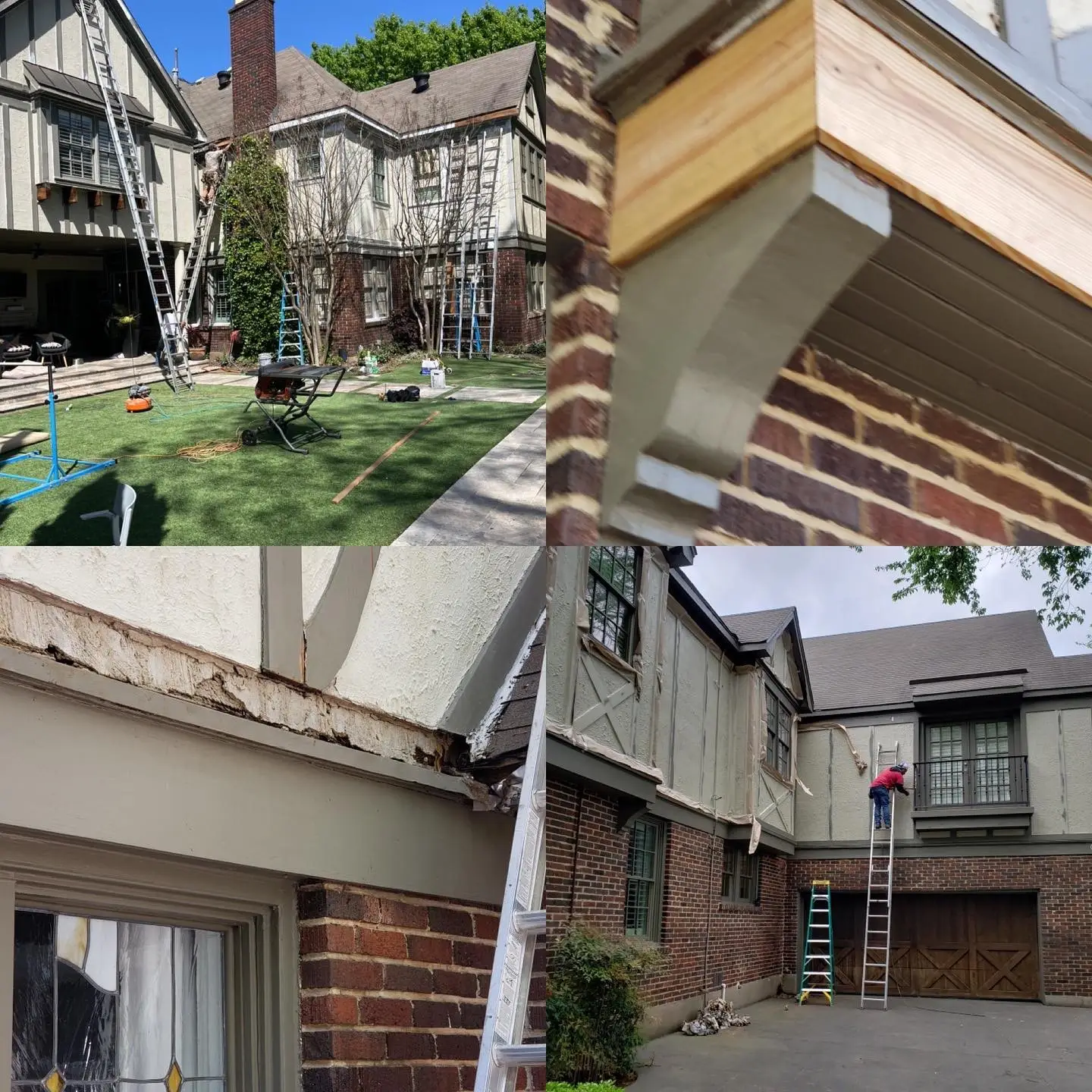
Chris Grimes, the owner, inspects the siding and trim with you and photographs each problem. You get one free written estimate that covers the repairs and the paint. If we find rot that reaches the framing, or a material we do not work on, we will show you and tell you what kind of help you need.
When I look at a wall with peeling paint, I check the bottom two courses and the joints around the windows before anything else, because that is where water gets in first.
For a related project type, see our guide to siding and gutter replacement in Denton.
Get one estimate for the siding and the paint
Call or text (214) 687-1951, 24/7, or book a free inspection. Chris will look at your siding and trim, photograph what needs repair, and give you one written estimate for the repairs and the painting.
Questions people ask next
Can you paint over damaged siding instead of replacing it?
You can, but it rarely lasts. Paint needs a sound, dry surface to bond to. Boards that are soft, swollen at the bottom edge or split will keep moving and holding moisture, and the new paint peels there first. Small cracks and nail holes can be filled and primed, but rotted or swollen boards should be replaced before the painters start.
Will new siding boards match the old ones after painting?
Usually close, not always exact. The profile and texture of the replacement board matter most, because paint will not hide a different lap width or grain pattern. Some older profiles are discontinued. Ask before work starts how close the match will be, and whether the repaired wall will be painted corner to corner so the color is uniform.
How long should I wait to paint after siding is repaired?
New boards should be primed promptly, including cut ends, so bare material is not left exposed to rain and sprinklers. Finish coats then go on once the surface is dry and the weather fits the paint's label. Sherwin-Williams advises waiting at least one day after a heavy rain and stresses that the surface must be dry before painting.
Does homeowners insurance pay for painting after hail damages siding?
It may, when the painting is part of repairing covered storm damage, but your policy and deductible control what is paid. Whether a full wall is painted so repaired sections match is a policy question to raise with your insurer. A contractor can photograph the damage and write the repair estimate; the claim itself is yours to file and manage.
Can vinyl siding be painted?
It can, with paint made for vinyl, and HomeGuide lists painting vinyl siding at $1 to $3 per square foot. Cracked or holed vinyl panels should be replaced first, since paint does not close a crack. Check the siding manufacturer's guidance on colors before going darker, and ask the contractor which product will be used and why.
Sources
- HomeGuide: Siding repair cost (February 2026)
- HomeAdvisor: How much does it cost to paint the exterior of a house?
- InterNACHI: Standard estimated life expectancy chart for homes
- Sherwin-Williams: Exterior product application FAQs
- U.S. EPA: Lead Renovation, Repair and Painting Program
- City of Dallas: Storm damage repair information (permits)
Chris Grimes owns Verde Roofing in Plano, Texas, a locally owned residential and commercial roofer serving Dallas–Fort Worth. Verde is an NTRCA Accredited Member, an RCAT member and a Dallas Observer Best of Dallas Best Roofer winner (readers’ choice) in 2021, 2022 and 2023.
Keep reading
Related guides
 Gutters, siding, paint & solarSiding Repair or Replacement: Vinyl, Engineered Wood, Composite and ClapboardRepair siding when the damage is limited to a few boards or one wall, the material is still available and the sheathing behind it is dry…Read the guide
 Gutters, siding, paint & solarExterior Painting in the Texas Climate: Timing, Prep and How Long Paint LastsIn North Texas, repaint when the paint chalks, fades badly, cracks or peels, or when bare wood shows; InterNACHI estimates exterior paint lasts 7 to 10…Read the guide
 Roofers by citySiding and Gutter Replacement in Denton: Who Does BothVerde Roofing, a locally owned roofer based in Plano, does both in Denton: it replaces and repairs gutters and downspouts, repairs engineered wood, composite wood, vinyl…Read the guide