Buying a Commercial Building in DFW: What Should the Roof Inspection Include?
 By Chris Grimes, owner of Verde RoofingPublished November 4, 2026 · 11 min read
In short
Before you close on a commercial building in Dallas–Fort Worth, the roof inspection should identify the roof system and its age, give an opinion of remaining service life with its basis, check for wet insulation, and document drainage, flashing, rooftop units and leak history. It should also confirm whether the existing warranty can transfer and end with a repair and replacement budget you can show a lender and use in negotiation.
Key takeaways
- The lender's Property Condition Assessment is a walk-through of the whole property; Fannie Mae's instructions describe the site visit as visual and non-invasive, so it does not test what is under the membrane.
- A roof evaluation for a purchase should end in three numbers: repairs needed now, repairs likely in the first few years, and a replacement budget with the year it is expected.
- IIBEC says every non-destructive moisture scan has to be confirmed with core samples, and cutting cores in a roof you do not own yet needs the seller's permission.
- A manufacturer's roof warranty does not pass to a buyer automatically: one manufacturer's transfer form lists a $1,000 fee, a possible inspection and approval at its sole discretion.
- TREC has no commercial contract form, so the length of your inspection period is whatever your contract says; order the roof work in its first days.
You are under contract on an office building, a retail strip or a warehouse, and the clock on your inspection period is running. The roof is the largest single surface on the property, the most expensive to replace, and the one thing nobody showed you on the tour.
A leak stain can be painted over in an afternoon. Wet insulation under a membrane cannot be seen at all. This guide lays out what a buyer should know about the roof before closing, who can find it out, and how to turn it into a number.
What does a buyer need to know about the roof before closing?
Ten things, in plain terms:
- What the roof is. The system (TPO, modified bitumen, built-up, metal and so on), how it is attached, and how many roofs are stacked on the deck.
- How old it is, with the evidence: permits, invoices, warranty documents.
- How long it is likely to last, as an opinion with its basis.
- Whether the insulation is wet, and where.
- Whether it drains.
- The condition of flashing, edges and penetrations.
- The condition around rooftop units.
- Leak history, from the inside and from records.
- Whether there is a warranty and whether it can transfer to you.
- What it will cost: now, soon, and at replacement.
The first nine are findings. The tenth is why you ordered the inspection.
How is a roof evaluation different from the lender's Property Condition Assessment?
If you are financing the purchase, the lender will probably order a Property Condition Assessment, or PCA. Most follow an ASTM standard known as E2018, whose full title is Standard Guide for Property Condition Assessments: Baseline Property Condition Assessment Process.
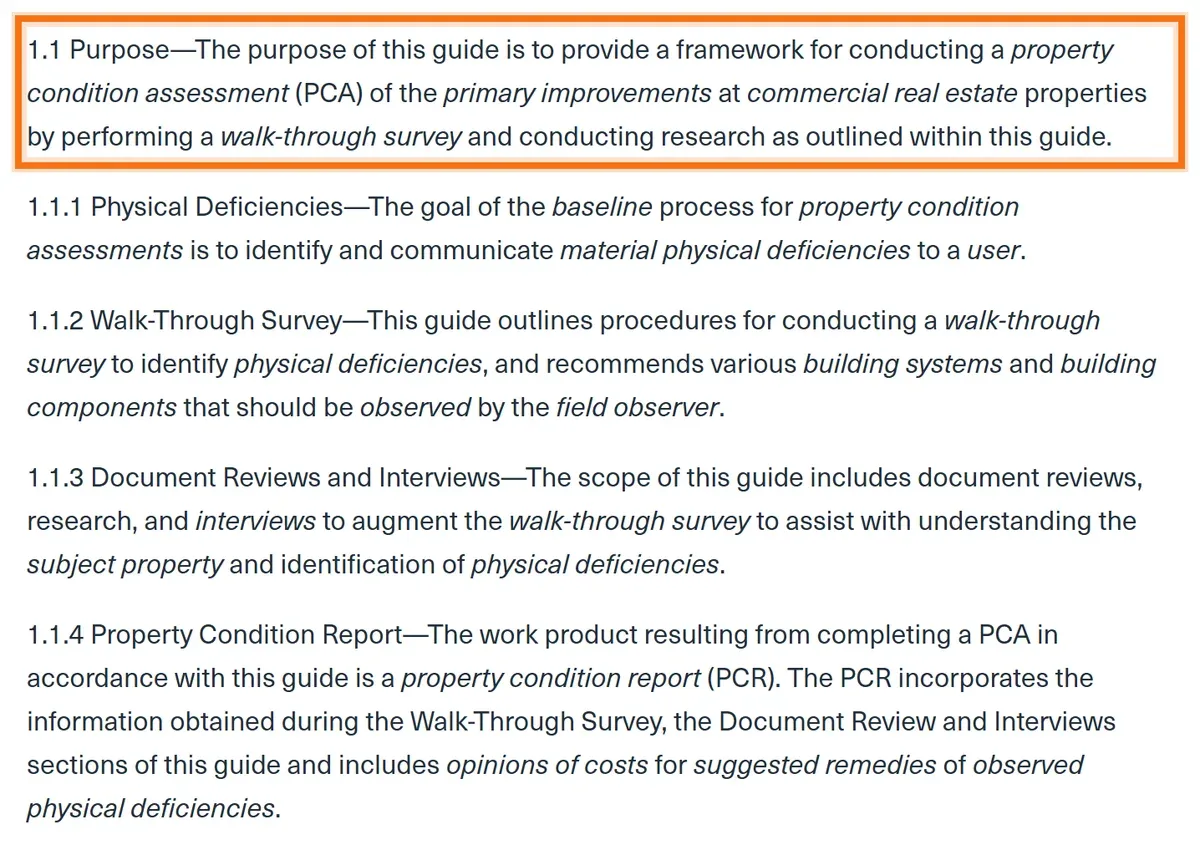
ASTM's public summary of the guide describes a framework built on a walk-through survey, document review and interviews, ending in a property condition report with opinions of cost for the physical deficiencies observed. The same summary says no PCA can wholly eliminate uncertainty about building systems, and that some investigations are outside the baseline scope and are for the user to add.
Lender instructions show how that plays out on a roof. Fannie Mae's instructions for multifamily PCAs describe the site visit as a visual and non-invasive inspection of observable and accessible areas. For roofs, the consultant is told to observe the type, slope, coverings and flashing, look for evidence of damage, leaks or ponding, and report the roof's age and the remaining term of any warranty.
That is useful, and it is a different job from finding out what is under the membrane. Here is how the three levels of roof information compare:
| Lender's PCA | Roofer's evaluation | Roof consultant or testing firm | |
|---|---|---|---|
| Who orders it | Usually the lender | You | You, often on the roofer's or lender's advice |
| What it covers | Every building system in one visit | The roof only: system, condition, drainage, flashing, units, leak evidence | Moisture survey, core analysis, drawings, sometimes design |
| Method | Visual walk-through, records, interviews | Hands-on visual inspection with photos; may include cores if permitted | Infrared, nuclear or electrical scanning, confirmed by cores |
| What it produces | Report with immediate repairs and reserves for the loan term | Photo report, repair list, repair and replacement estimates | Wet-area map, measurements, independent opinion |
| What it does not do | Test for hidden moisture; price the roof in detail | Independent testing, unless arranged; structural opinions | Do the repair work |
| Published cost | Set by the PCA firm | HomeGuide: $200–$600, or $0.05–$0.10 per sq ft; often free from a roofer | HomeGuide: infrared $400–$600; large surveys quoted per project |
How to read it: these are layers, not alternatives. The PCA satisfies the lender. The roofer's evaluation gives you condition and price. Testing answers the one question neither can answer by looking, and it is worth its fee whenever the roof is old, large, ponding or has a leak history. The HomeGuide figures are national and lean toward small roofs.
For the residential version of this question, see what roof inspection report an insurer, buyer or lender will accept.
What should the roof inspection cover, item by item?
System, layers and age
The inspector should name the membrane, the attachment and the insulation if it can be seen, and say how the age was established. A seller's “about ten years” is not evidence. A permit record, an invoice or a warranty certificate is.
The number of layers matters more than most buyers realize. If two roofs are already in place, the next reroof is a full tear-off under the model building code. That changes your replacement budget, as explained in can a new commercial roof go over the existing roof in Texas.
Drainage
Look for where water stands, staining and dirt rings that show where it used to stand, and the condition of every drain, scupper, gutter and downspout. Ponding is a clue to sagging, crushed or wet insulation and blocked drains. Our guide on standing water on a flat roof explains which causes are cheap and which are not.
Flashing, edges, seams and penetrations
Most leaks start at details, not in the open field of the roof. The report should photograph wall flashing, edge metal, pipe boots, pitch pans, skylights, expansion joints and a sample of seams. Open laps and failed sealant are repairable. Flashing that is too low or pulling away along whole walls is a larger item. See what to do when TPO seams are opening and whether blisters on a flat roof need repair.
Rooftop units and the trades that visit them
Curbs, condensate lines, gas line supports and the path technicians walk are where commercial roofs get damaged. Note missing unit panels, dropped screws, patches around curbs and any equipment added after the roof was installed.
The condition and age of the units themselves is a question for a mechanical contractor. A roofer can tell you about the roof around them. More in who to call for a roof leak near an AC unit and how rooftop trades damage a commercial roof.
Leak history, from below and from records
Walk the inside. Stained or replaced ceiling tiles, rust on the underside of a steel deck, buckets above the ceiling and fresh paint in one corner all tell a story. Ask tenants. They know where it drips.
Then count the patches on the roof. A dozen neat repairs can mean an attentive owner. A dozen smeared ones around the same drain mean a problem that was never solved.
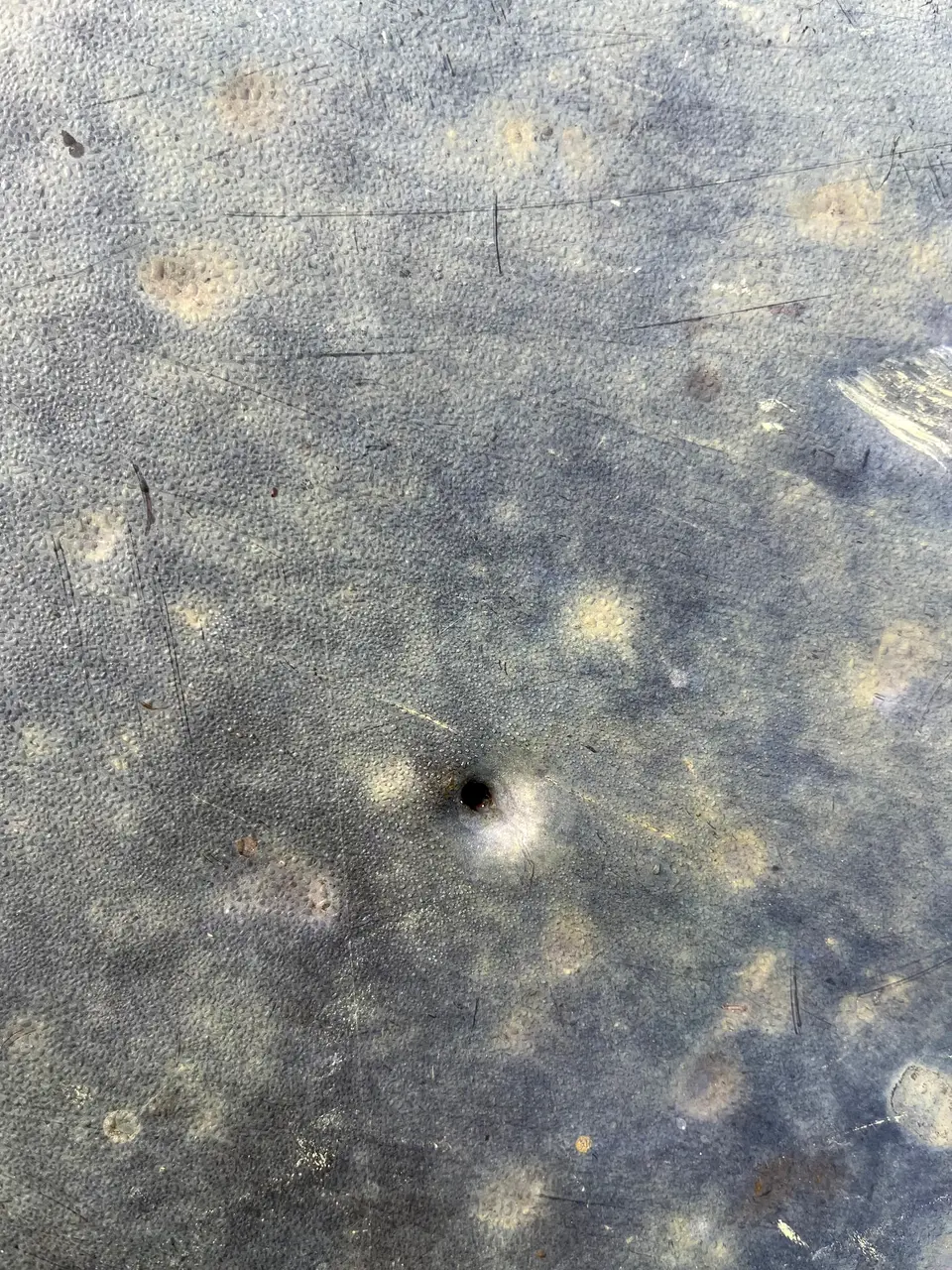
In North Texas, ask about hail specifically. Our guide to commercial hail damage and insurance claims shows what hail does to membranes and metal.
Moisture survey and core cuts
This is the test that separates a roof with years left from one that only looks that way. IIBEC lists the common non-destructive methods as infrared imaging, nuclear gauges and electrical impedance scanners, and says all of them require confirming the findings with roof core samples. The infrared method has its own ASTM practice, C1153, titled Standard Practice for Location of Wet Insulation in Roofing Systems Using Infrared Imaging. Electronic leak detection, which finds breaches in the membrane and not wet insulation, is described in ASTM D7877.
A core also shows the layers, the insulation type and thickness, and the deck. Ask who performs the survey and the cores. It is often a testing firm or roof consultant, and you should have the provider and method named in writing. Our guide on how wet insulation is found under a commercial roof explains each method and when to pay for it.
Remaining service life, as an opinion
Ask for a range, the reasons behind it, and what would shorten it. A fair opinion reads like this: the roof is a single-layer mechanically attached membrane of a stated age, seams are intact, two areas of wet insulation were confirmed, drainage is adequate, so with the listed repairs and yearly maintenance several more years are reasonable. It is an opinion, not a guarantee, and it should say so.
When I inspect a roof for a buyer, I separate what I saw from what I think. The photos and measurements are facts. The years remaining are my judgment, and you are entitled to know which is which.
Does the existing roof warranty transfer to a buyer?
Do not assume so. There are usually two documents: the manufacturer's warranty on the roof system and the installing contractor's workmanship warranty. Each has its own terms, and a change of ownership is one of them.
One manufacturer's process shows what to expect. Johns Manville's guarantee transfer request states that a roof inspection by its field representative may be required, that a non-refundable transfer fee of $1,000 applies, reduced to $500 if the inspection is waived, that the request is treated as withdrawn if the fee is not paid within 90 days, and that approval is at the company's sole discretion. Other manufacturers set their own terms.
Ask the seller for:
- The warranty certificate, with its number, start date, term and covered roof areas
- The transfer clause and any deadline that runs from the date of sale
- Records of the inspections and maintenance the warranty requires
- Any notices of claims, denials or exclusions
- A list of rooftop work done by other trades since the roof was installed
A warranty with ten years left is worth little if it was voided by unreported alterations. What these documents do and do not promise is covered in what a no dollar limit warranty actually covers.
How do you turn the findings into a budget for the lender and the negotiation?
Sort every finding into one of three lines:
- Now: active leaks, open seams, failed flashing, blocked drains, wet areas to cut out.
- Soon: work likely in the first one to five years, including partial replacement of the worst sections.
- Replacement: the expected year and a budget, with the assumption stated: recover or tear-off.
That is the same structure a lender's report uses. Fannie Mae's instructions, for example, have the PCA consultant price immediate repairs and the capital items expected to need replacing during the loan term plus two years. A roofer's written estimate gives those lines a real basis.
For scale only, national cost guides put an installed TPO roof at $4 to $10 per square foot (HomeGuide) and $4 to $14 (HomeAdvisor, updated June 2026), with removal of the old roof at $1 to $5 per square foot. Those are not our prices. What moves the real number is in our guide to commercial roof replacement cost, and the middle path, when the roof is sound, is in roof coating versus replacement.
If you need a written repair and replacement estimate inside your inspection period, call or text (214) 687-1951 as soon as the contract is signed.
When should the roof be inspected in a Texas commercial contract?
Early, because the deadline is set by your contract and nothing else. The Texas Real Estate Commission says it does not have an improved commercial contract form: the parties use a form drafted by an attorney or supplied by the buyer or seller, and members of the Texas Association of REALTORS may use that association's form. So there is no standard state inspection period to rely on.
Commercial contracts commonly give the buyer a set number of days, often called a feasibility, inspection or due diligence period, to investigate and to terminate. How long it is, what testing it allows and what happens to the earnest money are in your document. Read that paragraph with your attorney or broker before you schedule anything.
TREC also notes that a licensed inspector is not required to use the state's report form or its Standards of Practice on property other than one-to-four family residential. On a commercial building, the scope of every inspection is whatever you agree in writing. Be specific.
A workable sequence:
- Day one: request the seller's roof documents (the list is below) and written permission for roof access.
- First week: roofer's inspection with photos, inside and out.
- Same week, if the roof is old, ponding or leaking: order the moisture survey. Infrared work depends on weather and time of day, so it cannot always be done on demand.
- With the seller's written consent: core cuts, patched the same day.
- Before the deadline: written report and estimates to you, your lender, your insurance agent and your attorney, with time left to negotiate or extend.
Documents to request from the seller:
- Roof installation contract, invoice and permit
- Warranty certificates and maintenance records
- Leak and repair logs, with invoices
- Any prior roof reports, moisture surveys or PCAs
- Insurance claims involving the roof, and proof the work was completed
- A list of rooftop equipment added or replaced
Who does what on a purchase?
- Roofing contractor: inspection, photos, repair list, repair and replacement estimates.
- Roof consultant or testing firm: moisture surveys, core analysis, an independent opinion, replacement design on a large roof.
- Structural engineer: sagging, deflection, deck damage, or any plan to add load.
- Mechanical contractor: rooftop unit condition, curbs and condensate.
- Attorney and broker: contract deadlines, seller consent, credits and repairs.
After closing, the roof becomes a maintenance item with your name on it. A commercial roof inspection and maintenance program keeps the findings from growing and keeps a transferred warranty in force.
Under contract and need the roof looked at?
Verde Roofing inspects commercial roofs across Dallas–Fort Worth and installs TPO systems on offices, convenience stores, warehouses and multi-family buildings. See our commercial roofing page, then call or text (214) 687-1951, 24/7, or book a free roof inspection. Chris will walk the roof with you, document what he finds with photos, tell you what needs testing by others, and give you a written estimate you can use.
Questions people ask next
Is the lender's property condition report enough for the roof?
Usually not on its own. A Property Condition Assessment covers the whole property in one walk-through and reports what is visible. It can flag an old or ponding roof and budget a replacement, but it does not scan for wet insulation or cut cores. If the roof is large, old or a big share of the price, add a roof-specific evaluation.
How much does a commercial roof inspection cost before a purchase?
HomeGuide's 2026 guide puts a commercial roof inspection at $200 to $600 on average, or $0.05 to $0.10 per square foot, and an infrared inspection at $400 to $600. Those are national figures that lean toward small roofs. A moisture survey of a large roof by a testing firm is quoted per project. Many roofers, including us, inspect and estimate for free.
Can a roofer tell me exactly how many years the roof has left?
No one can. Remaining service life is an opinion, and a good one states its basis: the system and its age, the condition of seams and flashing, drainage, moisture findings, repair history and how the roof has been maintained. Ask for a range and for what would shorten it. Treat a single confident number with no reasons as a sales figure.
Do I need the seller's permission for core cuts or a moisture survey?
Check your contract and ask before anyone cuts. A visual inspection and a non-destructive scan usually fall within a buyer's inspection rights, but a core cut is a hole in a roof you do not own yet. Get written permission, have the cores patched properly the same day, and confirm that cutting will not affect the seller's existing warranty.
What if the roof has unrepaired hail damage or an open insurance claim?
Ask the seller in writing whether a claim was filed, what was paid and whether the work was done. Whether any rights under the seller's policy can pass to you is a legal and insurance question for your attorney and the insurer, not for a roofer. What we can do is document the roof's condition with dated photos before you close.
Should I ask for a price reduction or for the seller to replace the roof?
That is a decision for you, your broker and your attorney. A credit or price change lets you choose the system, the contractor and the warranty in your own name. A seller-installed roof may be built to the lowest price and its warranty must still be issued or transferred to you. Either way, a written roof report gives the number a basis.
Will my insurer care about the roof when I buy the building?
Often, yes. Insurers commonly ask for roof age, type and condition when they quote a commercial property, and an old or damaged roof can change the terms offered. Send your agent the roof report early in the inspection period, so that insurance terms are known before your right to terminate ends.
Sources
- ASTM International: E2018, Standard Guide for Property Condition Assessments: Baseline Property Condition Assessment Process (public scope page)
- Fannie Mae Multifamily: Form 4099, Instructions for Performing a Multifamily Property Condition Assessment (PDF)
- IIBEC Technical Advisory No. 016-2018: Reuse of Roof Insulation (moisture survey methods and core confirmation)
- ASTM International: C1153, Standard Practice for Location of Wet Insulation in Roofing Systems Using Infrared Imaging
- ASTM International: D7877, Standard Guide for Electronic Methods for Detecting and Locating Leaks in Waterproof Membranes
- Texas Real Estate Commission: FAQ (no improved commercial contract form; inspections of commercial property)
- Johns Manville: roofing guarantee transfer request form
- HomeGuide: Roof inspection cost
- HomeAdvisor: How much does it cost to replace a flat roof?
- HomeGuide: TPO roofing cost
Chris Grimes owns Verde Roofing in Plano, Texas, a locally owned residential and commercial roofer serving Dallas–Fort Worth. Verde is an NTRCA Accredited Member, an RCAT member and a Dallas Observer Best of Dallas Best Roofer winner (readers’ choice) in 2021, 2022 and 2023.
Keep reading
Related guides
 Commercial roofingCommercial Roof Inspections and Maintenance Programs for Property ManagersNRCA recommends inspecting roof systems at least twice a year, preferably in spring and fall, and again after severe weather such as hail. In North Texas…Read the guide Commercial roofingHow Do Roofers Find Wet Insulation Under a Commercial Roof in Texas?On a Texas commercial roof, wet insulation is found in two steps. A scan (infrared at night, a nuclear gauge or an electrical impedance meter read…Read the guide
 Commercial roofingCommercial Roof Replacement Cost: What Building Owners Should BudgetNational cost guides put a TPO flat roof at roughly $4 to $14 per square foot installed, with HomeGuide citing $5 to $12 once tear-off, insulation…Read the guide