
Can a Leaking Roof Valley Be Repaired Without Replacing the Whole Roof in DFW?
 By Chris Grimes, owner of Verde RoofingPublished November 13, 2026 · 10 min read
In short
Yes, in most cases. On a Dallas–Fort Worth home a leaking valley can be repaired without replacing the roof when the cause is local: debris, a few damaged shingles, nails too close to the centerline or a worn valley lining. The valley is opened, relined and reshingled. It stops being enough when the surrounding shingles are too brittle to lift or several areas are failing at once.
Key takeaways
- A valley carries the runoff of two roof planes, so a flaw that would never leak in the open field of shingles leaks there first.
- The three usual causes are debris damming the water, a faulty valley detail (lining, cut, or nails too close to the centerline) and damage to the shingles or decking around it.
- ARMA and Owens Corning instructions both keep fasteners at least 6 inches from the valley centerline; nails closer than that are a common hidden cause.
- HomeGuide's February 2026 guide puts roof valley repairs at $300 to $1,500, and says restoration that includes damaged underlayment or sheathing can reach $6,000 or more.
- A valley repair is not enough when the shingles crack as they are lifted, when more than one valley or slope is failing, or when rot runs well beyond the valley.
The stain is in a corner of the ceiling, or runs down the inside of an exterior wall, and when you look up from the yard the spot sits right below the crease where two sections of roof meet. Someone has already suggested that a roof with a leaking valley is a roof that needs replacing.
Usually it is not. A valley is a short, well-defined part of the roof, and most valley leaks have a local cause that can be fixed locally. The honest answer depends on what failed and on the condition of the shingles on either side, so that is how this guide is organized.
Why are valleys the first place a DFW roof leaks?
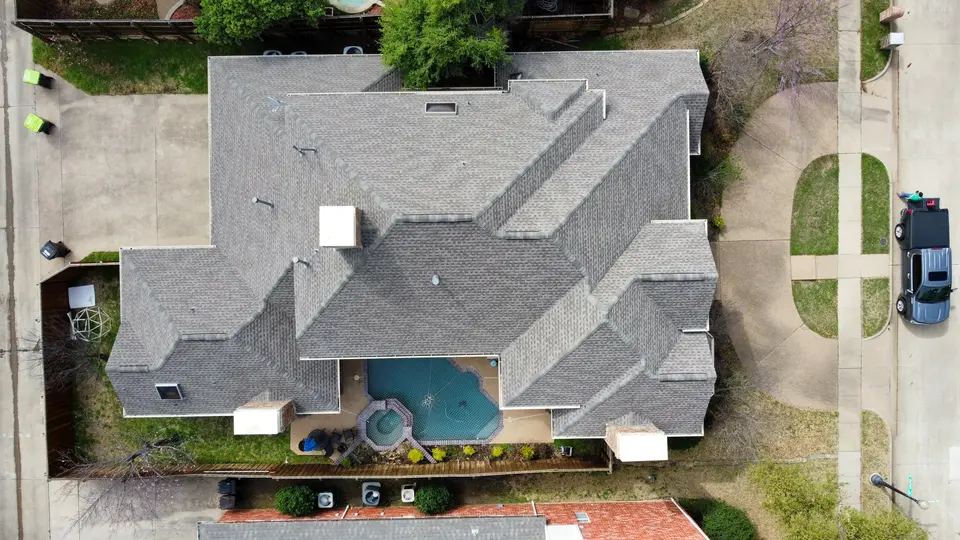
A valley is the inside corner where two roof planes come together. Every drop that lands on both of those planes ends up in that one channel, so the valley carries far more water than any other square foot of the roof. In a North Texas thunderstorm that flow is deep, fast and often pushed sideways by wind.
That is why a flaw that would never matter in the open field of shingles shows up in a valley. A nail in the wrong place, a shingle edge that lifts half an inch, a handful of oak leaves: on a flat slope the water runs past, in a valley it backs up and goes under.
The homes that fill Frisco, McKinney, Allen and West Plano make this worse, not better. Steep, cut-up roofs with many gables and dormers have many valleys, and some of them end against a wall or empty onto a lower roof. Mature trees in Lakewood, Preston Hollow and older parts of Richardson add a steady supply of leaves and twigs.
What are the three causes of a valley leak?
Almost every valley leak falls into one of three groups, and the right repair depends on which one you have.
1. Debris
Leaves, seed pods, twigs and shingle granules collect in the valley, especially at the bottom and behind anything that interrupts it. The pile acts as a dam. Water rises behind it, spreads sideways under the shingle edges and finds the first nail or seam. Wet debris also holds moisture against the shingles for days after the rain stops, which ages them faster.
2. A failed valley detail
There are three accepted ways to build a shingle valley, and each has its own way of failing.
- Open metal valley. A strip of metal is left exposed down the center and the shingles are trimmed back on both sides. The International Residential Code (R905.2.8.2 in the 2021 edition) requires that metal lining to be at least 24 inches wide and corrosion resistant. It fails when the metal rusts through, is punctured, is too narrow, or when the shingle edges beside it were never sealed.
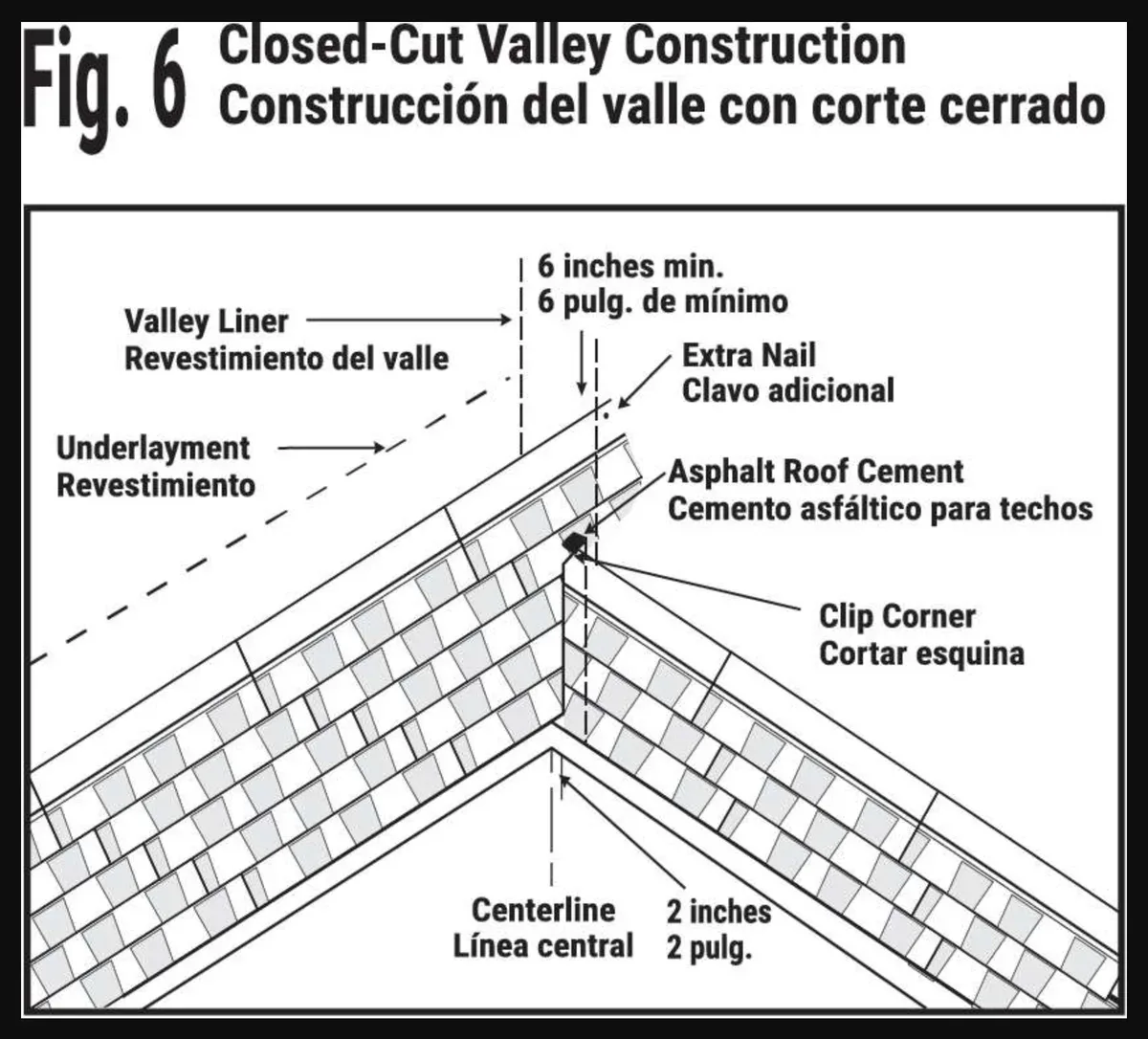
- Closed-cut valley. Shingles from one slope run across the valley, and shingles from the other slope are laid over them and cut in a straight line. It fails when the cut is on the centerline instead of beside it, when the trimmed corners are not clipped and sealed, or when the lining underneath is missing.
- Woven valley. Shingles from both slopes are interlaced across the valley. Thick laminated shingles do not always lie flat when woven, and bridged shingles crack when someone steps there.
Under any of the three there must be a valley lining. The code allows a 36-inch-wide roll roofing lining for closed valleys or a self-adhering modified bitumen underlayment in its place, installed according to the shingle manufacturer's instructions before the shingles go on. Owens Corning's instructions for its Oakridge shingles call for a 36-inch-wide valley liner of self-adhered underlayment or an equivalent.
Then there are the nails. The Asphalt Roofing Manufacturers Association (ARMA) says plainly: do not nail within 6 inches of the valley centerline, and never allow an end joint between shingles to fall in the valley. Owens Corning says the same, fasten a minimum of 6 inches away from the centerline on each side. A nail closer than that sits in the deepest part of the flow, and it is invisible from the ground and usually from the roof too. It is found by lifting shingles.
3. Damage around the valley
Sometimes the detail was fine and something else changed. Foot traffic cracks shingles that bridge a valley. A fallen limb gouges it. Hail bruises the shingles where they are least supported. A nail backing out of the deck lifts a shingle edge into the flow; our guide to roof nail pops explains how that happens. And a slow leak that went unnoticed for years rots the decking under the valley until the shingles sag into a trough that holds water.
What does an inspection have to establish?
Before anyone names a price, these questions need answers:
- Is the valley the entry point at all? Water travels along decking and rafters. The attic view, following the stain uphill, confirms it. Our guide to chimney, flashing and vent leaks covers the other usual suspects near a valley.
- Which type of valley is it, and was it built to the shingle manufacturer's instructions?
- Is there a lining, and what condition is it in?
- Where are the nails? This means lifting shingles along the valley, not looking from a ladder.
- Is the decking solid? Soft or stained wood under the valley changes the scope.
- Can the surrounding shingles be lifted and relaid without cracking? This single test often decides between a repair and something larger.
- Where does the valley end? A valley that empties against a wall or onto a lower roof needs flashing at the bottom that many roofs lack.
When I check a valley, I press along both sides with my hand before I look at anything else. A soft spot under the shingles tells me the leak is older than the stain on the ceiling.
If you only see the leak in downpours, mention it. Our guide for roofs that only leak in heavy rain explains why that pattern points at high-flow areas like valleys.
What are the repair options, from smallest to largest?
Here are the realistic options side by side, with national cost context from guides we opened in November 2026:
| Option | When it fits | What the work includes | What it does not solve | Typical published cost |
|---|---|---|---|---|
| Clear and inspect | Debris dam, sound shingles, no defect found once it is clean | Valley and gutters cleared by hand, shingle edges checked, photos | A wrong detail, bad nails or rot; overhanging trees will refill it | No valley-specific figure published; HomeGuide lists typical minimum call-out fees of $150 to $300 |
| Spot repair | A few cracked, lifted or punctured shingles; a nail pop; an unsealed cut edge | Damaged shingles replaced, offending nails pulled and holes sealed, cut edge reset | A missing lining or nails wrong along the whole run | Near the low end of HomeGuide's $300 to $1,500 valley range |
| Rebuild the valley | Missing or failed lining, rusted metal, nails inside 6 inches, cut on the centerline | Shingles removed 2 to 3 feet each side, decking checked, new self-adhered lining or metal, shingles relaid to the manufacturer's detail | Aged shingles elsewhere; color match on an older roof | $300 to $1,500 (HomeGuide; Fixr gives the same range). Valley flashing alone $200 to $850 (HomeGuide) |
| Rebuild plus decking | Soft or rotted wood under the valley | Everything above, plus rotted sheathing cut out and replaced | Framing damage, which is a separate assessment | Add $200 to $500 per 100 square feet of decking (HomeGuide). HomeGuide notes restoration with underlayment or sheathing can reach $6,000+ |
| Replace the slope or the roof | Shingles too brittle to relay, several valleys failing, widespread wear or storm damage | Tear-off, new underlayment, valleys, flashing and shingles | Nothing on the roof side; interior repairs are still separate | Priced per roof; see the calculator below |
How to read it: start at the top and stop at the first row that honestly describes your roof. Most valley leaks end at the second or third row. The fourth is common when the leak has been ignored for a few seasons. These are national, typical figures and not Verde's prices; ours is a written estimate after a free inspection.
What moves the price: the length of the valley, the pitch and height of the roof, whether it is one story or two, tile or metal instead of shingles, how much decking is soft, and how hard the area is to reach. For a fuller picture of how repairs are priced, see what common roof repairs cost, and for the wood itself, what roof decking replacement costs in DFW.
If the inspection points to the last row, the roof cost calculator gives a typical DFW range for your roof in about two minutes, so you can compare a repair against a replacement with real numbers.
When is a valley repair not enough?
A repair is the wrong purchase in a few specific situations, and a good roofer will say so before taking your money.
- The shingles will not survive being lifted. Rebuilding a valley means separating sealed shingles and relaying them. Old, sun-baked shingles crack instead of bending. If the test shingle breaks, the repair area keeps growing.
- More than one valley or slope is failing. One bad valley is a repair. Three bad valleys on a twenty-year-old roof is a pattern.
- The roof has two layers. A valley rebuilt in a layered roof cannot be lined properly without removing both layers in that area.
- The rot has spread. Decking damage that runs well beyond the valley, or into rafters, needs a larger opening and possibly a framing assessment.
- The design is the problem. A valley that dumps onto a wall, a chimney or a nearly flat section will leak again unless that junction is rebuilt with proper flashing or membrane. See roof leaks where the roof meets a wall for that detail.
- Storm damage is widespread. If hail or wind damaged the whole roof, patching the valley only addresses the symptom you happened to notice.
Our repair or replace decision guide walks through that choice without the sales pitch. If the roof is fairly new and the valley leaks, the installation is the first suspect, and who should fix a leak in a brand-new roof explains where to turn first.
What should be written in the quote?
Ask for these in writing before any valley work starts:
- Where the water enters and how that was confirmed, with photos.
- The valley type being built: open metal, closed-cut or woven, and why.
- The lining: self-adhered membrane or metal, its width, and for metal the type and thickness.
- How far the shingles will be removed on each side.
- That nails will be kept at least 6 inches from the centerline, per the shingle manufacturer's instructions.
- The price per sheet for decking replacement, agreed before the valley is opened.
- The shingle brand, line and color to be used, and whether a match was checked.
- What is excluded, such as interior ceilings, gutters or tree trimming.
- The workmanship warranty on the repair, in writing. Our guide on how long a roof repair should last covers what that warranty should say.
A one-line quote that says "seal valley" describes the cheapest and shortest-lived option. That may be all you need, but you should know that is what you are buying.
Which other trades may be involved, and in what order?
- Roofer first. Find the entry point and make the roof side watertight. Everything else waits on that.
- Tree service. If limbs overhang the valley, a tree service or arborist should cut them back. A valley that is cleaned under a shedding tree is full again by the next season.
- Gutters. A valley delivers a concentrated stream to one short stretch of gutter. If water overshoots or the gutter overflows there, the fascia and wall below pay for it. Verde installs and repairs gutters and downspouts, so ask for the gutter below the valley to be checked at the same inspection.
- Dry-out, then drywall and paint. Wet attic insulation and stained ceilings are interior work for a restoration or drywall and paint contractor, after a rain has shown the roof side is dry. See who repairs wet insulation and ceiling damage after a roof leak.
After the repair, the cheapest protection is keeping the valley clear. A look twice a year and after big storms, part of our roof maintenance checklist, catches debris before it becomes a dam. From the ground with binoculars is fine. Please do not walk a wet or steep roof to check it yourself.
Have the valley looked at before the next storm
Call or text (214) 687-1951, 24/7, or book a free roof inspection. Chris will check the valley from the attic and the roof, show you photos of what he finds, and give you a written roof repair estimate for the smallest fix that will actually hold.
Questions people ask next
Why does my roof valley only leak in heavy rain?
A valley handles the water from two slopes at once, so in a downpour the flow is deep and fast. Debris, a lifted shingle edge or a nail near the centerline may stay dry in a light shower and leak only when the water rises over it or is pushed sideways by wind. Leaks that follow rainfall intensity are a strong hint that the valley, not the open roof, is the entry point.
Can I just seal a leaking roof valley with roofing cement?
Roofing cement belongs in a valley in small, specific places, such as under the trimmed shingle edges of a closed-cut valley. Smeared over the surface it cracks in Texas heat, traps debris and hides the real fault. If the lining, the cut or the nailing is wrong, the lasting fix is to open the valley and rebuild it. Please do not try this yourself on a wet or steep roof.
Is an open metal valley better than a closed shingle valley?
Both are accepted. The International Residential Code permits open valleys lined with metal at least 24 inches wide and closed valleys over a 36-inch lining, and ARMA says laminated shingles can be installed woven, open or closed-cut. Open metal sheds debris well and is easy to inspect; closed-cut looks cleaner. Workmanship matters more than the type, and the shingle manufacturer's instructions decide what is allowed.
How much does it cost to repair a roof valley?
HomeGuide's February 2026 roof repair guide lists valley repairs at $300 to $1,500 on average depending on length and severity, and valley flashing work at $200 to $850. Fixr's 2026 leak guide gives the same $300 to $1,500 range. Those are national figures, not Verde's prices. Rotted decking, a steep or two-story roof and tile or metal roofing raise the number.
Will a repaired valley match the rest of my roof?
Not always. Rebuilding a valley means new shingles a couple of feet wide on each side, and new shingles on a weathered roof look darker and crisper for a while. If your shingle has been discontinued the difference is permanent. Ask to see the proposed match against your roof in daylight before the work starts, and ask whether shingles can be salvaged and reused.
Does insurance pay for a leaking roof valley?
Only when a covered event caused it and your policy says so. A limb that tore the valley open in a storm is different from a valley that wore out or was installed wrong. The Texas Department of Insurance notes that an insurer will not pay for a roof just because it is old or worn. Photograph the damage and read your own policy; it governs.
Sources
- UpCodes: 2021 International Residential Code, Chapter 9 Roof Assemblies (R905.2.8.2 Valleys)
- Asphalt Roofing Manufacturers Association (ARMA): Good Application Makes a Good Roof Better, laminated shingles (valleys and flashings)
- Owens Corning: Oakridge shingles installation instructions (valley construction)
- HomeGuide: How much does roof repair cost? (February 2026)
- Fixr: How Much Does It Cost to Repair a Roof Leak? (2026)
- Texas Department of Insurance: Insurance and your roof
Chris Grimes owns Verde Roofing in Plano, Texas, a locally owned residential and commercial roofer serving Dallas–Fort Worth. Verde is an NTRCA Accredited Member, an RCAT member and a Dallas Observer Best of Dallas Best Roofer winner (readers’ choice) in 2021, 2022 and 2023.
Keep reading
Related guides
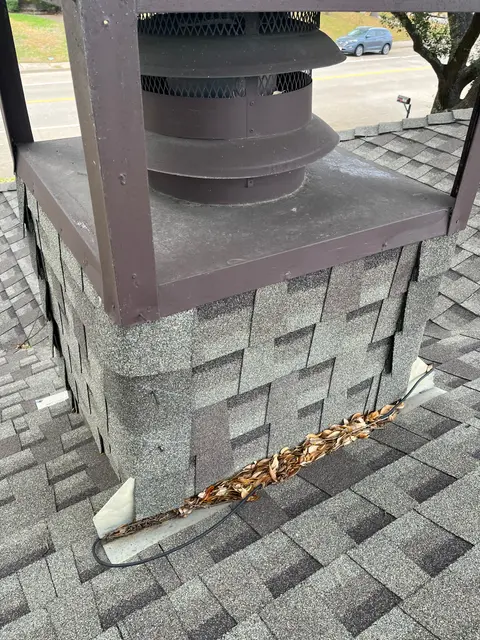 Repair or replaceChimney, Flashing and Vent Leaks: The Most Common Roof RepairsMost roof leaks start where the shingles stop: at chimneys, walls, skylights and pipe or exhaust vents. Rubber pipe boots crack in Texas sun, chimney step…Read the guide
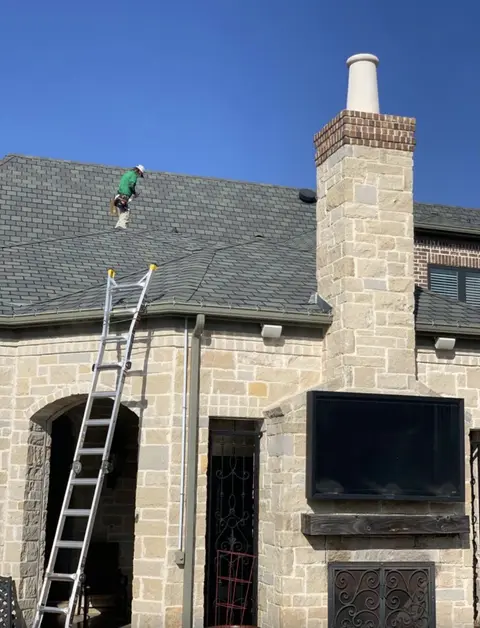 Hiring a rooferHow Long Should a Roof Repair Last in Texas, and What Should Its Warranty Cover?A roof repair in Texas that replaces the failed part, such as a pipe boot, flashing or damaged shingles, should last as long as the roof…Read the guide
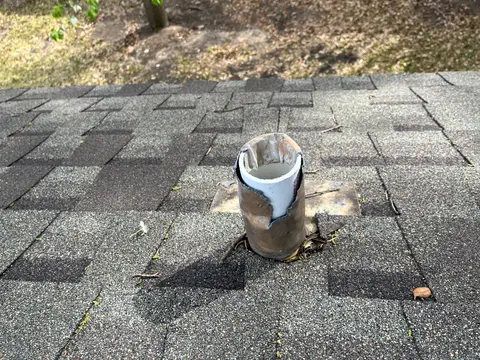 Repair or replaceRepair or Replace Your Roof? An Honest Decision GuideRepair when the roof is reasonably young, the damage is limited to one area and the rest of the roof is sound. Replace when the roof…Read the guide