Rotten Fascia and Soffits on a North Texas Home: Is the Roof or the Gutter Causing It?
 By Chris Grimes, owner of Verde RoofingPublished November 16, 2026 · 11 min read
In short
On a North Texas home, rotten fascia most often comes from water that misses the gutter: a missing drip edge, shingles cut too short, or a gutter that is clogged, sloped the wrong way or fastened into wood that is already soft. Soffit rot usually points higher, to a roof leak running down a rafter, or to animals. Replace the wood only after the water path is corrected, or the new boards rot too.
Key takeaways
- Fascia rot directly behind the gutter usually means water is running between the roof edge and the gutter or over the back of the gutter.
- The model residential code requires a drip edge at the eaves and rakes of shingle roofs, and plenty of older North Texas roofs were built without one.
- Soffit stains away from the gutter line point to a roof leak traveling down a rafter, a wall flashing problem, or wildlife.
- This Old House's 2026 guide puts fascia replacement at $7 to $40 per linear foot; the price depends on length, height, material and what is rotten behind the board.
- The repair often needs three trades in order: roof-edge correction, carpentry, then gutters and paint. Get the order and the scope in writing.
You noticed it while cleaning the gutters or painting the trim: a board at the roof edge that is soft, black or flaking, or a stained panel under the eave that has started to sag. The gutter company says it is the roof. The roofer says it is the gutter. The painter offers to caulk it and paint it.
All three can be partly right. The board is where the damage shows, not where it starts. This guide walks through how the source is found, which repairs make sense, and what to get in writing so you pay for the fix once.
Which board is the fascia, and which is the soffit?
Two parts, two different jobs:
- Fascia is the vertical board that caps the ends of the rafters along the eave. Your gutters are fastened to it.
- Soffit is the horizontal panel under the overhang, between the fascia and the wall. On most North Texas homes it holds the vents that let air into the attic.
Behind both are the rafter tails, the ends of the roof framing, and above them the edge of the roof decking. Rot that starts in the fascia can spread into all three. That is why the repair is rarely just one board.
What causes fascia and soffits to rot on a North Texas home?
Wood at the roof edge rots when it stays wet. Spring storms in Dallas–Fort Worth dump a lot of water in a short time, summer sun cracks the paint that protects the wood, and pollen, leaves and seed pods fill gutters between cleanings. Seven causes come up again and again.
1. No drip edge. A drip edge is a metal strip under the first course of shingles that carries water off the roof deck and into the gutter. The 2021 International Residential Code says a drip edge shall be provided at the eaves and rake edges of shingle roofs (R905.2.8.5), and the U.S. Department of Energy's Building America Solution Center describes it as protecting the top of the fascia and the edge of the roof deck from water. Plenty of older roofs here were built without one. Fort Worth's roofing FAQ says drip edges are required on a re-roof if they do not already exist.
2. Shingles cut too short or too long at the eave. Without enough overhang, water clings to the roof edge and runs down the face of the fascia behind the gutter. Too much overhang and the shingle edge droops and cracks.
3. Clogged gutters. A full gutter overflows on both sides. The back side is the fascia.
4. Gutters sloped the wrong way. The Building America Solution Center says gutters should slope at least 1/16 inch per foot toward the downspout. A gutter that sags or tilts back holds standing water against the board for days.
5. Gutter fastened into soft wood. Once the fascia softens, spikes and screws loosen, the gutter pulls away, and the gap behind it lets even more water onto the board. The rot feeds itself.
6. A roof leak running down a rafter. Water that gets in higher up, at a valley, a vent or a wall, can travel along a rafter and come out at the tail. It shows as a stain or soft spot in the soffit, often in one bay, with a fascia that looks fine from the front.
7. Wildlife and failed paint. Squirrels and raccoons chew through softened corners to reach the attic, and birds nest in open soffit vents. Paint that has cracked and peeled lets every rain soak the end grain of the boards.
How does an inspection find the real source?
By reading where the rot is and what is next to it. This table shows the usual patterns:
| What you see | Most likely source | What confirms it |
|---|---|---|
| Fascia soft along the top edge, behind the gutter, for a long run | No drip edge, or short shingle overhang | Lift the first shingle course: no metal, or the shingle ends at or behind the fascia |
| Fascia rot near one end or one low spot of the gutter | Gutter holding water or tilted back | Standing water after rain; a level on the gutter |
| Dirt streaks down the fascia and staining on the soffit below the gutter | Overflow from clogged gutters or too few downspouts | Debris in the gutter; overflow marks on the front lip |
| Rot where a roof edge dies into a wall | Missing kick-out flashing | Water marks down the wall below the end of the gutter |
| Soffit stain in one rafter bay, fascia sound | Roof leak running down the rafter | Stained decking or rafter in the attic above that bay |
| Hole at a corner or a vent, with nesting or droppings | Animals | Chewed edges, noise in the attic at dawn or dusk |
| Peeling paint and surface checking on the sunny side, wood still firm | Paint failure, not yet rot | A screwdriver does not sink in |
Read it by location. Damage that follows the gutter line is an edge or gutter problem. Damage in one spot under the overhang, or where a roof meets a wall, is usually water arriving from somewhere else. More than one row can apply to the same house.
A proper inspection looks at four places, and you should expect photos from each:
- The roof edge, with the first course lifted, to see the drip edge, the overhang and the edge of the decking.
- The gutter: slope, hangers, seams, outlets and where the downspouts empty.
- The attic above the damaged area: stains on rafters and decking, blocked soffit vents, wet insulation.
- The wood itself, probed, to find where the rot stops.
Do the ground-level part yourself if you like, with binoculars and a hose. Do not walk the roof edge or lean a ladder on a gutter that is fastened to rotten wood.
What does the roof edge have to do with it?
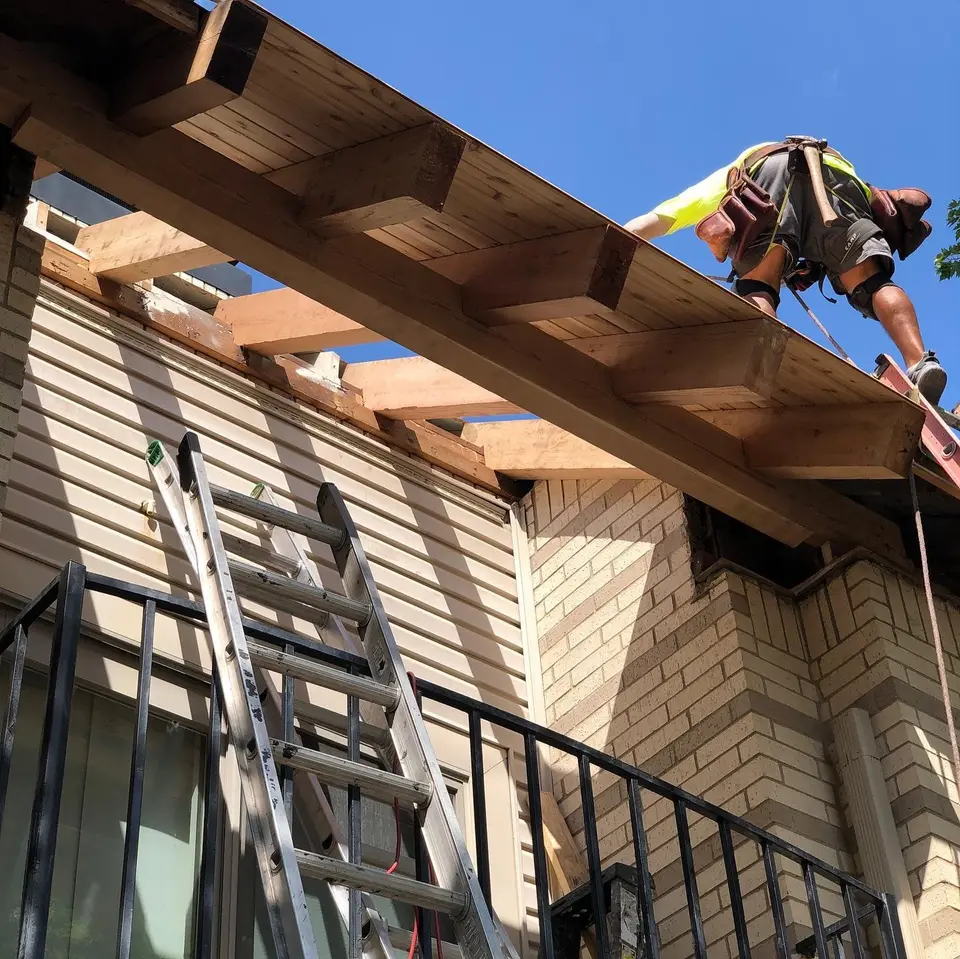
More than most people expect, because the gutter can only catch water that reaches it. The first course of shingles, the starter strip under it and the drip edge decide where the water goes when it leaves the roof.
Owens Corning's shingle instructions say the starter course should overhang the drip edge along the rake and eaves by 1/4 to 3/4 inch. Its Duration instructions add that shingles must extend at least 1/2 inch and no more than 1 inch past the rake and eave edge, unless a drip edge with an extended profile is used. The Building America Solution Center adds that an eave drip edge should extend at least 1/2 inch below the sheathing.
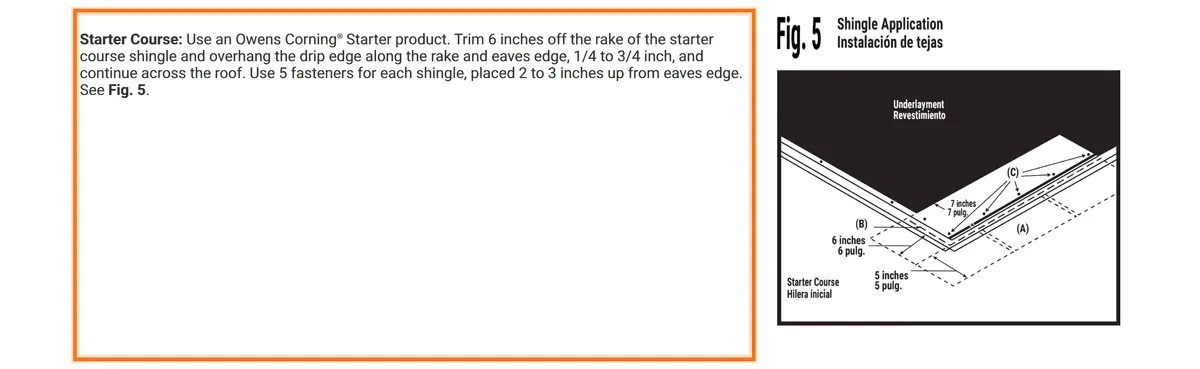
When I look at a rotten fascia, the first thing I do is lift the bottom course of shingles. If there is no metal under it, or the shingle ends flush with the board, I know why the top of the fascia is black, and I know new wood alone will not last.
Where a roof edge ends against a wall, a small bent piece of metal called kick-out flashing turns the water into the gutter. The Building America Solution Center says it directs rainwater into rain gutters, and that missing kick-out and step flashing can let water into the wall and cause rot and mold inside the wall cavity. If your rot is at that corner, read a roof leaking where it meets a wall as well.
Edge rot also reaches the roof deck. If the first foot of decking is soft, it has to be replaced before any new drip edge is nailed to it; our guide to roof decking replacement cost explains how that is priced. And blocked or missing soffit vents starve the attic of intake air, which is a cause of a damp attic when it has not rained. The way intake and exhaust should balance is covered in underlayment, ventilation and decking.
Which repair is reasonable, and when?
These are the five scopes homeowners are usually offered. Cost context comes from This Old House's fascia guide (updated March 31, 2026) and Fixr's roof repair guide (updated January 21, 2026); both are national. The options, from least to most work:
| Option | When it fits | What the work includes | What it does not solve | Published cost context |
|---|---|---|---|---|
| Scrape, prime, caulk and paint | Wood is firm; paint has failed | Prep, primer on bare wood, two finish coats | Any rot, and any water still reaching the board | No guide we opened prices trim-only painting; ask for a written quote |
| Replace the rotten boards only | Cause already corrected, or damage came from a one-time event | Gutter section down, boards out, new primed boards, gutter re-hung | The water path, if nobody checked it | Fascia replacement $7 to $40 per linear foot (This Old House); old fascia removal $3 to $7 per linear foot |
| Boards plus gutter correction | Overflow, standing water or loose hangers caused it | New boards, gutter re-pitched or replaced, hangers into sound wood, downspouts added if needed | A missing drip edge or short shingles | Soffit and fascia repairs $500 to $6,000 (Fixr); gutters priced separately |
| Boards plus roof-edge correction | No drip edge, short overhang, soft deck edge | First course lifted, deck edge repaired, drip edge and starter installed, shingles relaid, then boards and gutter | A leak higher on the roof | Fixr's roof replacement guide lists fascia and soffit repairs at $500 to $2,500 when done with a roof |
| Eave rebuild | Rot has reached rafter tails or the wall | Framing repair or sistered tails, decking, edge metal, boards, soffit, vents, gutters, paint | Structural problems beyond the eave; those need an engineer | Not priced by the guides we opened; written estimate only |
How to read this: move down the table until you reach the row that includes the cause your inspection found. Paying for a row above it means paying again later. What moves the price within a row is the length of the run, one story or two, the board material, how much is rotten behind the face, and whether the gutters can be reused.
If you would like someone to look at the roof edge and the gutters together, call or text (214) 687-1951 and we will tell you which row you are in.
Who does the work, and in what order?
Rot at the eave touches several trades. The order matters because each one covers the last:
- Wildlife removal, if animals are involved. A wildlife or pest control company gets the animals out before any hole is closed. Closing them in creates a worse problem.
- Roof-edge work. Decking edge, drip edge, starter and first course. This is roofing.
- Carpentry. Rafter tail repairs, fascia and soffit boards, soffit vents.
- Gutters. Re-hung or replaced, pitched correctly, into sound wood.
- Paint. Primer on all faces of new wood, including the cut ends, then finish coats.
Verde Roofing does roofing, gutters and downspouts and exterior painting, and repairs several kinds of siding. How much of the carpentry is ours on your job, and whether any framing repair needs another trade, should be spelled out in the written estimate. Ask before you sign rather than assume.
On a home built before 1978, the EPA's lead rule says anyone paid to do work that disturbs paint must be certified in lead-safe work practices. Ask the contractor for that certification before old trim is scraped or cut.
For gutter sizing, materials and guards, see our gutter guide for Texas homes. For how long a paint job should last here and what prep it needs, see exterior painting in the Texas climate. If you are weighing replacement of the cladding on the same wall, siding repair or replacement covers that decision.
What should the written estimate say?
Use this as a checklist:
- The cause found, in words, with photos of the roof edge, the gutter and the attic.
- Linear feet of fascia and of soffit to be replaced, and the material and size of the new boards.
- What happens if rot is found in rafter tails or decking: the unit price and how you will be told.
- Whether drip edge is being added, and along which edges.
- Whether gutters are re-hung or replaced, and the hanger type and spacing.
- Primer and paint: which surfaces, how many coats, and who does it.
- Who handles permits if your city requires one for the scope.
- The workmanship warranty, in writing. Our guide on how long a roof repair should last and what its warranty should cover lists the terms to look for.
How do you keep it from coming back?
- Clean gutters after the spring seed drop and again after the leaves fall.
- After a heavy rain, walk the house and look for water coming over the back of a gutter.
- Keep tree limbs off the roof edge.
- Repaint trim when the paint starts to crack, before the wood is bare.
- Have the roof edge looked at once a year. Our roof maintenance checklist for Texas shows what to check each season, and a maintenance plan puts it on a schedule.
The same edge details cause trouble on low-slope additions, where gutters sit even closer to the wall. If your rot is on a porch or patio cover, see why porch, patio and garage roofs keep leaking.
Want the cause found before the wood is replaced?
Call or text (214) 687-1951, 24/7, or book a free roof inspection. Chris will check the roof edge, the gutters and the attic above the damage, show you the photos, and give you a written estimate that says what is causing the rot and what it takes to stop it.
Questions people ask next
Should I call a roofer, a gutter company or a carpenter for rotten fascia?
Start with whoever will look at the roof edge and the gutter together, because the rot is a symptom of water going where it should not. A roofer who also does gutters can check the drip edge, the shingle overhang and the gutter in one visit. The wood itself is carpentry. Ask who does it, and get that scope written into the estimate.
Can rotten fascia be repaired without removing the gutters?
Rarely. The gutter is fastened through the fascia, so the section over the rot has to come down to get the board out and to see the rafter tails behind it. Sound gutters can often be re-hung afterward. Bent, seam-leaking or undersized gutters are better replaced at the same time, since the labor to take them down is already being paid for.
Is it okay to wrap rotten fascia in aluminum or vinyl?
Not over rot. Cladding hides the wood and traps moisture, so the board keeps decaying where you cannot see it and the gutter fasteners lose their grip. Covering sound, dry wood with metal is a legitimate low-maintenance finish. The order is always the same: fix the water path, replace the bad wood, then cover or paint.
How much does it cost to replace fascia and soffit?
This Old House's fascia guide, updated March 31, 2026, gives $7 to $40 per linear foot for fascia replacement, materials and labor, and about $1,750 to $10,000 for a single-story home with 250 linear feet. Fixr's 2026 roof repair guide lists soffit and fascia repairs at $500 to $6,000. These are national ranges, not our prices.
Does homeowners insurance cover rotten fascia and soffits?
Usually not when the cause is gradual. The Texas Department of Insurance says most home policies do not cover water damage from gradual leaks or seepage, and rot from years of overflow is gradual. Fascia or soffit broken by a covered storm, such as wind or a fallen limb, is a different matter. Your own policy governs, so read it or ask your agent.
Will a drip edge stop fascia rot?
It stops one common cause. A drip edge is a metal strip at the roof edge that carries water off the deck and into the gutter instead of letting it curl back onto the fascia. It does nothing for a clogged or back-pitched gutter, a roof leak higher up, or animals. Adding one to an existing roof means lifting the first course of shingles, which is easier on a younger roof.
Can I paint over soft or peeling fascia to protect it?
Paint protects sound, dry wood. It does not stop rot that has started, and paint over damp wood peels again within a season. Probe the board with a screwdriver first. If the tip sinks in, the board needs replacing. If your home was built before 1978, scraping old paint is covered by the EPA's lead-safe rules for paid contractors.
Sources
- 2021 International Residential Code, Chapter 9, Section R905.2.8.5 Drip edge (UpCodes, Texas)
- Owens Corning: Supreme Shingles Installation Instructions (starter course and drip edge overhang)
- Owens Corning: Duration Series Shingles Installation Instructions (PDF, July 2026)
- U.S. DOE Building America Solution Center (PNNL): Roof Edge Protection
- U.S. DOE Building America Solution Center (PNNL): Gutters and Downspouts
- U.S. DOE Building America Solution Center (PNNL): Step and Kick-Out Flashing at Roof-Wall Intersections
- City of Fort Worth: Roofing FAQs (PDF)
- This Old House: Fascia Board Replacement Cost (updated March 31, 2026)
- Fixr: Roof Repair Cost (updated January 21, 2026)
- Texas Department of Insurance: When are water damage and mold covered by insurance?
- U.S. EPA: Lead Renovation, Repair and Painting Program
Chris Grimes owns Verde Roofing in Plano, Texas, a locally owned residential and commercial roofer serving Dallas–Fort Worth. Verde is an NTRCA Accredited Member, an RCAT member and a Dallas Observer Best of Dallas Best Roofer winner (readers’ choice) in 2021, 2022 and 2023.
Keep reading
Related guides
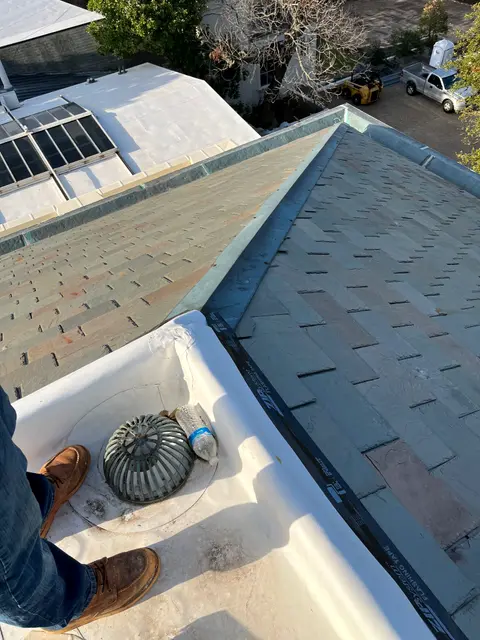 Gutters, siding, paint & solarGutters for Texas Homes: Sizes, Materials, Guards and ReplacementMost North Texas homes do well with seamless aluminum K-style gutters, 5-inch on typical roofs and 6-inch on large or steep roof areas, with downspouts that…Read the guide
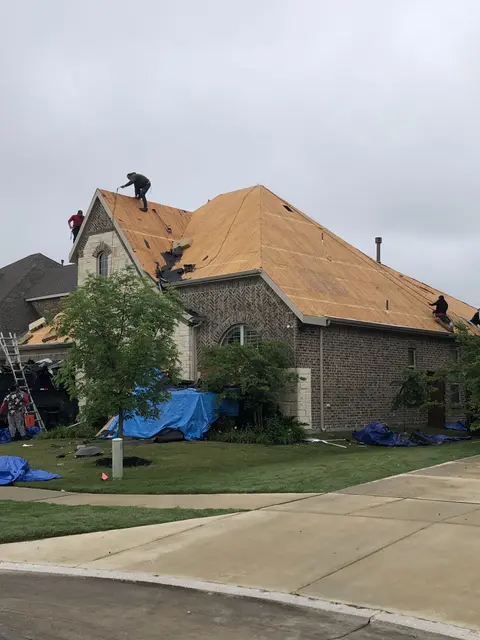 Cost & financingHow Much Does Roof Decking Replacement Cost in DFW?Nobody publishes a verified Dallas–Fort Worth price for roof decking. Fixr's 2026 roof replacement guide lists decking replacement at $2 to $8 per square foot of…Read the guide
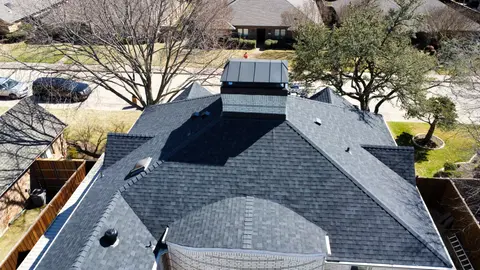 Repair or replaceRoof Leaking Where It Meets a Wall in DFW: Will Siding Need to Come Off?Often yes, but usually only the bottom course or two. On a Dallas–Fort Worth home, step flashing has to sit behind the siding, so a real…Read the guide